Why Is My Toyota Tire Pressure Light On When Tires Are Fine
Your Toyota tire pressure light can turn on even when your tires are perfectly fine. This happens because of temperature changes, sensor battery issues, or a simple system reset need. In this guide, you’ll learn the top reasons your Toyota tire pressure light is on and how to fix it quickly.
Your Toyota tire pressure light is on, but your tires look perfectly fine. This is a common puzzle for Toyota owners. You check the tires, they seem normal, yet the warning stays lit. The good news is that this issue is usually simple to fix. In this guide, you’ll learn the real reasons your Toyota tire pressure light is on when the tires are fine, and exactly how to solve it.
It’s easy to panic when a dashboard light appears. Your mind jumps to the worst-case scenario. But the tire pressure monitoring system (TPMS) is designed to be sensitive. It alerts you to even small pressure changes. Often, those changes are harmless. Understanding why the light comes on helps you stay calm and take the right action. This article covers the top causes, simple fixes, and when you should actually worry.
Many drivers confuse the tire pressure light with other dashboard warnings. For example, the service light comes on for routine maintenance. If you’ve ever wondered how to get rid of the service light on your dashboard, the process is similar to resetting a tire pressure light. Another light that puzzles drivers is the VSC light. You can check if it’s safe to drive with the VSC light on in a separate guide. And just like the fuel gauge that tells you how much gas is left when the light comes on, the tire pressure light is a simple alert system. It tells you something needs attention, but not always that something is broken.
Key Takeaways
- Temperature drops are the #1 culprit: Cold air reduces tire pressure, triggering the light even if tires are fine.
- A dying sensor battery often causes the light: The TPMS sensor battery lasts 5-10 years and needs replacement.
- Resetting the system is usually simple: You can fix it with a button or a short drive.
- Flashing light means urgent attention: A solid light is often less serious than a flashing one.
- Check your tire pressure monthly: Regular checks prevent false alerts and keep you safe.
- Other dashboard lights can confuse you: Learn the difference between the tire pressure light and the service light.
📑 Table of Contents
- What Is the Toyota Tire Pressure Light and Why Does It Matter?
- Top Reasons Your Toyota Tire Pressure Light Is On When Tires Are Fine
- How to Reset Your Toyota Tire Pressure Light (Step-by-Step)
- When to Worry: Flashing Light vs. Solid Light and Other Signs
- Quick Tips to Keep Your Toyota Tire Pressure System in Top Shape
- Common Mistakes That Trigger the Toyota Tire Pressure Light
- Expert Insight: What Toyota Mechanics Say About False Alerts
- Key Takeaways
- Final Thoughts: Don’t Let the Toyota Tire Pressure Light Fool You
What Is the Toyota Tire Pressure Light and Why Does It Matter?
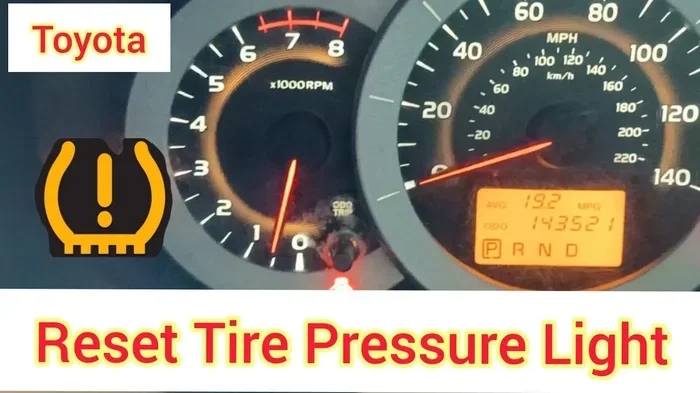
The tire pressure light is part of your Toyota’s TPMS. This system uses sensors inside each tire or on the valve stems. They measure the air pressure in real time. When pressure drops below a safe level, the light turns on. The symbol looks like a horseshoe with an exclamation point in the center. It’s a yellow or red icon on your dashboard.
The TPMS exists for safety and fuel efficiency. Under-inflated tires can reduce fuel economy. They also wear out faster. More importantly, low pressure can lead to blowouts. The system gives you an early warning so you can fix the problem before it becomes dangerous. When the light stays on even though your tires feel hard, it means the system thinks something is off. But the tires themselves might be perfectly fine.
Top Reasons Your Toyota Tire Pressure Light Is On When Tires Are Fine
Temperature Changes and Altitude
The most common reason for a false alert is cold weather. Air contracts when temperatures drop. This reduces the pressure inside your tires. A sudden temperature shift of just 10 degrees Fahrenheit can lower pressure by 1 PSI. In winter, this can trigger the light even if your tires were fine in summer. The same thing happens with altitude changes. Driving up a mountain reduces pressure slightly. The TPMS notices this and lights up.
Here’s a quick tip: if the light comes on in the morning and disappears after driving for 20 minutes, temperature is likely the cause. The tires warm up as you drive, and the pressure rises back to normal. This is a very common experience for Toyota owners in cold climates.
Sensor Battery Failure
Every TPMS sensor has a small battery. These batteries typically last between 5 and 10 years. When the battery dies, the sensor can’t send a signal. The system then assumes a tire is flat and turns on the light. This is one of the top reasons the Toyota tire pressure light stays on when the tires are fine.
You can’t replace just the battery in most Toyota sensors. The whole sensor unit usually needs replacement. The good news is that this is a quick fix. A Toyota dealer or tire shop can swap the sensor in minutes. The cost is usually between $50 and $100 per sensor. If your Toyota is older than 8 years, a dead sensor battery is a very likely culprit.
Faulty Tire Pressure Sensor
Sometimes the sensor itself malfunctions. It might send incorrect readings to the car’s computer. A sensor can fail due to physical damage. Driving over a pothole or hitting a curb can damage the sensor. Corrosion on the valve stem can also cause issues. When a sensor sends a bad signal, the light comes on even though all tires are at the correct pressure.
To check for a faulty sensor, you need a TPMS scan tool. Many auto parts stores offer this for free. The tool reads the data from each sensor. It tells you if one sensor is reporting a pressure that doesn’t match the others. If one sensor reads zero or an impossible number, that sensor is likely faulty.
The System Needs a Reset
After you fix a tire or check the pressure, the Toyota tire pressure light might not turn off automatically. The system needs a reset. This is a simple process. Most Toyotas have a reset button under the steering column. You press and hold it until the light blinks three times. Then you start the engine. The system recalibrates and the light should go off.
If you’ve recently rotated your tires or added air, always reset the system. The TPMS needs to learn the new baseline pressure. Skipping this step is a common mistake. It leaves the light on even when the tires are perfect.
How to Reset Your Toyota Tire Pressure Light (Step-by-Step)
Resetting the Toyota tire pressure light is straightforward. Follow these steps for most Toyota models:
- Make sure all tires are at the correct pressure. Check the owner’s manual for the recommended PSI.
- Locate the TPMS reset button. It’s usually under the steering wheel on the left side.
- Turn the ignition to the “On” position. Don’t start the engine.
- Press and hold the reset button until the tire pressure light blinks three times.
- Release the button. Start the engine and let the car idle for 20 minutes.
- The light should turn off. If it doesn’t, drive the car at a steady speed for 10 minutes.
If the light still won’t turn off, the sensor battery might be dead. You may need a professional scan tool to reprogram the system. This is a quick fix at any Toyota dealer. They can also check for hidden leaks with a soap bubble test.
When to Worry: Flashing Light vs. Solid Light and Other Signs
Not all tire pressure lights mean the same thing. The pattern of the light tells you how urgent the issue is.
| Light Pattern | Meaning | Action Needed |
|---|---|---|
| Solid yellow light | Pressure is slightly low or a sensor has a minor fault | Check tire pressure within a few days |
| Flashing yellow light | TPMS sensor malfunction or battery failure | Visit a dealer or tire shop soon |
| Red light with warning message | Severe pressure loss or flat tire | Stop safely and check the tire immediately |
A flashing Toyota tire pressure light is never normal. It usually means the sensor itself has a problem. A solid light is often less urgent. It could just be a temperature change. If the light flashes, don’t ignore it. The sensor battery may be dead, or the sensor could be sending false data.
Other signs that something is wrong include a vibrating steering wheel at highway speeds. You might also notice uneven tire wear. The car might pull to one side. If you see any of these signs along with the light, get the tires checked right away. Even if the pressure looks fine, a slow leak could be developing.
Quick Tips to Keep Your Toyota Tire Pressure System in Top Shape
- Check pressure monthly: Use a digital tire gauge. Don’t rely on the TPMS alone. The system only alerts you when pressure is already low.
- Check pressure when tires are cold: Drive less than a mile before checking. Hot tires give false high readings.
- Keep a tire pressure log: Write down the PSI for each tire. This helps you spot slow leaks early.
- Replace sensor batteries proactively: If your Toyota is over 7 years old, ask a technician to check the sensor batteries. A dead battery causes false alerts.
- Don’t ignore the reset step: Always reset the TPMS after adding air or rotating tires.
Common Mistakes That Trigger the Toyota Tire Pressure Light
Many drivers make simple mistakes that cause the light to come on. Avoid these common errors:
- Overfilling the tires: Too much pressure is just as bad as too little. It makes the ride harsh and causes uneven wear.
- Using the wrong PSI number: The number on the tire sidewall is the max pressure, not the recommended pressure. The correct PSI is on a sticker inside the driver’s door jamb.
- Ignoring the reset after a tire change: Even a small pressure adjustment needs a reset. The system won’t recalibrate on its own.
- Assuming the light means a flat tire: The light is a warning, not a diagnosis. The tires might be fine. Always check the pressure first.
Expert Insight: What Toyota Mechanics Say About False Alerts
Toyota service advisors see the tire pressure light come on every day. Most of the time, the tires are perfectly fine. The most common cause is a temperature drop. Mechanics recommend checking the pressure with a gauge before panicking. They also suggest replacing sensor batteries on a schedule. Waiting for the battery to die completely often leaves you stranded with a false light.
One mechanic shared this tip: “If the light comes on in the morning and goes away after 10 minutes of driving, it’s almost always temperature. If it stays on all day, you need to check the pressure or the sensor.” Another advisor added that a faulty sensor can drain the car’s battery if it sends a constant error signal. So it’s best to address the issue quickly.
Some drivers wonder if they can just ignore the light. While you can drive short distances, it’s not a good idea. Under-inflated tires reduce braking performance. They also wear out faster. A Toyota tire pressure light is there to protect you and your investment. Treat it as a helpful reminder, not a nuisance.
Key Takeaways
- Cold weather is the top trigger: Air contracts in the cold, lowering pressure and lighting the dash.
- Sensor batteries die after 5-10 years: This causes a false alert even with perfect tires.
- Resetting is simple and often fixes the issue: Use the button under the steering wheel.
- Flashing light means a sensor problem: A solid light is usually less urgent.
- Monthly manual checks beat relying on the TPMS: The system only alerts you when pressure is already low.
- Always reset after tire service: Skipping this step leaves the light on.
Final Thoughts: Don’t Let the Toyota Tire Pressure Light Fool You
A lit tire pressure light can feel stressful. But in most cases, the tires are fine. The cause is often a simple temperature change or a dead sensor battery. By understanding how the TPMS works, you can respond calmly. Check the pressure with a gauge. Reset the system if needed. Replace the sensor if the battery is dead. And remember, a flashing light deserves quick attention, but a solid light is rarely an emergency.
Your Toyota is built with safety and precision in mind. The tire pressure light is one of its many smart features. Use it as a guide, not a source of fear. Keep a digital tire gauge in your glove box. Check your pressure monthly. And if the light stays on, don’t hesitate to visit a Toyota dealer. They can read the sensor data and fix the issue in minutes. A little knowledge goes a long way in keeping your Toyota running smoothly and safely.
Frequently Asked Questions
Can I drive my Toyota with the tire pressure light on?
Yes, you can drive a short distance if the light is solid and the tires feel firm. However, it’s best to check the pressure as soon as possible. Driving on under-inflated tires reduces fuel efficiency and can cause uneven wear.
How do I know if my Toyota tire pressure sensor battery is dead?
A dead sensor battery usually triggers a flashing tire pressure light. You can also use a TPMS scan tool to check the battery status. Most sensors last 5 to 10 years before the battery needs replacement.
Why does my Toyota tire pressure light come on in cold weather?
Cold air causes the air inside your tires to contract. This lowers the pressure by about 1 PSI for every 10-degree drop. The TPMS notices this and turns on the light. The light often goes away once the tires warm up from driving.
How much does it cost to replace a Toyota TPMS sensor?
Replacing a TPMS sensor typically costs between $50 and $100 per sensor for parts and labor. The price varies by Toyota model and whether you go to a dealer or an independent shop.
Should I reset the tire pressure light after checking my tires?
Yes, always reset the system after checking or adjusting tire pressure. This tells the Toyota computer that the new pressure is the normal baseline. Without a reset, the light may stay on even though the tires are fine.
Is it safe to ignore a solid tire pressure light if the tires look fine?
It’s not recommended. A solid light often means the pressure is slightly low or a sensor is failing. While it’s usually not an emergency, ignoring it can lead to reduced fuel economy, uneven tire wear, or a more serious issue over time.