Can I Pay My Car Payment With a Credit Card Directly
Yes, you can pay your car payment with a credit card, but most lenders do not allow it directly. Many auto loan servicers block credit card payments to avoid processing fees. However, third-party services and balance transfer options can bridge the gap. Before you try, understand the fees, risks, and rewards involved so you make the best decision for your wallet.
This is a comprehensive guide about Can I Pay My Car Payment With a Credit Card?.
Key Takeaways
- Direct credit card payments are rare: Most lenders and loan servicers do not accept credit cards for car payments.
- Third-party services fill the gap: Platforms like Plastiq let you pay with a credit card, but they charge a convenience fee.
- Balance transfers can work: A 0% APR credit card can help you manage payments temporarily, but watch the timeline.
- Fees can eat your rewards: The convenience fee often cancels out any credit card reward points you earn.
- Credit score impact matters: Large credit card payments can spike your credit utilization ratio.
- Alternatives exist: Personal loans, autopay discounts, and lender hardship programs may be better options.
[FEATURED_IMAGE_PLACEHOLDER]
Have you ever stared at your monthly car payment due date and wished you could just swipe a credit card? It would be so simple, so fast, and maybe even earn you some reward points. The idea is tempting, but the reality is not always that straightforward. So, can you actually pay your car payment with a credit card directly? The short answer is maybe. The long answer is much more interesting. In this guide, we will walk through every angle of this question. You will learn what lenders allow, what fees you will face, and what smarter alternatives might work better for you. Let us break it all down in plain, simple terms.
Paying a car loan with a credit card is not as common as you might think. Most auto lenders prefer debit cards, bank transfers, or checks. They have good reasons for this. Credit card payments come with processing fees. Those fees can eat into the lender’s profits. Some lenders also worry about debt stacking. That is when a borrower uses one form of debt to pay off another. It can create a cycle that is hard to escape. But that does not mean you are completely out of options. There are workarounds, and some of them might actually make sense for your situation. Let us explore them together.
Can You Pay Your Car Payment With a Credit Card Directly?
The first thing you need to know is that most lenders do not accept credit cards for auto loan payments. This is the biggest hurdle. When you sign up for a car loan, your lender sets the payment methods. Many of them only allow bank account transfers, also known as ACH payments. Others accept checks or debit cards. Very few lenders accept credit cards directly. The reasons are simple. Credit card processing costs money. Lenders do not want to eat those costs. They also want to avoid creating a cycle of debt for their borrowers.
That said, a few lenders and loan servicers do accept credit cards. These are rare, but they exist. Some smaller community banks or credit unions might allow it. You would need to call your lender and ask directly. Do not assume. Check your loan agreement or your online payment portal. If credit cards are not listed as an option, they likely do not accept them. The good news is that even if your lender does not accept credit cards, you still have options. More on that in a moment.
Why Do Lenders Avoid Credit Card Payments?
Lenders have solid reasons for steering clear of credit card payments. Let us look at the main ones. First, credit card transactions carry a processing fee. These fees usually run between 2% and 3% of the payment amount. On a $400 monthly car payment, that is $8 to $12 extra per month. Over a year, that adds up fast. Lenders do not want to absorb that cost or pass it on to you.
Second, lenders worry about debt stacking. This happens when you use one type of debt to pay another. For example, using a credit card to pay your car loan means you are paying a high-interest debt with another high-interest debt. It can snowball quickly. Lenders want their borrowers to stay financially healthy. They prefer stable payment methods like automatic bank transfers. These are predictable and low-risk for everyone involved.
Third, credit card payments can create accounting headaches. Credit card transactions are more complex to process than simple bank transfers. They involve multiple parties, like the card network and the payment processor. For a loan servicer handling thousands of payments, this adds complexity. That is why most of them keep it simple and stick to traditional payment methods.
What Happens If You Pay Your Car Payment With a Credit Card Through a Third Party?
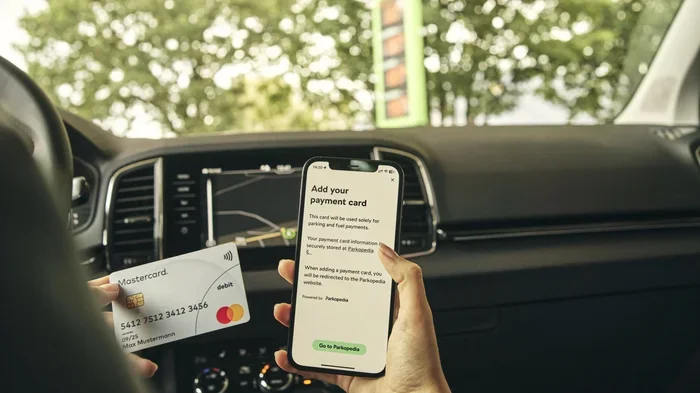
Even if your lender does not accept credit cards, you can still use a third-party service. These services act as a middleman. You pay them with your credit card, and they send the money to your lender as a bank transfer or check. It is a clever workaround. But it comes with a catch. These services charge a convenience fee. That fee can range from 2.5% to 3.5% of the payment amount.
Let us say your monthly car payment is $500. A third-party service might charge $12.50 to $17.50 per transaction. That is not cheap. But for some people, the benefits outweigh the cost. You might want to earn credit card reward points. Or you might need to build credit history. Or you might just not have enough money in your bank account right now. Whatever the reason, it is important to understand the full picture before you go this route.
Popular Third-Party Services for Car Payments
A few services let you pay bills with a credit card even when the biller does not accept it directly. Here are the most common ones.
- Plastiq: This is one of the most well-known bill payment services. It accepts credit cards and sends payments as ACH or checks. The fee is usually around 2.85% per transaction.
- Pay1040: This service is geared toward tax payments, but some people use it for other bills. The fees can vary.
- Charge Cards: Some prepaid Visa or Mastercard gift cards can be used for online payments. These are not the same as credit cards, but they work similarly.
Before you use any third-party service, read the fine print. Check the fees, the processing time, and any limits on payment amounts. You also want to make sure the service is reputable. Look for reviews and check if they are registered with the Better Business Bureau. You do not want to deal with a scam or a service that holds your payment.
The Pros and Cons of Using a Credit Card for Car Payments
Using a credit card to pay your car loan is not all bad. There are real benefits. But there are also real risks. Let us lay them out clearly so you can decide for yourself.
The Pros
- Reward points: If you have a rewards credit card, paying your car loan with it can earn you cash back, travel points, or miles. On a $6,000 annual payment, even 2% cash back gives you $120 back.
- Building credit: Making regular credit card payments on time can help build your credit history. This is especially helpful if you are new to credit.
- Intro 0% APR offers: Some credit cards offer 0% APR for the first 12 to 18 months. If you can pay off the balance before the intro period ends, you avoid interest entirely.
- Convenience: Credit cards are easy to use. You can pay online, track your spending, and get fraud protection.
The Cons
- Convenience fees: Third-party services charge 2.5% to 3.5% per payment. That can cost $10 to $20 or more each month.
- High interest rates: Credit card APRs are usually between 15% and 29%. If you carry a balance, the interest can quickly outweigh any rewards.
- Credit utilization spike: Putting a large car payment on your credit card raises your credit utilization ratio. This can temporarily lower your credit score.
- Debt cycle risk: Using credit to pay debt can create a dangerous cycle. It is easy to get trapped in a loop of borrowing to cover borrowing.
- No direct option from most lenders: You have to go through a third party, which adds complexity and cost.
Is It Worth It? A Quick Math Check
Let us do a quick example. Say your monthly car payment is $400. You use a third-party service with a 2.85% fee. That is $11.40 per month, or $136.80 per year. Now say your credit card earns 2% cash back. On $4,800 in annual payments, that is $96 back. You are still $40.80 in the hole. The math does not always work in your favor. You need to weigh the rewards against the fees carefully.
How Credit Card Payments Affect Your Credit Score
Using a credit card to pay your car loan can have a real impact on your credit score. This is something many people overlook. Your credit score is based on several factors. Payment history, credit utilization, and credit mix are all important. A large credit card charge can affect more than one of these factors at once.
Credit utilization is the percentage of your available credit that you are using. If your credit card has a $5,000 limit and you charge a $400 car payment, you are using 8% of your available credit. That is not terrible. But if you charge several months of payments at once, your utilization can spike. A utilization rate above 30% can hurt your credit score. Keeping it below 10% is ideal.
Payment history is another factor. If you pay your credit card bill on time, that helps your score. But if you miss a payment because the car payment charged was too high, it can do real damage. Late payments stay on your credit report for seven years. That is a long time. So if you go this route, set up autopay on your credit card to make sure you never miss a due date.
What About the Debt-to-Income Ratio?
Your debt-to-income ratio is another important number. It measures how much of your monthly income goes toward debt payments. Lenders look at this when you apply for a mortgage or another loan. If you put a large car payment on a credit card, it can increase your monthly debt. That can make it harder to qualify for other forms of credit in the future. Keep this in mind if you are planning a big purchase like a home anytime soon.
Smarter Alternatives to Paying Your Car Payment With a Credit Card
If the credit card route feels too risky or too expensive, you have other options. These alternatives can help you manage your car payment without the extra fees and risks. Let us look at the best ones.
Set Up Autopay From Your Bank Account
The simplest and most reliable option is autopay. Most lenders offer automatic payments from your bank account. You link your checking or savings account, and the payment is pulled each month. Autopay often comes with a perk too. Many lenders offer a 0.25% to 0.50% interest rate discount for enrolling. Over the life of a loan, that can save you hundreds of dollars. Plus, you never miss a payment. That is a win for your credit score and your peace of mind.
Use a Balance Transfer Credit Card
If you are struggling to make your car payment, a balance transfer might help. Some credit cards offer 0% APR on balance transfers for 12 to 18 months. You transfer your car loan balance to the card and pay it off interest-free during the intro period. This works best if you are confident you can pay off the balance before the intro period ends. After that, the regular APR kicks in, and it can be very high. Use this strategy only if you have a solid plan to pay it off.
Ask Your Lender About a Payment Plan Adjustment
If you are having trouble making your monthly car payment, talk to your lender. Many lenders offer hardship programs. These can include temporary payment reductions, loan extensions, or skipped payments. It never hurts to ask. Your lender would rather work with you than deal with a missed payment or a default. Call their customer service line and explain your situation honestly. You might be surprised by what they can offer.
Refinance Your Auto Loan
If your current loan has a high interest rate, refinancing might be a great move. Refinancing means you take out a new loan with better terms to pay off your old one. This can lower your monthly payment and save you money over the life of the loan. Your credit score, income, and current loan terms all play a role in the new rate. It is worth checking with multiple lenders to compare offers. Even a small rate reduction can add up to big savings over time.
Sell the Car and Downgrade
If your car payment is just too much, it might be time to consider selling the vehicle. A more affordable car means a lower payment. You might even have equity to put toward the new purchase. This is a bigger move, but it can free up significant cash each month. Think about your budget, your needs, and your long-term goals before making this decision. It is not the right choice for everyone, but for some people, it is the best path forward.
Common Mistakes People Make When Trying to Pay a Car Payment With a Credit Card
When people try to use a credit card for their car payment, they often make a few common mistakes. Being aware of these pitfalls can save you money and stress.
- Ignoring the convenience fee: People focus on the rewards and forget about the fee. The fee can erase any benefit you would have earned. Always do the math first.
- Carrying a balance: Some people charge the car payment and do not pay the credit card bill in full. The interest charges quickly dwarf any rewards. This is the biggest mistake you can make.
- Not checking your lender’s policy: Assuming your lender accepts credit cards can lead to a failed payment. Always verify first by calling or checking your online portal.
- Overlooking the credit score impact: A large credit card charge can spike your utilization ratio. That can drop your credit score by several points. Be mindful of this, especially if you are planning a big loan application soon.
- Using the wrong credit card: Not all credit cards are equal. Some offer better rewards for everyday spending. Others have higher fees or lower limits. Pick the card that makes the most sense for your situation.
Expert Insight: What Financial Advisors Say
Most financial advisors caution against using credit cards for fixed monthly bills like car payments. The convenience fee and high interest rates usually make it a losing proposition. However, they acknowledge that it can make sense in specific situations. If you have a 0% intro APR card and a plan to pay it off quickly, it can work. If you are trying to build credit and have no other options, it can also make sense. The key is to have a clear plan and understand the full cost before you start.
Key Takeaways
- Direct credit card payments are rare: Most lenders and loan servicers do not accept credit cards for car payments.
- Third-party services fill the gap: Platforms like Plastiq let you pay with a credit card, but they charge a convenience fee.
- Balance transfers can work: A 0% APR credit card can help you manage payments temporarily, but watch the timeline.
- Fees can eat your rewards: The convenience fee often cancels out any credit card reward points you earn.
- Credit score impact matters: Large credit card payments can spike your credit utilization ratio.
- Alternatives exist: Personal loans, autopay discounts, and lender hardship programs may be better options.
Frequently Asked Questions
Can any lender accept a credit card for a car payment?
Most lenders do not accept credit cards directly. A few smaller lenders or credit unions might, but they are the exception. You need to check with your specific lender. Look at your loan agreement or log into your online portal to see what payment methods are available. If credit cards are not listed, they likely do not accept them.
What is the typical convenience fee for paying a car payment with a credit card?
Third-party services usually charge between 2.5% and 3.5% of the payment amount. On a $400 monthly payment, that is $10 to $14 extra per month. These fees can add up over time. Always calculate the total cost before using a third-party service to make sure it makes sense for your budget.
Will paying my car loan with a credit card hurt my credit score?
It can, if you are not careful. Putting a large charge on your credit card raises your credit utilization ratio. A high utilization ratio can lower your credit score. Also, if you miss a payment on your credit card, that stays on your credit report for seven years. Set up autopay on your credit card to avoid this risk.
Is it better to use a balance transfer card for my car payment?
A balance transfer card can be helpful if you have a 0% intro APR offer and a plan to pay off the balance before it ends. The key is discipline. If you carry a balance after the intro period, the regular APR will apply, and it can be very high. Only use this strategy if you are confident in your ability to pay it off on time.
Can I use a credit card for my car payment if I am in a financial hardship?
Using a credit card in a hardship situation is risky. The convenience fees and high interest rates can make your financial situation worse. Instead, contact your lender directly. Many lenders offer hardship programs, payment extensions, or temporary relief options. These are almost always better than adding credit card debt on top of your existing loan.
What is the best way to pay my car payment without stress?
The best way is to set up autopay from your bank account. It is free, reliable, and often comes with an interest rate discount. You never miss a payment, and it protects your credit score. If autopay is not an option, set up calendar reminders and pay a few days early to avoid any issues. Staying on top of your payment schedule is the single most important thing you can do for your financial health.
Final Thoughts: Can I Pay My Car Payment With a Credit Card Directly?
The bottom line is that paying your car payment with a credit card directly is not the norm. Most lenders do not allow it. But you are not completely stuck. Third-party services and balance transfer cards offer workarounds. The question is whether those workarounds make financial sense for you. In most cases, the fees and risks outweigh the rewards. Autopay from a bank account is still the best option for most people. It is free, reliable, and often comes with a discount.
If you do decide to use a credit card, go in with your eyes wide open. Know the fees. Know the risks. Have a plan to pay off the balance. Do not let convenience turn into a costly habit. Your financial health matters more than any reward points. Take a moment to review your options. Pick the path that keeps your budget strong and your stress low. You have got this, and your car payment does not have to be a headache.
Frequently Asked Questions
What is Can I Pay My Car Payment With a Credit Card??
Can I Pay My Car Payment With a Credit Card? is an important topic with many practical applications.