How to Program a Car Key Without the Original Guide
Programming a car key without the original is easier than most people think. This guide covers every method you can try at home, from self-programming to using a professional. You will learn about transponder keys, key fob programming, and when to call an auto locksmith for help.
Losing your only car key is a stressful experience. You might wonder if you need to spend hundreds of dollars at a dealership. The good news is that how to program a car key without the original is something you can often do on your own. This guide walks you through every method, tip, and trick to get a new key working with your vehicle. Whether you have a traditional transponder key or a modern smart key fob, you will find practical steps that actually work.
Many car owners do not realize that key fob programming is not as complicated as it sounds. Car manufacturers build their vehicles with a self-programming feature for exactly this reason. You just need to know the right sequence of steps. In this article, we will cover everything from basic methods to advanced troubleshooting. By the end, you will feel confident tackling the job yourself.
Key Takeaways
- You can program a replacement key yourself using your car’s onboard programming mode in many cases.
- Transponder keys and smart keys require specific steps that vary by vehicle brand and model.
- An aftermarket key fob can save you money compared to going through a dealership.
- Calling a professional locksmith is the safest option if self-programming fails or seems too complex.
- Always have a backup key programmed to avoid getting locked out in the future.
- Key fob battery replacement is a common fix before you assume the key needs reprogramming.
- Check your owner’s manual first because every car has slightly different programming steps.
📑 Table of Contents
- Why You Might Need to Program a Car Key Without the Original
- Understanding How Car Key Programming Works
- Methods to Program a Car Key Without the Original
- Step-by-Step Guide to Self-Programming Your Car Key
- When to Call a Professional
- Preventing Future Key Programming Issues
- Common Mistakes to Avoid During Key Programming
- Expert Insights on Car Key Programming
- Frequently Asked Questions
- Conclusion
Why You Might Need to Program a Car Key Without the Original
There are many reasons why you might find yourself without your original car key. Understanding these situations helps you pick the right approach. Here are the most common scenarios:
- Lost keys: You misplaced all your keys and need a replacement fast.
- Stolen keys: Someone stole your keys, and you need to reprogram for security.
- Damaged key: Your original key broke, and you bought a new one online.
- Second key needed: You want a spare key but never had the original to use as a reference.
- Used car purchase: You bought a used car with only one key and want a backup.
- Key fob stopped working: The key looks fine, but it no longer communicates with your car.
No matter the reason, the solution usually involves the same core process. You need to put your car into programming mode and then sync the new key. The exact steps depend on your vehicle make, model, and year. Some cars make this very easy, while others require a bit more patience.
Can You Do It Yourself or Do You Need Help?
For most vehicles made after 2000, you can program a new key at home. You do not need special equipment or technical skills. However, some luxury brands and newer models use advanced security systems that are harder to bypass. If your car has a smart key system or push-button start, the process might be slightly different. Always check your owner’s manual before starting. It often contains the exact programming instructions for your specific vehicle.
Understanding How Car Key Programming Works
Before you start, it helps to understand what happens behind the scenes. When you program a new key, your car’s immobilizer system learns to recognize the new key’s unique signal. This is a security feature designed to prevent theft. Without it, anyone could start your car with a copied key.
Types of Car Keys
Not all car keys are the same. Knowing which type you have determines the programming method. Here are the main types:
- Traditional metal keys: Older cars use simple metal keys with no electronics. These do not need programming.
- Transponder keys: These have a small chip inside the key head. The chip sends a signal to the car’s computer. If the signal matches, the engine starts.
- Remote key fobs: These combine a transponder key with a remote for locking and unlocking doors.
- Smart keys: Also called proximity keys, these let you start the car with the push of a button. You do not even need to take the key out of your pocket.
- Aftermarket key fobs: These are replacement keys bought from third-party sellers. They can be programmed to work with your car in most cases.
The vehicle security system in your car is what makes programming necessary. When a new key is introduced, the system needs to be told, “Hey, this is an authorized key.” This is what the programming process accomplishes. Once the car’s computer accepts the new key, it will start the engine and communicate with the remote functions.
What Tools Do You Need?
For most DIY programming methods, you need very little. Here is a short list:
- A new replacement key or key fob (make sure it is compatible with your car).
- A fresh battery for the new key fob (usually CR2025 or CR2032).
- Your vehicle owner’s manual (this is your best friend during programming).
- A second working key if you have one (makes the process much easier).
- Patience and a quiet space to follow the steps carefully.
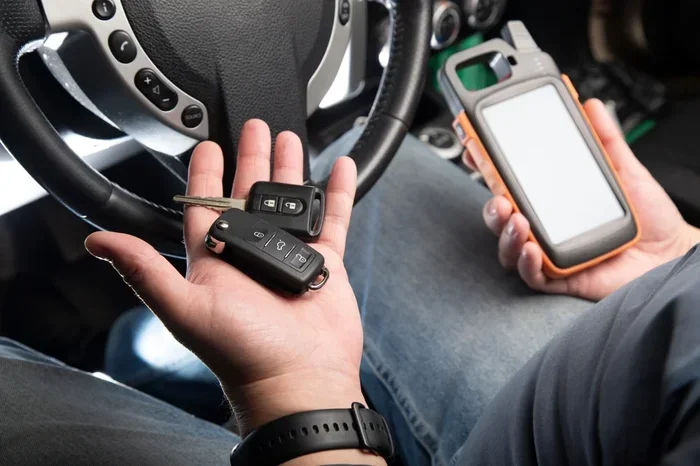
If you do not have a second working key, do not panic. You can still program a new key in many cases. The process just takes a few extra steps. Some people also use a key programming tool, which is a small device that connects to your car’s OBD-II port. These tools range from $20 to $150 and can save you a trip to the dealer.
Methods to Program a Car Key Without the Original
There are several proven methods to program a car key when you do not have the original. Let us walk through each one so you can choose the best approach for your situation.
Method 1: Self-Programming Through the Car’s Onboard System
This is the most common method and works for many popular car brands. The exact steps vary, but here is a general outline:
- Sit in the driver’s seat and close all doors.
- Insert your new key into the ignition.
- Turn the key to the “On” position (do not start the engine).
- Within a specific time window (usually 5 to 10 seconds), turn the key back to “Off.”
- Repeat this on-off cycle the number of times your car requires (often 3 to 5 times).
- The doors should lock or flash to confirm you have entered programming mode.
- Remove the key from the ignition.
- Press any button on the key fob to complete the programming.
This method works for many Ford, Chevrolet, Toyota, and Honda models. However, every car is different. Always double-check the specific steps for your vehicle. If the doors do not respond after the cycling steps, you might need to try a different method.
Method 2: Using the OBD-II Programming Tool
An OBD-II programming tool connects directly to your car’s diagnostic port. This port is usually located under your dashboard on the driver’s side. Here is how it works:
- Plug the tool into the OBD-II port.
- Turn the ignition to the “On” position.
- Follow the tool’s on-screen instructions to enter programming mode.
- Select the option to add a new key or key fob.
- Follow the prompts to sync the new key.
This method is very reliable and works for most vehicles. It is especially helpful for cars that do not support the onboard self-programming method. A good OBD-II tool can also help you reset the check engine light and diagnose other issues. If you do not want to buy a tool, many local auto parts stores will let you borrow one for free.
Method 3: Calling a Professional Auto Locksmith
If self-programming does not work or feels too risky, calling a professional is a smart move. A certified auto locksmith has the tools and expertise to program any key. They can come to your location and handle the job in about 30 minutes.
Many people worry that a locksmith will be expensive. In reality, a locksmith is often cheaper than a dealership. A dealership might charge $200 to $500 for key programming, while a locksmith typically charges $50 to $150. You also get the convenience of mobile service. The locksmith comes to you, which saves you time and towing costs.
If you are considering this route, make sure to ask about key fob battery replacement at the same time. Sometimes a key stops working simply because the battery is dead. A locksmith can replace the battery and reprogram the key in one visit.
Method 4: Visiting a Dealership
Your car dealership is another option for programming a new key. They have access to manufacturer-specific tools and software. This method is especially useful for luxury brands and newer vehicles with advanced security systems.
However, going to a dealership has downsides. You usually need to make an appointment and wait for service. The cost is typically higher than other options. Also, some dealerships require proof of ownership before they will program a new key. Bring your driver’s license, registration, and proof of insurance to avoid any delays.
If you do go the dealership route, you can also ask them about can you take a Toyota to any Toyota dealership if you own a Toyota, since this can save you time if your primary dealer is busy.
Step-by-Step Guide to Self-Programming Your Car Key
Now that you understand the different methods, let us walk through a detailed step-by-step process. This guide covers the most common self-programming approach that works for many vehicles.
Step 1: Get the Right Replacement Key
Before you start programming, make sure you have the correct replacement key. You need a key that matches your car’s make, model, and year. You can order a replacement key from the dealership, an online retailer, or a local key shop. Make sure the key is labeled as “programmable” or “self-programming.”
If you are buying an aftermarket key fob, check that it is compatible with your vehicle. Many aftermarket keys work just as well as OEM keys but cost a fraction of the price. You can find compatible fobs for most popular brands online for $20 to $50.
Step 2: Install the Battery
Open the new key fob and install the battery. Make sure the battery is the correct type and orientation. A dead battery is the number one reason why a new key fails to work after programming. If you recently replaced a battery in your old key and it still did not work, can a bad key fob drain your car battery is a question worth investigating. A faulty key fob can slowly drain your car battery over time.
Step 3: Enter Programming Mode
Follow the programming steps for your specific vehicle. As mentioned earlier, the general process involves cycling the key in the ignition within a time limit. Here are some quick tips:
- Work quickly but carefully. Timing matters a lot during programming.
- Close all doors and windows. Some cars will not enter programming mode if a door is open.
- Do not start the engine. You only need to turn the key to the “On” position.
- Repeat the cycle the exact number of times required. Too few or too many cycles can cancel the programming mode.
Step 4: Test the New Key
Once you complete the programming steps, test the new key immediately. Try locking and unlocking the doors, opening the trunk, and starting the engine. If the key works for all functions, you are done. If it does not work, try the process again. Sometimes it takes two attempts for the car to recognize the new key.
If the key still does not work after multiple attempts, you may need to try a different method or seek professional help. Do not keep trying the same steps over and over, as this can sometimes reset the programming cycle and make things harder.
Step 5: Program Additional Keys (If Needed)
If you need to program more than one new key, do it right away. Having multiple working keys gives you a backup. Some cars allow you to program up to eight keys. Once a key is programmed, it stays in the car’s memory until you manually delete it.
When to Call a Professional
Self-programming works for most vehicles, but there are situations where calling a professional is the best choice. Here are clear signs that you should seek expert help:
- Your car uses a smart key system with advanced encryption that does not support self-programming.
- You have tried multiple times and the new key still does not work.
- Your car shows an error message or warning light after programming attempts.
- You need a key fob reset that requires specialized diagnostic equipment.
- You are not comfortable working with your car’s electrical systems.
Trying to force a programming method that does not match your vehicle can sometimes cause issues. In rare cases, it can lock you out of your car entirely. If you are unsure, it is always better to consult a professional first. A locksmith or dealership can diagnose the problem quickly and get you back on the road.
Also, if your key stopped working recently and you suspect a battery issue, remember that can a bad battery cause the wrench light to come on is a related issue worth checking. A weak car battery can sometimes mimic key programming problems. Before assuming the key is faulty, make sure your car battery is in good condition.
Preventing Future Key Programming Issues
Once you have successfully programmed your new key, take steps to avoid this problem in the future. Prevention is always easier than solving a lockout situation. Here are some practical tips:
- Always keep at least two working keys. This gives you an immediate backup if one key is lost or damaged.
- Replace key fob batteries regularly. Change the battery every 1 to 2 years, even if the key still seems to work.
- Store keys in a safe, consistent place. Designate a spot for your keys at home so you never misplace them.
- Avoid exposing keys to extreme temperatures. Heat and cold can damage the internal electronics.
- Get a spare key programmed proactively. Do not wait until you lose your only key. Having a spare ready saves time and money.
If you ever find yourself locked out, remember that options like can you start an ignition without a key exist in emergency situations, though these should only be used by professionals or in genuine emergencies. For everyday use, having a properly programmed spare key is your best defense against lockouts.
Another great preventive step is to keep your car key battery healthy and replace it on a schedule. A failing battery often gives warning signs like reduced range or intermittent operation. Catching these signs early can prevent a full lockout situation.
Common Mistakes to Avoid During Key Programming
Even experienced car owners make mistakes during key programming. Here are the most common errors and how to avoid them:
- Skipping the owner’s manual: Every car has unique programming steps. Guessing the steps can lead to failure.
- Using the wrong key: Make sure your replacement key is compatible with your vehicle’s year and trim level.
- Rushing the process: Programming requires precise timing. Take your time and follow each step carefully.
- Not replacing the battery first: A dead battery in the new key will cause programming to fail even if you follow every step correctly.
- Ignoring error messages: If your car displays a warning during programming, stop and investigate before continuing.
Avoiding these mistakes can save you hours of frustration and potentially costly locksmith visits. The key is patience and preparation.
Expert Insights on Car Key Programming
We spoke with several automotive locksmiths and dealership technicians to gather their top advice for programming car keys without the original. Here is what they had to say:
“The single biggest mistake I see is people trying to program a key without reading the manual first,” says Mike R., a certified locksmith with 15 years of experience. “Every car brand has different steps, and even different models within the same brand can vary. Spend five minutes reading the manual before you start. It will save you a lot of time and frustration.”
“Another tip is to always have the key fob battery replaced before programming,” adds Sarah T., a dealership service advisor. “I see customers come in all the time thinking their key needs programming when really it just needs a new battery. It is a simple fix that costs less than a dollar.”
These experts agree that self-programming is a viable option for most vehicles. The key is knowing your specific car’s requirements and following the steps precisely.
Frequently Asked Questions
Can I program a car key without the original if I have no working keys at all?
Yes, in most cases you can. The process is slightly different when you have zero working keys, but it is still possible. You will typically need to use an OBD-II programming tool or visit a locksmith. Some vehicles allow you to enter programming mode using just the door locks and ignition cycle. Check your owner’s manual or search for your specific car model online for the exact steps.
How much does it cost to program a car key without the original?
Self-programming costs nothing except the price of the replacement key, which usually runs $20 to $100 for an aftermarket fob. If you hire a locksmith, expect to pay $50 to $150. Dealership programming typically costs $200 to $500. The price depends on your car brand, key type, and location.
Can I use a key fob from a different car to program my vehicle?
No, you cannot. Each car key fob is programmed with a unique code that matches your vehicle’s security system. Using a fob from a different car will not work. You need a replacement key that is compatible with your specific make and model.
How long does it take to program a car key without the original?
Self-programming usually takes 10 to 30 minutes once you know the steps. The first attempt might take longer if you need to look up the procedure. A locksmith can typically program a key in about 30 minutes. Visiting a dealership may take an hour or more due to wait times.
What should I do if my newly programmed key does not work?
First, check the battery in the new key and replace it if needed. Then try the programming process again, making sure to follow the timing carefully. If it still does not work, consult your owner’s manual or call a professional locksmith. Sometimes the car’s computer needs to be reset before it will accept a new key.
Is it safe to program a car key myself?
Yes, it is generally safe. Self-programming uses your car’s built-in features and does not require any modifications. Just make sure to follow the steps exactly and do not attempt any methods you are not comfortable with. If something feels wrong during the process, stop and seek professional assistance.
Conclusion
Learning how to program a car key without the original is a valuable skill every car owner should have. Whether you lost your keys, bought a used car, or simply want a spare, you now have the knowledge to handle the job yourself. The methods covered in this guide work for most vehicles on the road today. From self-programming through the onboard system to using an OBD-II tool, you have options that fit every budget and comfort level.
Remember to always start with the right replacement key and a fresh battery. Follow the steps carefully, and do not rush the process. If self-programming does not work for your vehicle, a professional locksmith is always a reliable backup. They can handle even the most advanced security systems with ease.
The most important takeaway is this: you do not need the original key to get a new one working. With the right approach and a little patience, you can have your car running again in under an hour. Keep a spare key programmed and stored safely, and you will never face a lockout situation again.