What Is the Difference Between Dodge Charger and Challenger
The Dodge Charger and Dodge Challenger are two iconic American muscle cars that share a platform but deliver very different experiences. The Charger is a sporty four-door sedan built for practicality and daily driving, while the Challenger is a classic two-door coupe built for raw power and retro style. This guide breaks down every major difference to help you choose the right one.
The debate between the Dodge Charger and the Dodge Challenger has been going on among car enthusiasts for years. These two models come from the same manufacturer and share some DNA, but they are built for very different kinds of drivers. If you are shopping for a new Dodge and cannot decide between these two icons, you have come to the right place. In this article, we will break down every major difference so you can make a confident choice.
Comparing the Dodge Charger and Challenger is a lot like comparing the Mazda CX-5 and CX-30. Both pairs share a platform and brand identity, but they target different buyers with different priorities. Both the Charger and the Challenger belong to the American muscle car family. They deliver big power, bold styling, and an unforgettable driving experience. But their differences go deeper than just looks. From body style to engine options, from interior space to price, each model has its own strengths. Let us dive into what sets them apart.
Key Takeaways
- Body Style: The Charger is a four-door sedan, while the Challenger is a two-door coupe.
- Performance: Both offer powerful engines, but the Challenger has more extreme high-performance options.
- Price: The Charger starts at a slightly lower price point than the Challenger.
- Interior Space: The Charger offers more rear-seat room and a larger trunk.
- Design: The Challenger has a retro muscle car look, while the Charger features a modern sporty aesthetic.
- Driving Feel: The Challenger feels more raw and nostalgic, while the Charger is more refined for everyday use.
📑 Table of Contents
Design and Exterior Differences
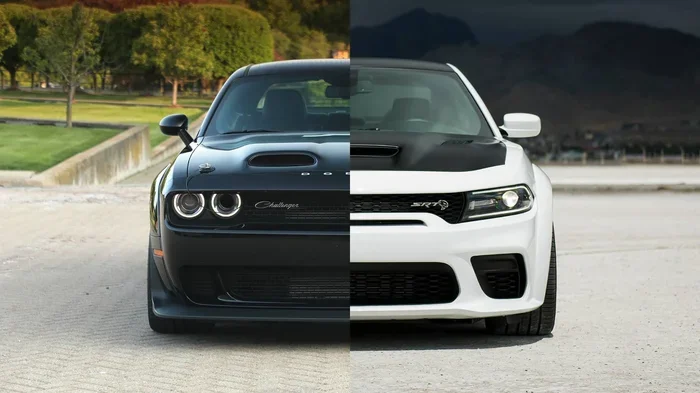
The most obvious difference between the Dodge Charger and the Dodge Challenger is their shape. The Charger is a four-door sedan, which means it has front and rear doors and seating for five passengers. The Challenger is a two-door coupe with a more compact footprint. This fundamental difference affects everything from how you use the car to how it looks on the road.
Body Style and Shape
The Charger features a long, sleek sedan profile. Its lines are smooth and modern, giving it a sophisticated look that works well for both daily driving and weekend cruises. The four-door design makes it easy to get in and out, and the trunk provides real-world cargo space. Many people choose the Charger because it looks fast but still feels practical. You can load groceries, luggage, and sports equipment without a second thought.
The Challenger, on the other hand, has a wide, aggressive stance. Its short front overhang and long hood give it the classic muscle car silhouette that fans love. The two-door coupe design means you are looking at a more compact vehicle overall. The wide rear fenders and flared wheel arches give it a muscular look that commands attention. If you want a car that turns heads at every stoplight, the Challenger delivers in spades.
Styling Details and Badging
Dodge gives both models distinct styling cues that set them apart. The Charger features a bold front grille with aggressive headlights that give it a commanding presence on the road. The rear lights are sleek and modern, matching the sedan theme. Badging on the Charger emphasizes its sporty sedan identity. It looks like a car that means business.
The Challenger leans into its retro heritage. It draws inspiration from the classic muscle cars of the 1960s and 1970s. The rounder headlights, wider body, and distinctive rear spoiler all contribute to its nostalgic appeal. The Challenger looks like it came straight out of a classic car show, even though it is a thoroughly modern machine under the skin. If you are comparing the Dodge Charger and Challenger purely from an aesthetics standpoint, the Challenger wins for those who love the old-school muscle car look. Both models offer a range of wheel options, body colors, and performance packages. You can customize either car to reflect your personal style. Whether you prefer the Charger’s elegant sedan lines or the Challenger’s aggressive coupe stance, Dodge gives you plenty of options to make the car your own.
Engine and Performance Comparison
When it comes to power, both the Dodge Charger and the Dodge Challenger bring serious muscle to the table. They share some engine options, but there are important differences in tuning and available performance packages. Let us look at what each model offers under the hood.
Engine Options
The base Charger comes with a 3.6-liter V6 engine that produces around 292 horsepower. This is plenty of power for daily driving and highway merging. It is smooth, reliable, and more than adequate for most driving situations. For those who want more, the Charger offers a 5.7-liter HEMI V8 that delivers 370 horsepower. This engine provides the classic American V8 rumble and strong acceleration.
The top-tier Charger SRT Hellcat pushes the envelope with a supercharged 6.2-liter V8 making 717 horsepower. This is one of the most powerful sedans ever made. The Challenger follows a similar path but with some differences. The base model also uses a 3.6-liter V6 producing 292 horsepower. The mid-range 5.7-liter HEMI V8 is available with 375 horsepower, a slight bump over the Charger.
The big difference comes in the high-performance trims. The Challenger SRT Hellcat also makes 717 horsepower, but the Challenger SRT Super Stock takes it even further with 807 horsepower. The Challenger has a slight edge when it comes to the most extreme performance numbers. This makes the Challenger the choice for enthusiasts who want the absolute maximum from their muscle car.
Horsepower, Torque, and Driving Feel
Horsepower numbers tell only part of the story. The Charger feels more balanced and composed thanks to its sedan platform. It handles well for a large car and feels stable at highway speeds. The suspension is tuned for comfort and control, making it a great car for long road trips.
The Challenger, with its shorter wheelbase and lighter rear end, feels more nimble in some ways. It has a raw, visceral driving feel that many enthusiasts prefer. Every press of the accelerator feels more immediate and exciting. Both models come standard with rear-wheel drive, which is typical for American muscle cars. All-wheel drive is available on both, which helps with traction in poor weather conditions. The driving experience on a curvy back road will feel different in each car. The Charger feels more planted and secure. The Challenger feels more playful and loose, with a tendency to break traction more eagerly. Both are thrilling in their own way.
Fuel Capacity and Range
Fuel tank size matters if you plan on taking long road trips. The Dodge Charger typically holds around 18.5 gallons, while the Challenger holds about 18.5 gallons as well. However, fuel economy varies depending on the engine you choose. If you are curious about how much fuel your car can hold in general, you can check out this guide on how many gallons your car tank holds. Both models will give you a decent range on a full tank, but the V8 engines will drink more fuel, especially under hard acceleration.
For daily commuting, the V6 engines offer better fuel economy. If you choose a V8 model, expect to visit the gas station more often. Both cars reward you with an incredible driving experience that makes the extra fuel cost worth it for many enthusiasts. The sound of the V8 alone is worth the price of admission.
Interior and Technology Features
Step inside either the Dodge Charger or the Dodge Challenger, and you will find a cabin designed with the driver in mind. Both models have received updates over the years, and the latest versions offer modern technology and comfortable seating. However, there are some differences worth noting.
Cabin Space and Practicality
The Charger, being a four-door sedan, offers more interior space. The rear seats are more comfortable and have more legroom. If you regularly carry passengers or need to transport more than two people, the Charger is the better choice. The trunk is also larger and more practical for groceries, luggage, or other everyday items. Families will appreciate the extra room the Charger provides.
The Challenger has less rear seat space, and the two-door design means accessing the back seats requires folding down the front seats. The trunk is smaller but still usable. For a couple or a single driver, the Challenger’s interior is perfectly adequate. But if you need a more family-friendly setup, the Charger wins this category. The front seats in both cars are comfortable and supportive, with available leather upholstery and heating and ventilation.
Infotainment and Technology
Both models come with Dodge’s Uconnect infotainment system, which features a large touchscreen display. You get Apple CarPlay, Android Auto, and a premium audio system as standard on most trims. The system is intuitive and responsive, making it easy to navigate, make calls, and stream music on the go.
Dodge also offers available features like a head-up display, wireless phone charging, and a premium Beats audio system. Remote start capability is available on both models, allowing you to start your car from a distance before getting in. This is especially useful in cold weather or hot summer days. If you are interested in remote start features across different brands, you can learn more about how remote start systems work with Toyota vehicles here. Both the Charger and Challenger also offer available adaptive cruise control, lane-keep assist, and automatic emergency braking for added safety on the road.
Safety Features
Safety is a priority in both the Charger and the Challenger. Standard safety features include forward collision warning, adaptive cruise control, blind-spot monitoring, and rear cross-path detection. Both models have earned solid safety ratings from the NHTSA. The available safety packages add features like lane-keep assist and automatic emergency braking, giving you extra peace of mind on every drive. Dodge has also included advanced airbags and stability control as standard equipment across the lineup.
Price and Available Trims
Price is an important factor when choosing between the Dodge Charger and the Dodge Challenger. Both models offer a range of trims to fit different budgets, from entry-level to extreme performance machines. Let us break down what each model offers at each price point.
Starting Prices
The Dodge Charger generally starts at a slightly lower price than the Challenger. The base Charger SE begins around $34,000, while the base Challenger SE starts around $36,000. Of course, prices rise quickly when you move up to the R/T, Scat Pack, and Hellcat trims. A Charger SRT Hellcat can cost over $80,000, and a Challenger SRT Super Stock can exceed $100,000.
Keep in mind that prices vary by region, dealer incentives, and current model year. Always check with your local Dodge dealer for the most accurate pricing. You can also explore leasing options if you want to drive one of these powerful machines without the full upfront cost. Leasing can be a smart way to experience a Hellcat without the long-term commitment.
Trim Levels and Options
The Charger offers trims including SE, SXT, R/T, Scat Pack, and SRT Hellcat. Each trim adds more power, features, and styling elements. The R/T trim brings the 5.7-liter HEMI V8, while the Scat Pack adds even more performance upgrades. The Hellcat trims are the ultimate expression of Dodge performance.
The Challenger offers similar trim levels: SE, R/T, Scat Pack, and SRT Hellcat, along with the Super Stock and Demon variants for extreme performance. The Challenger has a slight advantage in the number of special edition models available. Dodge has released limited-edition Challenger variants that celebrate its racing heritage and classic muscle car roots. These special editions can be highly collectible and add to the car’s appeal for enthusiasts. Models like the Challenger T/A and the Challenger Shaker are favorites among collectors.
When comparing the two, think about what you value most. If you want a more affordable entry point into the Dodge performance lineup, the Charger may be the better starting point. If you are willing to pay a premium for the classic coupe look and potentially higher-performance options, the Challenger is worth the investment. Both cars offer excellent value for what they deliver.
Which One Should You Choose?
Choosing between the Dodge Charger and the Dodge Challenger comes down to your priorities and how you plan to use the car. Both are excellent vehicles, but they serve different needs and preferences. Think carefully about your lifestyle and what you need from a car before making your decision.
If you need a car that can handle daily driving, carpooling, and road trips with ease, the Charger is the smarter choice. Its four-door design, larger cabin, and practical trunk make it a versatile daily driver that still delivers thrilling performance when you want it. The Charger also tends to have a slightly lower starting price, which is a nice bonus for budget-conscious buyers. Parents who need to shuttle kids around will also appreciate the extra space and convenience.
If you want a car that is all about the driving experience and looks, the Challenger is hard to beat. Its classic coupe design, aggressive stance, and raw power delivery make every drive feel special. The Challenger is the car you will want to take to car shows, cruise nights, and weekend drives. It is less practical but far more emotionally engaging. The sound of the exhaust, the feel of the shifter, and the stare you get from passersby all add to the experience.
Think about your lifestyle. Do you need back seats and cargo space? Go with the Charger. Do you want maximum style and driving thrill? Choose the Challenger. Both cars will give you an unforgettable experience behind the wheel. The best way to decide is to sit in both, take them for a test drive, and trust your gut.
Final Verdict
The Dodge Charger and Dodge Challenger are both outstanding American muscle cars, but they are built for different purposes. The Charger is the practical choice for those who want performance without sacrificing everyday usability. It is the muscle car that can do it all. The Challenger is the enthusiast’s pick for those who want style, nostalgia, and maximum driving excitement. It is the car you buy with your heart, not your spreadsheet.
Neither car is objectively better than the other. They simply serve different needs and different lifestyles. The best way to decide is to test drive both models back to back. Sit in each one, feel the seats, turn the key, and see which one speaks to you. When you find the one that makes your heart race, you will know it is the right choice.
Whichever model you choose, you are getting a piece of American automotive history. The Dodge Charger and Challenger represent the best of what muscle cars can be. They are bold, powerful, and full of character. Drive safe, drive proud, and enjoy every mile of the journey.
Frequently Asked Questions
Is the Dodge Charger a sedan or a coupe?
The Dodge Charger is a four-door sedan. It offers seating for five passengers and a practical trunk, making it a versatile choice for daily driving and long road trips alike. Its sedan format gives it an edge in practicality.
Is the Dodge Challenger a good daily driver?
The Challenger can be a daily driver, but it is less practical than the Charger. The two-door design and smaller cabin make it better suited for drivers who prioritize style and driving excitement over everyday convenience.
Which Dodge has more horsepower, the Charger or Challenger?
At the top of the lineup, both the Charger SRT Hellcat and Challenger SRT Hellcat produce 717 horsepower. However, the Challenger SRT Super Stock pushes out 807 horsepower, giving it the edge in maximum output.
Are the Dodge Charger and Challenger rear-wheel drive?
Both models come standard with rear-wheel drive. All-wheel drive is available as an option on both cars, which helps with traction in rain, snow, and other challenging driving conditions.
Which Dodge is more expensive, the Charger or Challenger?
The Challenger generally starts at a slightly higher price than the Charger. However, pricing varies by trim and options. The difference is small at the base level but can grow with higher-performance trims and special editions.
Can I use a remote start feature on the Dodge Charger or Challenger?
Yes, both the Dodge Charger and Challenger offer remote start capability as an available feature. This allows you to start your engine from a distance, warming up or cooling down the cabin before you get in.