Does the Toyota Camry Have Transmission Fluid or Not
Yes, the Toyota Camry has transmission fluid, and keeping it fresh is one of the easiest ways to protect your investment. Whether you drive a older model with a traditional automatic or a newer model with a CVT, the right fluid and proper maintenance schedule make all the difference. In this guide, we walk you through everything you need to know about Toyota Camry transmission fluid, from checking the level to knowing when it is time for a change.
Let us start with a simple truth. Your Toyota Camry is one of the most reliable cars on the road. People buy it for the reputation, the comfort, and the long lifespan. But here is something many Camry owners overlook. That reliability depends heavily on one thing most people barely think about. Transmission fluid.
So, does the Toyota Camry have transmission fluid? The short answer is absolutely yes. Every single Camry, from the oldest models rolling off the line in the 1980s to the latest 2024 and 2025 versions, relies on transmission fluid to keep everything running right. Without it, your gears grind, your shifts get rough, and eventually, your transmission fails. That is a repair bill nobody wants to see.
In this article, we are going to cover everything you need to know. We will talk about what transmission fluid does, how to check it, when to change it, what type your specific Camry needs, and the warning signs that tell you something is wrong. Whether you are a DIY mechanic or someone who just wants to understand your car better, this guide has you covered.
Key Takeaways
- Every Toyota Camry has transmission fluid: It is essential for smooth gear shifting and protecting the internal components of your drivetrain.
- The type of fluid matters: Different Camry model years require specific transmission fluid types, and using the wrong one can cause serious damage.
- Regular checks prevent costly repairs: A simple fluid check every few thousand miles can extend the life of your transmission significantly.
- Change intervals vary by model year: Older Camrys typically need a fluid change every 30,000 to 60,000 miles, while newer models may go longer.
- You can check and change the fluid yourself: With basic tools and the right guidance, many Camry owners handle this maintenance at home.
- Warning signs are easy to spot: Dark color, burning smell, or rough shifting all indicate it is time to inspect or replace your transmission fluid.
- Proper maintenance adds miles to your Camry: A well-maintained transmission helps your Camry last well beyond 200,000 miles.
📑 Table of Contents
- What Is Transmission Fluid and Why Does It Matter?
- Does Every Toyota Camry Have Transmission Fluid?
- How to Check Your Toyota Camry Transmission Fluid
- When and How Often to Change Toyota Camry Transmission Fluid
- What Type of Transmission Fluid Does a Toyota Camry Use?
- Warning Signs Your Toyota Camry Transmission Fluid Needs Attention
- Common Mistakes to Avoid with Toyota Camry Transmission Fluid
- Expert Tips for Long-Lasting Transmission Fluid
- Conclusion
What Is Transmission Fluid and Why Does It Matter?
Transmission fluid is the lifeblood of your car’s gearbox. Think of it like engine oil, but for your transmission. It serves several critical jobs at the same time.
Lubrication
Inside your transmission, there are hundreds of moving parts. Gears, clutch packs, bands, and bearings all spin and slide against each other. Without proper lubrication, metal rubs against metal. That creates heat, friction, and eventually, wear. Transmission fluid creates a protective layer between these parts so they move smoothly.
Cooling
Your transmission generates a surprising amount of heat, especially during hard acceleration or when towing. Transmission fluid absorbs that heat and carries it away from the internal components. This prevents overheating, which is one of the leading causes of transmission failure.
Hydraulic Pressure
In an automatic transmission, fluid is what makes the gears actually shift. The transmission pump pushes fluid through channels and valves to engage the right gear at the right time. Low or dirty fluid means weak hydraulic pressure. That leads to sloppy shifts, delayed engagement, or even missed gears.
Cleaning and Protection
Good transmission fluid contains detergents and additives that keep the inside of your transmission clean. They prevent sludge buildup and protect seals from drying out and cracking. Over time, these additives break down, which is exactly why fluid changes matter.
For Toyota Camry transmission fluid specifically, using the right type and keeping it fresh is non-negotiable if you want your car to last. The Camry is known for going well past 200,000 miles, but that only happens with proper care. A well-maintained Camry can absolutely reach 500,000 miles, and fresh transmission fluid plays a big role in that.
Does Every Toyota Camry Have Transmission Fluid?
The answer is a resounding yes. Every Camry model year has transmission fluid. But here is where things get interesting. The type of transmission and the kind of fluid your Camry uses depends on the model year and trim level.
Older Camry Models (Pre-2012)
Most older Toyota Camrys came with a conventional automatic transmission. These typically use a specific type of automatic transmission fluid, often Toyota’s own ATF WS (World Standard) or the older ATF+4 depending on the year. The fluid sits in a transmission pan that you can access relatively easily. Checking and changing it is a straightforward process.
Newer Camry Models (2012 and Later)
Starting around 2012, many Camry models switched to a continuously variable transmission, commonly known as a CVT. CVTs work differently from traditional automatics. Instead of fixed gears, they use a belt and pulley system that provides seamless acceleration. CVTs require their own specific type of transmission fluid, and the maintenance schedule can differ from older models.
The 8-Speed Automatic
Some later model Camrys, especially the V6 versions, use an 8-speed automatic transmission. These units are more complex and require yet another specific fluid type. Always check your owner’s manual to confirm what your particular Camry needs.
No matter which type of transmission your Camry has, one thing stays the same. It needs fluid. And that fluid needs to be the right kind, at the right level, and changed on a regular basis. If you are unsure whether your local quick-lube shop can handle the job properly, you might want to check whether Jiffy Lube handles transmission fluid changes before booking an appointment.
How to Check Your Toyota Camry Transmission Fluid
Checking your transmission fluid is one of the simplest maintenance tasks you can do. It takes about five minutes and requires no special tools. Here is exactly how to do it.
Step-by-Step Guide
- Park on a level surface. Your car needs to be flat for an accurate reading. Turn off the engine and let it cool slightly.
- Locate the transmission dipstick. On most Camry models, the dipstick has a red or yellow handle. It is usually near the back of the engine bay, separate from the engine oil dipstick.
- Pull the dipstick out and wipe it clean. Use a rag or paper towel. This removes any old fluid so you get an accurate reading.
- Reinsert the dipstick fully, then pull it out again. Look at the fluid level markings. The fluid should fall between the “full” and “add” marks.
- Check the fluid condition. Good transmission fluid is typically reddish and translucent. If it looks dark brown or black, it is time for a change. If it smells burnt, your transmission may be overheating.
Tips for Accurate Checking
- Check the fluid with the engine running and warm. Most manufacturers recommend this for an accurate reading.
- Do not overfill. Too much fluid can cause foaming and pressure problems.
- If your Camry has a sealed transmission with no dipstick, you will need to check the fluid level through a fill plug on the side of the transmission housing. Consult a repair manual for your specific model year.
- For a general understanding of checking fluid levels in your vehicle, this guide on checking oil levels offers helpful context that applies broadly to all your vehicle’s fluids.
When and How Often to Change Toyota Camry Transmission Fluid
This is where most Camry owners fall behind. The owner’s manual gives you a recommended change interval, but many people ignore it until something goes wrong. Do not be that person.
Recommended Change Intervals
Toyota generally recommends changing the transmission fluid in a Camry every 30,000 to 60,000 miles for older models. Newer models with CVT transmissions may have longer intervals, sometimes up to 100,000 miles. However, these are just guidelines. Your driving habits and conditions matter a lot.
If you do a lot of stop-and-go city driving, tow a trailer, or drive in extreme heat, your transmission fluid breaks down faster. In those cases, changing the fluid more often is a smart move. Many experienced Camry owners swear by changing it every 30,000 miles no matter what. It is cheap insurance.
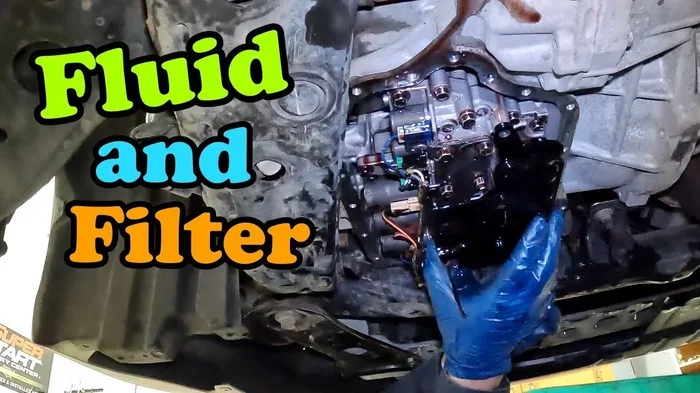
How to Change the Fluid
Changing your Camry’s transmission fluid involves a few key steps:
- Drain the old fluid. Locate the transmission pan underneath the car. Remove the drain plug and let the old fluid flow out into a catch pan.
- Remove the transmission filter. In most models, the filter sits inside the pan. Take it out and replace it with a new one.
- Clean the pan. Wipe out any debris or sludge from the inside of the pan. Check the magnet for metal particles, which can indicate internal wear.
- Replace the pan gasket. A new gasket prevents leaks. These are inexpensive and easy to install.
- Refill with the correct fluid. Use only the transmission fluid type specified for your Camry model year. Overfilling or underfilling both cause problems.
Some owners prefer to have a professional handle this. If you go that route, you might wonder whether a full service center can do it properly. A maintenance service typically includes an oil change, but transmission fluid changes are often an add-on service you need to request separately.
What Type of Transmission Fluid Does a Toyota Camry Use?
Using the wrong transmission fluid is one of the fastest ways to cause serious damage. The fluid must meet specific friction and viscosity requirements for your Camry’s transmission to work correctly.
Toyota ATF WS
Toyota’s World Standard automatic transmission fluid is the most common type used in Camrys from the mid-2000s onward. It is a synthetic fluid designed for smooth shifting and long life. If your owner’s manual says ATF WS, that is what you need.
Toyota ATF+4
Older Camry models, particularly those from the 1990s and early 2000s, may require ATF+4. This is a Dexron III-compatible fluid with additional additives. Using ATF WS in a transmission that requires ATF+4 can cause slipping and poor engagement.
CVT Fluid
If your Camry has a CVT transmission, it needs CVT-specific fluid. Regular automatic transmission fluid will not work in a CVT. The friction characteristics are completely different. Using the wrong fluid in a CVT can destroy the belt and pulley system very quickly.
How to Find the Right Fluid
- Check your owner’s manual. It lists the exact fluid specification.
- Look under the hood for a fluid cap or label with the specification.
- Ask a Toyota dealer. They can look up the correct fluid by your VIN.
- When in doubt, stick with genuine Toyota fluid. It costs a little more but gives you peace of mind.
Warning Signs Your Toyota Camry Transmission Fluid Needs Attention
Your Camry will tell you when something is wrong with the transmission fluid. The trick is knowing what to look for. Here are the most common warning signs.
Dark or Dirty Fluid
Fresh transmission fluid is red and translucent. If you pull the dipstick and the fluid looks brown, dark red, or black, it has been in there too long. Dark fluid has lost its lubricating properties and may contain metal particles from internal wear.
Burnt Smell
A burnt odor coming from under your hood is never a good sign. It usually means the transmission fluid is overheating and breaking down. This can happen from low fluid levels, towing too much weight, or simply neglecting fluid changes for too long.
Rough or Delayed Shifting
Does your Camry hesitate before engaging drive? Do the gears feel jerky or harsh when shifting? These are classic symptoms of old or low transmission fluid. The fluid cannot maintain proper hydraulic pressure, so the shifts suffer.
Slipping Gears
If your Camry feels like it is changing gears on its own or the RPMs spike without a corresponding increase in speed, your transmission may be slipping. This is often caused by low or degraded fluid that can no longer provide enough friction for the clutch packs.
Leaking Fluid
Spotting a red or reddish-brown puddle under your parked Camry is a clear sign of a transmission fluid leak. Common leak points include the drain plug, the pan gasket, and the seals around the input and output shafts. A small leak can become a big problem fast if you ignore it.
Warning Lights on the Dashboard
Some Camrys have a transmission temperature warning light or a check engine light that illuminates when transmission problems are detected. Do not ignore these. Have a diagnostic scan done right away to identify the issue.
If you notice any of these signs, do not wait. Address the problem immediately. A simple fluid change costs a fraction of what a transmission rebuild or replacement costs. Taking care of small issues early is the secret to keeping your Camry on the road for a very long time.
Common Mistakes to Avoid with Toyota Camry Transmission Fluid
Even well-meaning Camry owners make mistakes when it comes to transmission fluid. Here are the ones to watch out for.
- Using the wrong fluid type. This is the most common and most damaging mistake. Always match the fluid to your transmission type and model year.
- Ignoring the dipstick. Some newer Camrys do not have a traditional dipstick. If yours does not, do not assume the fluid level is fine just because you cannot check it. Have a professional check it.
- Overlooking leaks. A small drip today becomes a major problem tomorrow. Check under your car regularly for any signs of fluid leaks.
- Changing fluid only when it is black. By the time the fluid looks bad, it has already been harming your transmission for a while. Stick to the recommended change schedule.
- Flushing a transmission with old, dirty fluid. In some cases, a aggressive flush can dislodge sludge and clog the transmission passages. A gentle drain and fill is often safer for high-mileage Camrys.
Expert Tips for Long-Lasting Transmission Fluid
Want to get the absolute most life out of your Toyota Camry transmission? These expert tips will help you go the distance.
- Check your fluid regularly. Make it part of your monthly routine. A two-minute check can save you thousands in repairs.
- Keep a maintenance log. Write down every fluid change, including the date, mileage, and fluid type. This helps you stay on track and proves your maintenance history if you ever sell the car.
- Warm up the car before checking. Drive your Camry for a few minutes before checking the fluid. This ensures the fluid is at operating temperature and gives you the most accurate reading.
- Use OEM or manufacturer-approved fluid. Aftermarket fluids can work, but they may not meet the exact specifications your transmission needs. When in doubt, go with the genuine Toyota product.
- Do not ignore the filter. When you change your transmission fluid, always replace the filter at the same time. A clogged filter restricts flow and reduces the effectiveness of even fresh fluid.
- Address leaks immediately. Even a slow leak will eventually drop your fluid level to a point where the transmission starts to suffer.
Taking care of your Toyota Camry transmission fluid is one of the simplest and most cost-effective things you can do as a car owner. It is not glamorous, but it is essential. A little prevention today saves a lot of pain tomorrow.
Remember, the Toyota Camry is built to last. But it is only as durable as the maintenance you give it. Fresh transmission fluid, checked and changed on schedule, is the foundation of that longevity. Your Camry will reward you with years of smooth, reliable driving.
Conclusion
So, does the Toyota Camry have transmission fluid? Yes, it absolutely does. And now you know exactly why it matters, how to take care of it, and what to watch for when something goes wrong. From understanding the different fluid types to recognizing the warning signs of degraded fluid, you are now equipped to keep your Camry’s transmission in top shape.
The best part is that this maintenance is easy and affordable. A fluid check takes minutes. A fluid change costs a fraction of what a transmission repair would cost. And the payoff is enormous. A well-maintained transmission means smooth shifts, better fuel economy, and a car that keeps running mile after mile.
Do not wait until you hear a strange noise or feel a rough shift. Make transmission fluid maintenance a regular part of your Camry care routine. Your future self, and your wallet, will thank you.
Frequently Asked Questions
Can I use any transmission fluid in my Toyota Camry?
No, you should always use the specific transmission fluid type recommended for your Camry model year. Using the wrong fluid can cause slipping, poor shifting, and even permanent transmission damage. Check your owner’s manual or ask a Toyota dealer for the correct specification.
How do I know if my Camry’s transmission fluid is low?
The most common signs include difficulty shifting gears, a burning smell, fluid leaks under the car, or the transmission slipping between gears. You can also check the dipstick to see if the fluid level falls below the “add” mark. If you are unsure, have a professional inspect it.
How much does it cost to change Toyota Camry transmission fluid?
A transmission fluid change for a Toyota Camry typically costs between $150 and $300 at a service center, depending on the model year and type of transmission. If you do it yourself, the cost is mainly the fluid and filter, which usually runs between $50 and $100.
Can I drive my Toyota Camry with old transmission fluid?
You can, but you should not. Old transmission fluid loses its lubricating and cooling properties over time. Driving with degraded fluid increases wear on internal components and can lead to expensive repairs. Stick to the recommended change schedule to protect your transmission.
Is it better to drain and fill or flush the transmission fluid?
For most Camry owners, a drain and fill is the safer option. A full flush can dislodge sludge and debris that may clog transmission passages, especially in high-mileage vehicles. A drain and fill replaces the majority of the old fluid while minimizing the risk of disturbing built-up contaminants.
Does the Toyota Camry transmission fluid need to be changed even if I drive rarely?
Yes. Even if you drive low mileage, transmission fluid degrades over time due to heat exposure and oxidation. Toyota recommends changing the fluid based on time as well as mileage, typically every two years or at the mileage interval specified in your owner’s manual, whichever comes first.