How Many Gallons Does the Toyota Camry Fuel Tank Hold
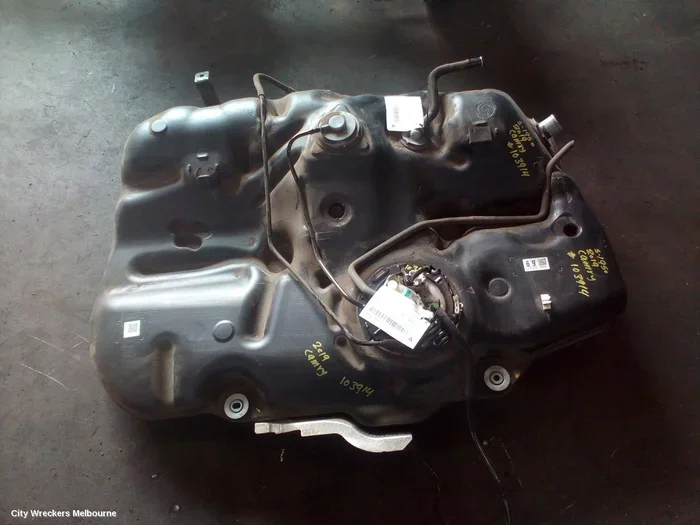
The Toyota Camry fuel tank holds between 15.8 and 16 gallons depending on the model year and trim. This generous fuel tank capacity gives the Camry an impressive driving range of 450 to 550 miles on a single tank. Whether you drive the gas or hybrid version, understanding your Camry tank size helps you plan road trips and budget for fuel costs.
If you are a Toyota Camry owner or thinking about becoming one, you might wonder about the Toyota Camry fuel tank capacity. How much gas can it actually hold? How far can you go before you need to stop for fuel? These are practical questions that matter every single day, whether you are commuting to work or planning a long road trip.
The good news is that the answer is straightforward. Most Toyota Camry models come with a fuel tank capacity of around 15.8 to 16 gallons. This is a solid size for a midsize sedan. It means you can go hundreds of miles without constantly worrying about finding a gas station. In this article, we will break down everything you need to know about the Camry gas tank size, how it compares across different years, and how to get the most out of every gallon.
Toyota has built a reputation for Toyota reliability and efficiency. The Camry has been one of the best-selling sedans in America for decades. Understanding your vehicle’s fuel capacity is a small but important part of owning this car. Let us dive into the details.
Key Takeaways
- Standard fuel tank capacity: Most Toyota Camry models hold 15.8 to 16 gallons of fuel.
- Driving range: A full tank can take you 450 to 550 miles depending on driving conditions.
- Hybrid models: The Camry Hybrid uses a smaller 13.6-gallon tank but still delivers strong range thanks to electric assist.
- Generation differences: Older models may vary slightly in tank size from newer ones.
- Fuel efficiency matters: Your actual range depends heavily on driving habits, terrain, and MPG ratings.
- Regular maintenance: Keeping your Camry well-maintained ensures optimal fuel economy over time.
📑 Table of Contents
- What Is the Toyota Camry Fuel Tank Capacity?
- Toyota Camry Fuel Tank Size by Generation
- How Far Can You Drive on a Full Tank?
- Tips to Maximize Your Toyota Camry’s Fuel Efficiency
- Toyota Camry vs. Other Sedans: Fuel Tank Comparison
- Common Mistakes That Waste Fuel in Your Camry
- Expert Insights on Toyota Camry Fuel Efficiency
- Frequently Asked Questions
What Is the Toyota Camry Fuel Tank Capacity?
The standard Camry tank size is 15.8 gallons for most recent model years. This number applies to the base L trim, the SE, and the XSE trims. The Camry Hybrid has a slightly smaller tank at 13.6 gallons, but it makes up for that with excellent electric-assisted fuel economy.
So what does 15.8 gallons actually mean in real-world terms? It means you can fill up and drive a long distance before needing another stop. For most drivers, this translates to peace of mind and fewer trips to the pump. The gas tank size is carefully engineered by Toyota to balance weight, range, and cabin space.
If you are comparing vehicles, the sedan fuel capacity of the Camry sits comfortably in the middle of the pack. It is not the largest tank you will find, but it is well-suited for a car of this size. Toyota has tuned the Camry to deliver a smooth ride and efficient fuel use without sacrificing the tank size that drivers expect.
Why Does Tank Size Matter?
Your vehicle fuel capacity directly affects how often you stop for gas. A larger tank means fewer fill-ups. For people who drive long distances daily, this is a big deal. It also affects the overall weight of the car. A fuller tank adds weight, which can slightly impact fuel economy. Toyota has found the sweet spot with the Camry’s tank design.
Another reason tank size matters is resale value. Buyers often look at Toyota Camry specifications when shopping for a used car. Knowing the fuel tank capacity gives them a clear picture of what to expect. It is one of those details that shows a car has been well thought out by its engineers.
Toyota Camry Fuel Tank Size by Generation
The Camry has gone through many generations since its debut in 1982. Each generation brought changes to the design, engine, and yes, the fuel tank capacity. Let us look at how the tank size has evolved over the years.
Current Generation (2018 to Present)
The current generation Camry, which started in 2018, features a 15.8-gallon fuel tank across most trims. This applies to both the gas-powered models and the Camry Hybrid. Toyota kept the tank size consistent, which simplifies things for owners and parts suppliers alike.
The 2018, 2019, 2020, 2021, 2022, 2023, and 2024 Camry models all share this 15.8-gallon capacity. Whether you drive the base L, the SE, or the top-tier TRD, the tank holds the same amount of fuel. This consistency is a hallmark of Toyota’s approach to engineering.
Previous Generations
Going back a generation, the 2012 to 2017 Camry also used a 15.8-gallon tank. The 2007 to 2011 models were very similar. Some earlier generations from the 2000s had slightly different capacities, but the differences were minor. If you own an older Camry, chances are the tank size is close to 15.8 gallons.
When shopping for a used Camry, you can generally assume the gas tank size will be around 15.8 gallons. Always double-check the owner’s manual for your specific model year to be sure. Small variations can happen based on trim level and market region.
How Far Can You Drive on a Full Tank?
This is one of the most common questions Camry owners ask. The answer depends on your Toyota Camry MPG rating and your driving habits. Let us break it down.
The current Camry gets an estimated 28 to 32 miles per gallon in combined driving. The Camry Hybrid does even better, with ratings around 52 MPG combined. Using these numbers, we can calculate a rough driving range.
For a gas-powered Camry with a 15.8-gallon tank and 30 MPG combined, you can expect to drive about 474 miles on a full tank. The Camry hybrid fuel tank is 13.6 gallons, but at 52 MPG, it can go roughly 707 miles. That is a serious distance and shows why Toyota’s hybrid technology is so effective.
City vs Highway Driving Range
Your actual Camry gas mileage will vary between city and highway driving. In the city, where you stop and go more often, you might see 25 to 28 MPG. On the highway, where speeds are steady, you could push 32 to 35 MPG.
This means your Toyota Camry range on full tank could be shorter in stop-and-go traffic and longer on open roads. If you commute on the highway, you will enjoy fewer fill-ups. If your driving is mostly urban, plan for more frequent stops.
Real-World Factors That Affect Range
Several factors influence how far you can go on a full tank:
- Driving style: Aggressive acceleration and hard braking reduce your range significantly.
- Tire pressure: Underinflated tires create more rolling resistance and lower fuel economy.
- Air conditioning use: Running the AC puts extra load on the engine, especially in hot weather.
- Terrain: Hilly or mountainous roads use more fuel than flat highways.
- Payload: Carrying heavy cargo or multiple passengers increases fuel consumption.
- Maintenance: A dirty air filter or old spark plugs can hurt your miles per gallon.
Keeping these factors in mind will help you get the most accurate estimate of your personal driving range. No two drivers will see exactly the same numbers, and that is perfectly normal.
Tips to Maximize Your Toyota Camry’s Fuel Efficiency
Want to squeeze every last mile out of your tank? Here are some practical tips that actually work. These are not gimmicks. They are proven strategies that real Camry owners use every day.
1. Keep Your Tires Properly Inflated
Check your tire pressure at least once a month. Toyota recommends a specific PSI for each Camry model, and you can find it on the driver’s side door jamb. Properly inflated tires reduce rolling resistance and improve your fuel economy by up to 3 percent.
2. Drive Smoothly and Steadily
Avoid rapid acceleration and hard braking. Smooth driving is the single best way to improve your Camry gas mileage. Accelerate gently and coast to stops when possible. Your fuel tank will last longer, and your brakes will thank you too.
3. Use Cruise Control on Highways
Maintaining a steady speed on the highway helps your engine run efficiently. Cruise control keeps your speed consistent, which means less fuel wasted on unnecessary acceleration and deceleration.
4. Remove Unnecessary Weight
Every extra pound in your car requires more fuel to move. Clear out your trunk and back seat of items you do not need. That old golf bag or heavy toolbox might be costing you a few miles per gallon.
5. Keep Up with Regular Maintenance
Regular oil changes, air filter replacements, and spark plug checks all contribute to better fuel economy. If you are unsure about maintenance schedules, check whether a Toyota Camry take regular oil is recommended for your model year. Staying on top of maintenance keeps your engine running clean and efficient.
Also, a well-maintained Camry can last 30 years or more with proper care. Regular maintenance is a big part of that longevity. When your car runs efficiently, it uses less fuel and costs you less money over time.
6. Plan Your Trips Wisely
Combine errands into one trip rather than making multiple short drives. A warmed-up engine runs more efficiently than a cold one. If you know you have several stops to make, plan a route that minimizes backtracking and idling time.
Toyota Camry vs. Other Sedans: Fuel Tank Comparison
How does the Camry’s fuel tank capacity stack up against the competition? Let us compare it with a few popular midsize sedans.
| Vehicle | Fuel Tank Capacity | Estimated Range (Combined MPG) |
|---|---|---|
| Toyota Camry (Gas) | 15.8 gallons | ~474 miles |
| Toyota Camry Hybrid | 13.6 gallons | ~707 miles |
| Honda Accord | 15.3 gallons | ~474 miles |
| Nissan Altima | 16.2 gallons | ~470 miles |
| Hyundai Sonata | 14.8 gallons | ~444 miles |
As you can see, the Camry holds a competitive amount of fuel. The gas model and the Honda Accord are nearly identical in tank size. The Camry Hybrid stands out with its exceptional range despite a smaller tank, thanks to its hybrid powertrain.
If you are comparing the Camry to larger vehicles like SUVs or trucks, the tank size will look smaller. For example, a Chevrolet Tahoe seats eight passengers and has a much larger tank. But for a midsize sedan, the Camry’s 15.8 gallons is right in the sweet spot. It gives you range without adding unnecessary weight.
Common Mistakes That Waste Fuel in Your Camry
Even the best-designed cars can suffer from poor fuel economy if the driver develops bad habits. Here are some common mistakes Camry owners should avoid.
Ignoring the check engine light: A glowing check engine light can signal problems that hurt fuel efficiency. A loose gas cap, faulty oxygen sensor, or misfiring spark plug can all reduce your miles per gallon. If your light comes on, get it checked promptly.
Using the wrong octane fuel: Most Camry models run perfectly fine on regular unleaded gasoline. You do not need premium fuel unless your specific model requires it. Check your owner’s manual to be sure. Using premium when regular is fine wastes money without any real benefit.
Leaving windows open at highway speeds: Open windows create drag, especially at speeds above 55 mph. This aerodynamic drag forces your engine to work harder and burn more fuel. At higher speeds, keep your windows closed and use the ventilation system instead.
Idling for long periods: If you are parked and waiting for more than a minute, turn off the engine. Idling burns fuel without moving you any closer to your destination. This is especially relevant for Camry owners who might be waiting in drive-through lines or picking someone up.
Avoiding these mistakes can add real miles to your range and save you money at the pump over time. Small changes in driving behavior lead to big results over the life of the vehicle.
Expert Insights on Toyota Camry Fuel Efficiency
Toyota engineers designed the Camry with a focus on balance. The 15.8-gallon tank is large enough to give you range but not so large that it adds unnecessary weight to the front of the car. This balance is part of why the Camry has remained so popular for so many years.
According to automotive experts, the Camry’s fuel economy is among the best in the midsize sedan segment. The gas models offer solid MPG numbers, and the Hybrid version sets a new standard for efficiency. Toyota has consistently refined the Camry’s aerodynamics and engine technology to squeeze out every possible mile per gallon.
When you think about long-term ownership, the Camry’s fuel efficiency adds up to real savings. Over 100,000 miles, a Camry owner can save hundreds of dollars compared to less efficient vehicles. And with proper care, a Camry can easily surpass 200,000 miles. That is a lot of fill-ups saved.
If you are curious about how long a Camry can truly last, the answer is impressive. Many owners have reported their Camrys going well beyond 300,000 miles. The combination of a reliable engine, efficient fuel use, and Toyota’s reputation for durability makes the Camry one of the smartest sedan choices on the market today.
Frequently Asked Questions
How many gallons does a Toyota Camry hold?
Most Toyota Camry models hold 15.8 gallons of fuel. The Camry Hybrid has a slightly smaller tank at 13.6 gallons. Always check your owner’s manual for the exact capacity of your specific model year.
How far can a Toyota Camry go on a full tank?
A gas-powered Camry with a 15.8-gallon tank can travel approximately 450 to 550 miles on a full tank, depending on driving conditions. The Camry Hybrid can go even farther, sometimes exceeding 700 miles, thanks to its electric assist and excellent fuel economy.
Does the Toyota Camry Hybrid have a smaller fuel tank?
Yes, the Camry Hybrid uses a 13.6-gallon tank, which is about 2.2 gallons smaller than the gas model. However, the hybrid system compensates with superior fuel efficiency, often delivering over 50 MPG combined. This means the Hybrid can actually go farther on a single tank than the gas version.
What type of fuel does the Toyota Camry require?
Most Toyota Camry models run on regular unleaded gasoline with an octane rating of 87. Premium fuel is not required unless your specific model’s owner’s manual states otherwise. Using regular fuel saves money and is perfectly fine for the Camry’s engine.
Can a Toyota Camry last 30 years?
Yes, with proper maintenance and care, a Toyota Camry can easily last 30 years or more. The Camry is known for its durability and long lifespan. Regular oil changes, timely repairs, and good driving habits all contribute to a Camry reaching this impressive milestone.
How does the Camry’s fuel tank size compare to other Toyota models?
The Camry’s 15.8-gallon tank is standard for a midsize sedan. Smaller Toyota models like the Corolla may have slightly smaller tanks, while larger models like the Camry’s sibling, the Lexus ES, often share similar tank sizes. The Camry sits comfortably in the middle of Toyota’s sedan lineup for fuel capacity.