How Heavy Is a Jeep Grand Cherokee and What You Need to Know
The Jeep Grand Cherokee weighs between 4,430 and 5,600 pounds depending on the trim, engine, and options. Curb weight is the most common measurement, but GVWR and towing capacity also matter. Knowing your Jeep Grand Cherokee weight helps with safety, fuel economy, and towing decisions.
If you have ever wondered about the Jeep Grand Cherokee weight, you are not alone. This popular SUV is a favorite among families, adventure seekers, and daily commuters alike. But its size and capability come with a real number on the scale. Understanding how much your Jeep weighs is more important than most people realize.
Vehicle weight affects everything from fuel economy to towing capacity. It also plays a role in safety, handling, and even insurance costs. Whether you are buying a new Jeep Grand Cherokee or just want to know more about your current ride, this guide covers all the details you need. We will break down the numbers by trim, explain why weight matters, and share practical tips to help you get the most out of your SUV.
The Jeep Grand Cherokee weight varies quite a bit across the lineup. A base Laredo model is much lighter than a fully loaded Summit or an SRT Trackhawk. Engine choice, features, and added equipment all push the numbers higher. Let us dive into the specifics so you have a clear picture of what your Jeep actually weighs.
Key Takeaways
- Weight Range: The Jeep Grand Cherokee weighs between 4,430 and 5,600 pounds depending on the trim and engine.
- Curb Weight Matters: Curb weight is the standard measurement and includes all standard equipment and fluids.
- Heavier Trims Have More Power: SRT and Trackhawk models are significantly heavier but come with powerful engines to match.
- Towing Capacity Depends on Weight: Heavier models can tow up to 7,200 pounds when properly equipped.
- Weight Affects Fuel Economy: A heavier Jeep Grand Cherokee will generally get lower MPG than lighter trims.
- Payload Capacity Is Limited: Stay within the payload limit to avoid damaging your vehicle or compromising safety.
- Check Your Specific Model: Always look up the exact weight for your year, trim, and engine combination.
📑 Table of Contents
Understanding Jeep Grand Cherokee Weight
When people ask about vehicle weight, they usually mean one of a few different measurements. Each one tells you something different about the Jeep Grand Cherokee. Let us look at the most common terms you will see when researching weight specs.
Curb Weight: What It Means
Curb weight is the most common measurement for any vehicle. It refers to the weight of the Jeep with a full tank of fuel and all standard equipment. Think of it as the weight of the vehicle ready to drive, but without passengers or cargo. For the Jeep Grand Cherokee, curb weight typically falls between 4,430 and 5,300 pounds.
This number gives you a solid baseline. It includes the engine, transmission, body, chassis, and all factory-installed features. When you compare curb weight across trims, you can see exactly how much each version adds to the overall Jeep Grand Cherokee weight.
Gross Vehicle Weight Rating (GVWR)
GVWR stands for Gross Vehicle Weight Rating. This is the maximum safe weight your Jeep can carry, including its own curb weight plus passengers, cargo, and any accessories. For most Grand Cherokee models, the GVWR ranges from about 6,000 to 6,700 pounds.
Staying at or below the GVWR is essential for safety and performance. Exceeding this limit can strain your brakes, suspension, and engine. Always check the GVWR label on your vehicle, which is usually found on the driver’s side door jamb.
Payload Capacity Explained
Payload capacity is the amount of weight your Jeep can carry inside and on top of it. You calculate it by subtracting the curb weight from the GVWR. For example, if your Jeep has a curb weight of 4,800 pounds and a GVWR of 6,400 pounds, your payload capacity is 1,600 pounds.
This includes passengers, luggage, roof racks, and any towing equipment. Many owners underestimate how quickly payload adds up. A full load of passengers plus gear can eat into this number fast. Always be mindful of your payload when packing for a trip.
Weight by Trim Level
The Jeep Grand Cherokee comes in several trim levels, and each one carries a different weight. The base model is the lightest, while high-performance and luxury trims add pounds through extra features and more powerful engines. Here is a closer look at how the weight changes across the lineup.
Laredo and Limited Trims
The Laredo is the entry-level trim and the lightest option. Its curb weight starts around 4,430 pounds with the base V6 engine. The Limited trim adds luxury features like leather seats, upgraded sound systems, and larger wheels. This pushes the weight up to roughly 4,600 to 4,800 pounds.
These trims offer a great balance of capability and efficiency. Their lighter weight helps with fuel economy, which makes them ideal for daily driving. If you want a versatile SUV without unnecessary bulk, these two trims are excellent starting points.
Overland and Summit Trims
The Overland and Summit trims bring premium comfort and advanced technology. Heated and ventilated seats, upgraded interiors, and larger wheels all contribute to a higher Jeep Grand Cherokee weight. The Overland trim typically weighs between 4,800 and 5,100 pounds.
The Summit trim goes a step further with top-tier luxury features. Its weight can reach around 5,200 to 5,300 pounds. While these trims are heavier, they also offer improved ride quality and refined styling that many buyers love.
SRT and Trackhawk Trims
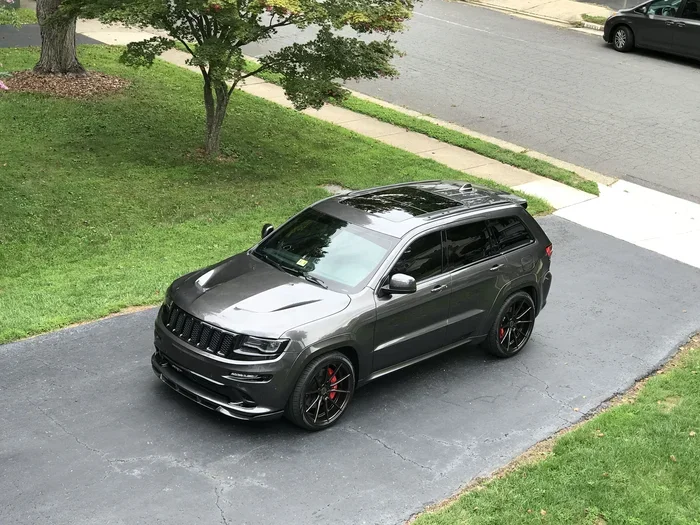
The SRT (Street and Racing Technology) trim is all about performance. Its heavier body houses a powerful HEMI V8 engine. The SRT model weighs around 5,100 to 5,300 pounds depending on the configuration.
The Trackhawk is the heavyweight champion of the lineup. With its supercharged 6.2-liter V8 engine, the Trackhawk tips the scales at around 5,400 to 5,600 pounds. All that weight is justified by the incredible power on offer. The Trackhawk can go from zero to 60 in just over 3.5 seconds, making it one of the fastest SUVs in its class.
Why Vehicle Weight Matters
Some people think vehicle weight is just a number on a spec sheet. In reality, it affects your daily driving experience in several important ways. Understanding these impacts helps you make smarter decisions about your Jeep Grand Cherokee.
Impact on Fuel Economy
Heavier vehicles need more energy to move. This means a heavier Jeep Grand Cherokee will generally get lower fuel economy than a lighter one. The base Laredo with its V6 engine can achieve around 21 to 25 MPG on the highway. In contrast, the heavier Trackhawk with its V8 engine drops to around 16 MPG combined.
If fuel economy is important to you, consider the lighter trims and smaller engines. They offer a better balance of capability and efficiency for most driving situations. Simple habits like keeping your tires properly inflated also help maximize your MPG regardless of weight.
Effect on Handling and Braking
Weight directly affects how your Jeep handles on the road. A heavier vehicle takes longer to stop and may feel less agile in tight turns. The Grand Cherokee is a large SUV, so it is never going to feel like a compact car. But within the lineup, lighter trims offer a more nimble driving experience.
Braking distance increases with weight, which is a key safety consideration. The Grand Cherokee comes equipped with advanced braking systems to help compensate. Still, it is important to drive with awareness, especially when the vehicle is fully loaded with passengers and cargo.
Tire Wear and Maintenance Costs
Heavier vehicles put more stress on tires, brakes, and suspension components. This can lead to faster tire wear and higher maintenance costs over time. The SRT and Trackhawk trims, being the heaviest, may require more frequent brake pad replacements and tire rotations.
Staying on top of regular maintenance helps offset these costs. Check your tire pressure often, rotate your tires on schedule, and inspect your brakes regularly. These small steps keep your Jeep running smoothly and safely regardless of its weight.
Towing and Payload Capacity
One of the biggest reasons people buy a Jeep Grand Cherokee is for its towing ability. But towing capacity is closely tied to vehicle weight. Understanding how these numbers work together is essential for safe and effective towing.
What Is Gross Combined Weight Rating (GCWR)?
GCWR is the maximum safe weight of your Jeep plus the full weight of your trailer. This number includes the vehicle, passengers, cargo, fuel, and the entire loaded trailer. For the Grand Cherokee, the GCWR typically ranges from 9,000 to 9,900 pounds.
Think of GCWR as the total weight limit for everything your Jeep is pulling along. Going over this limit can cause serious damage to your transmission, brakes, and engine. Always know your GCWR before hitting the road with a trailer.
How Much Can Your Grand Cherokee Tow?
The towing capacity of the Jeep Grand Cherokee ranges from 3,500 to 7,200 pounds depending on the trim and engine. The base V6 engine with the proper towing package can handle up to 3,500 pounds. The V8 engine in the Overland and higher trims boosts that number significantly.
The SRT 8 and Trackhawk trims, when properly equipped, can tow up to 7,200 pounds. This makes them capable haulers for boats, travel trailers, and even small horse trailers. Always verify the exact towing capacity for your specific model year and configuration, as options and packages can change the numbers.
Payload vs Towing: Key Differences
Many people confuse payload capacity with towing capacity, but they are very different. Payload is the weight carried inside the vehicle, including passengers and cargo. Towing capacity is the weight your Jeep can pull behind it with a trailer.
Both numbers matter, and exceeding either one can be dangerous. When loading your Grand Cherokee, keep an eye on both the payload and the towing limits. Distribute weight evenly and secure all cargo properly for the safest experience.
How Jeep Grand Cherokee Weight Compares to Other SUVs
Curious how the Grand Cherokee stacks up against the competition? Vehicle weight varies widely across the mid-size SUV segment. Here is a general comparison to put things in perspective.
The Ford Explorer weighs around 4,300 to 4,900 pounds depending on the trim. The Toyota Highlander comes in at roughly 4,300 to 4,600 pounds. The Chevy Tahoe is significantly heavier at around 5,500 to 5,900 pounds. Compared to these models, the Jeep Grand Cherokee sits right in the middle of the pack.
The Grand Cherokee’s weight gives it a solid advantage in off-road capability. Heavier SUVs tend to have better traction on rough terrain. At the same time, the lighter trims still offer respectable fuel economy for a vehicle of this size. It is a balance that Jeep has managed well across the lineup.
Tips for Managing Your Grand Cherokee’s Weight
Now that you understand the numbers, here are some practical tips to help you manage your Jeep Grand Cherokee’s weight effectively. These simple steps can improve safety, performance, and fuel economy.
- Remove unnecessary items from your trunk. Every extra pound adds up. Clean out gear you do not need for your trip.
- Check your tire pressure regularly. Properly inflated tires improve fuel economy and handling, especially when the vehicle is heavy.
- Distribute weight evenly. When loading cargo, place heavier items low and centered to maintain balance.
- Stay within payload limits. Overloading your Jeep stresses the suspension, brakes, and engine.
- Use the right fuel. Higher-performance trims like the SRT and Trackhawk require premium fuel for optimal operation.
- Keep up with maintenance. Regular oil changes, brake inspections, and tire rotations help your Jeep handle its weight safely.
These tips may seem simple, but they make a real difference. A well-maintained Jeep Grand Cherokee handles its weight with confidence and delivers a smooth, safe ride every time.
Key Takeaways
- Weight Range: The Jeep Grand Cherokee weighs between 4,430 and 5,600 pounds depending on the trim and engine.
- Curb Weight Matters: Curb weight is the standard measurement and includes all standard equipment and fluids.
- Heavier Trims Have More Power: SRT and Trackhawk models are significantly heavier but come with powerful engines to match.
- Towing Capacity Depends on Weight: Heavier models can tow up to 7,200 pounds when properly equipped.
- Weight Affects Fuel Economy: A heavier Jeep Grand Cherokee will generally get lower MPG than lighter trims.
- Payload Capacity Is Limited: Stay within the payload limit to avoid damaging your vehicle or compromising safety.
- Check Your Specific Model: Always look up the exact weight for your year, trim, and engine combination.
Conclusion
The Jeep Grand Cherokee weight is an important factor that influences how your SUV performs in everyday life and on the trail. From the lightweight Laredo to the powerful Trackhawk, each trim offers a unique balance of capability, comfort, and weight. Understanding these numbers helps you make smarter choices about towing, loading, and driving.
Whether you are a first-time Jeep buyer or a longtime owner, knowing your vehicle’s weight gives you an edge. It helps you stay safe, maximize fuel economy, and get the most out of your towing adventures. Always refer to your owner’s manual or the door jamb label for the exact specs of your particular model.
The Jeep Grand Cherokee remains one of the most capable and popular SUVs on the road. Its weight is a trade-off for the power, comfort, and off-road ability it delivers. With the right knowledge and a little care, you can enjoy everything this incredible SUV has to offer for years to come.
Frequently Asked Questions
How much does a Jeep Grand Cherokee weigh in pounds?
The Jeep Grand Cherokee weight ranges from about 4,430 pounds for the base Laredo trim to around 5,600 pounds for the Trackhawk. The exact number depends on your trim level, engine choice, and added options.
Does the engine type affect Jeep Grand Cherokee weight?
Yes, it does. The base V6 engine keeps the weight lower, while the V8 engines in the SRT and Trackhawk trims add significant pounds. Additional performance features and heavier components also contribute to a higher overall vehicle weight.
What is the towing capacity of a Jeep Grand Cherokee?
The towing capacity ranges from 3,500 pounds for the base V6 model to 7,200 pounds for the SRT and Trackhawk trims when properly equipped. Always check your specific model’s towing specs before hauling a trailer.
How does curb weight differ from GVWR?
Curb weight is the weight of the empty Jeep with fuel and standard equipment. GVWR is the maximum safe total weight, including the curb weight plus passengers, cargo, and accessories. Never exceed your GVWR for safety reasons.
Is the Jeep Grand Cherokee too heavy for daily driving?
Not at all. The Grand Cherokee is designed to be a comfortable daily driver. The lighter trims like the Laredo and Limited offer good fuel economy and easy handling. Even heavier trims feel manageable for most drivers in everyday conditions.
How can I reduce the effective weight of my Jeep Grand Cherokee?
You can remove unnecessary items from the vehicle, keep your fuel tank at a reasonable level, and avoid overloading with passengers or cargo. Staying within payload limits and maintaining proper tire pressure also help your Jeep perform at its best.