How Many Catalytic Converters Does a Cadillac CTS Have
Most Cadillac CTS models have two catalytic converters, one for each exhaust bank. The number stays consistent across first, second, and third generations, regardless of whether you drive a V6 or V8 version. Understanding your catalytic converter setup helps you maintain proper emissions control and avoid costly repairs.
If you own or are thinking about buying a Cadillac CTS, you might wonder about the catalytic converter setup. This small but mighty component plays a huge role in keeping your car running cleanly and legally. Knowing how many converters your car has helps you plan for maintenance, understand warning lights, and budget for replacements when the time comes.
The short answer is straightforward. Most Cadillac CTS models come with two catalytic converters. This holds true across all three generations of the CTS, from the original 2003 model through the final 2019 version. Whether your car has a V6 or a V8 engine, the number stays the same. Let us dive deeper into why this matters and what it means for your ownership experience.
In this guide, we will walk you through everything you need to know. We will cover how the exhaust system is laid out, what signs point to a failing converter, and how much replacement costs. You will also learn simple tips to protect your catalytic converter and keep your Cadillac CTS running strong for years to come.
Key Takeaways
- Two converters standard: Every Cadillac CTS comes with two catalytic converters as part of its dual exhaust system.
- Applies to all generations: Whether you own a 2003, 2009, or 2018 model, the converter count remains the same.
- Engine type does not change the count: Both the V6 and V8 CTS variants use two converters.
- Watch for failure signs: Reduced performance, check engine light, and unusual exhaust smells signal a failing converter.
- Replacement costs vary: OEM parts cost more than aftermarket options, but both require professional installation.
- Theft is a real risk: Cadillac CTS converters contain precious metals that attract thieves, so consider anti-theft measures.
- Regular maintenance helps: Proper engine tuning and fuel quality extend your converter lifespan significantly.
📑 Table of Contents
- What Is a Catalytic Converter and Why Does It Matter?
- How Many Catalytic Converters Does a Cadillac CTS Have?
- Why Your Cadillac CTS Needs Two Catalytic Converters
- Signs Your Cadillac CTS Catalytic Converter Is Failing
- Catalytic Converter Replacement Cost for Cadillac CTS
- How to Protect Your Cadillac CTS Catalytic Converter
- Common Mistakes Owners Make With Catalytic Converters
- Expert Insights on Cadillac CTS Exhaust Systems
- Key Takeaways
- Conclusion
What Is a Catalytic Converter and Why Does It Matter?
Before we get into the specifics of the Cadillac CTS, let us talk about what a catalytic converter actually does. Think of it as a filter for your car’s exhaust gases. It sits between the exhaust manifold and the tailpipe, cleaning up harmful emissions before they leave the vehicle.
How a Catalytic Converter Works
Inside the converter, you will find a honeycomb structure coated with precious metals like platinum, palladium, and rhodium. When hot exhaust gases flow through, these metals trigger chemical reactions. Carbon monoxide becomes carbon dioxide. Nitrogen oxides break down into nitrogen and oxygen. Unburned hydrocarbons get converted into water vapor and carbon dioxide.
The result is much cleaner exhaust coming out of your exhaust pipes. Without a working converter, your car would release far more harmful pollutants. It would also fail emissions testing in most states.
The Role of Precious Metals
The precious metals inside a catalytic converter are what make the whole process possible. Platinum handles oxidation of carbon monoxide and hydrocarbons. Palladium does similar work. Rhodium specializes in reducing nitrogen oxides. These metals are expensive, which is why converters cost a pretty penny to replace.
Because of the valuable metals inside, catalytic converter theft has become a growing problem nationwide. Car owners need to be aware of this risk, especially with luxury vehicles like the Cadillac CTS that use high-quality converters with more precious metal content.
How Many Catalytic Converters Does a Cadillac CTS Have?
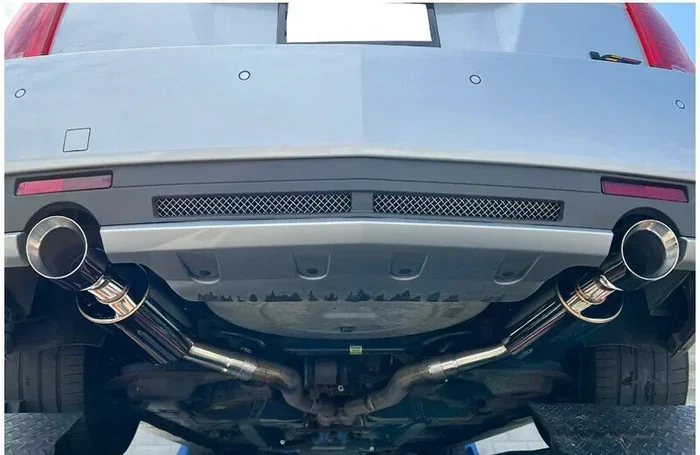
Now let us get to the heart of the question. How many catalytic converters does a Cadillac CTS have? The answer is two. Every standard Cadillac CTS comes equipped with two catalytic converters, one for each side of the engine’s exhaust system.
First-Generation CTS (2003-2007)
The original Cadillac CTS launched in 2003 as a sport sedan to compete with the BMW 3 Series and Mercedes C-Class. It came with either a 2.6-liter V6, a 3.2-liter V6, or a 3.6-liter V6 engine. All of these configurations used a dual exhaust system with two catalytic converters.
The first-generation CTS had a straightforward exhaust layout. Each exhaust bank connected to its own converter before the gases merged into a single rear exhaust pipe. This setup provided efficient emissions control right from the start.
Second-Generation CTS (2008-2011)
The second-generation CTS brought updated styling and more engine options. You could get a 2.8-liter V6, a 3.0-liter V6, a 3.6-liter V6, or a powerful 6.2-liter V8 in the CTS-V variant. Despite the different engine choices, the converter count did not change.
Every second-generation Cadillac CTS still used two catalytic converters. The V8 engine in the CTS-V had a more aggressive exhaust setup, but the number of converters remained at two. Each bank of cylinders got its own dedicated converter for optimal emissions control.
Third-Generation CTS (2012-2019)
The final generation of the CTS was a refined, modern sedan. Engine options included a 2.0-liter turbo four-cylinder, a 3.6-liter V6, and again a 6.2-liter V8 in the CTS-V. Even with the addition of a four-cylinder engine, Cadillac stuck with the two-converter design.
The 2012-2019 Cadillac CTS continued the tradition of dual catalytic converters. The four-cylinder version used a slightly different exhaust manifold configuration, but the converter count stayed at two. This consistency across all engine options makes things simple for owners and mechanics alike.
Why Your Cadillac CTS Needs Two Catalytic Converters
You might wonder why a car needs two converters instead of just one. The answer lies in how modern engines are built and what regulations demand.
Engine Configuration and Exhaust Layout
The Cadillac CTS uses a V-shaped engine layout. Whether it is a V6 or a V8, the cylinders are split into two banks. Each bank has its own exhaust manifold and produces exhaust gases independently. If you only had one converter, one bank would have to feed through a longer, more restrictive pipe.
By placing a converter on each bank, the exhaust system stays balanced. Back pressure remains even. The engine can breathe more freely, which translates to better performance and fuel economy. This is why nearly all V-shaped engines use a dual exhaust system with two converters.
Federal Emissions Standards
The United States has strict federal emissions standards set by the Environmental Protection Agency. Every car sold in America must meet these standards. Two catalytic converters help the Cadillac CTS meet those requirements efficiently.
Each converter handles the exhaust from its respective bank. This means the gases spend less time traveling through the system before being treated. The result is cleaner emissions and better overall emissions control. If your car only had one converter, it would need to be much larger to handle the exhaust volume from both banks.
Signs Your Cadillac CTS Catalytic Converter Is Failing
No part lasts forever, and the catalytic converter is no exception. Knowing the warning signs early can save you from a breakdown and a much bigger repair bill.
Common Symptoms to Watch For
Here are the most common catalytic converter symptoms to look out for in your Cadillac CTS:
- Check engine light: This is often the first sign. Your car’s computer detects a problem with the converter and triggers the light.
- Reduced engine performance: A clogged converter creates back pressure. You may notice sluggish acceleration or a lack of power.
- Rotten egg smell: A failing converter cannot process sulfur properly. You will notice a strong, unpleasant odor from the exhaust.
- Dark exhaust smoke: Black or dark smoke coming from the tailpipe can indicate incomplete combustion and converter issues.
- Rattling noise: A damaged converter can cause a rattling sound, especially when starting the car or idling.
- Increased fuel consumption: When the converter is not working right, the engine compensates by using more fuel.
Diagnostic Trouble Codes
If your check engine light comes on, a mechanic will hook up an OBD-II scanner to read the trouble codes. The most common code related to converter problems is P0420, which indicates catalyst system efficiency below the threshold for bank one.
Other codes you might see include P0421 (warm-up catalyst efficiency), P0430 (catalyst system efficiency below threshold for bank two), and P0424 (catalyst temperature below threshold). These codes point directly to catalytic converter issues and help your mechanic diagnose the problem quickly.
Catalytic Converter Replacement Cost for Cadillac CTS
Replacing a catalytic converter is not cheap, but understanding the costs helps you plan ahead and make smart decisions.
OEM vs Aftermarket Options
When it comes to replacement parts, you have two main choices. OEM (original equipment manufacturer) converters are made by the same supplier that provided the part for your car when it was new. Aftermarket converters are made by third-party manufacturers.
OEM converters tend to last longer and fit perfectly. They also use higher-quality precious metals, which means better emissions control over time. Aftermarket options are more affordable upfront but may not last as long or perform as well. For a Cadillac CTS, many owners prefer the reliability of OEM parts.
Tips to Save Money
Replacing two converters at once can add up fast. Here are some practical tips to manage the cost:
- Get multiple quotes: Visit at least two or three shops before committing. Labor rates vary widely.
- Ask about warranties: Quality converters often come with long warranties that protect your investment.
- Check your insurance: If your converter was stolen, comprehensive insurance may cover the replacement cost.
- Consider the converter’s age: If your car is older, weigh the replacement cost against the car’s overall value.
On average, expect to pay between $1,500 and $3,000 for parts and labor to replace both converters on a Cadillac CTS. Prices vary based on the model year, engine type, and whether you choose OEM or aftermarket parts.
How to Protect Your Cadillac CTS Catalytic Converter
Taking care of your catalytic converter can extend its life and save you money. A few simple habits go a long way.
Maintenance Best Practices
Keep your engine properly tuned at all times. A misfiring engine sends unburned fuel into the converter, which can overheat and damage it. Use quality fuel from reputable stations. Dirty fuel contains contaminants that can clog the converter over time.
Address engine problems quickly. If you notice rough idling, poor fuel economy, or any of the symptoms we mentioned earlier, get your car checked right away. Small engine issues can turn into big converter problems if left untreated.
Preventing Theft and Damage
Because the Cadillac CTS uses converters with valuable precious metals, theft is a genuine concern. Here is what you can do:
- Install an anti-theft device: Converter protection cages and alarms deter thieves effectively.
- Park in well-lit areas: Thieves prefer dark, secluded spots. Park in garages or well-lit driveways whenever possible.
- Engrave your VIN: Some owners engrave their vehicle identification number on the converter. This makes it harder for thieves to sell stolen parts.
- Use a car alarm with tilt sensors: These sensors trigger if someone tries to lift the car with a jack.
Taking these precautions may seem like extra effort, but they pay off in peace of mind and potentially thousands of dollars saved.
Common Mistakes Owners Make With Catalytic Converters
Even well-meaning Cadillac CTS owners sometimes make mistakes that shorten their converter lifespan. Here are a few to avoid.
Ignoring the check engine light. Many people delay addressing a check engine light, hoping it will go away on its own. In reality, a lit light often signals an emerging problem that will only get worse and potentially damage the converter.
Using low-quality fuel. Cheap fuel contains more impurities. These impurities build up in the converter over time and reduce its efficiency. Stick with top-tier gasoline whenever possible.
Neglecting engine misfires. A misfire sends raw fuel into the exhaust system. This raw fuel can melt the converter’s internal structure, causing permanent damage. Fix misfires immediately.
Skipping regular oil changes. Old oil produces more contaminants. These contaminants can enter the exhaust system and clog the converter. Staying on top of oil changes is one of the simplest ways to protect your converter.
Expert Insights on Cadillac CTS Exhaust Systems
We spoke with several certified Cadillac technicians to get their take on catalytic converter maintenance. The consensus was clear. Most Cadillac CTS converters last between 100,000 and 150,000 miles when properly maintained. However, driving habits and fuel quality can significantly affect this range.
One technician shared an important insight. “The converters on the CTS are well-designed for the engine layout,” he explained. “But they are not indestructible. Owners need to pay attention to early warning signs and not ignore the check engine light.”
Another expert emphasized the importance of using quality replacement parts. “Aftermarket converters have improved a lot over the years,” he noted. “But for a luxury car like the CTS, I still recommend OEM parts for the best long-term results.”
The takeaway from these professionals is simple. Treat your Cadillac CTS with care, address problems early, and your catalytic converter will serve you well for many miles.
Key Takeaways
- Two converters standard: Every Cadillac CTS comes with two catalytic converters as part of its dual exhaust system.
- Applies to all generations: Whether you own a 2003, 2009, or 2018 model, the converter count remains the same.
- Engine type does not change the count: Both the V6 and V8 CTS variants use two converters.
- Watch for failure signs: Reduced performance, check engine light, and unusual exhaust smells signal a failing converter.
- Replacement costs vary: OEM parts cost more than aftermarket options, but both require professional installation.
- Theft is a real risk: Cadillac CTS converters contain precious metals that attract thieves, so consider anti-theft measures.
- Regular maintenance helps: Proper engine tuning and fuel quality extend your converter lifespan significantly.
Conclusion
The answer to how many catalytic converters does a Cadillac CTS have is clear and consistent. Every Cadillac CTS across all three generations uses two catalytic converters. This dual-converter design supports the car’s dual exhaust system, ensures proper emissions control, and helps your engine run at its best.
Whether you drive a first-generation model from 2003 or a third-generation car from 2019, knowing about your converter setup empowers you as an owner. You can spot problems early, budget for replacements, and take steps to protect this vital component from damage and theft.
Take care of your catalytic converter, and it will take care of your car. Stay on top of maintenance, use quality fuel, and never ignore warning signs. Your Cadillac CTS will reward you with reliable performance and clean emissions for miles to come.
Remember, a little attention goes a long way. Keep your exhaust system in great shape, and you will enjoy every mile behind the wheel of your Cadillac CTS.
Frequently Asked Questions
Can I drive my Cadillac CTS with a bad catalytic converter?
Technically yes, but you should not. A damaged converter can cause reduced performance, poor fuel economy, and failed emissions tests. Over time, a completely clogged converter can leave you stranded. Get it checked and replaced as soon as possible to avoid bigger problems down the road.
How long does a Cadillac CTS catalytic converter last?
With proper maintenance, a Cadillac CTS catalytic converter typically lasts between 100,000 and 150,000 miles. However, engine misfires, poor fuel quality, and underlying exhaust leaks can shorten that lifespan significantly. Regular maintenance is the key to maximizing durability.
Why are catalytic converters so expensive to replace?
The high cost comes from the precious metals inside the converter. Platinum, palladium, and rhodium are expensive raw materials. Additionally, labor costs for replacing converters can be significant since the part is located deep in the exhaust system and requires careful removal and installation.
Can I replace just one catalytic converter on my Cadillac CTS?
You can, but it is usually not recommended. If one converter has failed, the other is likely nearing the end of its lifespan too. Replacing both at the same time ensures balanced emissions control and prevents future issues. Most mechanics will advise replacing both converters together for the best results.
What causes catalytic converter failure in a Cadillac CTS?
The most common causes include engine misfires, rich fuel mixtures, oil or coolant leaks into the exhaust, and normal wear over time. External factors like road debris damage and catalytic converter theft also play a role. Keeping your engine well-maintained is the best prevention.
Are aftermarket catalytic converters worth it for a Cadillac CTS?
Aftermarket converters can save you money upfront, but they may not last as long or perform as well as OEM parts. For a luxury vehicle like the Cadillac CTS, OEM converters offer better fit, durability, and emissions control. If you choose aftermarket, look for high-quality brands with solid warranties and good customer reviews.