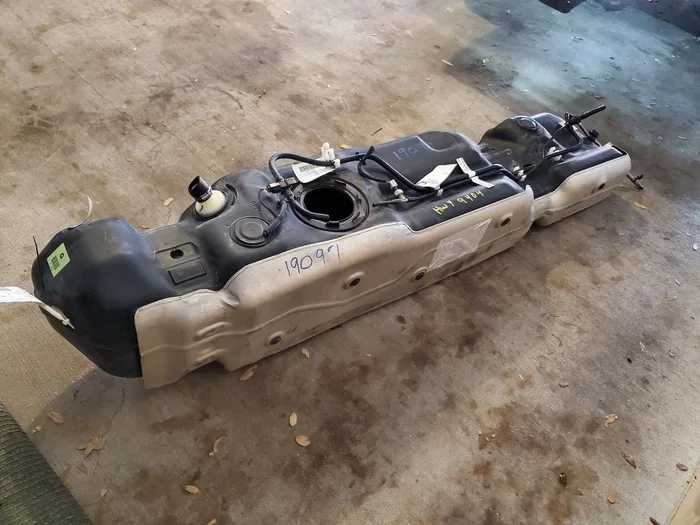
How Many Gallons Are in an F-150 Fuel Tank Capacity
The Ford F-150 fuel tank capacity varies by trim, year, and engine option, ranging from about 18 gallons to 36 gallons. Most standard F-150 models come equipped with a 23-gallon or 26-gallon tank, while larger and more powerful versions can hold up to 36 gallons. Knowing your F-150 fuel tank size helps you plan trips, estimate range, and avoid unexpected stops at the pump. This guide covers every trim level, generation, and engine combination so you always know exactly how far your truck can go.
So, how many gallons are in an F-150? The answer is not as simple as you might think. The Ford F-150 has been one of the best-selling trucks in America for decades. And with that popularity comes a lot of variation in fuel tank size. Depending on the trim level, year, and engine option, the F-150 fuel tank capacity can range from around 18 gallons all the way up to 36 gallons.
Whether you are buying a new F-150 or just trying to figure out how far your current truck can go on a full tank, this guide has you covered. We will break down every tank size, every trim, and every year so you never have to guess again. Knowing your F-150 fuel tank size is one of the easiest ways to plan road trips, estimate fuel costs, and avoid getting stranded.
The Ford F-150 comes in many configurations. There is the regular cab, the SuperCrew, and the extended cab. Each body style can come with different engine options. And each engine option can pair with a different tank size. It is a lot to keep track of. But do not worry. We will walk through it all in simple terms.
Key Takeaways
- Standard F-150 tank size: Most trims offer a 23-gallon or 26-gallon fuel tank as the default option.
- Largest tank available: The Ford F-150 Raptor and some higher trims can hold up to 36 gallons.
- Tank size varies by year: Older models and newer generations may differ significantly in fuel capacity.
- Engine choice matters: The PowerBoost hybrid, V8, and V6 engines each pair with specific tank sizes.
- Range depends on tank size and MPG: A full tank can take you anywhere from 400 to over 700 miles.
- Trim level affects capacity: XL, XLT, Lariat, and Raptor trims each have different standard tank options.
- Aftermarket upgrades exist: Some owners install larger fuel tanks for extended towing and hauling range.
📑 Table of Contents
- How Many Gallons Are in an F-150: The Short Answer
- F-150 Fuel Tank Size by Trim Level
- F-150 Fuel Tank Capacity by Year and Generation
- How Far Can an F-150 Go on a Full Tank?
- F-150 Fuel Tank Size by Engine Option
- Tips to Maximize Your F-150 Fuel Efficiency
- Aftermarket Fuel Tank Upgrades for the F-150
- Common Mistakes F-150 Owners Make About Fuel
- Key Takeaways
- Conclusion
How Many Gallons Are in an F-150: The Short Answer
If you just want a quick answer, here it is. Most Ford F-150 models come with a fuel tank that holds between 23 and 26 gallons. That is the sweet spot for the base and mid-level trims. But if you are looking at a more powerful or specialized version, the tank can be much bigger.
The F-150 Raptor often comes with a 36-gallon tank. That is the largest factory tank available for the F-150. Some older models and special editions may have smaller tanks, like 18 or 20 gallons. So the range is wide. Let us dig deeper into each trim level and see what is what.
Why Tank Size Matters for F-150 Owners
Tank size directly affects your driving range. A bigger tank means fewer trips to the gas station. For people who tow trailers, haul heavy loads, or drive long distances for work, this is a big deal. Fuel range is one of the most practical things to consider when buying a truck.
Think about it this way. If your F-150 gets 20 miles per gallon and you have a 26-gallon tank, you can go about 520 miles on a full tank. That is a serious road trip distance. But if your tank is only 18 gallons, your range drops to about 360 miles. That is a big difference. Understanding F-150 fuel tank capacity helps you make smarter buying decisions.
F-150 Fuel Tank Size by Trim Level
The trim level of your F-150 plays a huge role in determining the fuel tank size. Ford offers many trims, from the basic XL to the high-performance Raptor. Each trim comes with different standard features, and the fuel tank is no exception.
F-150 XL Fuel Tank Size
The F-150 XL is the base model. It is the workhorse of the F-150 lineup. The XL typically comes with a 23-gallon fuel tank. This is a solid size for daily driving and light-duty work. It gives you a good balance between fuel capacity and overall truck size.
Some older XL models from the early 2000s may have come with smaller tanks, around 18 to 20 gallons. But in recent years, Ford has standardized the 23-gallon tank for the base XL trim. If you are looking at an F-150 XL, expect a 23-gallon tank in most cases.
F-150 XLT Fuel Tank Size
The XLT trim is one step up from the XL. It adds more comfort and convenience features. The fuel tank size for the XLT is typically 26 gallons. This gives you a nice boost in range compared to the XL.
The 26-gallon tank is very common across the F-150 lineup. Many mid-level trims use this same tank size. If you want a good mix of comfort and fuel range, the XLT is a popular choice.
F-150 Lariat and Higher Trims Fuel Tank Size
The Lariat, King Ranch, Platinum, and Limited trims all tend to use the same 26-gallon tank as the XLT. Some higher-end models may offer an optional larger tank. This is especially true for models designed for long-distance towing or hauling.
The Lariat trim adds leather seats, better infotainment, and more comfort features. But the fuel tank size usually stays the same as the XLT. Always check the specific model year and build sheet to confirm the exact tank size.
F-150 Raptor Fuel Tank Size
The F-150 Raptor is the performance truck of the lineup. It is built for off-road racing and extreme driving. The Raptor comes with a massive 36-gallon fuel tank. That is the largest factory tank available for any F-150 model.
Why so big? The Raptor uses a lot of fuel, especially when driven hard off-road. The high-performance V6 EcoBoost engine and the heavy-duty suspension all add to fuel consumption. A 36-gallon tank helps the Raptor go longer distances between fill-ups. For anyone who loves the Raptor lifestyle, that big tank is a welcome feature.
F-150 Fuel Tank Capacity by Year and Generation
The Ford F-150 has gone through many generations since it was first introduced in 1948. Each generation brought changes to the truck, including the fuel tank size. Some years saw bigger tanks, while others had smaller ones. Let us look at how the F-150 fuel tank capacity has changed over the years.
12th Generation (2009-2014)
The 12th generation F-150 is one of the most popular eras for this truck. During this period, most models came with a 26-gallon fuel tank. Some base models may have had a 23-gallon tank. The fuel tank was made of aluminum, which helped reduce weight and improve fuel efficiency.
This generation offered a wide range of engines, from the 4.6-liter V8 to the 5.0-liter V8 and the 3.5-liter EcoBoost V6. Each engine had different fuel economy ratings, but the tank size remained fairly consistent across the lineup.
13th Generation (2015-2020)
The 13th generation brought a major redesign to the F-150. Ford switched to a fully aluminum body, which made the truck significantly lighter. The fuel tank size during this generation was typically 23 gallons for base models and 26 gallons for higher trims.
The 2015 F-150 was a game-changer for fuel economy. With the aluminum body and efficient engines, the F-150 started getting much better MPG. A 26-gallon tank on a truck that gets 25 MPG means a range of over 650 miles. That was a huge selling point for the 13th generation.
14th Generation (2021-Present)
The current 14th generation F-150 continues the trend of offering multiple tank sizes. Most models still use a 26-gallon tank as the standard. The Raptor keeps its 36-gallon tank. And with the introduction of the PowerBoost hybrid, there is even more variety in the fuel tank setup.
The PowerBoost hybrid combines a gasoline engine with an electric motor. It uses a traditional fuel tank, but the hybrid system helps improve fuel economy. This means the PowerBoost can go farther on the same amount of fuel. For 2024 and 2025 models, the tank sizes remain consistent with the 2021-2023 lineup.
How Far Can an F-150 Go on a Full Tank?
This is one of the most common questions F-150 owners ask. The answer depends on two things: the fuel tank size and the fuel economy rating. Let us break it down with some real numbers.
Here is a simple way to calculate your range. Multiply your tank size by your MPG rating. For example, a 26-gallon tank at 22 MPG gives you about 572 miles of range. A 36-gallon tank at 18 MPG gives you about 648 miles.
Of course, real-world fuel economy varies a lot. Driving habits, towing weight, road conditions, and weather all play a role. But these numbers give you a good starting point.
Estimated Range by Tank Size
Here is a quick look at how far different F-150 tank sizes can take you. These estimates are based on average fuel economy ratings for each engine type.
- 18-gallon tank: About 300 to 360 miles of range. Common in older or base models with smaller engines.
- 20-gallon tank: About 340 to 400 miles of range. Found in some special edition or older F-150s.
- 23-gallon tank: About 400 to 460 miles of range. Standard for the base XL trim in recent years.
- 26-gallon tank: About 450 to 570 miles of range. The most common tank size across the current lineup.
- 36-gallon tank: About 580 to 700 miles of range. Available on the F-150 Raptor and some limited editions.
As you can see, the difference between a 26-gallon tank and a 36-gallon tank is huge. That extra 10 gallons can add over 200 miles of range. For people who live in rural areas or travel long distances for work, that extra range is invaluable.
Factors That Affect F-150 Fuel Range
Tank size is only one piece of the puzzle. Several other factors influence how far your F-150 can go on a full tank. Let us look at the biggest ones.
- Engine type: The V8 engines tend to use more fuel than the V6 or EcoBoost options. The PowerBoost hybrid is the most fuel-efficient.
- Driving style: Aggressive driving with lots of speeding and hard braking burns fuel faster.
- Towing and hauling: Pulling a heavy trailer dramatically reduces fuel economy and range.
- Road conditions: Highway driving is more efficient than stop-and-go city driving.
- Terrain: Hilly or mountainous terrain uses more fuel than flat highway driving.
- Weather: Cold weather and using the heater can lower fuel economy.
- Tire pressure: Underinflated tires create more rolling resistance and reduce MPG.
Keeping all these factors in mind will help you get the most out of every gallon.
F-150 Fuel Tank Size by Engine Option
The engine you choose for your F-150 can also influence the fuel tank size. While most engine options share the same tank sizes within a given trim, some combinations come with unique setups.
3.3-Liter V6 Engine
The base 3.3-liter V6 engine is found in many F-150 XL and STX models. It pairs with a 23-gallon fuel tank in most configurations. This engine is reliable and gets decent fuel economy for a V6. It is a great choice for daily driving and light work.
5.0-Liter V8 Engine
The 5.0-liter V8 is a popular option for those who need towing power. It typically comes with a 26-gallon tank. The V8 uses more fuel than the V6, so the larger tank helps compensate. For towing heavy loads, the 5.0 V8 with a 26-gallon tank is a solid combination.
3.5-Liter EcoBoost V6 Engine
The 3.5-liter EcoBoost is a turbocharged V6 that delivers serious power and torque. It is available in many trims and is a favorite for towing. The EcoBoost pairs with a 26-gallon tank in most models. Its fuel economy is surprisingly good for a turbocharged engine, especially in the 14th generation.
PowerBoost Hybrid Engine
The PowerBoost hybrid is the most fuel-efficient engine in the F-150 lineup. It combines a 3.5-liter V6 with an electric motor. The fuel tank size for the PowerBoost is typically 26 gallons. But because the hybrid system boosts efficiency, the real-world range is often better than non-hybrid models.
If fuel economy is your top priority, the PowerBoost hybrid is the way to go.
High-Output V6 and V8 Options
The high-output versions of the EcoBoost and the supercharged V8 engines are found in performance models like the Raptor and the Limited. These engines are thirstier and need larger tanks. The 36-gallon Raptor tank is the best example of this. More power means more fuel consumption, so a bigger tank makes sense.
Tips to Maximize Your F-150 Fuel Efficiency
No matter what tank size your F-150 has, you can take steps to get more miles out of every gallon. These tips apply to all F-150 models and all engine types.
Drive Smoothly and Steadily
Hard acceleration and sudden braking waste fuel. Try to keep your speed steady and accelerate gently. Using cruise control on the highway is a great way to maintain a consistent speed. Smooth driving can improve your fuel economy by 10 to 15 percent.
Keep Your Tires Properly Inflated
Underinflated tires create more drag, which makes your engine work harder. Check your tire pressure at least once a month. The recommended pressure for the F-150 is usually listed on a sticker inside the driver door jamb. Properly inflated tires are one of the simplest ways to save fuel.
Reduce Excess Weight
The heavier your truck, the more fuel it uses. Remove unnecessary items from your bed and cab. Every extra 100 pounds can reduce your fuel economy by about 1 percent. Travel light whenever possible to get the best MPG.
Use the Right Oil and Keep Up with Maintenance
Using the manufacturer-recommended motor oil helps your engine run efficiently. Regular oil changes, air filter replacements, and spark plug checks all contribute to better fuel economy. A well-maintained F-150 will always get better MPG than a neglected one.
Plan Your Trips Efficiently
Combine errands into one trip instead of making multiple short drives. Cold starts use more fuel than warm engines. If you can, drive during off-peak hours to avoid stop-and-go traffic. Smart trip planning saves both time and fuel.
Aftermarket Fuel Tank Upgrades for the F-150
Some F-150 owners want even more range than what the factory offers. Fortunately, there are aftermarket options available. These larger fuel tanks can significantly increase your driving range.
Aftermarket fuel tanks are popular among over-the-road truckers, off-road enthusiasts, and anyone who regularly drives long distances. These tanks are designed to fit in the bed or under the truck, replacing or supplementing the factory tank.
Before installing an aftermarket tank, make sure it is legal in your state. Some regions have regulations about fuel tank modifications. Also, consider the impact on your truck’s weight distribution and handling. A bigger tank adds weight, which can affect your F-150’s performance.
Popular aftermarket tank brands include RTS, Fuel Safe, and Transfer Flow. These companies make tanks specifically designed for the F-150. Installation costs vary, but most setups run between 1,000 and 3,000 dollars. For serious long-distance drivers, an aftermarket tank is a worthwhile investment.
Common Mistakes F-150 Owners Make About Fuel
There are a few common mistakes that F-150 owners make when it comes to fuel management. Avoiding these can save you money and keep your truck running at its best.
Mistake 1: Ignoring the fuel gauge warning light. Many people keep driving after the low fuel light comes on. This can strain the fuel pump and leave you stranded. Fill up as soon as you can when the light comes on.
Mistake 2: Overfilling the tank. Topping off the tank can cause fuel to overflow or enter the emissions system. This can lead to expensive repairs. Stop pumping when the nozzle clicks off.
Mistake 3: Using the wrong fuel grade. Most F-150 models run fine on regular unleaded gasoline. Only the high-performance Raptor and some limited models require premium fuel. Check your owner manual to be sure.
Mistake 4: Not tracking your fuel economy. Many owners never check their actual MPG. Keeping track helps you spot problems early. If your fuel economy drops suddenly, it could signal a mechanical issue.
Avoiding these simple mistakes will help you get the most out of your F-150 fuel tank.
Key Takeaways
- Standard F-150 tank size: Most trims offer a 23-gallon or 26-gallon fuel tank as the default option.
- Largest tank available: The Ford F-150 Raptor and some higher trims can hold up to 36 gallons.
- Tank size varies by year: Older models and newer generations may differ significantly in fuel capacity.
- Engine choice matters: The PowerBoost hybrid, V8, and V6 engines each pair with specific tank sizes.
- Range depends on tank size and MPG: A full tank can take you anywhere from 400 to over 700 miles.
- Trim level affects capacity: XL, XLT, Lariat, and Raptor trims each have different standard tank options.
- Aftermarket upgrades exist: Some owners install larger fuel tanks for extended towing and hauling range.
Conclusion
So, how many gallons are in an F-150? The answer depends on your specific model, trim, and year. Most F-150 trucks come with a 23-gallon or 26-gallon fuel tank. The Raptor stands out with its 36-gallon tank. And older models may have smaller tanks in the 18 to 20-gallon range.
Understanding your F-150 fuel tank capacity is essential for planning trips, estimating costs, and making the most of your truck. Whether you use your F-150 for work, play, or both, knowing how much fuel you have and how far it can take you gives you peace of mind.
Use the information in this guide to compare tank sizes across trims and years. Factor in your driving habits and typical fuel economy. And if you need more range, consider aftermarket tank upgrades or the PowerBoost hybrid for better fuel efficiency. The Ford F-150 is a versatile and capable truck, and knowing your fuel tank size is just one way to get the most out of it.
Now that you know the answer to how many gallons are in an F-150, you can shop with confidence. Pick the tank size that fits your lifestyle, and hit the road knowing exactly how far you can go.
Frequently Asked Questions
What is the standard F-150 fuel tank size?
The standard F-150 fuel tank size is typically 23 gallons for base models like the XL and 26 gallons for higher trims like the XLT and Lariat. This is the most common tank size across recent model years and covers the majority of F-150 buyers.
Does the F-150 Raptor have a bigger fuel tank?
Yes, the F-150 Raptor comes with a 36-gallon fuel tank, which is the largest factory tank available for any F-150 model. This extra capacity helps the Raptor go longer distances, especially during off-road adventures and high-performance driving.
How far can an F-150 go on a full tank?
An F-150 with a 26-gallon tank can travel roughly 450 to 650 miles on a full tank, depending on the engine and driving conditions. The Raptor with its 36-gallon tank can go even farther, up to around 700 miles in optimal conditions.
Can I upgrade my F-150 to a larger fuel tank?
Yes, aftermarket fuel tank upgrades are available from brands like RTS, Fuel Safe, and Transfer Flow. These larger tanks can increase your range significantly, but installation costs and legal regulations vary by location.
Which F-150 engine gets the best fuel economy?
The PowerBoost hybrid engine delivers the best fuel economy in the F-150 lineup. It combines a 3.5-liter V6 with an electric motor to achieve impressive MPG ratings, making it ideal for drivers who want maximum range from their fuel tank.
Did older F-150 models have smaller fuel tanks?
Yes, many older F-150 models from the 1990s and early 2000s had fuel tanks as small as 18 to 20 gallons. Over the years, Ford increased the standard tank size to improve range and convenience for truck owners.