Can You Test a Car Battery With a Multimeter Right Now
Yes, you can test a car battery with a multimeter right now and it takes less than five minutes. This guide shows you exactly how to check your battery health using simple multimeter settings and get accurate multimeter readings every time. You will learn voltage testing, load testing, and how to spot dead battery symptoms before you get stranded.
Have you ever turned the key and heard nothing but a slow click? That sound can mean your car battery is dying. The good news is that you do not need a mechanic to figure out what is going on. Can you test a car battery with a multimeter right now? Absolutely. You just need a simple tool and a few minutes.
Testing your battery health at home is one of the easiest things you can do as a car owner. A digital multimeter costs under thirty dollars and works for many tasks around the house. In this guide, I will walk you through every step. You will learn how to check voltage, understand what the numbers mean, and know exactly when to replace your battery.
Whether your battery is old or new, testing it regularly keeps you safe on the road. Cold cranking amps, alternator output, and parasitic draw are all things you can check with the right approach. Let us get into it.
Key Takeaways
- Testing is easy: A digital multimeter lets you check your 12-volt battery in minutes.
- Voltage tells the story: A fully charged battery should read 12.6 volts or higher at rest.
- Safety first: Always wear gloves and check for battery corrosion before testing.
- Load testing matters: Voltage alone does not tell the full story about battery capacity.
- Replace when needed: Readings below 12.0 volts mean your battery needs attention or replacement.
- Prevent problems: Regular battery maintenance saves money and avoids unexpected breakdowns.
📑 Table of Contents
Why Testing Your Car Battery Matters
Your car battery is the heart of your electrical system. It powers the starter, the lights, and all the electronics. When it fails, your car does not start. Period. Many people ignore their battery until it is too late. A quick voltage test can save you from a very bad day.
Signs Your Battery Is Failing
Watch for these warning signs. They tell you that your battery may need testing soon:
- Slow engine crank when you turn the key.
- Dim headlights or flickering dashboard lights.
- Battery corrosion around the terminals.
- Check engine light that comes on for no clear reason.
- Electrical glitches like power windows moving slowly.
Why Most People Ignore Warning Signs
Most drivers assume their battery will just keep working. But batteries wear out over time. Heat, cold, short trips, and age all take a toll. A battery capacity test gives you the truth. You do not have to guess. You can know for sure whether your battery still has life in it.
What You Need to Test a Car Battery
Before you start, gather a few things. You do not need much. The right tools make the job fast and accurate.
Choosing the Right Multimeter
A digital multimeter is the best choice for most people. It gives clear numbers on an easy-to-read screen. Analog multimeters work too, but they are harder to read. Look for one that measures voltage, amps, and ohms. A basic model works fine for battery testing.
Here are some things to look for when buying one:
- Auto-ranging feature for easy use.
- Backlit display for reading in dim garages.
- Overload protection to prevent damage.
- Test leads with good clips.
Safety Tips Before You Start
Safety matters. Batteries contain acid and can produce sparks. Follow these rules every time:
- Wear safety gloves and eye protection.
- Turn off the car engine and all accessories.
- Do not smoke near the battery.
- Check for cracks or leaks on the battery case.
- Keep metal tools away from both terminals at once.
Also, make sure your hands are dry. Water and electricity do not mix. If you see heavy battery corrosion, clean the terminals first. A wire brush and baking soda paste work great for this.
How to Test a Car Battery With a Multimeter Right Now
This is the core of what you came here to learn. Follow these steps carefully and you will get reliable results every time.
Step 1: Set Up Your Multimeter
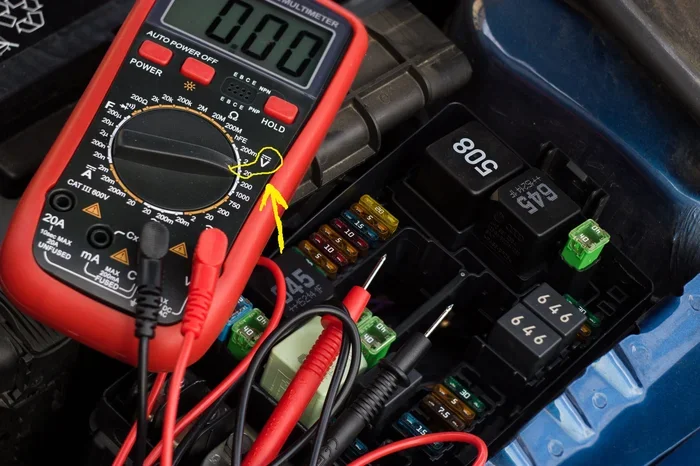
First, turn on your digital multimeter. Set the dial to DC voltage. Look for the “V” symbol with a straight and curved line next to it. This measures the resting voltage of your battery. If your multimeter has different voltage ranges, choose the 20-volt setting.
Step 2: Let the Battery Rest
Do not test the battery right after driving. The resting voltage gives you the most accurate picture. Wait at least thirty minutes after turning off the engine. This lets the chemical reaction inside the battery settle down. The number you get will be much more reliable.
Step 3: Connect the Probes
Now it is time to connect the leads. Follow this order:
- Plug the black lead into the COM port on the multimeter.
- Plug the red lead into the V-ohm port.
- Touch the black probe to the negative battery terminal.
- Touch the red probe to the positive battery terminal.
Make sure the clips bite cleanly onto the terminals. Do not let the probes touch each other. A multimeter reading will appear on the screen within seconds.
Step 4: Read the Voltage
Look at the number on the display. Here is what it means:
- 12.6 volts or higher: Your battery is fully charged and healthy.
- 12.4 volts: About 75% charged. It is okay but needs attention soon.
- 12.2 volts: About 50% charged. The battery is weakening.
- 12.0 volts or below: The battery is dead or very weak. It needs charging or replacement.
If your reading is below 12.0, do not keep trying to start the car. That drains it even more. Use a battery charger or get a jump start.
Step 5: Test Under Load
Voltage at rest tells only part of the story. A battery load test shows how the battery performs when the starter demands power. Ask a friend to turn the key to the start position (do not crank for more than five seconds). Watch the multimeter while they do this.
A healthy battery should not drop below 10.0 volts during cranking. If it drops fast or stays low, the battery capacity is weak. The battery may fail soon even if the resting voltage looked okay.
Understanding Your Multimeter Readings
Numbers on a screen can feel confusing at first. But once you know what to look for, it becomes second nature. Let us break down the most important readings.
What Good Voltage Looks Like
A fully charged battery at rest should read 12.6 volts. This is the gold standard. When the engine is running, the alternator output should push the voltage to between 13.7 and 14.7 volts. This means the alternator is charging the battery properly.
If the running voltage is below 13.5, the alternator may not be working right. If it is above 15.0, the voltage regulator could be failing. Both situations need attention from a mechanic.
When to Replace Your Battery
Sometimes testing tells you the battery is done. Here are clear signals that replacement is needed:
- The battery is more than three to five years old.
- Resting voltage stays below 12.4 after a full charge.
- The battery drops below 10.0 volts during cranking.
- You have to jump-start the car more than twice a month.
- The case is swollen, cracked, or leaking.
Do not wait until you are stranded. Replacing a battery early saves you from costly towing and missed appointments. Keep track of when you bought your battery. Write the date on the case with a marker if you need to.
Common Mistakes People Make When Testing Batteries
Even with a good multimeter, mistakes can throw off your results. Knowing what to avoid makes your testing much more reliable.
Wrong Multimeter Settings
One of the most common errors is using the wrong measurement mode. If you set the dial to amps instead of volts, you will get a zero or a wrong reading. Always double-check that you are in DC voltage mode before connecting the probes. This simple step saves a lot of confusion.
Ignoring Terminal Corrosion
White or blue-green buildup on the terminals creates resistance. This can make your multimeter reading look worse than it really is. Clean the terminals with a wire brush and a paste of baking soda and water. Rinse with a little water and dry thoroughly before testing again.
Testing After Short Drives
Short trips do not fully recharge a battery. If you test right after a five-minute drive, the voltage may be artificially low. Always let the battery rest for at least thirty minutes. This gives you a true picture of the battery health.
Forgetting to Check the Alternator
A bad battery is not always the problem. A weak alternator can cause all the same symptoms. After testing the battery, check the alternator output with the engine running. If the voltage is not between 13.7 and 14.7, the alternator may be the real issue.
Expert Tips for Long Battery Life
Testing is great, but prevention is even better. A few simple habits keep your battery strong for years.
Battery Maintenance Schedule
Make battery checks part of your routine. Here is a simple schedule to follow:
- Every month: Look at the terminals for corrosion.
- Every three months: Do a full voltage test with your multimeter.
- Every six months: Clean the terminals and tighten the connections.
- Once a year: Have a professional do a load test at an auto parts store.
Most auto parts stores will test your battery for free. They use professional load test equipment that gives you a complete picture. This is a great way to double-check your own readings.
When to Call a Professional
Sometimes the problem goes deeper than the battery. If your tests look normal but the car still will not start, the issue could be the starter, the alternator, or a wiring problem. A voltage drop test checks for hidden resistance in the cables. This is a job for a trained technician if you are not comfortable doing it yourself.
Also, if you notice a parasitic draw that drains the battery overnight, a professional can run a draw test to find the culprit. Common causes include faulty dome lights, bad relays, or aftermarket electronics left wired in.
Quick Tips to Remember
Here are some fast tips to keep in mind every time you test:
- Always test a cold battery for the most accurate resting voltage.
- Keep your multimeter probes clean and free of debris.
- Write down your readings over time to track trends.
- Do not test a frozen battery. If the temperature is below freezing, warm the battery first.
- Replace your multimeter batteries regularly for accurate readings.
Frequently Asked Questions
Can I test my car battery without a multimeter?
Yes, you can use a battery tester tool or even try the headlight test. Turn on the headlights and wait a few minutes. If they are very dim when you start the car, the battery may be weak. However, a multimeter gives you the most accurate and detailed multimeter reading of your battery’s true condition.
What should a fully charged car battery read on a multimeter?
A fully charged battery should read 12.6 volts or higher when the engine is off and the battery has been resting for at least thirty minutes. Anything below 12.4 volts means the battery needs charging or further testing. This simple battery voltage test takes less than two minutes.
How often should I test my car battery?
Testing every three months is a good habit. If you live in a very hot or very cold climate, test more often. Extreme temperatures speed up battery wear. Regular battery maintenance helps you catch problems before they leave you stranded.
Can a bad alternator give a normal battery reading?
Yes, it can. A battery can show a good resting voltage even when the alternator is failing. This is why you should also check the alternator output with the engine running. The voltage should be between 13.7 and 14.7 volts. If it is not, the alternator may be the real problem.
Is it safe to test a car battery by myself?
It is very safe as long as you follow basic precautions. Wear gloves, keep the area well-ventilated, and never let the probes touch both terminals at the same time. As long as you use the right multimeter settings and take your time, testing your own battery is simple and risk-free.
What causes battery sulfation?
Battery sulfation happens when a battery sits too long at a low charge. Lead sulfate crystals build up on the plates and reduce battery capacity. This is why keeping your battery charged and testing it regularly with a digital multimeter can help you catch low charge levels before permanent damage occurs.
Conclusion
Can you test a car battery with a multimeter right now? Yes, and you should. A quick voltage check takes only a few minutes and gives you peace of mind. You now know how to set up your digital multimeter, read the numbers, and understand what they mean. You also know when to replace the battery and how to avoid common testing mistakes.
Regular testing is the best way to extend the life of your battery and avoid surprise breakdowns. A few simple checks each month can save you hundreds of dollars in towing and replacement costs. Keep your multimeter in the glove box and make it a habit to check your battery health often.
The road ahead is better when you are prepared. Grab your digital multimeter, follow the steps in this guide, and take control of your car’s battery maintenance today. Your future self will thank you the next time you turn the key and hear that engine roar to life.