Can You Lease a Car With Bad Credit Here Is Your Answer
Yes, you can lease a car with bad credit, though your options may be more limited. Many leasing companies and dealerships offer subprime lease deals designed for people with lower credit scores. This guide covers everything you need to know about leasing a car with bad credit, including requirements, tips to improve your chances, and practical steps to get behind the wheel faster.
Have you ever wanted to drive a new car but thought your credit score would hold you back? You are not alone. Thousands of people ask themselves the same question every day. The good news is that you can lease a car with bad credit. It is not always easy, but it is definitely possible. Let us walk through how it works and what you can do to get approved.
Leasing a car means you pay to use the vehicle for a set period, usually two to four years. At the end of the lease, you return the car or buy it out. Many people prefer leasing because the monthly payments are often lower than loan payments. But when your credit score is less than perfect, the process can feel overwhelming. That is exactly why this guide exists. We will break down every option, every tip, and every strategy you need to know.
Your credit score matters a lot when leasing a car. Lenders use it to decide how risky you are as a borrower. A low score means lenders see more risk. But risk does not mean rejection. It just means you need to know the landscape better. Let us dive in and explore your options.
Key Takeaways
- Bad credit does not block you from leasing: Several lenders and dealers specialize in subprime lease approvals.
- Expect higher rates and larger down payments: Your lease terms will reflect the risk lenders take on.
- A co-signer can boost your approval odds: Adding someone with good credit strengthens your application.
- Check your credit report first: Fixing errors before applying can improve your chances significantly.
- Shop around for the best deals: Not all leasing companies treat bad credit the same way.
- Lease payments build credit over time: Making on-time payments helps you rebuild your score.
- Know your credit score range: Understanding where you stand helps you set realistic expectations.
📑 Table of Contents
- Understanding Bad Credit and Leasing
- Can You Lease a Car With Bad Credit? Yes, Here Is How
- Steps to Improve Your Chances of Lease Approval
- Pros and Cons of Leasing With Bad Credit
- How Leasing With Bad Credit Can Help Rebuild Your Credit
- Common Mistakes to Avoid When Leasing With Bad Credit
- Expert Tips for Getting the Best Lease Deal With Bad Credit
- Comparing Lease Options for Bad Credit
- Frequently Asked Questions
- Final Thoughts
Understanding Bad Credit and Leasing
What Counts as Bad Credit?
Credit scores range from 300 to 850. Most people do not know exactly where they stand. A bad credit score typically falls below 620 on the FICO scale. Some lenders consider anything under 580 to be very poor. But different leasing companies use different standards. What one company sees as risky, another might accept with a higher interest rate.
Here is a simple breakdown of credit score ranges:
- Excellent: 750 and above
- Good: 700 to 749
- Fair: 650 to 699
- Poor: 600 to 649
- Very Poor: Below 600
If your score falls in the poor or very poor range, do not panic. You still have options. Many leasing companies for bad credit exist specifically to help people in your situation. The key is knowing what to expect and how to prepare.
Why Do Lenders Care About Credit Scores?
Lenders want to know they will get paid back. Your credit score is their shortcut to judging your reliability. A higher score shows a history of on-time payments and responsible borrowing. A lower score raises red flags. This does not mean you are a bad person. It just means the lender needs extra reassurance.
When you apply for a lease with bad credit, lenders will look at your score and adjust the terms accordingly. You might face higher interest rates, larger down payments, or stricter lease terms. Understanding this helps you set realistic goals and avoid disappointment.
Can You Lease a Car With Bad Credit? Yes, Here Is How
The short answer is yes. You can lease a car with bad credit. But the process requires more work and patience. Let us look at the main paths people take to get a lease despite a low credit score.
Subprime Leasing Options
Subprime lenders specialize in working with people who have poor credit. These lenders understand that credit scores do not tell the whole story. They look at your income, employment history, and overall financial picture. A subprime auto lease usually comes with higher interest rates and shorter lease terms.
Some well-known subprime lease programs include:
- LeaseTrader: Allows you to take over existing leases
- Carvana: Offers lease-like options with flexible terms
- Bad credit dealerships: Many local dealers partner with subprime lenders
- Credit unions: Often more flexible than big banks
These options are not perfect, but they provide real paths forward. The interest rates will be higher than what someone with great credit pays. But that is the trade-off for getting behind the wheel now.
The Role of a Co-Signer
Having a co-signer can change everything. A co-signer with good credit essentially vouches for you. The lender sees their strong credit history and feels more confident approving your lease. This is one of the most effective ways to get a car lease with bad credit.
But there is a big responsibility involved. If you miss a payment, the co-signer is legally responsible. This can damage their credit too. Only use a co-signer if you are confident you can make every payment on time. The relationship is built on trust and shared financial risk.
Higher Down Payments and Monthly Payments
When you lease with bad credit, expect to pay more upfront. Lenders want to reduce their risk. A larger down payment for a lease shows you are serious and financially stable. Some lenders may require a down payment of $2,000 to $5,000 or more.
Your monthly payments will also be higher than they would be for someone with good credit. The higher interest rates get baked into every monthly payment. This means you pay more over the life of the lease. Budget carefully and make sure the payments fit comfortably into your monthly income.
Steps to Improve Your Chances of Lease Approval
Getting approved for a lease with bad credit is not just about luck. You can take concrete steps to improve your odds. Here is a practical action plan.
Check Your Credit Report for Errors
Before you apply anywhere, pull your credit report. You are entitled to a free report from each of the three major bureaus once a year. Look for errors like late payments you never made or accounts that are not yours. Even one error can drag your score down significantly.
If you find mistakes, dispute them immediately. The credit bureaus are required to investigate your dispute within 30 days. Fixing even small errors can boost your score enough to qualify for better lease terms.
Gather Your Financial Documents
Lenders want to see proof of income. Gather your pay stubs, tax returns, and bank statements before you apply. Showing a stable income tells lenders you can handle the monthly lease payments. The more documentation you provide, the stronger your application looks.
Also, prepare a list of your monthly expenses. This helps you understand how much you can afford for a lease payment. Lenders will look at your debt-to-income ratio too. Keeping this ratio low improves your chances of approval.
Research Leasing Companies That Work With Bad Credit
Not all leasing companies are created equal. Some specialize in helping people with poor credit. Do your homework before you visit a dealership. Look for online reviews, check their reputation, and read customer testimonials.
Here are some quick tips for finding the right company:
- Search for “lease a car with bad credit” online
- Read reviews on trusted sites like Trustpilot or Google
- Ask friends or family for recommendations
- Visit local credit unions and ask about their lease programs
- Compare offers from at least three different lenders
Shopping around takes time, but it pays off. You might find a better deal than you expected.
Consider a Shorter Lease Term
Longer lease terms mean more risk for the lender. When you have bad credit, a shorter lease term can actually help you get approved. A two-year lease shows the lender you are committed and reduces their exposure. Plus, shorter leases often come with lower total costs.
After you build some positive payment history, you might even qualify for a longer lease or better terms. Think of this as a stepping stone to better financial opportunities.
Pros and Cons of Leasing With Bad Credit
Every financial decision has trade-offs. Leasing a car with bad credit is no different. Let us look at both sides so you can make an informed choice.
The Advantages
- Lower monthly payments than buying: Lease payments are typically lower than loan payments for the same vehicle
- Drive a newer car: Leasing lets you get a newer model with the latest features
- Lower repair costs: New cars usually come with warranties that cover repairs
- Credit building opportunity: Making on-time lease payments helps rebuild your credit score
- No long-term commitment: At the end of the lease, you simply return the car
The Disadvantages
- Higher interest rates: You will pay more in interest than someone with good credit
- Larger down payments required: Expect to put more money down upfront
- Mileage limits: Most leases cap you at 10,000 to 15,000 miles per year
- Fees and penalties: Late payments, excess wear, and over-mileage charges add up fast
- Limited vehicle choices: Some leasing companies restrict the models you can choose
Weigh these pros and carefully against your situation. Leasing might still be the right move even with the downsides. It depends on your needs, budget, and goals.
How Leasing With Bad Credit Can Help Rebuild Your Credit
One of the biggest benefits of leasing a car with bad credit is the opportunity to rebuild your credit score. Every on-time payment you make gets reported to the credit bureaus. Over time, these positive marks can significantly improve your credit profile.
Think of it as a credit-building tool. You get to drive a car while simultaneously working toward a better financial future. Here is how it works in practice:
- Make all payments on time: Set up automatic payments so you never miss a due date
- Keep your credit utilization low: Do not max out your credit cards while paying the lease
- Avoid taking on new debt: Focus on the lease and nothing else during the term
- Monitor your credit regularly: Check your score every few months to track progress
After 12 to 24 months of consistent payments, many people see their credit score rise by 30 to 50 points or more. That improvement can open doors to better lease terms, lower interest rates, and more financial freedom down the road.
Common Mistakes to Avoid When Leasing With Bad Credit
Knowing what not to do is just as important as knowing what to do. Here are some common pitfalls that people fall into when trying to lease a car with bad credit.
Skipping the Fine Print
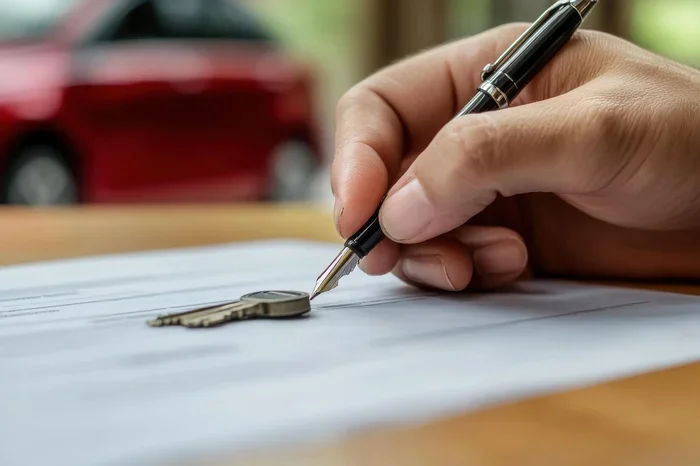
Always read the full lease agreement before you sign. Some leases include hidden fees, early termination penalties, or costly maintenance requirements. If something is unclear, ask the dealer or lender to explain it in plain language. Never sign a document you do not fully understand.
Choosing a Car You Cannot Afford
It is tempting to stretch for a nicer car than you can actually afford. Resist that urge. Pick a vehicle that fits comfortably within your budget. Remember that lease payments are just one part of car ownership. You also need to pay for insurance, fuel, and routine maintenance.
Not Comparing Multiple Offers
Taking the first offer you receive is a costly mistake. Different lenders offer very different terms for the same vehicle. Compare at least three offers before making a decision. Look at the total cost of the lease, not just the monthly payment.
Ignoring Your Credit Score Until It Is Too Late
Do not wait until you are at the dealership to check your credit. Know your score ahead of time so you can set realistic expectations. If your score is low, take steps to improve it before applying. Even small improvements can lead to better lease terms.
Expert Tips for Getting the Best Lease Deal With Bad Credit
Getting a lease with bad credit does not mean you have to accept bad terms. Here are some expert-backed tips to help you get the best possible deal.
Negotiate Everything
Many people forget that lease terms are negotiable. The monthly payment, the down payment, the mileage cap, and the interest rate are all open for discussion. Do not accept the first offer on the table. Walk in prepared with research and be willing to walk out if the terms are not right.
Look for Lease Takeovers
Platforms like LeaseTrader and Swapalease let you take over someone else’s existing lease. This can be a great option because the lease already has favorable terms. The credit check is often less strict too. You might find a lease takeover that saves you thousands of dollars.
Save for a Bigger Down Payment
The more money you put down, the less risk the lender takes. A larger down payment for a lease can help you qualify for better interest rates. Even an extra $1,000 or $2,000 can make a meaningful difference in your monthly payment and overall lease cost.
Consider a Shorter Lease Duration
As mentioned earlier, shorter lease terms are easier to get approved for. A 24-month lease might come with better terms than a 36 or 48-month lease. Once you prove yourself as a reliable payer, you can upgrade to a longer lease in the future.
Comparing Lease Options for Bad Credit
Not all lease options are created equal. Here is a quick comparison of the main paths available to someone with bad credit.
| Option | Pros | Cons |
|---|---|---|
| Subprime Dealer Lease | Wide selection of vehicles, in-house financing | Higher interest rates, larger down payments |
| Lease Takeover | Existing good terms, less strict credit check | Limited vehicle choices, mileage restrictions carry over |
| Credit Union Lease | Lower rates than banks, more flexible terms | Requires membership, approval process can be slower |
| Buy Here Pay Here Lease | Easy approval, minimal documentation | Very high interest rates, limited vehicle quality |
Each option has its place depending on your situation. The best choice depends on your credit score, budget, and how quickly you need a vehicle. Take your time and choose wisely.
Frequently Asked Questions
Can I lease a car with a credit score below 550?
Yes, it is possible but very challenging. You will need a co-signer or a larger down payment. Some subprime lenders and buy-here-pay-here dealerships work with scores in this range. Your best bet is to improve your score even slightly before applying, as it can unlock better terms and lower interest rates.
Does leasing a car help build credit?
Yes, leasing a car can help rebuild your credit score. As long as you make all payments on time, the lease activity gets reported to the credit bureaus. Over time, consistent on-time payments can raise your score significantly. This makes leasing a smart move for people looking to improve their credit history.
How much of a down payment do I need for a lease with bad credit?
Expect to pay between $2,000 and $5,000 upfront, though some lenders may require more. The exact amount depends on your credit score, income, and the leasing company. Putting more money down can help you qualify for better interest rates and lower monthly payments.
Can I lease a car with no credit history at all?
Yes, you can. Leasing with no credit is similar to leasing with bad credit. You will need a co-signer or a larger down payment. Some lenders specialize in no-credit situations and will evaluate your income and employment history instead of relying solely on your credit score.
What is the difference between leasing with bad credit and getting a bad credit auto loan?
A lease is a rental agreement where you pay to use the car for a set period. A loan is a purchase agreement where you pay to own the car. With bad credit, lease terms are usually stricter and interest rates higher. However, lease payments tend to be lower than loan payments for the same vehicle. Both options can help you drive now while working toward better credit.
Are there any hidden fees I should watch out for?
Yes, always read the lease agreement carefully. Common hidden fees include acquisition fees, disposition fees, early termination penalties, and excess wear-and-tear charges. Ask the dealer to explain every fee before you sign. Understanding the full cost of the lease prevents unpleasant surprises later.
Final Thoughts
Can you lease a car with bad credit? The answer is a clear yes. It takes more effort, more preparation, and sometimes a higher price tag. But the opportunity is absolutely there. Whether you choose a subprime lease, a lease takeover, or a credit union option, you have real paths forward.
The most important thing is to go in with your eyes open. Know your credit score. Understand the terms. Budget carefully. And never accept a deal that does not feel right. Leasing with bad credit is not just about getting a car today. It is about building toward a better financial future tomorrow.
Take the steps outlined in this guide. Check your credit report. Gather your documents. Shop around. Compare offers. Every smart move you make brings you closer to driving the car you want while improving your financial health. Start today, and your future self will thank you.