Difference Between Mazda CX-5 and CX-30 – Pick the Right One
The difference between Mazda CX-5 and CX-30 comes down to size, price, and purpose. The CX-5 is a compact SUV with more room and power, while the CX-30 is a stylish subcompact SUV built for city driving. Both are excellent Mazda crossover models, but each serves a different driver.
Choosing between two great SUVs can be tough. That is exactly why we put together this difference between Mazda CX-5 and CX-30 guide. Both are popular Mazda crossover models, but they are not the same. One is bigger, one is more affordable, and each has its own strengths.
Whether you are shopping for a family SUV or a stylish city runabout, this comparison covers everything you need. We looked at size, price, performance, safety, and more. By the end, you will know exactly which Mazda CX-5 or Mazda CX-30 fits your life best.
The vehicle comparison below breaks down every major category. We kept the language simple so you can make a confident choice. No jargon, no fluff. Just clear, honest info to help you decide.
Key Takeaways
- Size Matters: The CX-5 is larger, with more cargo space and rear-seat room than the CX-30.
- Price Difference: The CX-30 starts at a lower price point, making it a budget-friendly option.
- Performance: Both SUVs share the same engine family, but the CX-5 offers more horsepower and a turbo option.
- Fuel Economy: The CX-30 edges ahead in fuel economy thanks to its lighter weight.
- Safety Features: Both models come packed with Mazda i-Activsense safety tech as standard.
- Target Audience: The CX-5 suits families, while the CX-30 appeals to young professionals and urban drivers.
- Driving Feel: The CX-5 offers a stable ride, while the CX-30 feels nimble and sporty.
📑 Table of Contents
What Sets the Mazda CX-5 Apart from the CX-30?
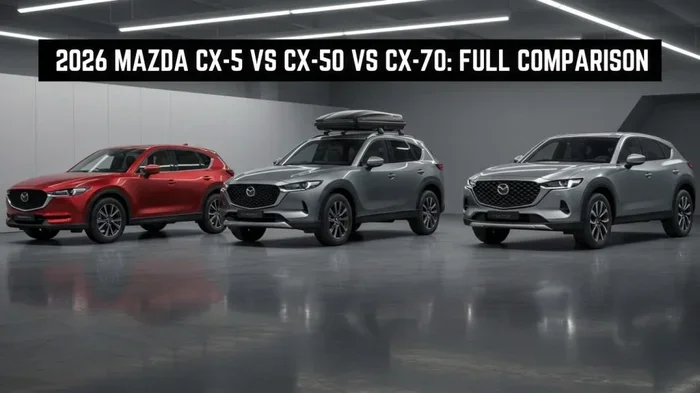
The difference between Mazda CX-5 and CX-30 starts with their size and positioning. The CX-5 is a compact SUV that has been a market leader for years. The CX-30 is a newer subcompact SUV that slots below the CX-5 in Mazda’s lineup. Think of the CX-30 as the younger, smaller sibling in the family.
Both SUVs share the same design language from Mazda. You will notice the same sleek profiles, sporty front grille, and premium interiors. But the CX-5 is longer, wider, and taller. This gives it a more commanding road presence.
Size and Dimensions
The CX-5 is a full-size compact crossover in its class. It measures about 179 inches long, while the CX-30 comes in at around 173 inches. That six-inch difference adds up in real-world use.
Here is a quick look at the key dimensions:
- CX-5 Length: 179 inches
- CX-30 Length: 173 inches
- CX-5 Cargo Volume: 30.9 cubic feet
- CX-30 Cargo Volume: 20.1 cubic feet
- CX-5 Rear Seat Legroom: 37.1 inches
- CX-30 Rear Seat Legroom: 33.4 inches
If you often carry passengers in the back seat, the CX-5 wins easily. The extra rear seat room makes long trips far more comfortable. The CX-30 is better suited for couples or singles who rarely fill the back seat.
Who Each SUV Is Best For
The CX-5 is a true family SUV. It can comfortably seat five adults and still leave room for groceries or luggage. Families who need space will find the CX-5 hard to beat.
The CX-30 targets a different buyer. It is ideal for young professionals, city dwellers, and anyone who values style over raw space. Its smaller footprint makes it easy to park in tight spots. If you live in a busy downtown area, the CX-30 will feel right at home.
Also, consider your drivetrain needs. Both models offer front-wheel drive as standard. All-wheel drive is available on higher trims for both. AWD is a smart choice if you live in a snowy or rainy climate. It adds confidence and traction when roads get tricky.
Price and Value Comparison
Price is one of the biggest factors in any vehicle comparison. The starting price of each SUV plays a big role in who will buy it. Let us break down the numbers.
Starting Prices and Trim Levels
The Mazda CX-30 starts at a lower price than the CX-5. This makes it an attractive entry point for first-time SUV buyers. The CX-5 costs more, but it also delivers more value in terms of space and features.
Both models offer multiple trim levels. The base trims are well-equipped, and higher trims add premium touches like leather seats, premium audio, and advanced driver aids. Here is a quick look:
- CX-30 Base Trim: Starts around $23,000
- CX-5 Base Trim: Starts around $28,000
- CX-30 Top Trim: Around $34,000
- CX-5 Top Trim: Around $39,000
Keep in mind that prices vary by region and model year. Always check with your local dealer for current pricing. Also, consider leasing options if you prefer lower monthly payments. Both SUVs are popular choices for lease deals, and you may qualify for special Mazda financing offers.
Cost of Ownership
When you look beyond the sticker price, the cost of ownership matters too. The CX-30 has a slight edge here. It is lighter and uses less fuel, which means lower running costs over time. Insurance costs are also slightly lower for the CX-30 since it is less expensive to replace.
The CX-5 costs more upfront, but it also holds its value better. Mazda resale values are strong across the lineup, and the CX-5 is no exception. If you plan to sell or trade in your vehicle in a few years, the CX-5 may give you a better return on your investment.
Maintenance costs are similar for both models. Mazda parts are reasonably priced, and both SUVs have good reliability ratings. Regular oil changes and tire rotations will keep either vehicle running smoothly for years.
Performance and Driving Dynamics
Both SUVs use Mazda’s Skyactiv engine technology. This means you get responsive power and good fuel efficiency in both models. But there are differences worth noting.
Engine and Horsepower
The base engine in both the CX-5 and CX-30 is a 2.5-liter four-cylinder. It produces about 187 horsepower in the CX-5. The CX-30 makes slightly less, around 186 horsepower. The difference is small, but the CX-5 feels more powerful because it is heavier.
For those who want more punch, the CX-5 offers a turbocharged 2.5-liter engine option. This version produces 227 horsepower and 320 pound-feet of torque. The CX-30 does not have a turbo option. If you enjoy spirited driving, the turbocharged CX-5 is hard to beat.
Both SUVs come with a six-speed automatic transmission. The shifts are smooth and quick. You will not find a manual gearbox in either model, which may disappoint driving purists. But the automatic transmission is well-tuned and handles daily driving with ease.
Fuel Economy
Fuel economy is where the CX-30 shines. Because it weighs less, it does not need as much fuel to move. Here is a quick comparison:
- CX-5 Fuel Economy: 25 mpg city / 31 mpg highway
- CX-30 Fuel Economy: 26 mpg city / 33 mpg highway
The CX-30 saves about 1 to 2 mpg in real-world driving. Over several years, that adds up to meaningful savings at the pump. If fuel economy is a top priority, the CX-30 has a slight advantage.
Quick Tip: The CX-30’s lighter body also means it handles more nimbly. If you enjoy spirited cornering and quick direction changes, you may prefer the CX-30’s driving feel. It is a fun car to drive in the city.
On the highway, the CX-5 feels more planted and stable. Wind noise is slightly lower in the CX-5 thanks to its larger size and better aerodynamics. Long road trips in the CX-5 are comfortable and relaxing. The CX-30 is still good on highways, but it feels a bit more lively and less settled at high speeds.
Safety and Technology Features
Safety is a top priority for most SUV buyers. Both the CX-5 and CX-30 come loaded with advanced safety features. Mazda’s i-Activsense suite is standard on both models, which is impressive for this price range.
Driver-Assistance Technology
Both SUVs offer a similar suite of driver-assistance tools. You get adaptive cruise control, lane-keeping assist, automatic emergency braking, and blind-spot monitoring. These features work well and are intuitive to use.
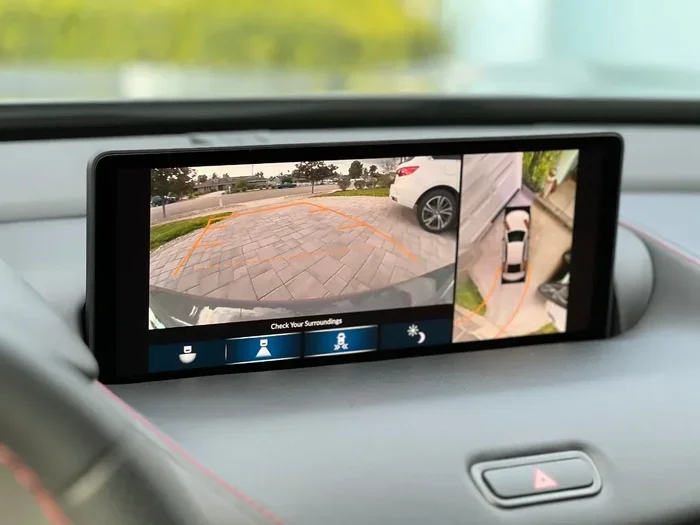
The CX-5 does offer some additional safety options on higher trims. For example, the CX-5 can get a 360-degree camera system and smart brake support for low-speed driving. These extras make parking and navigating tight spaces much easier.
Both models earned top safety ratings from crash testing organizations. Mazda builds these SUVs with strong body structures and smart engineering. You can feel confident knowing either vehicle is built to protect you and your passengers.
Infotainment and Interior Features
Inside, both SUVs feel premium for their price range. The interiors use quality materials, soft-touch surfaces, and thoughtful design. The infotainment system on both models features an 8.8-inch touchscreen with Apple CarPlay and Android Auto.
The CX-5 has a slightly larger center stack display on higher trims. The CX-30 keeps things simple and clean. Both systems are easy to use, and the graphical interface is clear and responsive.
One thing to note: neither SUV offers a large-screen display like some competitors. If you want a massive 12-inch screen, you will need to look at other brands. But the Mazda systems are well-designed and do not distract from driving.
Common Mistake: Many buyers overlook interior quality when comparing SUVs. Do not just look at specs. Sit inside both the CX-5 and CX-30. The fit and finish of Mazda interiors is excellent, and you will notice the difference in person.
Both models also offer wireless phone charging, Bose premium audio, and multi-zone climate control on higher trims. The CX-5 has a bit more room up front, which means the driver and front passenger get extra legroom. The CX-30 is still comfortable up front, but it is tighter for taller drivers.
Which Mazda Should You Choose?
This is the big question. The answer depends on your lifestyle, budget, and priorities. Let us make it easy for you.
Choose the CX-5 If…
- You need more seating and cargo space for your family
- You want the turbocharged engine option for more power
- You plan to keep the vehicle for many years and care about resale value
- You frequently drive on highways and want a stable, comfortable ride
- You prefer a larger vehicle with a more commanding presence
- You need the extra cargo space for road trips or hauling gear
- You want the best driving dynamics in a family-friendly package
Choose the CX-30 If…
- You have a tighter budget and want a lower entry price
- You mostly drive in the city and need easy parking
- You are a single buyer or couple who rarely fills the back seat
- You value fuel economy and lower running costs
- You want a stylish, compact crossover that still feels premium
- You prefer a lighter, more nimble vehicle for daily commuting
- You are interested in leasing options with lower monthly payments
Both SUVs are excellent choices. You really cannot go wrong with either one. The key is matching the right Mazda crossover to your daily needs.
Expert Insight: Test drive both models back-to-back if possible. The difference in size and feel becomes obvious once you are behind the wheel. What looks good on paper may not match your real-world experience. Bring your family along and see how they fit in the back seat.
Final Thoughts
The difference between Mazda CX-5 and CX-30 comes down to size, price, and who you are. The CX-5 is the bigger, more powerful, and more spacious option. It is the better choice for families and long-distance drivers.
The CX-30 is the smarter pick for those who want a stylish, efficient, and affordable compact SUV. It is perfect for city life and daily commuting. Both SUVs deliver the driving dynamics and build quality you expect from Mazda.
Take your time, test drive both, and trust your gut. The right Mazda CX-5 or Mazda CX-30 is out there waiting for you. Make your choice based on what fits your life, and you will be happy with your decision.
Frequently Asked Questions
Is the Mazda CX-30 smaller than the CX-5?
Yes, the CX-30 is a subcompact crossover, while the CX-5 is a compact SUV. The CX-30 is about six inches shorter and offers less cargo space and rear-seat room. It is designed for buyers who prioritize style and city-friendly size.
Which Mazda SUV has better fuel economy?
The CX-30 has slightly better fuel economy than the CX-5. The CX-30 delivers about 26 mpg in the city and 33 mpg on the highway, while the CX-5 gets around 25 mpg city and 31 mpg highway. The weight difference is the main reason for this gap.
Does the CX-5 have a turbo engine option?
Yes, the CX-5 offers a turbocharged 2.5-liter engine that produces 227 horsepower. The CX-30 does not have a turbo option. If you want more power, the turbocharged CX-5 is the clear choice.
Are safety features standard on both models?
Yes, both the CX-5 and CX-30 come standard with Mazda i-Activsense safety features. This includes adaptive cruise control, lane-keeping assist, automatic emergency braking, and blind-spot monitoring. Higher trims add even more safety tech.
Can I lease either the CX-5 or CX-30?
Absolutely. Both SUVs are popular choices for leasing. Leasing can give you lower monthly payments and the chance to drive a new vehicle every few years. Check with your local Mazda dealer for current lease offers and terms.
Which SUV holds its value better, the CX-5 or CX-30?
The CX-5 tends to hold its value slightly better than the CX-30. This is partly because the CX-5 has been on the market longer and has a stronger reputation. However, both models have strong Mazda resale values compared to many competitors.