Are High Beams and Brights Actually the Same Thing
High beams and brights refer to the same headlight setting on your vehicle. The terms are used interchangeably by most drivers, though the technical name is high beam headlights. Understanding how these lights work helps you drive safer at night and in low-visibility conditions.
This is a comprehensive guide about Are High Beams and Brights the Same Thing?.
Key Takeaways
- High beams and brights are the same thing: Both terms describe the same full-power headlight setting on your vehicle.
- They are different from low beams: Low beams point downward and are for regular driving, while high beams shine straight ahead.
- Use high beams only in dark, empty areas: Using them near oncoming traffic can blind other drivers and cause dangerous situations.
- Modern cars have automatic systems: Many newer vehicles come with adaptive headlights that switch between high and low beams automatically.
- Different headlight types matter: LED, halogen, and xenon headlights all have different beam patterns and brightness levels.
- Dashboard symbols tell you your status: A blue icon means high beams are on, while a green or amber icon means low beams.
- Misusing high beams is illegal in many places: Shining them at oncoming drivers can result in tickets or accidents.
[FEATURED_IMAGE_PLACEHOLDER]
What Are High Beams and Brights, Really?
Let us clear up the confusion right away. High beams and brights are the same thing. When you flip that switch or push your stalk forward, you are turning on your high beam headlights. Some people call them brights. Others say full beams. But no matter what you call them, they all mean the same setting on your car.
The high beam setting sends light straight down the road. This gives you a much longer view of the road ahead. It is perfect for dark highways and empty country roads. But it comes with a big responsibility. You need to know when to use them and when to switch back to low beams.
Many drivers do not think much about their headlights until they need them. That is a mistake. Your headlights are one of the most important safety features on your car. Understanding how they work can keep you and everyone else on the road safer.
The headlight system on your vehicle has more than just on and off. Most cars have at least two settings. The low beam points downward to light up the road without blinding others. The high beam shoots straight out for maximum visibility. Some cars even have fog lights and adaptive systems now.
High Beams vs Low Beams: What Is the Difference?
People often mix up high beams and brights with low beams. These are two completely different settings. Knowing the difference is important for safe driving. Let us break it down.
Low Beams: Your Everyday Headlights
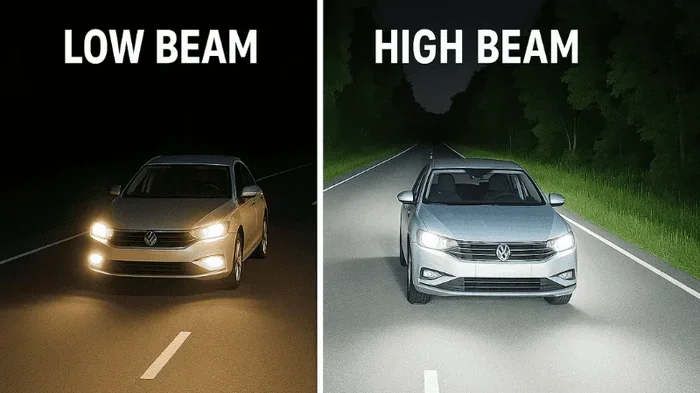
Low beams are what you use most of the time. They are also called dipped beams or regular headlights. The light is angled downward. This prevents glare for other drivers. You use low beams in the city, on lit roads, and when there is traffic around you.
Most automatic headlight systems default to low beams. When it gets dark and your lights come on by themselves, they are using low beams. This is by design. The goal is to keep the road visible without bothering other people.
High Beams: Your Maximum Visibility Setting
High beams give you the brightest light possible. They shine almost straight ahead. This doubles or even triples your sight distance compared to low beams. You can see much farther down the road at night.
The beam pattern is different too. Low beams create a cutoff line. High beams spread out more evenly. This wider spread helps you spot animals, obstacles, and road signs earlier.
Here is a simple way to remember it. Low beams are for sharing the road. High beams are for when you have the road to yourself.
Quick Comparison Table
- Low Beams: Light angled down, shorter range, safe for traffic, used daily
- High Beams: Light straight ahead, longer range, for empty roads, use with caution
- Brights: Another name for high beams, same function, same rules apply
- Fog Lights: Separate lights low on the bumper, for fog and heavy rain only
How Do Headlight Systems Actually Work?
Understanding the headlight mechanism helps you appreciate why high beams and brights are the same thing. The system is simpler than most people think.
The Headlight Switch and Controls
Most cars have a headlight switch on the dashboard or steering column. You turn it to the auto position, low beam, or high beam. Some vehicles use a lever on the steering column. You push it forward to engage high beams. Pulling it back returns you to low beams.
The switch controls the electrical current to the bulbs. When you flip to high beam, power flows to both headlights at full output. When you switch back, the current reduces and the light dims.
The Dashboard Indicator Light
Your car tells you which setting you are on. A green or white icon means low beams are active. A blue icon means high beams are on. You will see this symbol on your dashboard when the lights are activated.
If you see the blue light stay on, your high beams are engaged. If it is not there, you are on low beams. This simple visual cue helps you avoid accidentally leaving high beams on around other drivers.
Bulb Types and Their Beam Patterns
Not all headlights are created equal. The type of bulb affects how the beam looks and how far it reaches. Here are the most common types you will find on the road today.
- Halogen Headlights: The most traditional type. They use a tungsten filament inside a halogen gas capsule. They are affordable and easy to replace. The beam pattern is warm and yellowish.
- LED Headlights: Modern and energy-efficient. They light up instantly and last a long time. Many new cars come with LED low beams and high beams.
- Xenon (HID) Headlights: These use an electric arc through gas. They are very bright and have a blue-white color. They are common in luxury vehicles.
- Laser Headlights: The newest technology. They are extremely bright and efficient. You mostly find them in high-end vehicles right now.
Each type produces a slightly different beam pattern. But the high beam setting works the same way across all of them. Whether you have halogen or LED headlights, high beams and brights still mean the same full-power mode.
When Should You Use High Beams?
Knowing when to switch to high beams is just as important as knowing what they are. Using them at the wrong time can be dangerous. Here are the rules you should follow.
Good Times to Use High Beams
Use high beams when you are driving on dark roads with no other cars around. Rural highways and open country roads are perfect for this. You get much better visibility and can spot hazards earlier.
Another good time is when you are driving behind someone. If the car ahead of you is far enough away, high beams help you see the road better. Just make sure you do not follow too closely.
When You Must Switch to Low Beams
Always switch to low beams when you are within 500 feet of an oncoming vehicle. The bright light from high beams can blind the other driver. This is one of the leading causes of nighttime accidents.
You should also switch to low beams when you are behind another car. The reflection from their rearview mirror can distract the driver in front of you. Keep your lights low when you have traffic around you.
In fog, rain, or snow, low beams work better. High beams actually bounce off the moisture in the air and create glare. This makes visibility worse, not better. Many drivers do not know this, and it causes a lot of accidents.
Common Mistakes People Make
One of the biggest mistakes is leaving high beams on in the city. Street lights and traffic make high beams unnecessary. They also blind pedestrians and cyclists. Another mistake is forgetting to switch back after passing a car.
Some drivers also misuse their fog lights instead of high beams. Fog lights are designed for low-speed driving in bad weather. They are not a replacement for proper headlight use. Using them on clear nights just blinds other drivers for no reason.
Modern Headlight Technology: What Has Changed?
Headlight technology has come a long way. Cars today have features that older vehicles never had. Let us look at what is new and how it affects your use of high beams and brights.
Automatic High Beam Systems
Many newer cars have automatic high beam control. The system uses a sensor to detect other vehicles. When it sees headlights or taillights ahead, it switches you back to low beams automatically. When the road is clear, it switches back to high beams.
This is a game changer. You no longer have to remember to switch your lights manually. The car does it for you. It makes driving at night much safer and more convenient.
Adaptive Driving Beam Technology
Some luxury vehicles now have adaptive driving beams. These systems use cameras and sensors to shape the light pattern. They dim the part of the beam that would hit other drivers. But they keep the rest of the road fully lit.
This technology is still new and expensive. But it represents the future of headlight design. It solves the biggest problem with high beams, which is blinding other drivers.
LED Matrix Headlights
LED matrix headlights are another exciting development. They use multiple small LED modules that can be controlled individually. The system can darken specific sections of the beam while keeping others bright. This gives you high beam visibility without affecting other drivers.
These advanced systems are still mostly found in premium vehicles. But they are slowly becoming more common in mid-range cars too.
Legal Rules Around High Beam Use
Using high beams is not just about courtesy. There are actual laws about it. Every state has rules for headlight use. Most require you to dim your lights for oncoming traffic within a certain distance.
In most states, you must switch to low beams when an oncoming vehicle is within 500 feet. Some states require it at 300 feet. If you leave your high beams on and blind another driver, you could get a ticket. More importantly, you could cause a serious accident.
It is also illegal in many places to have aftermarket headlights that are too bright or incorrectly aimed. If your headlight modification puts out too much glare, you could be pulled over. Always make sure your headlights are properly aligned and meet local regulations.
Some drivers install blue-tinted bulbs thinking they look cool. These often do not meet road safety standards. They can also look like emergency vehicle lights and confuse other drivers. Stick with approved headlight bulbs and keep them clean and properly aimed.
Headlight Maintenance Tips for Better Visibility
Even the best high beams will not help if your headlights are not maintained. Here are some simple tips to keep your lights working at their best.
- Clean your headlights regularly: Dirt and grime on the lens reduce brightness significantly. A quick wipe before a night drive makes a big difference.
- Replace bulbs in pairs: Always change both headlights at the same time. This ensures even lighting on both sides of the road.
- Check your alignment: Over time, headlights can shift out of position. Misaligned lights blind other drivers and reduce your own visibility.
- Watch for condensation: Moisture inside the headlight housing can cause fogging. This reduces beam output and can lead to bulb failure.
- Upgrade when needed: If your headlights are dim, consider upgrading to LED or better-quality halogen bulbs. The improvement in road visibility can be dramatic.
Taking care of your headlights is one of the easiest ways to improve your nighttime driving safety. And it ensures that when you do use high beams and brights, they are performing at their best.
Conclusion
So, are high beams and brights the same thing? Yes, they absolutely are. Both terms refer to the full-power headlight setting on your vehicle. They give you the longest possible view of the road ahead. But they also come with important rules you need to follow.
Always use high beams on dark, empty roads. Switch to low beams when other vehicles are nearby. Never use them in fog or heavy rain. And keep your headlights clean and properly maintained.
Understanding your headlights is not just about passing a driving test. It is about being a responsible driver. The right use of high beams keeps you safe and protects everyone else on the road. So next time you flip that switch, you will know exactly what you are doing and why it matters.
Drive safe, stay visible, and always be respectful of other drivers on the road. Your headlights are your first line of defense when the sun goes down. Make sure you are using them correctly.
Frequently Asked Questions
Can I use high beams in a residential area?
You should avoid using high beams in residential areas, especially when there are street lights and nearby homes. The bright light can blind drivers pulling into driveways and disturb people sleeping near the road. Stick to low beams in neighborhoods and populated areas.
Why do my high beams seem dimmer than they used to be?
Dim high beams are usually caused by old or dirty bulbs. Over time, the filament in halogen bulbs weakens and the light output drops. Dust and oxidation on the headlight lens also reduce brightness. Replacing the bulbs or cleaning the lens often fixes the problem completely.
Do high beams drain the car battery faster?
High beams use more power than low beams because they draw more electrical current. However, the difference is small in most modern vehicles. If you have a weak battery, leaving high beams on for long periods could contribute to drainage, but normal use should not cause problems.
Are blue-tinted high beam bulbs legal?
In most places, blue-tinted bulbs are not street legal. They often do not meet the color temperature standards set by vehicle regulations. Blue bulbs can also look like emergency vehicle lights and confuse other drivers. Always use bulbs that are approved for road use in your area.
How far should high beams effectively light the road?
High beams typically illuminate the road about 350 to 400 feet ahead. This is roughly twice the distance of low beams. The exact range depends on your bulb type, headlight alignment, and the condition of your headlight lenses. Keeping your headlights clean and properly aimed ensures maximum reach.
What should I do if another driver does not dim their high beams?
If another driver has their high beams on and is blinding you, focus on the right edge of the road. This helps you avoid looking directly into the glare. You can also flick your own high beams once or twice to remind them to switch back to low beams. Stay calm and do not retaliate by keeping your brights on.