Are Toyota 4Runners All-Wheel Drive Really Worth It
Yes, Toyota 4Runners come with all-wheel drive and 4WD options. The Toyota 4Runner offers both part-time 4WD and full-time AWD systems depending on the trim. These drivetrains deliver excellent off-road capability, traction control, and real-world versatility for adventure seekers and daily drivers alike.
Key Takeaways
- AWD and 4WD are available: The Toyota 4Runner offers both drivetrain options across different trims.
- Part-time 4WD saves fuel: You can switch between 2WD and 4WD modes for better fuel economy on pavement.
- TRD Pro and Trail editions shine off-road: These trims come with locking differentials, crawl control, and multi-terrain select.
- Ground clearance and approach angles are class-leading: The 4Runner handles rough terrain with ease thanks to its off-road suspension.
- Towing capacity is impressive: The AWD/4WD system supports up to 5,000 pounds of towing.
- Resale value stays strong: The 4Runner’s drivetrain reputation keeps its resale value among the highest in the SUV class.
- Maintenance matters: Regular transfer case and differential upkeep keeps your 4Runner running strong for years.
📑 Table of Contents
- Are Toyota 4Runners All-Wheel Drive? The Full Breakdown
- How the Toyota 4Runner Drivetrain Works
- AWD vs 4WD on the Toyota 4Runner
- Off-Road Features That Make the 4Runner Stand Out
- Is the 4Runner AWD Worth the Cost?
- Maintenance Tips for Your 4Runner Drivetrain
- How the 4Runner Compares to Competitors
- Final Verdict: Are Toyota 4Runners All-Wheel Drive Worth It?
- Frequently Asked Questions
- Conclusion
Are Toyota 4Runners All-Wheel Drive? The Full Breakdown
If you are shopping for a rugged SUV, you have probably asked this question: are Toyota 4Runners all-wheel drive? The short answer is yes. The Toyota 4Runner offers both AWD and 4WD systems depending on the trim level and model year. This truck-based SUV has been a favorite for decades, and its drivetrain options are a big part of why.
The 4Runner is not just one vehicle. It comes in several trims, each with different drivetrain setups. Some models use part-time 4WD. Others use full-time AWD. Understanding the differences helps you pick the right one for your needs. Whether you hit trails on weekends or commute through snow every day, the 4Runner has a drivetrain that fits.
In this guide, we will cover everything you need to know. We will look at how the AWD and 4WD systems work. We will compare trims. We will talk about off-road features like crawl control and locking differentials. And we will help you decide if the 4Runner drivetrain is worth the investment. Let us dive in.
What Does AWD Mean on a Toyota 4Runner?
AWD stands for all-wheel drive. On the Toyota 4Runner, AWD sends power to all four wheels at the same time. This gives you better traction control on wet roads, gravel, and light off-road terrain. Not every 4Runner trim comes with AWD, though.
The base SR5 trim offers part-time 4WD as standard. The higher trims, like the TRD Off-Road and TRD Pro, offer more advanced AWD and 4WD systems. These systems use a transfer case to split power between the front and rear axles. The result is better grip and stability when the road gets tough.
Full-time AWD means the system is always working. Power flows to all four wheels continuously. Part-time 4WD lets you switch between 2WD and 4WD. This saves fuel on paved roads. You engage 4WD only when you need it. Both systems have their strengths.
How the Toyota 4Runner Drivetrain Works
The 4Runner uses a body-on-frame design. This means the body sits on a separate ladder frame. It is the same platform used by the Toyota Tacoma pickup truck. This design is tough and durable. It also affects how the drivetrain delivers power to the wheels.
The Transfer Case Explained
The transfer case is the heart of the 4WD system. It sits between the transmission and the front and rear axles. Its job is to send power to both the front and rear wheels. On the 4Runner, the transfer case has different modes.
In 2WD mode, power goes only to the rear wheels. In 4HI mode, power splits to all four wheels for higher-speed off-road driving. In 4LO mode, power goes to all four wheels at a reduced speed for extreme crawling. Some trims also have a center differential that allows full-time AWD on pavement without driveline wind-up.
Locking Differentials and Why They Matter
A locking differential is a game-changer for off-road driving. When one wheel loses traction on a slippery surface, a standard open differential sends all the power to that spinning wheel. A locking differential forces both wheels to spin at the same speed. This keeps you moving even when one wheel is in the air.
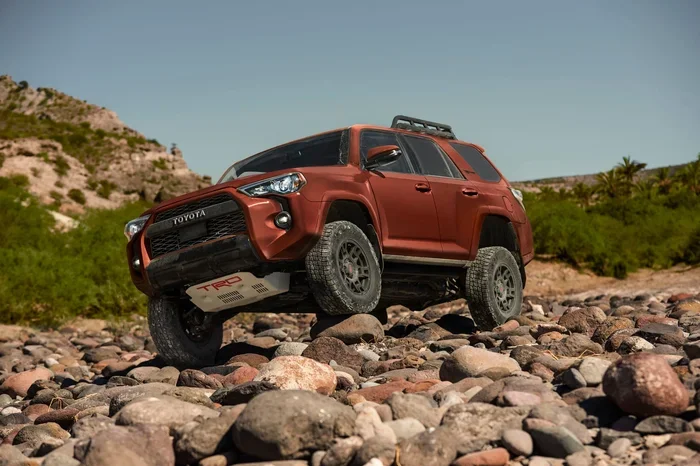
The TRD Off-Road and TRD Pro trims come with a rear locking differential. Some models also offer a front locking differential. These features make the 4Runner one of the most capable off-road SUVs on the market. You can tackle rocky trails, deep mud, and steep inclines with confidence.
AWD vs 4WD on the Toyota 4Runner
People often use AWD and 4WD interchangeably. But they are not the same thing. Understanding the difference helps you choose the right 4Runner for your lifestyle.
What Is Full-Time AWD?
Full-time AWD runs all four wheels all the time. The system adjusts power distribution automatically based on traction. This is great for mixed driving. You get the safety of AWD on wet pavement and the capability of 4WD when trails call.
On the 4Runner, full-time AWD is available on select trims. It uses a center differential or a torque-vectoring system to manage power split. The advantage is convenience. You never have to get out and switch modes. The system handles it for you.
What Is Part-Time 4WD?
Part-time 4WD is the traditional setup on the 4Runner. You drive in 2WD on normal roads. When the terrain gets rough, you shift into 4HI or 4LO using the console shifter or dial. This system is simpler and more rugged.
Part-time 4WD is also more fuel-efficient. Because you can run in 2WD on pavement, you burn less gas. For daily drivers who also venture off-road, this is a smart compromise. You get the best of both worlds.
Which One Should You Choose?
Your choice depends on how you use the truck. If you live in a snowy area and drive mostly on roads, full-time AWD is convenient. If you hit trails regularly and want maximum control, part-time 4WD with locking differentials is the way to go. Many owners choose the TRD Off-Road trim because it offers the best of both systems.
Off-Road Features That Make the 4Runner Stand Out
The Toyota 4Runner is famous for its off-road ability. Its drivetrain is only part of the story. The 4Runner also comes with advanced features that make tackling tough terrain easier and safer.
Crawl Control
Crawl control is a Toyota-exclusive feature. It acts like a low-speed cruise control for off-road driving. You set a speed between 1 and 5 mph, and the system manages throttle and braking for you. This lets you focus on steering over rocks and roots.
Crawl control works with the 4WD system to distribute torque to the wheels that need it most. It is available on TRD Off-Road and TRD Pro trims. For rock crawling and steep descents, this feature is incredibly useful.
Multi-Terrain Select
Multi-terrain select lets you choose a driving mode for the surface you are on. Options include Mud, Sand, and Rock modes. Each mode adjusts throttle response, traction control, and braking to match the terrain.
For example, Mud mode reduces traction control to prevent wheel spin in soft ground. Sand mode adjusts throttle to keep you moving without digging in. Rock mode gives you maximum control at low speeds. These features make the 4Runner feel almost effortless on challenging trails.
Ground Clearance and Approach Angles
The 4Runner has a ground clearance of about 9.8 inches on most trims. That is impressive for a mid-size SUV. Combined with a good approach angle and departure angle, the 4Runner can clear obstacles that would stop lesser vehicles.
The TRD Off-Road and TRD Pro trims add a front skid plate and upgraded suspension. This protects the undercarriage and improves articulation. When you pair this with the AWD or 4WD system, you get a vehicle that can go almost anywhere.
Is the 4Runner AWD Worth the Cost?
Now for the big question. Are Toyota 4Runners all-wheel drive really worth it? The answer depends on your priorities, budget, and how you plan to use the vehicle.
Pros of the 4Runner AWD/4WD System
- Exceptional off-road capability: The 4Runner can handle trails that would leave most SUVs stuck.
- Strong resale value: 4Runners hold their value incredibly well. The drivetrain plays a big role in this.
- Durability: The 4WD system is built to last. Many owners reach 200,000 miles without major drivetrain issues.
- Towing capacity: The AWD/4WD system supports up to 5,000 pounds of towing.
- Safety in bad weather: AWD and 4WD give you confidence driving in rain, snow, and ice.
- Traction control features: Crawl control, multi-terrain select, and locking differentials add real-world value.
Cons to Consider
- Fuel economy is lower: AWD and 4WD systems add weight and drag. The 4Runner gets around 16-19 mpg combined.
- Higher price tag: TRD Off-Road and TRD Pro trims cost more than the base SR5.
- Maintenance costs: The transfer case and differentials need regular servicing. Ignoring this can lead to expensive repairs.
- Not the most comfortable on-road: The body-on-frame design means a firmer ride than unibody SUVs.
Real-World Owner Insights
Most 4Runner owners say the drivetrain is worth every penny. They love the confidence it gives them on trails and in bad weather. The truck’s reputation for reliability is well-earned. Owners report few drivetrain problems even after many years of hard use.
If you plan to use your 4Runner for serious off-roading or live in an area with harsh winters, the AWD or 4WD system is absolutely worth it. For casual drivers who rarely leave the pavement, the added cost may not be justified. But even then, having 4WD capability is a nice insurance policy.
Maintenance Tips for Your 4Runner Drivetrain
Keeping your 4Runner’s AWD or 4WD system in top shape is essential. Regular maintenance prevents costly repairs and keeps the system working smoothly for years.
Transfer Case Service
The transfer case needs fluid changes at regular intervals. Check your owner’s manual for the recommended schedule. Most experts suggest changing the transfer case fluid every 30,000 to 60,000 miles. Fresh fluid keeps the internal gears lubricated and cool.
Differential Fluid Changes
Both the front and rear differentials need fluid changes. The rear differential on TRD Off-Road and TRD Pro models works hard, especially off-road. Change the differential fluid every 30,000 miles to prevent wear and tear.
Inspect U-Joints and Axles
The driveshaft connects the transfer case to the front and rear axles. U-joints on the driveshaft can wear over time. Listen for clicking or vibration during turns. These are signs that a U-joint may need replacement. Regular inspections catch problems early.
Keep Tires Matched
Running mismatched tires on a 4WD or AWD vehicle can damage the drivetrain. The different tires spin at different speeds, which stresses the transfer case and differentials. Always keep all four tires the same size and tread depth for best performance and longevity.
How the 4Runner Compares to Competitors
The Toyota 4Runner faces competition from the Jeep Wrangler, Ford Bronco, and Chevrolet Tahoe. Let us look at how the drivetrain systems compare.
| Feature | Toyota 4Runner | Jeep Wrangler | Ford Bronco |
|---|---|---|---|
| Standard Drivetrain | Part-time 4WD | Part-time 4WD | RWD or AWD |
| Available AWD | Yes (select trims) | Yes | Yes |
| Locking Rear Differential | Yes (TRD Off-Road+) | Yes | Yes |
| Crawl Control | Yes | Yes (Selec-Speed) | Yes (Trail Control) |
| Fuel Economy (Combined) | 16-19 mpg | 15-22 mpg | 16-20 mpg |
| Towing Capacity | Up to 5,000 lbs | Up to 3,500 lbs | Up to 3,500 lbs |
| Off-Road Reputation | Excellent | Excellent | Very Good |
The 4Runner holds its own against the competition. Its part-time 4WD system is proven and reliable. The TRD Off-Road and TRD Pro trims offer features that rival or exceed the Jeep Wrangler and Ford Bronco. And the 4Runner’s towing capacity is the best in its class among mid-size off-road SUVs.
Where the 4Runner shines is durability. The drivetrain is built to handle years of hard use. Owners report fewer drivetrain issues compared to competitors. This reliability adds to the 4Runner’s strong resale value and long-term ownership satisfaction.
Final Verdict: Are Toyota 4Runners All-Wheel Drive Worth It?
So, are Toyota 4Runners all-wheel drive really worth it? The answer is a strong yes for most buyers. The 4Runner offers a proven, durable drivetrain system that handles both on-road and off-road demands with ease. Whether you choose part-time 4WD or full-time AWD, you are getting a vehicle that is built to last and ready for anything.
The advanced features on higher trims like crawl control, multi-terrain select, and locking differentials make the 4Runner one of the most capable off-road SUVs available today. These are not just tech gimmicks. They are real tools that make challenging trails safer and more fun.
If you value reliability, off-road capability, and long-term ownership savings, the 4Runner’s drivetrain is a smart investment. The strong resale value means you will not lose much money when it is time to sell. And the reputation for durability means you will spend less time and money on repairs over the years.
Take the time to test drive different trims. Feel how the 4WD system engages. Check out the off-road features in person. Once you experience a 4Runner on a trail or in bad weather, you will understand why so many owners swear by this truck. The drivetrain is at the heart of what makes the 4Runner special.
Frequently Asked Questions
Is the Toyota 4Runner AWD or 4WD?
The Toyota 4Runner comes with both options. The base SR5 trim offers part-time 4WD as standard. Higher trims like the TRD Off-Road and TRD Pro offer advanced 4WD systems, and some models feature full-time AWD. It depends on the trim level you choose.
Can you switch between 2WD and 4WD on a 4Runner?
Yes, part-time 4WD models let you switch between 2WD and 4HI or 4LO using the console shifter or dial. This lets you run in 2WD on pavement for better fuel economy and switch to 4WD when you hit rough terrain. Full-time AWD models do this automatically.
Does the 4Runner AWD system work well in snow?
Absolutely. The AWD and 4WD systems provide excellent traction control in snow and ice. The 4Runner’s ground clearance and sturdy drivetrain make it a great choice for winter driving. Many owners in snowy regions prefer the 4Runner for its confidence-inspiring capability.
How much does the 4WD system add to the price?
The part-time 4WD system comes standard on most trims, so there is no extra cost. Upgrading to a TRD Off-Road or TRD Pro trim adds features like a locking rear differential, crawl control, and multi-terrain select. These upgrades increase the price by $2,000 to $5,000 depending on the trim.
Is the 4Runner drivetrain reliable for long-term use?
Yes, the 4Runner drivetrain is known for exceptional reliability. With regular maintenance like fluid changes and inspections, the 4WD and AWD systems can last well over 200,000 miles. This is one of the reasons the 4Runner holds its value so well.
Can you tow with a 4Runner AWD or 4WD?
Yes, the 4Runner’s AWD and 4WD systems support towing up to 5,000 pounds when properly equipped. Always check your specific trim’s towing capacity and use the proper hitch and wiring setup. The drivetrain handles the extra load well thanks to its robust design.
Conclusion
The Toyota 4Runner is more than just an SUV. It is a statement vehicle for anyone who values capability, reliability, and adventure. The AWD and 4WD systems are at the core of what makes this truck special. From the transfer case to the locking differentials, every component is designed to perform.
Whether you are a weekend trail warrior, a daily commuter in a snowy climate, or someone who wants a dependable truck that can handle anything, the 4Runner delivers. The drivetrain options give you the flexibility to choose the system that fits your lifestyle. And the proven track record of reliability means you can trust it for years to come.
So if you are still wondering whether the 4Runner’s all-wheel drive and 4WD systems are worth it, the answer is clear. They are. The 4Runner continues to earn its reputation as one of the most capable and trustworthy SUVs on the road. Do your research, take a test drive, and experience the difference for yourself.