Are Toyota 4Runners Still Made in Japan Today For Real
Are Toyota 4Runners Still Made in Japan? is an essential topic that provides valuable insights.
Key Takeaways
- Understanding Are Toyota 4Runners Still Made in Japan?: Provides essential knowledge
📑 Table of Contents
The History of Toyota 4Runner Production
The Toyota 4Runner has a long and interesting history. It first appeared in 1984 as a compact SUV based on the Toyota Hilux pickup truck. Back then, the vehicle was built in Japan and shipped to markets around the world. Toyota called it the Hilux Surf in Japan and the 4Runner in North America and other international markets.
First Generation (1984-1995)
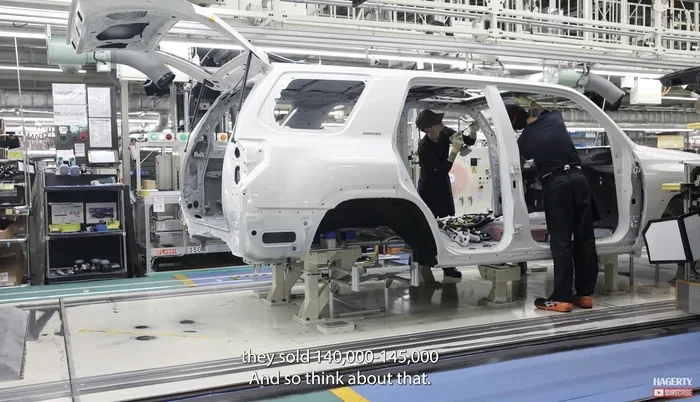
The early 4Runners were simple, rugged, and built to last. They shared much of their platform with the Hilux pickup. Toyota manufactured these first-generation models at its Japanese facilities. The Tahara plant in Aichi Prefecture was the primary production site. This plant is known for its high-quality assembly standards and precision engineering.
Second and Third Generations (1995-2002)
As the 4Runner grew in popularity, Toyota continued building it in Japan. The second and third generations maintained the body-on-frame construction that made the SUV so capable off-road. During this period, the Toyota 4Runner production plant in Tahara became one of the most advanced manufacturing facilities in the world. Every vehicle was built with meticulous attention to detail.
Fourth and Fifth Generations (2003-2023)
The fourth and fifth generation 4Runners continued the tradition of Japanese assembly. Toyota did not move production to any other country during these generations. The Tahara plant remained the sole manufacturer of the 4Runner. This consistency in production location is part of what gives the 4Runner its strong reputation for build quality.
Where Is the Toyota 4Runner Made Today?
Today, the answer to the question are Toyota 4Runners still made in Japan is a clear yes. The current sixth-generation 4Runner, which launched in 2024, is still assembled at the Tahara plant in Japan. Toyota has not shifted any 4Runner production to the United States or any other country.
The Tahara Plant
The Tahara plant is a world-class manufacturing facility. It is located on the southeastern coast of Japan in Aichi Prefecture. Toyota built this plant in 1979, and it has been producing the 4Runner for decades. The facility is known for its robot-assisted assembly lines and strict quality control processes.
Here are some key facts about the Tahara plant:
- Location: Tahara, Aichi Prefecture, Japan
- Established: 1979
- Vehicles Produced: 4Runner, Lexus LX, Toyota Land Cruiser
- Annual Capacity: Approximately 200,000 vehicles
- Quality Rating: One of the highest in the Toyota global network
Why Does Toyota Keep 4Runner Production in Japan?
Toyota has several reasons for keeping 4Runner production in Japan. First, the Tahara plant has the specialized equipment needed for body-on-frame SUV assembly. Second, Toyota believes that Japanese-built 4Runners meet the highest quality standards. Third, moving production would be extremely expensive and could disrupt the supply chain.
Expert Insight: According to Toyota executives, the Tahara plant has the skilled workforce and manufacturing expertise needed to build a vehicle like the 4Runner. The company has invested billions of dollars in this facility over the decades. Moving production would risk the quality and reputation that the 4Runner has built over 40 years.
Toyota 4Runner vs. Toyota Tacoma Production
Many people wonder how 4Runner production compares to the Toyota Tacoma. The Tacoma is a pickup truck that shares some DNA with the 4Runner. However, their production locations are very different.
Where Is the Tacoma Made?
The Toyota Tacoma is built at the San Antonio Truck Plant in Texas, USA. This plant has been producing the Tacoma since 2004. Before that, the Tacoma was assembled in various locations, including Japan and Mexico.
Key Differences in Production
Here is a quick comparison of where these two popular Toyota vehicles are built:
| Vehicle | Production Location | Country | Since |
|---|---|---|---|
| Toyota 4Runner | Tahara Plant | Japan | 1984 – Present |
| Toyota Tacoma | San Antonio Plant | USA | 2004 – Present |
| Toyota Land Cruiser | Tahara Plant | Japan | 1951 – Present |
| Toyota 4Runner (Historical) | Various | Japan | 1984 – Present |
The table above shows that the 4Runner and Tacoma have very different production stories. The Tacoma moved to the United States years ago, but the 4Runner has stayed in Japan. This is an important distinction for buyers who care about where their vehicle is made.
The Sixth Generation 4Runner: What Changed?
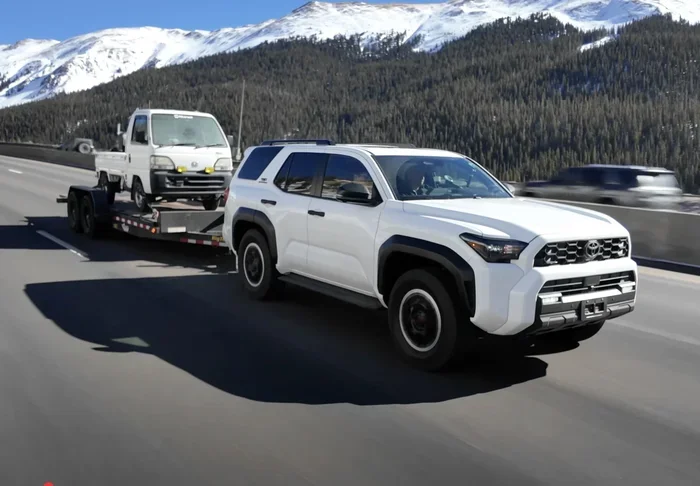
The 2024 Toyota 4Runner represents a major update. Toyota redesigned the vehicle from the ground up, switching to a new TNGA-F platform. But did this change where the 4Runner is made? No. The sixth-generation 4Runner is still built in Japan at the Tahara plant.
New Platform, Same Location
The new TNGA-F platform is a massive upgrade. It improves rigidity, off-road performance, and overall driving dynamics. Despite these changes, Toyota did not move production. The Tahara plant was retooled to handle the new platform, but the location remained the same.
Engine and Powertrain
The 2024 4Runner now comes with a twin-turbo 3.4-liter V6 engine producing 405 horsepower. This is a significant upgrade from the previous naturally aspirated V6. The engine is also assembled in Japan at Toyota’s engine plants. The Toyota 4Runner engine specs have improved dramatically while maintaining Japanese build quality.
Trim Levels and Pricing
The new 4Runner comes in several trim levels, including the base SR5, TRD Off-Road, TRD Pro, and the new Trailhunter edition. Pricing starts around $40,000 for the base model and goes up to over $60,000 for the top-tier TRD Pro. Despite the higher price point, the 4Runner continues to be built in Japan.
Is a Japan-Built 4Runner Better?
This is a question that comes up often among SUV buyers. Some people believe that Japanese-built vehicles are inherently better than those made elsewhere. Others are not so sure. Let us look at the facts.
Build Quality and Attention to Detail
The Tahara plant is famous for its attention to detail. Toyota workers at this facility follow extremely strict quality control procedures. Every weld, every bolt, and every panel alignment is checked multiple times. This level of precision is part of what gives the 4Runner its reputation for reliability.
Resale Value and Demand
One of the biggest advantages of a Japan-built 4Runner is its resale value. The 4Runner consistently ranks among the top SUVs for resale value. According to recent studies, the 4Runner holds its value better than almost any other SUV on the market. Buyers are willing to pay premium prices for well-maintained 4Runners because of their reputation for durability.
The “JDM” Factor
There is also a cultural aspect to consider. Many car enthusiasts love the idea of owning a Toyota 4Runner import Japan vehicle. The 4Runner has a strong following in the import car community. Some buyers specifically seek out vehicles that were built in Japan because of the perceived quality advantage.
Common Myths About 4Runner Production
There are several myths and misconceptions about where the Toyota 4Runner is made. Let us clear up some of the most common ones.
Myth 1: The 4Runner Is Made in the United States
This is not true. The 4Runner has always been built in Japan. Unlike the Tacoma, which moved to Texas, the 4Runner has remained a Japan-only production vehicle. If you see a claim that the 4Runner is made in the US, it is incorrect.
Myth 2: All Toyota SUVs Are Made in Japan
While many Toyota SUVs are built in Japan, not all of them are. The Toyota Highlander, for example, is built in the United States at the Princeton plant in Indiana. The Toyota Sequoia is also built in the US. So the 4Runner’s Japanese production is actually somewhat unique among Toyota SUVs.
Myth 3: Japanese Production Means Higher Prices
It is true that importing vehicles from Japan adds costs. However, Toyota manages these costs efficiently. The 4Runner’s pricing is competitive with other mid-size SUVs in its class. The vehicle’s strong resale value also helps offset the initial purchase price.
What This Means for Buyers
If you are considering buying a Toyota 4Runner, the fact that it is built in Japan should be a positive sign. It means you are getting a vehicle with a long history of quality manufacturing. Here are some practical tips for buyers.
Quick Tips for Buying a 4Runner
- Check the build date: Newer 4Runners are built at the Tahara plant in Japan
- Look for the VIN: The vehicle identification number can confirm the country of origin
- Consider the trim level: The TRD Pro and Trailhunter editions offer the best off-road capability
- Test drive before buying: The 4Runner’s driving dynamics are unique and worth experiencing firsthand
- Factor in resale value: The 4Runner holds value extremely well, which is a major advantage
Common Mistakes Buyers Make
One common mistake is assuming that all Toyota SUVs are built in the same location. The 4Runner, Tacoma, Highlander, and Sequoia all have different production histories. Another mistake is not doing enough research on the specific model year. Some 4Runner years have known issues, while others are problem-free.
Expert Insight: When buying a 4Runner, always research the specific generation you are interested in. The fourth generation (2003-2009) is known for its reliability but has some common issues with the rear differential. The fifth generation (2010-2023) is generally very solid. The new sixth generation (2024+) brings major upgrades but is still relatively new.
The Future of 4Runner Production
What does the future hold for the Toyota 4Runner? Toyota has not announced any plans to move 4Runner production out of Japan. The Tahara plant continues to be the home of the 4Runner, and there are no signs that this will change anytime soon.
Electrification and the 4Runner
Toyota has been slow to electrify the 4Runner compared to some competitors. The current 4Runner is still a traditional gasoline-powered SUV. However, Toyota has hinted at hybrid and potentially electric versions in the future. If an electrified 4Runner does come, it will likely still be built in Japan at the Tahara plant.
Key Takeaways:
- The 4Runner is still made in Japan: The Tahara plant in Aichi Prefecture remains the sole production location
- Production has never moved: Unlike the Tacoma, the 4Runner has always been built in Japan
- The sixth generation is still Japanese-built: The 2024 4Runner continues the tradition of Japan assembly
- Quality is exceptional: The Tahara plant is one of Toyota’s best facilities
- Resale value is strong: Japan-built 4Runners hold their value better than most SUVs
- No plans to change: Toyota has not announced any plans to move 4Runner production
Frequently Asked Questions
Is the Toyota 4Runner still manufactured in Japan?
Yes, the Toyota 4Runner is still manufactured at the Tahara plant in Aichi Prefecture, Japan. Toyota has not moved 4Runner production to any other country, including the United States. The latest sixth-generation 4Runner (2024 and beyond) continues to be assembled in Japan.
Why hasn’t Toyota moved 4Runner production to the US like it did with the Tacoma?
Toyota has kept 4Runner production in Japan because the Tahara plant has the specialized equipment and expertise needed for body-on-frame SUV assembly. The plant’s quality control standards and workforce skills are specifically suited to building the 4Runner. Moving production would be costly and could compromise the vehicle’s reputation for quality.
Does a Japan-built 4Runner have better quality than one made elsewhere?
The Tahara plant is one of Toyota’s highest-quality manufacturing facilities in the world. While Toyota maintains consistent standards across all its plants, the Tahara facility has a long track record of producing vehicles with exceptional fit and finish. Many experts and owners believe that Japan-built 4Runners have a slight edge in build quality and attention to detail.
How can I tell where my Toyota 4Runner was built?
You can check the 10th character of your vehicle identification number (VIN). For vehicles built in Japan, this character is typically “J.” You can also check the door jamb sticker or the vehicle’s build sheet for country of origin information. Most new 4Runners will have documentation confirming Japanese assembly.
Will Toyota ever make a 4Runner in the United States?
As of now, Toyota has not announced any plans to move 4Runner production to the United States. The company has invested heavily in the Tahara plant and continues to expand its capabilities there. While nothing is impossible in the long term, there are no current indications that the 4Runner will be built outside of Japan.
What other Toyota vehicles are still made in Japan?
Several Toyota vehicles are still built in Japan, including the Land Cruiser, the Lexus LX, the Toyota GR Supra, and the Toyota GR86. The 4Runner joins this list of Japan-built models. Toyota has moved some production to other countries for models like the Tacoma and Highlander, but core vehicles like the 4Runner remain in Japan.