Is 40 PSI Too High For Your Vehicle Tires And Equipment
Is 40 PSI too high? The answer depends on your vehicle, tire type, and driving conditions. For many passenger cars, 40 PSI falls within the normal range, but it can be too much for some vehicles and just right for others. Checking your vehicle manual and tire sidewall is the best way to find the correct tire pressure for your setup.
Key Takeaways
- 40 PSI is not always too high: It depends on your vehicle type and tire specifications.
- Overinflated tires reduce traction: Too much air pressure causes the tire center to wear faster and shrinks the contact patch.
- Check your vehicle manual: The recommended tire pressure is listed on the driver-side door jamb, not just the tire sidewall.
- Cold tire pressure matters: Always check PSI when tires are cold for the most accurate reading.
- Fuel efficiency can improve: Slightly higher pressure may boost mileage, but going too far has downsides.
- Use a quality tire pressure gauge: Don’t rely on gas station air pumps alone.
- TPMS alerts are helpful: Your tire pressure monitoring system can warn you of dangerous pressure levels.
📑 Table of Contents
- What Does 40 PSI Mean for Your Tires?
- Is 40 PSI Too High for Passenger Cars?
- When Is 40 PSI the Right Pressure?
- What Happens When Tire Pressure Is Too High?
- How to Check and Maintain Proper Tire Pressure
- Common Mistakes People Make With Tire Pressure
- Expert Insights on Tire Pressure and Safety
- Comparison: Recommended vs. Maximum Tire Pressure
- Key Takeaways
- Conclusion
What Does 40 PSI Mean for Your Tires?
PSI stands for pounds per square inch. It measures the air pressure inside your tires. Every tire has a maximum PSI rating printed on the sidewall. That number tells you the most air the tire can safely hold.
But the maximum rating is not the same as the recommended pressure. Your vehicle manufacturer sets the recommended tire pressure based on weight, handling, and safety. So when you ask, “Is 40 PSI too high?” the real question is, “Is 40 PSI too high for my specific vehicle?”
The answer varies. A compact car might need only 30 to 32 PSI. A heavy SUV might need 40 to 45 PSI. A pickup truck could even need more. This is why a one-size-fits-all answer does not work.
Where to Find Your Recommended Tire Pressure
You have two main sources for the correct air pressure. The first is the sticker on the driver-side door jamb. The second is your vehicle owner’s manual. Both list the recommended tire pressure for your specific model.
Do not confuse the tire sidewall number with the recommended pressure. The sidewall number is the maximum. The door jamb number is what you should actually use. This is one of the most common mistakes drivers make with their tire pressure.
Is 40 PSI Too High for Passenger Cars?
For most standard passenger cars, the recommended tire pressure falls between 30 and 35 PSI. So 40 PSI is above the typical range. But “above” does not always mean “dangerous.” Let us break this down.
Some sport sedans and lightweight vehicles use 40 PSI as their factory setting. In those cases, 40 PSI is perfectly fine. It is the right pressure for that vehicle. The problem starts when you put 40 PSI into a car that only needs 32 PSI.
The Effects of Overinflation on Passenger Vehicles
When tire pressure is too high, the tire rides harder. The center of the tread wears out faster than the edges. This uneven tire wear shortens the overall tire lifespan. You may find yourself replacing tires sooner than expected.
Overinflated tires also have a smaller contact patch with the road. That means less grip. In wet or icy conditions, this can be dangerous. Handling and stability suffer when the tire cannot grip the road properly.
On the flip side, slightly higher pressure can improve fuel efficiency. Less rolling resistance means the engine works less. But there is a fine line between efficiency gains and safety risks.
When Is 40 PSI the Right Pressure?
Not every vehicle suffers from 40 PSI. In fact, many vehicles call for exactly that amount. Let us look at when 40 PSI makes sense.
Vehicles That Use 40 PSI or Higher
Several types of vehicles run on 40 PSI or more from the factory:
- Sport utility vehicles (SUVs): Many SUVs use 35 to 45 PSI depending on load.
- Light trucks and pickups: These often need higher air pressure to handle heavy cargo.
- Performance cars: Some sports sedans run 40 PSI for better handling at high speeds.
- Trucks with heavy loads: The tire pressure increases when you carry more weight.
- Certain minivans: Larger family vehicles sometimes require pressures in the 40 PSI range.
If your vehicle manual says 40 PSI, then 40 PSI is correct. Do not second-guess the manufacturer. They designed the suspension, brakes, and handling around that specific tire pressure.
Tire Load Rating and Pressure
Every tire has a load rating. This rating tells you how much weight the tire can carry at a given pressure. Higher load ratings often require higher PSI. If you have tires with a high load index, 40 PSI may be exactly what you need.
Check the tire load rating on the sidewall. It looks like a number followed by a letter (for example, 91V). The higher the number, the more weight the tire can handle. More weight means you need more air pressure.
What Happens When Tire Pressure Is Too High?
Running too much air in your tires causes several problems. Some are minor. Others are serious safety risks. Let us look at what overinflation actually does to your tires and your drive.
Uneven Tire Wear
The most visible sign of overinflation is uneven wear. The center of the tread wears down faster than the shoulders. After a few thousand miles, you can see a clear flat spot in the middle of the tire.
This uneven wear means you lose tread life. Tires that should last 60,000 miles might only last 40,000 miles. That is money wasted. And it means more trips to the tire shop.
Reduced Traction and Safety Risks
When the tire is overinflated, the contact patch shrinks. Less rubber touches the road. This reduces grip in all conditions. In rain, snow, or ice, this can lead to accidents.
A tire blowout is the worst-case scenario. Overinflated tires are more prone to blowouts. The excess pressure puts too much stress on the tire sidewall and tread. A sudden failure at highway speeds is extremely dangerous.
Harsh Ride Quality
Overinflated tires make for a stiff, uncomfortable ride. Every bump and pothole hits harder. The suspension has less room to absorb shocks. Passengers feel every imperfection in the road.
Over time, this harsh ride can also damage other parts of your vehicle. Suspension components, wheel bearings, and steering parts all take a beating from too much tire pressure.
Impact on Tire Pressure Monitoring System
Most modern vehicles have a tire pressure monitoring system, or TPMS. This system lights up on your dashboard when pressure is too high or too low. If your TPMS warning light comes on after filling to 40 PSI, your vehicle may not be designed for that pressure.
Do not ignore the TPMS light. It exists to protect you. Check your tire pressure as soon as the light appears. A simple tire pressure gauge can tell you if you are in the safe range.
How to Check and Maintain Proper Tire Pressure
Keeping the right tire pressure is simple, but it takes a little effort. Here is how to do it right every time.
Step-by-Step Tire Pressure Check
- Check when tires are cold: Drive less than a mile, or wait at least three hours after driving. Cold tire pressure gives the most accurate reading.
- Find the recommended PSI: Look at the door jamb sticker or your vehicle manual.
- Remove the valve cap: Unscrew the small cap on the tire valve stem.
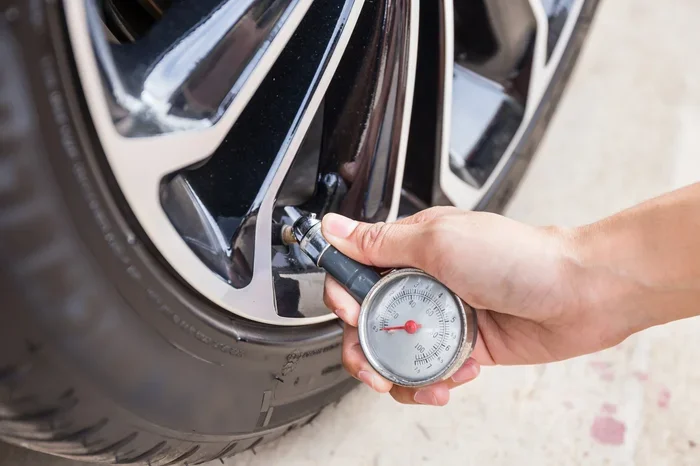
- Press the gauge firmly: Push the tire pressure gauge onto the valve stem. You will hear a brief hiss of air.
- Read the number: Check the display on your gauge. Compare it to the recommended PSI.
- Add or release air as needed: Use an air compressor to add air. Press the valve core to release air if you are over.
- Replace the valve cap: Put the cap back on to keep dirt and moisture out.
Best Tools for Checking Tire Pressure
Not all tire pressure gauges are created equal. The cheap dial gauges at gas stations can be inaccurate. A digital tire pressure gauge gives you a precise reading every time. Pencil-style gauges are cheap and reliable if you buy a good brand.
Keep a quality gauge in your glove box. Check your tire pressure at least once a month. Temperature changes affect air pressure too. In cold weather, tire pressure drops. In hot weather, it rises. This is why regular checks matter.
Quick Tips for Tire Pressure Maintenance
- Check all four tires: Do not skip the spare tire.
- Check before long trips: A quick check before a road trip can prevent problems on the road.
- Do not rely on visual inspection: Tires can look fine even when pressure is wrong.
- Reset your TPMS after adjusting pressure: Some vehicles need a manual reset.
- Rotate your tires regularly: This helps ensure even tire wear across all four tires.
Common Mistakes People Make With Tire Pressure
Even careful drivers make mistakes with tire pressure. Here are the most common ones to avoid.
Relying Only on the Tire Sidewall
The number on the tire sidewall is the maximum pressure, not the recommended pressure. Using the sidewall number as your guide will often lead to overinflation. Always use the door jamb or manual number instead.
Checking Tires After Driving
Hot tires give higher PSI readings. If you check your tire pressure right after a highway drive, the number will be inflated by heat. This leads to letting out too much air. Always check when the tires are cold.
Ignoring the TPMS Light
Many drivers ignore the TPMS warning light. They assume it will go away on its own. Sometimes it does. But sometimes it signals a real problem. A persistent light means you should check your tire pressure right away.
Overfilling Because of Cold Weather
In winter, tire pressure drops. Some drivers overfill to compensate. But the pressure rises as the tires warm up. This can push you into overinflation territory. Add a little air in cold weather, but do not overdo it.
Forgetting to Check the Spare
Your spare tire loses air too. A flat spare is useless when you need it most. Check the spare tire pressure every few months. Keep a tire pressure gauge in your trunk along with a portable air compressor.
Expert Insights on Tire Pressure and Safety
We asked automotive experts about the question, “Is 40 PSI too high?” Here is what they had to say.
Most tire professionals agree that the recommended pressure from your vehicle manufacturer is the number to follow. Going a PSI or two above might not cause immediate harm. But consistently running 5 PSI or more above the recommended pressure creates real risks.
tire experts also emphasize that tire pressure affects more than just the tires themselves. Your braking distance, fuel economy, and overall vehicle safety all depend on proper air pressure. A few extra pounds of pressure might save a little fuel, but the safety trade-off is not worth it.
For vehicles that genuinely need 40 PSI, tire shops recommend checking the pressure every two weeks. For others, a monthly check is sufficient. The key is consistency. Make tire pressure checks part of your regular vehicle maintenance routine.
Comparison: Recommended vs. Maximum Tire Pressure
| Vehicle Type | Recommended PSI | Max PSI (Sidewall) | Is 40 PSI Too High? |
|---|---|---|---|
| Compact Car | 30-32 PSI | 40-44 PSI | Yes, too high |
| Mid-Size Sedan | 32-35 PSI | 42-46 PSI | Slightly high |
| SUV (Light Load) | 33-38 PSI | 44-50 PSI | Borderline |
| SUV (Heavy Load) | 40-45 PSI | 50-65 PSI | No, correct range |
| Light Truck | 35-45 PSI | 50-80 PSI | No, within range |
| Performance Car | 38-42 PSI | 45-50 PSI | No, correct range |
| Minivan | 32-38 PSI | 44-50 PSI | Slightly high |
Use this table as a general guide. Always verify with your specific vehicle manual or door jamb sticker. The recommended tire pressure is the number you should trust.
Key Takeaways
- 40 PSI is not always too high: It depends on your vehicle type and tire specifications.
- Overinflated tires reduce traction: Too much air pressure causes the tire center to wear faster and shrinks the contact patch.
- Check your vehicle manual: The recommended tire pressure is listed on the driver-side door jamb, not just the tire sidewall.
- Cold tire pressure matters: Always check PSI when tires are cold for the most accurate reading.
- Fuel efficiency can improve: Slightly higher pressure may boost mileage, but going too far has downsides.
- Use a quality tire pressure gauge: Do not rely on gas station air pumps alone.
- TPMS alerts are helpful: Your tire pressure monitoring system can warn you of dangerous pressure levels.
Conclusion
So, is 40 PSI too high? The honest answer is: it depends. For some vehicles, 40 PSI is the perfect tire pressure. For others, it is dangerously overinflated. The difference comes down to your specific vehicle, tire type, and how you use your car.
The best thing you can do is check your vehicle manual or the door jamb sticker. Find the recommended tire pressure and stick with it. Use a reliable tire pressure gauge. Check your tires regularly, especially when the seasons change. And never ignore your TPMS warning light.
Proper tire pressure keeps you safe. It saves fuel. It extends the life of your tires. Taking five minutes to check your tire pressure each month is one of the easiest and most important things you can do for your vehicle. Do not let a simple tire pressure mistake turn into a costly repair or a dangerous situation on the road.
Now you know the answer to “Is 40 PSI too high?” Go check your tires. Your safety and your wallet will thank you.
Frequently Asked Questions
Can 40 PSI cause a tire blowout?
Yes, if your vehicle only needs 30 to 32 PSI, running 40 PSI puts extra stress on the tire. Over time, this increases the risk of a blowout, especially at high speeds or under heavy loads. Always match your tire pressure to the manufacturer’s recommendation.
How often should I check my tire pressure?
Check your tire pressure at least once a month. Also check before long road trips. Air pressure naturally drops over time, and temperature changes affect it too. A monthly check takes only a few minutes and keeps you safe.
Is it okay to drive on a tire with 40 PSI if the manual says 32?
Driving a short distance at 40 PSI when you need 32 PSI is not ideal but usually not an emergency. However, consistently overinflating your tires causes uneven wear, reduces traction, and creates a harsher ride. Adjust the pressure to the correct level as soon as possible.
Does cold weather affect tire pressure?
Yes, cold weather causes tire pressure to drop. For every 10-degree drop in temperature, your tire pressure can decrease by about 1 PSI. This is why you may need to add air during winter months. Always check pressure when the tires are cold for the most accurate reading.
What is the difference between PSI on the tire sidewall and the recommended PSI?
The PSI on the tire sidewall is the maximum pressure the tire can handle. The recommended PSI, found on your door jamb or vehicle manual, is what your specific vehicle needs. These two numbers are very different, and confusing them is a common mistake that leads to overinflation.
Can I use the same tire pressure for all four tires?
In most cases, yes. Most vehicles use the same recommended pressure for all four tires. However, some vehicles with staggered tire sizes or heavy-duty setups may have different pressures for the front and rear. Always follow your vehicle manual or door jamb sticker for the exact numbers.