How Can You Tell Which Tire Is Quiet On Your Next Ride
Choosing the right quiet tire can transform your driving experience. Tire noise comes from tread design, rubber compounds, and road contact. You can test quietness by checking noise ratings, reading reviews, and doing a test drive. This guide shows you exactly how to identify the quietest tires for your next ride.
Nobody wants a noisy ride. You know that annoying hum that fills your car cabin on the highway? That is your tires talking. And if you are shopping for new rubber, you probably want to know how can you tell which tire is quiet before you spend your hard-earned money.
Tire noise is not just an annoyance. It affects your comfort, your focus, and even your fatigue on long drives. Some tires whisper quietly on the freeway, while others sound like a washing machine full of bricks. The difference comes down to design, materials, and technology.
In this guide, we walk you through every way to identify a quiet tire. From reading noise ratings to understanding tread patterns, you will have everything you need to make a smart choice. Whether you are replacing all four tires or just swapping out one, this article helps you find the quietest option for your vehicle.
Key Takeaways
- Tire noise ratings matter: Look for the three-wave symbol on the tire sidewall to compare sound levels across brands.
- Tread pattern is the biggest factor: Asymmetric and directional tread designs tend to produce less road noise than aggressive patterns.
- Test before you buy: A test drive and online noise reviews give you real-world data on tire quietness.
- Proper maintenance keeps tires quiet: Regular rotation, alignment checks, and correct pressure reduce unwanted noise over time.
- Premium brands invest in noise tech: Brands like Michelin, Continental, and Bridgestone use advanced noise-reducing technologies.
- Cabin comfort is a team effort: Combining quiet tires with good cabin insulation and maintenance boosts overall ride quality.
📑 Table of Contents
- Why Tire Noise Matters For Your Driving Comfort
- How Tires Create Noise In The First Place
- The Best Ways To Test Tire Quietness Before Buying
- Top Quiet Tire Brands And Models To Consider
- Common Mistakes That Make Tires Louder
- Quick Tips For Keeping Your Tires Quiet Long-Term
- How To Match Quiet Tires To Your Driving Style
- Conclusion
Why Tire Noise Matters For Your Driving Comfort
Most people do not think about tire noise until it becomes a problem. But tire sound levels affect your daily driving more than you might expect. A loud cabin makes conversations harder, raises your stress, and tires out your ears on long road trips.
Here is why tire noise deserves your attention:
- Driver fatigue: Constant road noise wears you down over long distances. Quieter tires help you arrive feeling less tired.
- Conversation clarity: You can talk to passengers without raising your voice.
- Audio enjoyment: If you like music or podcasts, quiet tires let you hear them at lower volumes.
- Resale value: A car that feels premium inside often sells better. Quiet tires contribute to that premium feel.
Think of it this way. Your tires are the only part of your car that touches the road constantly. They take a lot of abuse. And the design choices made to give them grip, durability, and tread life also affect how much noise they produce.
Also, if you have ever wondered about other tire maintenance basics, check out our guide on Can You Pump A Car Tire With A Bike Pump for useful tire inflation tips.
How Much Noise Is Too Much?
Tire noise is measured in decibels, or dB. Most passenger car tires produce somewhere between 60 and 75 dB at highway speeds. A quiet tire will sit around 60 to 65 dB. Anything above 70 dB starts to feel noticeable inside the cabin. For comparison, normal conversation sits at about 60 dB, and a vacuum cleaner hits around 75 dB.
So when you are asking how can you tell which tire is quiet, you are really asking how to find tires that stay below that 70 dB threshold. The good news is there are clear ways to measure and compare this.
How Tires Create Noise In The First Place
Before you can pick a quiet tire, you need to understand what makes tires noisy. Once you know the cause, choosing the right tire becomes much easier.
Tread Pattern And Air Pockets
The tread on your tire is not just there for grip. It also shapes the air that moves around the tire as it rolls. When air gets trapped in the grooves and channels of the tread, it compresses and releases with every rotation. That compression creates sound waves. The bigger and more aggressive the tread blocks, the louder the noise.
Think of it like this. A tire with large, chunky tread blocks is like clapping your hands flat. A tire with small, tightly packed grooves is like softly tapping your fingers. The shape and size of the tread pattern directly controls the noise output.
Tire Type And Construction
Not all tires are built the same way. The construction layers inside the tire also play a role in noise levels:
- Tire sidewall design: Some sidewalls absorb more sound than others. Stiffer sidewalls tend to transmit more road noise into the cabin.
- Rubber compound: Softer rubber compounds can dampen vibrations, reducing noise. Harder compounds may last longer but often produce more sound.
- Tire ply count: More plies can add insulation, which helps absorb noise from the road surface.
Road Surface And Tire Pressure
Let us be honest. Sometimes the noise is not entirely your tire’s fault. Rough road surfaces amplify tire noise significantly. A tire that sounds quiet on a smooth highway might roar on a coarse chip seal. Similarly, underinflated tires create more contact area with the road, which increases noise. Overinflated tires ride harder and transmit more vibration.
Keeping your tire pressure at the manufacturer’s recommended level is one of the simplest ways to reduce noise. If you are curious about other tire basics, our article on Can You Pump A Car Tire With A Bike Pump covers inflation essentials in detail.
The Best Ways To Test Tire Quietness Before Buying
So how do you actually figure out which tire is quiet before you buy it? You have several practical options. Let us go through each one.
Check The EU Tire Noise Label
If you shop for tires in Europe or online from European retailers, you will see a noise rating label. It shows a simple visual with one, two, or three black waves. One wave means the tire is quiet. Three waves mean it is loud. This label is part of EU tire regulations and gives you a quick comparison tool.
Even if you are shopping in the US, many online tire retailers list the EU noise rating. Look for the decibel number and the wave rating side by side. This is one of the fastest ways to narrow down your options when searching for how can you tell which tire is quiet.
Read Professional And User Reviews
Tire review websites and YouTube channels test tire noise in controlled conditions. They often use sound meters inside a cabin at set speeds, usually 60 or 70 mph. These tests give you real-world data that no spec sheet can match.
Here is what to look for in reviews:
- Test speed: Make sure the noise test was done at highway speed, not city speed.
- Cabin type: A luxury sedan will feel quieter than a pickup truck, even with the same tire.
- Road surface: Smooth interstate noise differs from rough suburban roads.
- User feedback: Real owner reviews often mention noise after thousands of miles of wear.
Do A Test Drive With A Noise Check
Nothing beats experience. When you go to the tire shop or dealership, ask if you can take a test drive. Here is a simple method:
- Drive on a quiet road at 40 mph first. Listen for any hum or vibration.
- Find a smooth highway stretch and accelerate to 65 mph.
- Turn off the radio and climate control fans. Listen carefully.
- Note whether the noise feels like it comes from the tires or the engine.
- Compare the same route with different tire models if possible.
This hands-on approach gives you the most reliable answer to how can you tell which tire is quiet for your specific car and driving style.
Use Online Tire Noise Comparison Tools
Several websites and apps let you compare tire noise levels side by side. You can filter by tire size, brand, and type. These tools aggregate data from multiple sources, including EU labels, professional tests, and user submissions. They save you hours of research and help you quickly shortlist the quietest options.
Top Quiet Tire Brands And Models To Consider
Some tire brands invest heavily in noise reduction technology. These manufacturers consistently rank at the top for quiet ride quality. Here are the brands and models worth looking at.
| Brand | Model | Noise Level (approx. dB) | Key Quiet Feature |
|---|---|---|---|
| Michelin | Primacy MXM4 | 65-68 dB | Acoustic insulation technology |
| Continental | PremiumContact 7 | 66-69 dB | Silent Tread technology |
| Bridgestone | Turanza QuietTrack | 65-67 dB | Noise-absorbing cavity design |
| Pirelli | Cinturato P7 | 67-70 dB | Optimized tread block sequence |
| Goodyear | Assurance MaxLife | 68-71 dB | Sound-absorbing foam layer |
These models are widely regarded as some of the quietest passenger tires available. Of course, actual noise levels vary based on your vehicle, road conditions, and driving speed. But these tires consistently perform well in noise tests.
What Makes These Tires Quiet?
Quiet premium tires use several advanced technologies:
- Foam inserts: Some tires have a layer of sound-absorbing foam inside the tread cavity. This foam dampens the sound waves created by road contact.
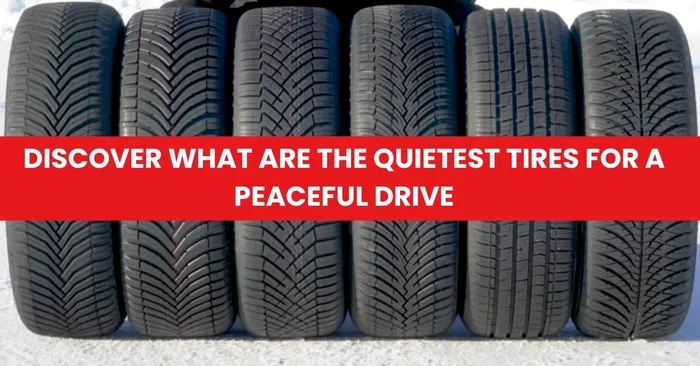
- Variable pitch tread: Instead of uniform tread blocks, quiet tires use blocks of different sizes and shapes. This disrupts the sound frequency and prevents a single loud tone from forming.
- Asymmetric tread patterns: These patterns balance quiet inner shoulders with grippy outer shoulders, reducing noise without sacrificing performance.
- Optimized groove design: Carefully calculated groove angles and widths manage airflow through the tread, minimizing the air pump effect that creates noise.
If you are also interested in cabin comfort beyond tires, our guide on Can You Clean A Cabin Air Filter Instead Of Replacing It covers simple ways to improve your car’s interior air quality and comfort.
Common Mistakes That Make Tires Louder
Sometimes the tires are quiet when you buy them, but they get louder over time. Here are the most common reasons why your tires might be noisier than they should be.
Ignoring Tire Pressure
Underinflated tires are the number one cause of increased road noise. When the tire sidewall flexes more than it should, the contact patch becomes larger and irregular. This creates more friction and more sound. Check your tire pressure at least once a month. The correct PSI is listed on the driver’s door jamb sticker, not on the tire sidewall itself.
Skipping Tire Rotations
Tires wear unevenly if you never rotate them. Uneven wear creates irregular tread surfaces that generate more noise. Most manufacturers recommend rotating tires every 5,000 to 7,500 miles. Staying on schedule keeps your tread wearing evenly and quietly.
Mixing Tire Types
Putting different tire brands or models on the same axle can create imbalance and extra noise. Even if the tires are the same size, different tread patterns and rubber compounds produce different sound signatures. Try to keep matching pairs on each axle.
Neglecting Wheel Alignment
A misaligned car causes tires to scrub sideways slightly as they roll. This uneven contact makes the tires work harder and produce more noise. If you notice your car pulling to one side or your tires wearing on one edge, get an alignment check right away.
Worn-Out Tread
As tires age and the tread wears down, the noise characteristics change. Some tires get louder as they wear, while others get quieter. But once the tread is very low, the tire loses its ability to manage road noise effectively. Replace tires before the tread hits the legal minimum of 2/32 of an inch.
Quick Tips For Keeping Your Tires Quiet Long-Term
Finding a quiet tire is only half the battle. Keeping it quiet over the life of the tire requires some simple habits. Here are quick tips that make a real difference.
- Check pressure monthly: A quick glance at the tire gauge keeps noise and wear in check.
- Rotate on schedule: Set a reminder on your phone every 6,000 miles.
- Balance tires after rotation: Unbalanced wheels cause vibration and noise at speed.
- Avoid aggressive driving: Hard acceleration and braking wear the tread faster and increase noise.
- Choose the right tire for your needs: If quiet ride is a priority, do not buy a performance or all-terrain tire unless you need the capabilities.
- Clean your tires regularly: Brake dust and road grime build up on the sidewalls and can affect vibration. A simple wipe-down helps.
These habits take just a few minutes each month, but they pay off in a quieter, safer, and more comfortable ride for years to come.
How To Match Quiet Tires To Your Driving Style
Not all quiet tires are the same. Some prioritize silence above everything else, while others balance quietness with performance, fuel efficiency, or all-season capability. Understanding your driving style helps you pick the right tire.
If you mostly drive on highways and interstates, prioritize tires with the lowest highway noise ratings. Touring and grand touring tires are usually the quietest category. If you drive a mix of city and highway, look for all-season touring tires that offer a balance of quiet ride, wet grip, and durability.
For those who need all-season performance, some tires offer impressive noise reduction without sacrificing handling. The key is reading the spec sheet carefully and comparing noise data across models. When in doubt, stick with the brands known for their acoustic engineering.
Also, remember that tire size matters. Larger wheels with low-profile tires tend to transmit more road noise because there is less sidewall to absorb vibrations. If you are choosing between a 16-inch and an 18-inch wheel for the same tire model, the smaller wheel setup will usually be quieter.
And if you are wondering about other maintenance decisions, check out our article on Can You Replace Just One Headlight for practical advice on matching replacement parts to your vehicle.
Conclusion
So how can you tell which tire is quiet? The answer is a combination of research, testing, and maintenance. Start by checking noise ratings and labels. Read professional and user reviews. Take test drives and listen carefully. Choose a reputable quiet tire brand that matches your driving style. And then maintain your tires properly to keep them quiet for the long haul.
Quiet tires are not a luxury. They are a practical upgrade that improves every drive. Whether you commute daily or take weekend road trips, the right set of quiet tires makes a noticeable difference. You will hear the difference the moment you hit the road.
Take your time, compare your options, and trust your ears. The quietest tire for your car is out there, and now you have the knowledge to find it.
Frequently Asked Questions
How Is Tire Noise Measured?
Tire noise is measured in decibels using a sound meter placed at a standard distance from the tire. The EU uses a three-wave label system, with one wave representing the quietest tires and three waves representing the loudest. Professional tests typically measure noise at 60 to 70 mph on smooth pavement.
Can Tire Pressure Affect How Loud Tires Are?
Yes, absolutely. Underinflated tires create a larger contact patch with the road, which increases friction and noise. Overinflated tires ride harder and transmit more vibration into the cabin. Keeping your tire pressure at the manufacturer’s recommended PSI is one of the easiest ways to maintain a quiet ride.
Are Quiet Tires Less Durable?
Not necessarily. Modern quiet tires use advanced rubber compounds and construction techniques that balance noise reduction with tread life. Some premium quiet tires last just as long as standard tires, and in many cases longer, because the softer compounds and optimized tread patterns reduce uneven wear.
Do All-Season Tires Tend To Be Quieter Than Summer Tires?
Generally, all-season touring tires are designed to be quieter than summer performance tires. Performance tires often have larger tread blocks and stiffer sidewalls that prioritize grip over noise reduction. However, some summer tires now include noise-reduction technology, so always check the specific model’s noise rating.
How Often Should I Replace Tires For The Quietest Ride?
Replace tires when the tread depth reaches 4/32 of an inch for optimal noise performance. At this point, the tire still has good grip but the tread blocks are not yet worn enough to create irregular noise patterns. Waiting until the legal minimum of 2/32 inch often means the tire is already noticeably louder.
Can Adding Foam Inserts Make Any Tire Quieter?
Some aftermarket tire shops offer noise-reducing foam inserts that fit inside the tire. These can reduce road noise by a few decibels. However, they work best when paired with tires that already have good noise-reducing design. They are not a substitute for choosing a quiet tire from the start.