My Car Wont Start but Has Power Try These Fixes Now
When your car won’t start but has power, it means your battery is alive but something is blocking the engine from turning over. This common problem can stem from a faulty starter motor, bad ignition switch, corroded battery terminals, or even a drained key fob battery. In this guide, we walk you through the most likely causes and easy fixes you can try right now to get back on the road.
Key Takeaways
- Battery connections matter: Corroded or loose terminals are the number one reason your car has power but won’t start.
- Starter motor issues are common: A bad starter solenoid or worn motor can completely stop your engine from cranking.
- Ignition switch failure happens often: This small part controls the entire starting circuit and can wear out over time.
- Try the basics first: Check your gear shifter, key fob battery, and battery terminals before calling a mechanic.
- Preventive maintenance saves money: Regular cleaning of terminals and timely part replacements keep starting problems away.
- Know when to call a pro: If you’ve tried the simple fixes and your car still won’t start, it’s time for a professional diagnosis.
📑 Table of Contents
Why Your Car Has Power But Won’t Start
You turn the key or push the start button. The dashboard lights up. The radio works. But the engine just sits there silent. This is one of the most frustrating feelings for any driver. You know your battery has charge because the electrical systems are working. So why won’t the engine turn over?
The answer usually lies in the starting system. When you turn your key, a chain of events must happen in the right order. The battery sends power to the starter motor. The starter motor turns the engine. The engine then fires up and runs on its own. If any link in that chain breaks, your car has power but won’t start. This guide will help you figure out exactly where the problem is and how to fix it.
Let’s be clear about something important. Having power means your battery is providing electricity to the lights, radio, and dashboard. But starting the engine requires a much bigger burst of energy. That burst comes from the starter motor, and it travels through a series of switches, relays, and wires. If any one of those parts fails, you get the dreaded no-start condition even though everything else works fine.
Before you panic or call a tow truck, take a deep breath. Most of the reasons behind this problem are simple and fixable. You don’t need to be a master mechanic. With a little patience and the right guidance, you can often solve the issue yourself in under an hour. Let’s dive into the most common causes and what you can do about them.
The Most Common Culprits Behind This Problem
Corroded or Loose Battery Terminals
This is the number one cause of a car that has power but won’t start. Battery terminals are the metal clamps that connect your battery cables to the battery posts. Over time, these connections can build up a white or greenish crusty substance called corrosion. Corrosion blocks the flow of electricity. Even if your battery is fully charged, the power can’t reach the starter motor properly.
Here’s a quick test. Turn your key to the start position. Do you hear a single click? Or maybe a rapid clicking sound? If so, the battery terminals are likely the problem. The click you hear is the solenoid trying to engage, but it can’t get enough current to turn the starter motor.
To fix this, grab a wrench and gently loosen the negative cable first, then the positive cable. Clean the terminals with a wire brush or a special battery terminal cleaner. You can even make a paste of baking soda and water to neutralize the corrosion. After cleaning, reconnect the positive cable first, then the negative. Tighten everything snugly and try starting your car again.
Faulty Starter Motor or Solenoid
The starter motor is the heavy-duty electric motor that cranks your engine. It’s connected to the engine through a small gear called a pinion. When you turn the key, the solenoid pushes that gear into the engine’s flywheel and sends a massive surge of electricity to the motor. If either the solenoid or the motor fails, your car won’t start even though it has full battery power.
A bad starter often makes a distinct sound. You might hear a single loud click when you turn the key, but the engine doesn’t crank at all. In some cases, you’ll hear a grinding noise. That grinding means the pinion gear is worn or not engaging properly. Sometimes the starter motor just gets old and the internal brushes wear out. This is especially common in cars with higher mileage.
Replacing a starter motor is a job that most DIYers can handle with basic tools. The starter is usually located on the bottom of the engine, between the engine and the transmission. You’ll need to disconnect the battery, unbolt the old starter, and bolt the new one in place. It helps to have a friend help you or to use a starter removal tool for easier access.
Bad Ignition Switch
The ignition switch is the part your key goes into. It might look simple, but it does a lot of work. When you turn the key, the ignition switch sends power to different systems in stages. First, it powers the dashboard lights. Then, when you turn it further, it activates the starter circuit. If the switch wears out or the internal contacts get damaged, your car might have dashboard power but no start signal.
One easy way to test this is to wiggle the key while trying to start the car. If the car starts intermittently when you jiggle the key, the ignition switch is likely the culprit. This is a very common problem in older vehicles or cars where the key gets a lot of daily use.
Replacing an ignition switch varies by vehicle. On many cars, you can access it from behind the steering column. On newer vehicles with push-button start, the problem might be in the ignition cylinder or the immobilizer system. If you’re not comfortable working around the steering column, this is a good job for a professional.
Dead or Weak Key Fob Battery
If you drive a modern car with a push-button start, a weak key fob battery can cause a no-start condition even when the car has plenty of electrical power. The key fob sends a signal to the car’s computer to allow the engine to start. When the fob battery dies, the car can’t recognize the key and won’t allow starting.
Most cars have a backup system for this exact situation. Look for a small slot near the steering column or center console. You can place the dead key fob in this slot, and the car will read the fob’s internal chip directly. This allows you to start the car with a completely dead fob battery. Once you’re able to start the car, replace the fob battery right away. These coin-sized batteries are cheap and easy to swap.
Neutral Safety Switch Problems
The neutral safety switch is a small but important safety device. It prevents the car from starting when the transmission is in gear. The switch tells the car’s computer that the gearbox is in park or neutral before it allows the starter to engage. If this switch fails, your car won’t start even though everything else is working perfectly.
This problem often shows up in a very specific way. Your car starts fine when the shifter is in park, but it won’t start in neutral. Or vice versa. Sometimes, just wiggling the shifter while holding the key in the start position will get the car to fire up. That’s a clear sign the neutral safety switch is worn out and needs replacement.
Replacing a neutral safety switch is usually straightforward. The switch is located on the transmission linkage. You’ll need to disconnect the electrical connector, remove the old switch, and install a new one. Adjusting the position correctly is important, so refer to your vehicle’s service manual for the exact procedure.
Ignition Relay or Fuel Pump Relay Failure
Relays are small electrical switches that control high-current circuits. The ignition relay sends power to the starter circuit, and the fuel pump relay powers the fuel pump. If either relay fails, your car has power but won’t start. The dashboard lights and radio work because they’re on a different circuit, but the starting circuit gets no power.
Relays can fail from heat, vibration, or simple age. If you suspect a bad relay, locate the fuse box and find the relay in question. You can swap it with a relay of the same type that’s known to be working. For example, swap the ignition relay with the horn relay. If the car starts after the swap, you’ve found your problem. Replace the faulty relay and you’re good to go.
Step-by-Step Fixes to Get Your Car Running
Now that you know the most common causes, let’s walk through the fixes in order of difficulty. Start with the easiest solutions and work your way down the list. Most of the time, the problem is solved in the first few steps.
- Check and clean the battery terminals. This fixes the problem more often than you’d think. A simple cleaning can restore full electrical contact and get your car starting again.
- Try the backup key fob start position. If you have a push-button start, place the fob against the start button or in the backup slot. This rules out a dead fob battery.
- Wiggle the shifter while turning the key. This can bypass a sticky neutral safety switch and get the car to start temporarily.
- Tap the starter motor gently with a wrench. This is an old trick that works surprisingly well. A stuck starter motor sometimes frees up after a light tap. Be careful not to damage the part.
- Swap the ignition relay or fuel pump relay. This takes about five minutes and can confirm or rule out a relay problem.
- Inspect the ignition switch and wiring. Look for frayed wires or loose connections behind the steering column. A visual inspection can reveal obvious damage.
- Test the starter motor and solenoid. Use a multimeter to check for voltage at the starter. If power is reaching the starter but it doesn’t crank, the motor itself is likely bad.
- Replace the faulty part. Once you’ve identified the problem, replace the bad component. Most starter motors, solenoids, and switches are affordable and available at any auto parts store.
Quick Tips for Diagnosing the Exact Cause
Diagnosing a no-start condition doesn’t have to be complicated. Here are some quick tips that will help you pinpoint the problem faster:
- Listen carefully. A single click usually points to the starter or solenoid. No sound at all often means the ignition switch or neutral safety switch. A rapid clicking sound usually means a weak battery or poor terminal connection.
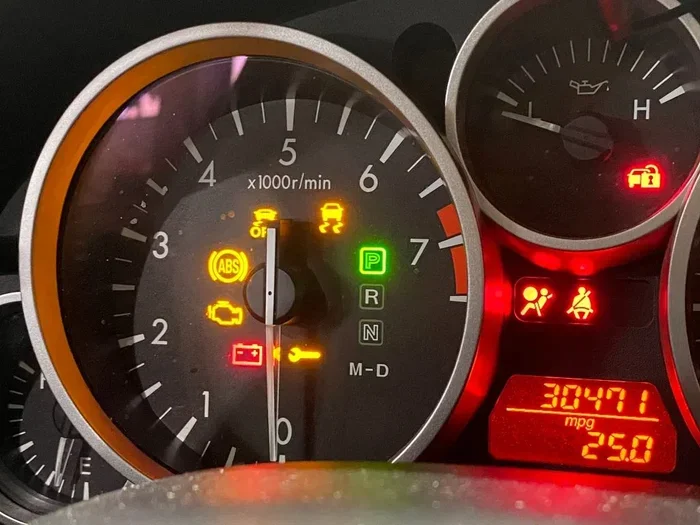
- Check the dashboard gauges. When you turn the key to the on position (without starting), do the warning lights come on normally? If some lights are missing, there’s an electrical issue to investigate.
- Use a multimeter. A basic multimeter can check battery voltage, continuity in circuits, and voltage drops across connections. This takes the guesswork out of diagnosing electrical problems.
- Look for visible damage. Sometimes the fix is as simple as a disconnected wire or a blown fuse. Open the fuse box and check the starter-related fuses first.
Comparison Table: Common No-Start Causes and Fixes
| Problem | Symptoms | Fix Difficulty | Cost to Fix |
|---|---|---|---|
| Corroded battery terminals | Clicking sound, dim lights when trying to start | Easy | $5-$15 for cleaning supplies |
| Weak key fob battery | Push-button start won’t respond, no dash warning | Very Easy | $5-$10 for replacement battery |
| Faulty starter motor | Single click, no cranking, grinding noise | Moderate | $200-$500 for parts and labor |
| Bad ignition switch | Intermittent start, key jiggling helps | Moderate | $100-$300 for parts and labor |
| Neutral safety switch | Starts in one gear but not another | Easy | $100-$200 for parts and labor |
| Failed ignition relay | No sound at all when turning the key | Very Easy | $10-$30 for replacement relay |
When You Should Call a Professional Mechanic
There’s no shame in calling a mechanic. Some car problems are complex and require specialized tools or expertise. If you’ve gone through the steps above and your car still won’t start, it’s time to get professional help. Here are the situations where calling a mechanic makes the most sense.
If you’ve checked the battery terminals, tried the backup fob start, and tested the relays, but the car still shows no signs of life, there could be a deeper electrical issue. Wiring problems, a failing engine control module, or a damaged ignition cylinder are all possibilities that need professional diagnosis.
Also, if you’re not comfortable working under the car or around the electrical system, don’t hesitate to get help. The starter motor is located in a tight spot on many vehicles, and working around the steering column involves airbags and delicate wiring. A trained mechanic has the right tools, experience, and safety equipment to handle these jobs efficiently.
One more situation that calls for a pro is when your car starts sometimes but not others. Intermittent starting problems are often caused by heat-sensitive components or loose connections that are hard to diagnose at home. A mechanic can perform a thorough electrical test and find the root cause quickly.
Common Mistakes People Make When Their Car Won’t Start
When you’re frustrated and your car won’t start, it’s easy to make mistakes. Here are the most common errors people make and how to avoid them:
- Assuming it’s always the battery. A battery can be fully charged and still not start the car if the terminals are corroded or the starter is bad. Don’t jump to conclusions.
- Ignoring the gear shifter position. Many people forget to check if the car is fully in park. Even a slight shift out of park can prevent starting.
- Trying to start the car too many times in a row. Each failed attempt drains the remaining charge from the battery. Wait at least 30 seconds between attempts to let the battery recover.
- Using the wrong size battery. If someone recently replaced the battery, it might not have the right cold cranking amps for your vehicle. Check the battery specifications against your owner’s manual.
- Neglecting the fuel level. It sounds silly, but running on empty can sometimes prevent the fuel pump from priming properly. Make sure you have enough fuel.
Simple Tips to Prevent This Problem in the Future
The best way to deal with a car that won’t start is to prevent the problem from happening in the first place. A little regular maintenance goes a long way toward keeping your starting system healthy and reliable.
Clean your battery terminals every six months. Use a wire brush and a baking soda solution to remove any corrosion before it builds up. After cleaning, apply a thin layer of dielectric grease to the terminals. This prevents future corrosion and keeps the electrical connection strong.
Replace your key fob battery once a year. Don’t wait until the fob stops working completely. A proactive replacement keeps the signal strong and prevents a no-start situation when you’re in a hurry.
Have your starter motor inspected during regular oil changes. A mechanic can check the starter for signs of wear and catch problems early before they leave you stranded.
Keep your battery terminals tight. Vibration from driving can loosen battery connections over time. Check that the cables are snug at least once every few months.
Avoid short trips when possible. Short trips don’t give your battery enough time to fully recharge. This can lead to a slowly weakening battery that eventually causes starting problems.
Expert Insights on Starting System Maintenance
Experienced mechanics often say that the starting system is one of the most overlooked parts of vehicle maintenance. People check their oil, rotate their tires, and change their spark plugs regularly. But they rarely think about the starter motor, ignition switch, or neutral safety switch until something goes wrong.
The truth is, these parts wear out gradually. A starter motor that’s starting to fail might take a second or two longer to engage. You might not even notice at first. But over weeks and months, the problem gets worse until one morning the car simply won’t start. Catching these early warning signs through regular inspections can save you from a frustrating no-start situation.
Another expert tip is to keep a portable jump starter pack in your trunk. These small devices can provide enough power to crank your engine even when your battery is weak. They’re inexpensive, compact, and can be a lifesaver in an emergency. Even if your battery is good, a jump starter can help if the starter motor is struggling.
Final Thoughts
A car that has power but won’t start is a stressful situation, but it’s almost always fixable. The most common causes are corroded battery terminals, a weak key fob battery, a faulty starter motor, or a bad ignition switch. By working through the steps in this guide, you can identify the problem and apply the right fix.
Start with the simplest solutions. Clean your battery terminals. Try the backup fob start position. Wiggle the shifter. These quick checks solve the problem a surprising amount of the time. If those don’t work, move on to testing the relays, ignition switch, and starter motor.
Remember that regular maintenance is your best defense against starting problems. Clean terminals, fresh fob batteries, and periodic inspections keep your car reliable and ready to go every time you turn the key. And when in doubt, don’t hesitate to consult a trusted mechanic. They have the tools and expertise to diagnose even the trickiest no-start conditions.
Now you have the knowledge and confidence to tackle this problem head-on. The next time your car won’t start but has power, you’ll know exactly what to check and how to fix it. Get under the hood, follow these steps, and get back on the road as quickly as possible.
Frequently Asked Questions
Why does my car have power but won’t start when I turn the key?
This usually means the battery is alive but something is preventing the starter motor from engaging. The most common causes are corroded battery terminals, a faulty starter motor, a bad ignition switch, or a failed neutral safety switch. Start by checking your battery terminals for corrosion and cleaning them if needed.
Can a dead key fob battery cause a car not to start even though it has power?
Yes, absolutely. In vehicles with push-button start, the car needs to detect the key fob before it will allow the engine to start. A dead fob battery means the car can’t recognize the key. Most cars have a backup start slot where you can place the fob to bypass this issue and start the car temporarily.
How do I know if my starter motor is bad?
A bad starter motor usually makes a single loud click when you turn the key, but the engine doesn’t crank. You might also hear a grinding noise. If you turn the key and the dashboard lights are bright but the engine makes no effort to turn over, the starter motor or solenoid is likely the problem.
Is it safe to tap the starter motor with a wrench to get it working?
Yes, this is a well-known trick that works in many cases. A light tap with a wrench or hammer can free up a stuck starter motor or solenoid. However, be gentle and make sure the car is in park with the parking brake engaged. This is only a temporary fix, so have the starter inspected or replaced soon.
How much does it cost to fix a car that won’t start but has power?
The cost depends on the cause. Cleaning battery terminals costs almost nothing. Replacing a key fob battery runs about five to ten dollars. A new ignition switch might cost one hundred to three hundred dollars. A starter motor replacement typically runs two hundred to five hundred dollars including parts and labor. Relay replacements are usually very affordable at ten to thirty dollars.
What should I do if my car clicks but won’t start?
A clicking sound usually means the starter solenoid is receiving a signal but not enough power to engage. First, check the battery voltage with a multimeter. If the battery reads below 12 volts, charge or replace it. If the battery is good, clean the terminals and check the ground wire connections. If the problem persists, the starter motor itself may need replacement.