How Do You Use a Cargo Net For All Your Hauling Needs
Knowing how do you use a cargo net properly can transform the way you haul everything from furniture to off-road gear. A cargo net keeps your load secure, prevents shifting during transit, and protects your belongings from damage. In this guide, we walk you through every step, from choosing the right net to installing it correctly and avoiding common errors. Whether you use a truck bed, roof rack, or SUV, you will find practical tips that actually work.
You have a truck full of stuff. Maybe it is a weekend camping haul, a pile of moving boxes, or some lumber from the hardware store. Whatever it is, you need it to stay put while you drive. That is where a cargo net comes in handy. But the truth is, a lot of people toss one over their load and call it good. That approach can lead to spills, damage, and even dangerous situations on the road.
If you have ever wondered how do you use a cargo net the right way, you are in the right place. This guide breaks down everything from choosing the perfect net to installing it like a pro. We will cover different vehicle setups, common mistakes, and maintenance tips that keep your net working for years. By the end, you will feel confident hauling anything safely and securely.
Let us get into it. Your load deserves better than a loose piece of mesh and some hope.
Key Takeaways
- Choosing the right cargo net depends on your vehicle type, load size, and intended use.
- Proper installation starts with locating tie-down points and stretching the net taut.
- Using bungee cords, ratchet straps, or hooks alongside your net adds extra security.
- Common mistakes include overloading, using damaged nets, and skipping regular inspections.
- Maintenance like cleaning and storing your net correctly extends its lifespan significantly.
- Different cargo net types serve different hauling needs from open-bed trucks to roof-mounted gear.
- Weight distribution matters just as much as the net itself for safe transport.
📑 Table of Contents
- What Is a Cargo Net and Why Does It Matter?
- Types of Cargo Nets You Should Know About
- How to Install a Cargo Net Step by Step
- Best Practices for Securing Your Load with a Cargo Net
- Common Mistakes People Make When Using a Cargo Net
- Cargo Net Maintenance and Care Tips
- Expert Tips for Getting the Most Out of Your Cargo Net
- Key Takeaways
- Conclusion
What Is a Cargo Net and Why Does It Matter?
A cargo net is a flexible mesh or netting system designed to hold items in place during transport. You will find them in all shapes and sizes, from small utility nets for bicycles to heavy-duty truck bed covers. The basic idea is simple. You stretch the net over your load and anchor it to your vehicle using tie-down points, hooks, or straps.
But why does it matter so much? Here are the big reasons a cargo net earns its spot in your vehicle:
- Load security: A properly installed net prevents items from sliding, shifting, or flying out of your vehicle. This is especially important at highway speeds.
- Safety: Loose cargo on the road is a serious hazard. It can cause accidents, damage to other vehicles, and roadside debris.
- Protection: Your belongings stay clean, dry, and intact. No more worrying about your gear bouncing off the truck bed.
- Versatility: You can use a cargo net for almost anything, from grocery runs to construction materials.
- Legal compliance: Many states require loads to be properly secured. A cargo net helps you stay on the right side of the law.
Think of a cargo net as the safety belt for your cargo. Without it, everything on your vehicle is just a guess. With it, you have a reliable system that keeps things where they belong.
Who Uses Cargo Nets the Most?
Cargo nets are not just for truck owners. Here is a quick look at who benefits most from using one:
- Truck and SUV owners who regularly haul gear, tools, or supplies
- Campers and outdoor enthusiasts who need to secure tents, coolers, and equipment on roof racks
- Moving and delivery professionals who transport boxes and furniture regularly
- Farmers and contractors who carry loose materials like hay, gravel, or lumber
- Everyday drivers who just want to keep groceries and luggage secure during road trips
No matter who you are, a cargo net solves a universal problem. Things move when they should not, and a net fixes that.
Types of Cargo Nets You Should Know About
Not all cargo nets are created equal. The right one for you depends on what you are hauling, your vehicle type, and how you plan to use it. Let us walk through the most common types you will find on the market.
Truck Bed Cargo Nets
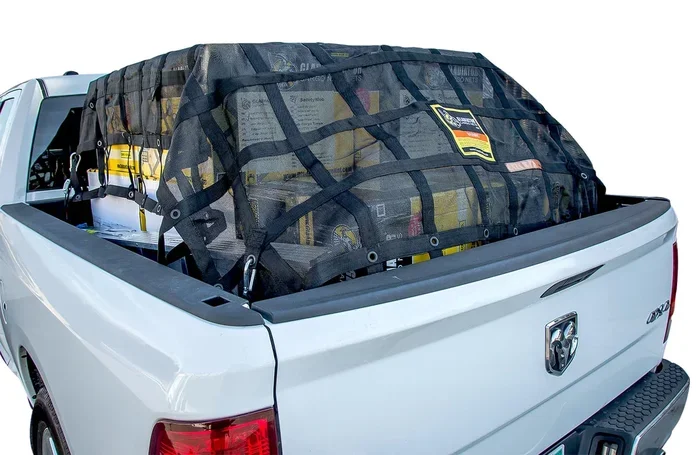
These are the workhorses of the cargo net world. Truck bed nets stretch across the open bed of a pickup and anchor to the bed rails or tie-down loops. They are perfect for keeping loose items from sliding around during a drive. You will find them in both lightweight mesh versions for everyday use and heavy-duty nylon options for tougher loads.
Most truck bed cargo nets use bungee cords or elastic cord edges for easy stretching and secure attachment. They fold up small, making them convenient for daily use.
Roof Rack Cargo Nets
If you haul gear on a roof rack, a roof cargo net is a game changer. These nets sit on top of your roof and strap down kayaks, bikes, camping gear, or extra luggage. They work especially well for off-road cargo that might shift during rough terrain driving.
Look for roof rack nets with reinforced edges and multiple attachment points. The more connection points, the more secure your load will be.
SUV and Hatchback Cargo Nets
Not everyone drives a truck. SUV and hatchback owners benefit from cargo nets designed to fit inside the cabin or on the back of the vehicle. These smaller nets keep groceries, pet supplies, or sports equipment from sliding around during sudden stops or turns.
Heavy-Duty and Industrial Cargo Nets
For serious hauling, heavy-duty cargo nets are built from thick, abrasion-resistant materials. They handle weights that standard nets simply cannot. Construction workers, landscapers, and farmers rely on these nets for hauling rocks, soil, and heavy equipment. They often pair with ratchet straps for maximum hold.
Mesh vs. Rope Cargo Nets
Here is a quick comparison to help you choose:
| Feature | Mesh Cargo Net | Rope Cargo Net |
|---|---|---|
| Material | Nylon or polyester mesh | Braided rope or cord |
| Visibility | High — easy to see contents | Lower — more coverage |
| Weight capacity | Medium to high | High to very high |
| Best for | Everyday hauling and light loads | Heavy or bulky items |
| Ventilation | Excellent airflow | Moderate airflow |
| Price range | Budget to mid-range | Mid-range to premium |
Both types serve a purpose. Mesh nets are great for quick access and visibility, while rope nets handle heavier loads with more durability.
How to Install a Cargo Net Step by Step
Now that you know the types, let us get into the actual process. Learning how do you use a cargo net starts with proper installation. Follow these steps and your load will be secure in no time.
Step 1: Gather Your Equipment
Before you start, make sure you have everything you need:
- The cargo net itself
- Tie-down straps or ratchet straps
- Bungee cords or elastic hooks
- Your vehicle’s anchor points identified
- The load you plan to secure
Take a moment to inspect all of your equipment. If any straps or cords look frayed or damaged, replace them before you start. Using weak equipment defeats the whole purpose of a cargo net.
Step 2: Position the Net Over Your Load
Place the cargo net over your load so it covers the entire surface evenly. You want enough net on all sides to wrap around and anchor to your vehicle. If the net is too small, it will not provide adequate coverage. When in doubt, go one size up.
For truck bed loads, center the net so the weight distributes evenly. For roof rack setups, make sure the net sits flat and does not bunch up in the middle.
Step 3: Attach the Net to Anchor Points
This is the most important step. Start at one corner and work your way across. Here is how:
- Hook or loop the net’s edge onto a tie-down point.
- Pull the net taut, but do not overstretch it.
- Secure the opposite corner the same way.
- Work your way around the remaining corners and sides.
Most vehicles have dedicated tie-down points built into the bed, floor, or roof rack. Check your owner’s manual if you are unsure where they are located.
Step 4: Add Secondary Securing Methods
A cargo net works best when combined with other load securing methods. Consider adding:
- Ratchet straps across the top of the load for extra tension
- Bungee cords at connection points for flexibility
- Cargo bars or dividers to prevent shifting
- Non-slip mats under the load to reduce movement
The goal is a load that does not move in any direction — forward, backward, side to side, or up and down.
Step 5: Do a Tug Test
Once everything is attached, give the net and load a firm tug from different angles. If anything shifts or feels loose, re-tighten your straps and adjust the net. This simple check can prevent a major headache on the road.
Pro tip: drive a short distance at low speed first. Stop and recheck everything. It takes two minutes and could save you a lot of trouble.
Best Practices for Securing Your Load with a Cargo Net
Installation is only half the battle. How you use your cargo net day to day makes a big difference in safety and effectiveness. Here are the best practices every hauler should follow.
Distribute Weight Evenly
Place heavier items in the center of your load and lighter items on the edges. This keeps the weight distribution balanced and prevents the net from tearing on one side. Uneven loads also affect your vehicle’s handling and braking.
Do Not Overload the Net
Every cargo net has a weight rating. Check the manufacturer’s specifications and stay within that limit. Overloading is one of the fastest ways to fail a cargo net under pressure. If you are hauling something particularly heavy, use multiple nets or pair your net with tie-down straps rated for the weight.
Keep the Net Taut
A slack cargo net is a useless cargo net. It flaps in the wind, catches on branches, and allows your load to shift. Always pull the net tight before securing it. The tighter the net, the more control you have over your cargo.
Check Your Net Before Every Trip
Get in the habit of inspecting your cargo net before each use. Look for:
- Frayed or worn edges
- Fading or sun damage on the mesh
- Loose or stretched bungee cords
- Rust or damage on metal hooks
- Tears or holes in the netting
Catching a problem before it becomes a failure is much easier than dealing with a load spill on the highway.
Use the Right Net for the Right Job
A small mesh net from the hardware store is not going to hold a pile of river rocks. Match your cargo net to the type of load you are carrying. For delicate items, use a net with smaller mesh openings. For heavy or bulky items, go with a heavy-duty rope net.
Secure Loose Items Individually First
If you are hauling items of different sizes, bundle or wrap loose items before covering them with the net. This prevents small things from poking through the mesh and getting lost during transit.
Common Mistakes People Make When Using a Cargo Net
Even experienced haulers make mistakes. Knowing what to avoid will save you time, money, and stress. Here are the most common errors we see.
Using the Wrong Size Net
A net that is too small cannot cover your load properly. A net that is too big creates excess slack. Both situations lead to an insecure cargo setup. Measure your load and your vehicle’s tie-down points before purchasing a net.
Skipping the Tug Test
It takes five seconds to pull on the net and check for movement. Skipping this step means you are guessing whether your load is secure. Do not guess. Always test before you hit the road.
Ignoring Weather Conditions
Strong winds, rain, and temperature changes all affect your cargo net’s performance. UV exposure degrades nylon and polyester over time. Cold weather makes elastic cords brittle. If you frequently haul in harsh conditions, invest in a weather-resistant net and replace it more often.
Relying Only on the Net
A cargo net is a great tool, but it should not be your only line of defense. Combine it with ratchet straps, bungee cords, or cargo bars for a layered securing approach. Multiple systems working together provide the best protection.
Failing to Store the Net Properly
After use, many people just toss their cargo net in the back of the truck and forget about it. Sun exposure, moisture, and dirt all shorten the life of your net. Fold it neatly, store it in a dry place, and keep it out of direct sunlight when not in use.
Cargo Net Maintenance and Care Tips
A good cargo net lasts for years with proper care. Here is how to keep yours in top shape.
Cleaning Your Cargo Net
Dirt, mud, and debris build up on your net over time. To clean it:
- Shake off loose dirt and debris
- Rinse with a hose or bucket of water
- Use mild soap for stubborn grime
- Rinse thoroughly and air dry completely
- Store only when fully dry to prevent mold
Avoid using harsh chemicals or a pressure washer on high settings. These can weaken the mesh fibers and damage the elastic edges.
Inspecting for Wear and Tear
Set a monthly reminder to inspect your cargo net. Look closely at the attachment points, the elastic edges, and the center mesh. Any signs of thinning, tearing, or stretching mean it is time for a replacement.
Replacing When Needed
No matter how well you care for it, every cargo net eventually wears out. A worn net is a safety risk. Replace yours at the first sign of significant damage. The cost of a new net is nothing compared to the cost of a lost load or a road accident.
Protecting Your Net From Sun Damage
UV rays are the number one enemy of cargo nets. If you must store your net outside, use a UV-resistant cover or keep it in a closed truck bed or garage. Some manufacturers offer UV-treated cargo nets that resist sun damage better than standard options.
Expert Tips for Getting the Most Out of Your Cargo Net
Here are some insider tips that experienced haulers swear by:
- Color matters: Choose a bright-colored net like yellow or orange. It is easier to spot during inspections and adds visibility on the road.
- Double up for heavy loads: Using two nets layered over each other provides extra security for heavy or valuable cargo.
- Label your tie-down points: If you haul frequently, mark your vehicle’s anchor points with colored tape so you can attach the net faster every time.
- Invest in quality hardware: The hooks and clips that come with some nets are flimsy. Upgrade to stainless steel or heavy-duty plastic connectors for better performance.
- Practice at home: Set up your cargo net in your driveway before a big trip. This lets you figure out what works without the pressure of a time-sensitive load.
These small habits add up to a much safer and more efficient hauling experience. You will wonder how you ever traveled without them.
Key Takeaways
- Choose the right cargo net type based on your vehicle and what you plan to haul.
- Always install the net over your load and anchor it to all available tie-down points.
- Combine your cargo net with ratchet straps or bungee cords for maximum load security.
- Perform a tug test before every trip to confirm everything is tight and secure.
- Avoid common mistakes like using the wrong size net, overloading, or skipping inspections.
- Maintain your cargo net with regular cleaning, inspections, and proper storage.
- Weight distribution and layered securing methods make your hauling setup far more reliable.
Conclusion
Using a cargo net might seem simple, but doing it right makes all the difference. From choosing the right type to installing it properly and maintaining it over time, every step matters. Your cargo net is the unsung hero of safe hauling, and now you know exactly how to get the most out of it.
Whether you are loading up a truck bed for a move, securing gear on a roof rack for a camping trip, or hauling supplies for a weekend project, a properly used cargo net keeps everything safe and sound. Follow the steps in this guide, avoid the common mistakes, and make cargo net use a regular part of your hauling routine.
Now go load up your vehicle with confidence. Your cargo net is ready to do its job. Just remember to check it, maintain it, and never underestimate the power of a well-secured load.
Frequently Asked Questions
What is the best way to attach a cargo net to a truck bed?
The best method is to loop the net’s corners or edges over your truck bed’s tie-down loops or stake pockets. Pull the net taut and use ratchet straps or bungee cords at each anchor point for a snug fit. Always check that the net does not sag or flap while driving.
Can I use a cargo net on a roof rack?
Yes, roof rack cargo nets are specifically designed for this purpose. They strap directly to the roof rack crossbars and hold items like kayaks, bikes, and camping gear securely. Make sure the net is rated for the weight of your load and use additional straps for heavy items.
How do I know what size cargo net I need?
Measure the area you need to cover, including the width and length of your truck bed, roof rack, or cargo area. Choose a net that is slightly larger than your load to ensure full coverage. Always check the manufacturer’s weight capacity before purchasing.
How often should I replace my cargo net?
Replace your cargo net as soon as you notice significant fraying, tearing, stretched elastic edges, or weakened attachment points. With regular use and proper care, most cargo nets last between one to three years depending on the quality and exposure to elements.
Are cargo nets weather-resistant?
Many cargo nets are made from weather-resistant materials like UV-treated nylon or polyester. However, prolonged exposure to sun, rain, and extreme temperatures will degrade any net over time. Store your net indoors or in a covered area when possible to extend its lifespan.
Can a cargo net be used for off-road hauling?
Absolutely. Off-road cargo nets are built from durable, abrasion-resistant materials designed to handle rough terrain and vibration. Pair your cargo net with tie-down straps and cargo bars for the most secure setup when driving on uneven or challenging trails.