What to Do If Cruise Control Is Stuck on the Road
Dealing with a stuck cruise control system can be scary, but staying calm is your first and most important step. This guide walks you through exactly what to do if cruise control gets stuck, from immediate safety actions to DIY troubleshooting and professional repair options. You will learn how to safely disable the system, identify common causes, and prevent future problems on every trip.
You are cruising down a long highway. The road stretches ahead, your feet are relaxed, and the car is maintaining a steady speed. Then suddenly, something feels wrong. The throttle does not respond when you lift your foot. The set speed refuses to change. Your cruise control is stuck, and panic starts to creep in.
This situation happens more often than most drivers realize. A cruise control malfunction can occur in any vehicle, from older models with mechanical cables to newer cars with electronic throttle control. The good news is that you have options. You can take action quickly and safely. This guide will show you exactly what to do if cruise control gets stuck on the road.
Whether you are dealing with a stuck throttle, a faulty cruise control switch, or a mysterious warning light, we have you covered. You will learn the immediate steps to take, how to troubleshoot common problems, and when to call a mechanic. By the end, you will feel confident handling this stressful situation like a pro.
Key Takeaways
- Stay calm and tap the brake: The brake pedal is your fastest way to cancel cruise control and regain full vehicle control.
- Know the common causes: Faulty switches, vacuum leaks, bad speed sensors, and stuck throttle bodies are the top culprits behind cruise control problems.
- Try simple resets first: Turning the system off and back on, checking fuses, and inspecting the brake light switch often solves the issue.
- Do not ignore warning lights: A cruise control warning light paired with other symptoms means it is time for a professional diagnosis.
- Prevention saves money: Regular maintenance of the throttle body, vacuum lines, and electrical connections keeps your cruise control running smoothly.
- Safety comes first: If the throttle is physically stuck, pull over safely, turn off the engine, and call for help if needed.
📑 Table of Contents
What Causes Cruise Control to Get Stuck
Understanding why your cruise control gets stuck helps you respond faster. Most causes fall into a few clear categories. Let us break them down.
Faulty Brake Light Switch
The brake light switch does double duty in your car. It turns on your brake lights, and it tells the cruise control module to disengage when you press the brake. If this switch fails, the system may not receive the cancel signal. Your cruise control stuck problem could be as simple as a bad switch.
You can test this yourself. Press the brake pedal and watch the brake lights. If they do not light up, the switch is likely the issue. Replacing a brake light switch is inexpensive and straightforward.
Vacuum Leaks in the System
Older vehicles use vacuum motors to operate the throttle cable for cruise control. A vacuum leak in one of these lines can cause the system to stick or fail to adjust speed. Cracked hoses, loose connections, and worn seals are common sources of leaks.
Look under the hood for cracked or disconnected vacuum lines. A hissing sound near the engine bay is a telltale sign. Fixing a vacuum leak often restores normal cruise control operation immediately.
Bad Vehicle Speed Sensor
Your car relies on the vehicle speed sensor to maintain a set speed. When this sensor malfunctions, the cruise control system receives incorrect data. The result can be a system that refuses to cancel or one that behaves erratically.
A failing speed sensor often triggers other warning signs too. You might notice inaccurate speedometer readings or rough shifting in automatic transmissions. Addressing the sensor early prevents cascading problems.
Stuck Throttle Body
In modern vehicles, an electronic throttle body controls airflow to the engine. Carbon buildup, dirt, or a faulty motor inside the throttle body can cause it to stick. When this happens, your cruise control stuck issue becomes a real safety concern because the throttle may not respond to your input.
A dirty throttle body is one of the most common reasons cruise control behaves strangely. Regular maintenance and cleaning can prevent this problem from developing in the first place.
Wiring and Electrical Issues
Modern adaptive cruise control systems rely on complex wiring harnesses and electronic connections. Corroded connectors, damaged wires, or a blown fuse can interrupt the signal between the cruise control switch and the engine computer. Electrical gremlins are frustrating but very fixable once identified.
Start by checking the fuse box. Look for a blown fuse labeled “cruise control” or “throttle.” A simple fuse replacement costs almost nothing and takes just minutes.
Immediate Steps to Take When Cruise Control Is Stuck
Finding yourself with a cruise control stuck situation on the road is stressful. But knowing what to do in the first few seconds makes all the difference. Follow these steps in order.
Step One: Tap the Brake Pedal Firmly
Your brake pedal is the most direct way to cancel cruise control. Even if the system seems unresponsive, press the brake firmly and hold it for a few seconds. This action sends a cancel signal to the cruise control module in most vehicles. Your throttle should return to normal driver control immediately.
If the brake pedal does not disengage the system, do not panic. Move on to the next steps calmly.
Step Two: Press the Cruise Control Cancel Button
Every cruise control system has a cancel button or switch. It is usually located on the steering wheel or the stalk near the steering column. Press it firmly. On some vehicles, you can also turn the cruise control knob to the off position.
If neither the brake nor the cancel button works, you may be dealing with a more serious electrical or mechanical failure. Stay calm and proceed to the next step.
Step Three: Shift to Neutral
For automatic transmissions, shifting into neutral disengages the engine from the wheels. This allows the car to slow down naturally without engine power. You will still have full steering control, which is critical for safety.
For manual transmissions, press the clutch pedal all the way down. This separates the engine from the drivetrain and lets the car coast to a lower speed.
Step Four: Pull Over Safely
Once you have regained some control over your speed, signal and move to the right lane or the shoulder. Turn on your hazard lights to alert other drivers. Come to a complete stop in a safe location away from traffic flow.
Do not attempt to drive for long distances with a malfunctioning cruise control system. Even if you manage to slow down, the throttle could stick again unexpectedly.
Step Five: Turn Off the Engine
After pulling over safely, turn the ignition off and then back on. This hard reset often clears temporary glitches in the electronic throttle control system. When you restart, try setting cruise control again at a low speed in a safe area to test it.
How to Troubleshoot a Stuck Cruise Control System
Once you are safely parked, you can start diagnosing the root cause. Some troubleshooting steps are simple enough for any car owner. Others may require a mechanic’s expertise.
Check the Cruise Control Fuse
Locate your fuse box and find the cruise control fuse. A blown fuse is one of the easiest and cheapest problems to fix. Refer to your owner’s manual for the exact fuse location and rating. Replace a blown fuse with one of the same amperage.
If the new fuse blows immediately, you have a deeper electrical issue that needs professional attention. Do not keep replacing fuses without diagnosing the underlying cause.
Inspect the Brake Light Switch
The brake light switch sits near the top of the brake pedal arm. Unplug the connector and use a multimeter to test for continuity. No continuity means the switch is bad and needs replacement.
This is a five-minute fix that costs under twenty dollars for most vehicles. Many drivers overlook this simple component when troubleshooting cruise control problems.
Look for Vacuum Leaks
Pop the hood and visually inspect all vacuum lines connected to the cruise control system. Look for cracks, dry rot, or disconnected ends. A simple smoke test at a repair shop can pinpoint hidden leaks that are hard to see.
Replacing a cracked vacuum hose takes minutes and costs just a few dollars. It is one of the most overlooked causes of cruise control malfunctions.
Clean the Throttle Body
Carbon buildup inside the throttle body is a leading cause of sticking throttles and cruise control issues. Remove the air intake duct and spray throttle body cleaner onto the throttle plate. Wipe it clean with a lint-free cloth.
Be gentle around the electronic sensors and gaskets. After cleaning, the idle may be rough for a few minutes as the engine computer relearns the baseline. This is normal and nothing to worry about.
Scan for Error Codes
An OBD-II scanner can read trouble codes stored in your car’s computer. Codes starting with P0500 through P0507 often relate to speed sensor and throttle control problems. You can buy a basic scanner for under thirty dollars or borrow one from many auto parts stores.
Write down any codes you find and look them up online or share them with your mechanic. This information saves time and money during the repair process.
Common Cruise Control Components That Fail
Several parts work together to make cruise control function. When one fails, the whole system suffers. Here are the components most likely to cause problems.
The Cruise Control Switch
The set, resume, accelerate, and decelerator buttons on your steering wheel endure constant use. Over time, the contacts inside these switches wear out. A failing switch may cause the system to turn on and off randomly or refuse to set a speed at all.
Replacing a steering wheel switch usually requires removing the airbag module, which can be tricky. If you are not comfortable with this work, a mechanic can handle it quickly.
The Cruise Control Module
The cruise control module acts as the brain of the system. It processes inputs from the speed sensor, the brake switch, and the driver’s commands. A failing module can cause all sorts of bizarre behavior, from the system not engaging to it refusing to cancel.
Module replacement can be expensive, often ranging from three hundred to eight hundred dollars depending on your vehicle. However, a qualified technician can test the module to confirm whether it is truly the problem before you invest in a replacement.
The Throttle Cable or Actuator
In older vehicles, a mechanical cable connects the cruise control system to the throttle plate. This cable can stretch, fray, or seize over time. A stuck cable prevents the throttle from returning to its normal position when cruise control is canceled.
In newer cars, an electronic actuator performs the same job. These actuators can fail due to water damage, electrical shorts, or general wear. Replacing a throttle actuator is more complex than fixing a cable but follows a similar diagnostic path.
The Speed Control Servo
Many vehicles use a servo motor to physically open and close the throttle based on cruise control commands. A failing servo may produce a clicking noise, respond slowly, or not move at all. This component is relatively easy to access in most engine bays and typically costs between one hundred and three hundred dollars to replace.
When to Seek Professional Help
Not every cruise control problem is a DIY fix. Knowing when to call a professional saves you time, money, and potential danger on the road.
Warning Signs You Need a Mechanic
Certain symptoms should never be ignored. If you experience any of the following, schedule a professional inspection right away:
- The throttle sticks even after you cancel cruise control
- You see a check engine light alongside cruise control failure
- The vehicle accelerates on its own without any input
- You hear grinding or clicking noises from the engine bay
- The speedometer behaves erratically or reads incorrectly
- Multiple electrical systems start malfunctioning at once
These symptoms could indicate serious problems with the electronic throttle control system or even the engine computer itself. Driving with these issues is dangerous and should be avoided.
Average Cruise Control Repair Costs
Repair costs vary widely depending on the cause and your vehicle model. Here is a rough breakdown of what you might expect:
| Repair | Parts Cost | Labor Cost | Total Estimate |
|---|---|---|---|
| Brake light switch replacement | $10-$25 | $30-$60 | $40-$85 |
| Vacuum hose replacement | $5-$15 | $40-$80 | $45-$95 |
| Throttle body cleaning | $10-$20 (cleaner) | $50-$100 | $60-$120 |
| Speed sensor replacement | $50-$150 | $60-$120 | $110-$270 |
| Cruise control switch replacement | $50-$150 | $80-$150 | $130-$300 |
| Throttle actuator replacement | $150-$400 | $100-$200 | $250-$600 |
| Cruise control module replacement | $200-$600 | $100-$200 | $300-$800 |
These estimates give you a general idea of what to expect. Your actual costs will depend on your location, vehicle make and model, and the severity of the problem.
Preventing Cruise Control Problems in the Future
Regular maintenance is the best defense against a cruise control stuck situation. A few simple habits can keep your system working reliably for years.
Keep the Throttle Body Clean
Have your throttle body inspected and cleaned every 30,000 miles. This simple service prevents carbon buildup that causes sticking and erratic throttle behavior. It also improves fuel economy and smooths out your engine idle.
Check Vacuum Lines During Oil Changes
Ask your mechanic to inspect vacuum lines during every oil change. Cracked or hardened hoses are cheap to replace but can cause big problems if they fail while you are driving. Catching them early is easy and prevents unexpected breakdowns.
Replace the Brake Light Switch Proactively
Brake light switches wear out over time. If your brake lights flicker or you notice the cruise control canceling randomly, have the switch tested. Replacing it before it completely fails keeps your cruise control system working and your brake lights functioning properly.
Use Your Cruise Control Wisely
Avoid using cruise control in heavy traffic, wet roads, or winding terrain. The system is designed for steady, open-road driving. Using it in conditions that require constant speed changes puts extra strain on the components and reduces their lifespan.
Update Your Vehicle Software
Many modern vehicles receive software updates that improve cruise control performance and fix known bugs. Check with your dealer about available updates for your specific model. A simple software flash at the dealership can resolve mysterious cruise control issues without any parts replacement.
Key Takeaways
- Stay calm and tap the brake: The brake pedal is your fastest way to cancel cruise control and regain full vehicle control.
- Know the common causes: Faulty switches, vacuum leaks, bad speed sensors, and stuck throttle bodies are the top culprits behind cruise control problems.
- Try simple resets first: Turning the system off and back on, checking fuses, and inspecting the brake light switch often solves the issue.
- Do not ignore warning lights: A cruise control warning light paired with other symptoms means it is time for a professional diagnosis.
- Prevention saves money: Regular maintenance of the throttle body, vacuum lines, and electrical connections keeps your cruise control running smoothly.
- Safety comes first: If the throttle is physically stuck, pull over safely, turn off the engine, and call for help if needed.
FAQ
Can a stuck cruise control cause the car to accelerate on its own?
Yes, in rare cases a severe malfunction can cause the throttle to remain engaged even when you take your foot off the accelerator. This is why knowing how to cancel cruise control and shift to neutral is so important. Always keep your brake pedal accessible and your attention on the road.
Is it safe to drive with cruise control malfunctioning?
No, it is not safe. A malfunctioning cruise control system can behave unpredictably. Turn the system off manually, drive at a controlled speed, and have the car inspected before using cruise control again.
How much does it cost to fix a stuck cruise control?
Costs range from under fifty dollars for a simple fuse or switch replacement to over eight hundred dollars for a module or actuator replacement. The exact cost depends on your vehicle and the specific component that has failed.
Can I reset my cruise control system at home?
Yes, in many cases. Turning the ignition off and back on, checking and replacing fuses, and cleaning the throttle body are all resets you can do at home. If these steps do not resolve the issue, a professional diagnosis is the next best step.
Does cold weather affect cruise control performance?
Cold weather can cause vacuum lines to become brittle and electrical connections to behave erratically. If you notice cruise control issues in winter, have the vacuum system and electrical connections inspected once temperatures warm up.
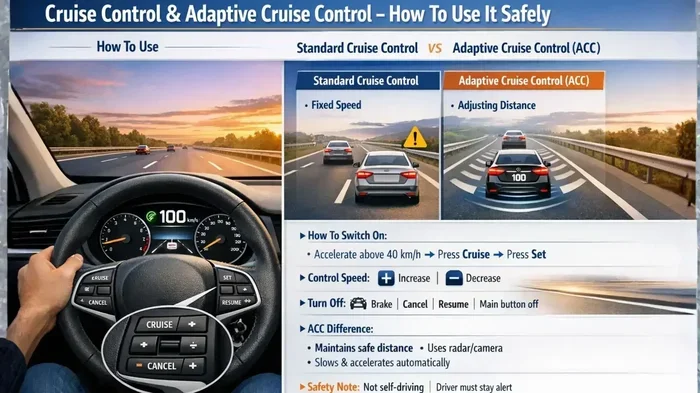
What is the difference between regular cruise control and adaptive cruise control?
Regular cruise control maintains a fixed speed you set. Adaptive cruise control uses radar or cameras to maintain a safe following distance from the vehicle ahead. Both systems can experience similar failures, but adaptive systems have additional sensors that can malfunction independently.
Conclusion
Dealing with a cruise control stuck situation on the road is frightening, but preparation and knowledge make it manageable. You now know the immediate steps to take, the common causes behind these malfunctions, and the simple troubleshooting steps you can perform at home. From checking fuses to cleaning the throttle body, many fixes are within your reach.
Remember that safety always comes first. If your throttle is physically stuck and simple cancel methods do not work, shift to neutral, pull over, and turn off the engine. Do not hesitate to call for professional help when the situation feels beyond your control.
Regular maintenance is your best friend when it comes to preventing cruise control problems. Keep your throttle body clean, inspect vacuum lines, and replace worn switches before they fail. These small habits pay off in reliability, safety, and peace of mind every time you hit the open road.
Now you have the knowledge to handle a cruise control malfunction confidently. Share this guide with fellow drivers who might benefit from it, and always keep your eyes on the road and your hands ready. Safe travels depend on being prepared for the unexpected.