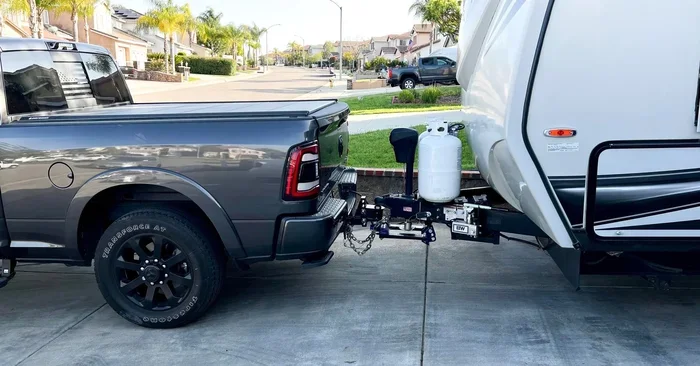
Does Towing Capacity Always Include Tongue Weight
Does towing capacity always include tongue weight? The answer depends on your vehicle, hitch setup, and manufacturer specifications. Understanding the difference between towing capacity and tongue weight is essential for safe and legal towing. This guide breaks down everything you need to know about tongue weight, towing capacity, and how they work together to keep you safe on the road.
Does towing capacity always include tongue weight? This is one of the most common questions among truck and SUV owners who plan to haul trailers. The short answer is: it depends on your vehicle and how the manufacturer defines your towing specifications.
Many drivers assume that their vehicle’s towing capacity covers everything about towing. But tongue weight plays a unique role that often gets overlooked. Understanding this distinction can mean the difference between a smooth, safe trip and a dangerous situation on the highway.
In this article, we will break down exactly what tongue weight is, how it relates to your towing capacity, and how to make sure you stay within safe limits. Whether you are pulling a boat, a travel trailer, or a horse trailer, this guide will help you tow with confidence.
Key Takeaways
- Tongue weight is separate from towing capacity: Towing capacity refers to the total trailer weight, while tongue weight is the downward force on the hitch.
- Tongue weight typically counts toward payload capacity: It affects your vehicle’s total load, not just the towing rating.
- The recommended tongue weight is 10 to 15 percent of trailer weight: Staying within this range ensures safe and stable towing.
- Too much or too little tongue weight is dangerous: It can cause trailer sway, loss of control, or damage to your vehicle.
- Use a tongue weight scale to measure accurately: Never guess your tongue weight before hitting the road.
- Weight distribution hitches help manage tongue weight: They redistribute force across all axles for safer towing.
📑 Table of Contents
What Is Tongue Weight and Why Does It Matter?
Tongue weight is the downward force that the trailer tongue applies to the hitch ball. It is the weight measured right at the point where your trailer connects to your vehicle. Many people confuse tongue weight with the total trailer weight, but they are not the same thing.
When you attach a trailer to your truck or SUV, the front part of the trailer rests on the hitch ball. This creates a downward push known as tongue weight. Proper tongue weight keeps your trailer stable and prevents it from swaying or lifting the back of your vehicle.
The Role of Tongue Weight in Towing
Without the right tongue weight, your trailer can become unstable. Too little tongue weight causes the trailer to sway in the wind. Too much tongue weight lifts the front of your vehicle and reduces steering control. Both situations are dangerous on the road.
Think of tongue weight as the anchor for your trailer. It keeps the trailer connected to your vehicle in a balanced way. If the anchor is too weak or too strong, the whole setup becomes unsafe. This is why every towing guide emphasizes getting tongue weight right.
How Tongue Weight Affects Trailer Stability
The right tongue weight keeps your trailer tracking straight behind your vehicle. It also helps distribute the load evenly across all axles. This is why most towing guides recommend keeping tongue weight between 10 and 15 percent of the total trailer weight.
Think of it this way. Your trailer is like a seesaw. The hitch ball is the pivot point. If there is too much weight behind the pivot, the trailer will push down on the hitch and lift the front of your truck. If there is too little weight, the trailer will swing from side to side. Finding the right balance is key to safe towing.
How Towing Capacity Is Determined
Towing capacity is the maximum weight your vehicle can safely pull behind it. But how do manufacturers arrive at this number? It is not a simple guess. There are several factors that go into determining your vehicle’s towing capacity.
Gross Vehicle Weight Rating Explained
Your vehicle’s Gross Vehicle Weight Rating, or GVWR, is the maximum total weight your vehicle can handle. This includes the weight of the vehicle itself, passengers, cargo, fuel, and the tongue weight from your trailer. The GVWR is set by the manufacturer and you can usually find it on a sticker inside the driver’s door frame.
It is important to understand that GVWR is not just about the vehicle. It covers everything. So when you add a trailer, the tongue weight counts toward your GVWR. This is a key point that many drivers miss when they are planning a trip.
Also, keep in mind the Gross Combined Weight Rating, or GCWR. This is the maximum weight of your vehicle plus the trailer together. Both GVWR and GCWR play a role in how much you can safely tow.
Payload Capacity vs. Towing Capacity
Payload capacity and towing capacity are two different things, but they are closely related. Payload capacity is the maximum weight your vehicle can carry in its bed and cabin. Towing capacity is the maximum weight your vehicle can pull behind it.
Here is the important part. Tongue weight counts against your payload capacity, not your towing capacity. So if your truck has a payload capacity of 1,500 pounds and your trailer tongue weight is 600 pounds, you only have 900 pounds left for passengers and cargo in the vehicle.
Quick Tip: Always check your vehicle’s payload capacity before loading up your trailer. Subtract the tongue weight first, then figure out how much room you have left for passengers and gear.
Does Tongue Weight Count Toward Towing Capacity?
This is where things get a little confusing. The answer is both yes and no, depending on how you look at it. Let us break it down clearly.
When Tongue Weight Is Included in Towing Capacity
Some manufacturers define towing capacity as the total trailer weight, including tongue weight. In this case, the towing capacity number already accounts for the tongue weight. So if your truck is rated for 10,000 pounds of towing capacity, that is the total weight of the trailer plus its contents.
However, this does not mean tongue weight is separate from the towing limit. The tongue weight is part of the total trailer weight. So you still need to make sure your tongue weight is within the recommended 10 to 15 percent range for that total trailer weight.
When Tongue Weight Is Separate from Towing Capacity
Other manufacturers treat tongue weight as a separate consideration. In these cases, the towing capacity refers only to the trailer weight. The tongue weight then becomes part of your vehicle’s payload calculation. This means you need to check both your towing capacity and your payload capacity before hitting the road.
This distinction matters a lot. If you only look at towing capacity and ignore tongue weight’s effect on payload, you could end up overloading your vehicle. And an overloaded vehicle is a safety hazard.
Comparison Table: Tongue Weight vs. Towing Capacity
| Aspect | Towing Capacity | Tongue Weight |
|---|---|---|
| Definition | Maximum trailer weight your vehicle can pull | Downward force on the hitch ball |
| What It Measures | Total trailer weight | Percentage of trailer weight on hitch |
| Affects | Engine, transmission, brakes | Rear suspension, steering, payload |
| Recommended Range | Varies by vehicle | 10 to 15 percent of trailer weight |
| Safety Impact | Overloading causes mechanical failure | Wrong weight causes trailer sway |
| Measured With | Vehicle towing guide or spec sheet | Tongue weight scale or CAT scale |
As you can see from the table above, tongue weight and towing capacity are related but serve different purposes. Both matter for safe towing. Ignoring either one can lead to problems.
Expert Insight: How Manufacturers Handle This
Different vehicle manufacturers handle tongue weight differently in their towing guides. Some list it as part of the towing capacity. Others leave it out and expect you to calculate payload separately. This is why it is so important to read your owner’s manual carefully.
Ford, for example, often lists towing capacity separately from payload. GM tends to include tongue weight in the overall weight discussion. And Ram provides detailed towing guides that break down every weight category. No matter which brand you drive, taking the time to understand these numbers will keep you safe.
How to Measure and Adjust Tongue Weight
Now that you understand what tongue weight is and why it matters, let us talk about how to actually measure it. You cannot guess tongue weight. You need to measure it with the right tools.
Using a Tongue Weight Scale
A tongue weight scale is a simple device that measures the downward force on your hitch ball. You place the scale under the trailer tongue, lower the trailer jack until the weight rests on the scale, and read the number. It is quick, easy, and inexpensive.
You can find tongue weight scales at most auto parts stores for under $30. Some truck stops and CAT scales also let you weigh your trailer and tongue separately. This is a great option if you want a very precise measurement.
Another option is to use a bathroom scale for smaller trailers. Place a scale on the ground, put a block of wood on top, and lower the trailer tongue onto the scale using the trailer jack. This method works well for lighter trailers and gives you a good estimate.
Tips for Adjusting Tongue Weight
If your tongue weight is too high or too low, you have options for adjusting it. Here are some practical steps you can take:
- Move cargo forward or backward. Shifting items in your trailer changes where the weight sits. Move heavier items toward the front of the trailer to increase tongue weight.
- Use a weight distribution hitch. This type of hitch redistributes tongue weight across all axles of your tow vehicle. It helps level your rig and improves stability.
- Adjust the hitch ball height. Sometimes a simple change in hitch ball height can affect how the trailer sits and how weight is distributed.
- Add or remove cargo. If your tongue weight is too high, you may need to shift some items to the front of the trailer or remove some weight entirely.
The goal is to get tongue weight into that sweet spot of 10 to 15 percent of your total trailer weight. Once you hit that range, your towing experience will be much safer and more comfortable.
Quick Tip: Always recheck your tongue weight after making any changes to your load. Even small shifts in cargo can change the tongue weight significantly.
Common Towing Mistakes and How to Avoid Them
Even experienced towers make mistakes. The good news is that most towing errors are easy to avoid if you know what to look out for. Here are some of the most common mistakes and how to prevent them.
Overloading Your Hitch
One of the biggest mistakes drivers make is exceeding the hitch weight rating. Every hitch has a maximum weight limit. If your tongue weight goes over that limit, you risk damaging your vehicle or losing control of the trailer.
Check your hitch receiver weight rating before you load up. Most standard hitches are rated for 500 to 1,000 pounds of tongue weight. Weight distribution hitches can handle more. But never exceed the rated limit.
Ignoring Weight Distribution
Another common mistake is loading the trailer unevenly. If all your cargo is in the back of the trailer, tongue weight drops dangerously low. This causes trailer sway, which is one of the leading causes of towing accidents.
Always distribute weight evenly across the trailer. Keep about 60 percent of the cargo weight in the front half of the trailer and 40 percent in the back. This helps maintain proper tongue weight and keeps the trailer stable.
Skipping the Pre-Trip Weight Check
Many drivers skip weighing their trailer before a trip. They assume everything looks fine. But appearances can be deceiving. A trailer that looks balanced might actually have too much or too little tongue weight.
Make it a habit to weigh your trailer at a CAT scale before every major trip. It takes about 10 minutes and could save your life. The cost is usually around $15 to $25, which is a small price for peace of mind.
Final Thoughts on Towing Capacity and Tongue Weight
So, does towing capacity always include tongue weight? The answer is not always. It depends on your vehicle, your manufacturer’s definitions, and how you calculate your loads. What is clear is that tongue weight matters enormously for safe towing.
Whether tongue weight counts toward your towing capacity or your payload capacity, you need to manage it carefully. Use a tongue weight scale, follow the 10 to 15 percent rule, and never exceed your vehicle’s weight ratings. These simple steps will keep you and your family safe on the road.
Towing can be a wonderful experience. It gives you the freedom to haul boats, campers, and equipment wherever you go. But it comes with responsibility. Understanding the relationship between towing capacity and tongue weight is the first step toward becoming a safe, confident tower.
Take the time to learn your vehicle’s specifications. Read your owner’s manual. Invest in the right equipment. And always, always weigh your trailer before you hit the road. Safe towing starts with knowledge, and knowledge starts with understanding the basics.
Frequently Asked Questions
What happens if tongue weight is too high?
Too much tongue weight lifts the front of your vehicle and reduces steering control. It can also overload your rear suspension and make braking less effective. In extreme cases, it can cause the trailer to push your vehicle from behind, leading to loss of control.
Can I tow at maximum capacity with full tongue weight?
Not necessarily. Tongue weight counts against your payload capacity, not your towing capacity. So even if your vehicle can tow 10,000 pounds, the tongue weight from that trailer still needs to fit within your vehicle’s payload limit. Always check both numbers before towing.
How do I know if my tongue weight is correct?
The recommended tongue weight is 10 to 15 percent of your total trailer weight. Use a tongue weight scale or visit a CAT scale to measure it. If your tongue weight falls outside this range, adjust your cargo placement until it is within the safe zone.
Does a weight distribution hitch change towing capacity?
A weight distribution hitch does not change your vehicle’s towing capacity rating. However, it does help manage tongue weight by redistributing force across all axles. This improves stability, levels your rig, and makes towing safer and more comfortable.
What is the difference between hitch weight and tongue weight?
Hitch weight and tongue weight are essentially the same thing. Both refer to the downward force the trailer applies to the hitch ball. Some people use the terms interchangeably. The key is making sure this force stays within the recommended 10 to 15 percent range.
Can I measure tongue weight at home without a special scale?
Yes, for lighter trailers you can use a bathroom scale and a block of wood. Place the scale on the ground, set a wooden block on top, and lower the trailer tongue onto the scale using the trailer jack. For heavier trailers, always use a proper tongue weight scale or visit a CAT scale for accurate results.