How Many Cylinders Does a Maserati Have and Why It Matters
Maserati offers a range of engine configurations, from 4-cylinder turbos in the Grecale to powerful V6, V8, and even V12 engines in their flagship models. The number of cylinders directly impacts horsepower, torque, fuel economy, and the iconic sound that defines the Maserati driving experience. Understanding your Maserati’s cylinder count helps you make informed decisions about maintenance, performance expectations, and which model suits your driving style.
Maserati has been turning heads on roads around the world for nearly a century. The Italian luxury brand is famous for its sleek designs, premium interiors, and engines that sound as good as they perform. But one question keeps coming up among car enthusiasts and shoppers alike: how many cylinders does a Maserati have?
The answer is not as simple as one number. Maserati has built cars with 4, 6, 8, and even 12 cylinders over the years. The right cylinder count depends on the model, the year, and what kind of driving experience you are looking for. In this guide, we break down every Maserati engine configuration, explain why cylinder count matters, and help you understand what it means for your wallet and your driving pleasure.
Whether you are shopping for a new Maserati or just curious about what is under the hood, this article covers everything you need to know about Maserati cylinder counts and engine configurations.
Key Takeaways
- Maserati models vary widely: cylinder counts range from 4 cylinders in the Grecale to 12 cylinders in historic and limited-edition models.
- V6 and V8 engines dominate the current lineup: most modern Maseratis use a V6 or V8 configuration for the perfect balance of power and refinement.
- Cylinder count affects performance directly: more cylinders generally mean more horsepower, smoother power delivery, and a distinctive engine note.
- Maintenance costs rise with cylinder count: V8 and V12 engines require more specialized care, parts, and attention than smaller configurations.
- Knowing your engine type matters: it helps with oil selection, spark plug replacements, and understanding when to seek professional service.
- The future is shifting: Maserati is moving toward hybrid and electric powertrains, which changes the traditional cylinder-count conversation entirely.
📑 Table of Contents
- What Is a Cylinder and Why Does It Matter?
- How Many Cylinders Does Each Maserati Model Have?
- Why Cylinder Count Matters for Performance
- Understanding Engine Configurations in Luxury Cars
- Maserati Engine Maintenance: What You Need to Know
- The Future of Maserati Powertrains
- Common Mistakes People Make With Maserati Engines
- Expert Tips for Getting the Most From Your Maserati Engine
- Comparing Cylinder Counts Across the Maserati Lineup
- Final Thoughts
What Is a Cylinder and Why Does It Matter?
Before we dive into specific Maserati models, let us talk about what a cylinder actually does. Every car engine has cylinders. These are the chambers where fuel and air mix and ignite to create power. The more cylinders an engine has, the more power strokes happen at once. This creates smoother operation and more available horsepower.
Think of it like a team of workers. A 4-cylinder engine has four workers. A V8 engine has eight. More workers means more gets done, but it also means more complexity and higher costs. This basic idea drives almost every decision automakers make when choosing an engine layout.
For Maserati, cylinder count is a core part of the brand identity. The famous Italian engine note, that deep and thrilling rumble, comes directly from the number and arrangement of cylinders. When people ask how many cylinders does a Maserati have, they are really asking what kind of driving experience they will get.
How Many Cylinders Does Each Maserati Model Have?
Maserati has offered several different engine configurations across its lineup. Let us go through the current and recent models so you know exactly what to expect.
Maserati Grecale — 4-Cylinder and 6-Cylinder Options
The Grecale is Maserati’s compact luxury SUV. It is the brand’s entry point, and that shows in the engine options. The base Grecale comes with a 2.0-liter turbocharged 4-cylinder engine that produces around 300 horsepower. This is the only Maserati SUV that offers a 4-cylinder configuration.
For those who want more of the classic Maserati feel, the Grecale Trofeo steps up to a 3.0-liter twin-turbo V6 producing 530 horsepower. This gives buyers a choice between efficiency and pure performance.
Maserati Levante — V6 Power
The Levante is Maserati’s mid-size luxury SUV. Every Levante model comes with a 3.0-liter V6 engine, either twin-turbo or hybrid in the Trofeo version. The V6 delivers between 430 and 590 horsepower depending on the trim. This engine configuration gives the Levante a great balance of SUV practicality and sports car performance.
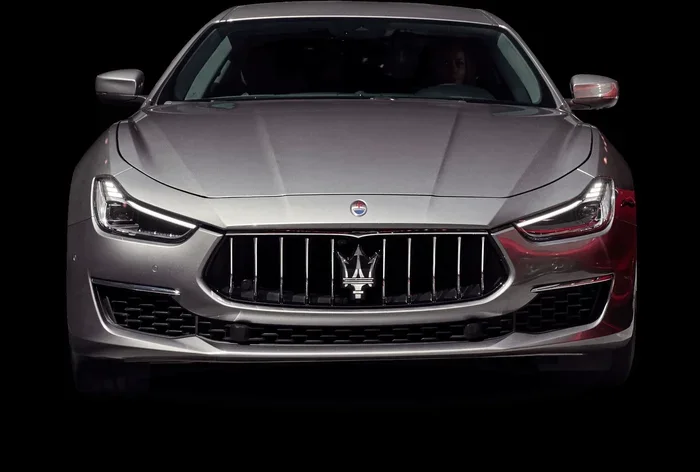
Maserati Ghibli — The Classic V6 Sedan
The Ghibli is one of Maserati’s most iconic models. It has been powered by a V6 engine for generations. The current Ghibli offers a 3.0-liter twin-turbo V6 with around 424 horsepower in the base model and up to 580 horsepower in the Trofeo trim. The Ghibli is a perfect example of how a V6 engine can deliver both luxury and thrilling acceleration.
Maserati Quattroporte — V6 with V8 Options
The Quattroporte is Maserati’s full-size luxury sedan. The standard model uses the same 3.0-liter V6 found in the Ghibli. However, the Quattroporte also offers a 3.8-liter twin-turbo V8 in higher trims, producing up to 523 horsepower. The V8 version delivers a noticeably different driving experience, with more power and a deeper, more commanding exhaust note.
Maserati MC20 — Mid-Engine V6 Supercar
The MC20 is Maserati’s flagship sports car. It features a mid-mounted 3.0-liter V6 twin-turbo engine that produces 621 horsepower. This is one of the most powerful engines Maserati has ever put in a production car. The MC20 proves that a V6 can compete with V8 and even V12 supercars when tuned properly.
Maserati GranTurismo — The New V6 Era
The latest generation GranTurismo uses a 3.0-liter V6 twin-turbo engine producing 550 horsepower. This model blends grand touring comfort with sports car performance. It shows that Maserati is doubling down on the V6 as its primary engine configuration for the foreseeable future.
Historic Maserati Models — V8 and V12 Legends
Maserati has a rich history with larger engines. The Maserati MC12, a limited-edition supercar, featured a 6.0-liter V12 engine producing 624 horsepower. Earlier models like the Maserati Bora and Merak used V8 configurations. These historic engines are part of what makes Maserati so beloved among collectors and enthusiasts.
Why Cylinder Count Matters for Performance
Now that you know what engines Maserati offers, let us talk about why cylinder count actually matters. This is where things get interesting for anyone who cares about how their car drives.
Power Output
More cylinders generally mean more power. Each cylinder contributes a power stroke during the engine’s firing cycle. A V8 fires more often than a V6, which fires more often than a 4-cylinder. This is why the Maserati MC20 with its V6 can still produce over 600 horsepower — modern turbocharging and engineering make smaller engines incredibly powerful.
Smoothness and Refinement
More cylinders also mean smoother operation. A V12 engine runs with almost no vibration because the power strokes overlap so frequently. This is why luxury car manufacturers have historically favored 12-cylinder engines. Maserati’s V6 engines are well-balanced and refined, but a V8 or V12 offers an even silkier ride at high speeds.
The Sound Factor
Let us be honest. A big part of loving a Maserati is the sound. The number of cylinders affects the engine note dramatically. A V6 has a higher, more melodic tone. A V8 has a deeper, more aggressive growl. A V12 sounds like a jet engine at idle. Maserati engineers tune each engine to deliver a signature sound that makes driving feel special.
If you have ever wondered whether how long a car can idle safely depends on cylinder count, the answer is yes, to some degree. More cylinders mean more heat generated at idle, and luxury engines like those in Maseratis are designed to handle extended warm-up periods. However, modern Maseratis are built with advanced cooling systems that keep everything running smoothly, even during longer idle periods.
Fuel Economy Considerations
More cylinders burn more fuel. A 4-cylinder Grecale will get better gas mileage than a V8 Quattroporte. This is a trade-off every car buyer must consider. If you want the Maserati experience but also need to save on fuel, the V6 models offer the best balance. The 4-cylinder Grecale is the most efficient option in the lineup.
Understanding Engine Configurations in Luxury Cars
Maserati uses a few different engine configurations. Understanding these helps you make sense of why certain models feel the way they do.
Inline-4 (I4)
The Grecale base model uses an inline-4 configuration. All four cylinders are arranged in a single row. This layout is compact, efficient, and cost-effective. It is the most common engine configuration in the automotive world today.
V6 Configuration
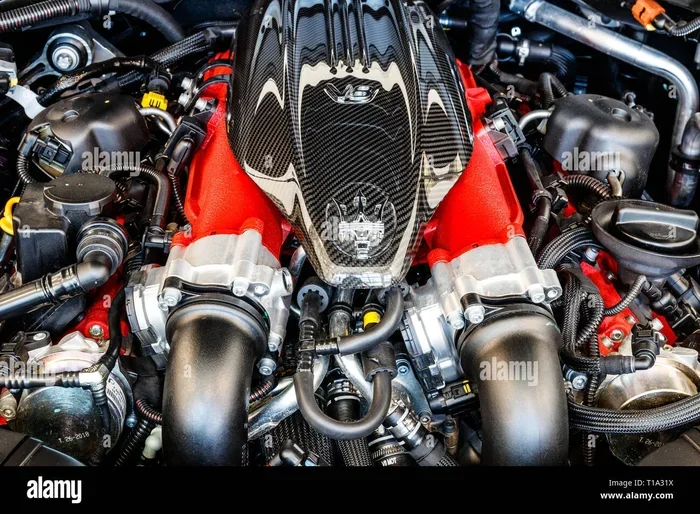
The V6 is the heart of the current Maserati lineup. The cylinders are arranged in two banks at a 60-degree angle. This configuration is compact enough to fit in most Maserati models while still delivering strong performance. The V6 is often considered the sweet spot for luxury sports cars.
V8 Configuration
The V8 is found in higher-performance Quattroporte trims. Eight cylinders in two banks give this engine incredible power and a distinctive sound. V8 engines are more complex and expensive to build, which is why they appear only in premium trims.
V12 Configuration
The V12 is the crown jewel of Maserati’s engine history. Twelve cylinders in two banks deliver maximum smoothness and power. While no current Maserati production car uses a V12, the brand has built legendary V12 engines in the past, and enthusiasts still dream of a modern V12 Maserati return.
Maserati Engine Maintenance: What You Need to Know
Owning a Maserati comes with responsibilities. These are luxury performance cars, and they need proper care to keep running their best. Here is what you should know about maintaining a Maserati engine.
Oil Changes and Fluid Maintenance
Maserati engines need high-quality synthetic oil. The V6 and V8 models are particularly demanding. You should change the oil every 5,000 to 7,500 miles, depending on your driving conditions. Using the wrong oil can lead to premature wear and reduced performance.
Spark Plug Replacement
Every cylinder has a spark plug. A V6 engine has six spark plugs, a V8 has eight, and a V12 has twelve. More spark plugs means more parts to replace, and the cost goes up with each additional cylinder. Spark plugs should be replaced according to Maserati’s maintenance schedule, typically every 30,000 to 60,000 miles.
Transmission Care
Maserati uses automatic transmissions, and these need regular fluid changes too. The transmission works closely with the engine to deliver power smoothly. If you notice rough shifting or delays, it is important to address the issue quickly. Understanding at what mileage a transmission goes bad can help you stay ahead of potential problems. Most Maserati transmissions last well over 100,000 miles with proper maintenance.
Cooling System Upkeep
Performance engines generate a lot of heat. The cooling system in a Maserati works hard to keep temperatures in check. Flushing the coolant and checking hoses and connections regularly helps prevent overheating. This is especially important if you enjoy spirited driving or live in a hot climate.
Driving Mode Selection
Many Maseratis come with different driving modes, including Sport mode. Switching to sport mode while driving changes how the engine responds, the transmission shifts, and the steering feels. This is a great feature for when you want to push the car harder. Just keep in mind that sport mode uses more fuel and puts more stress on engine components.
Some drivers also wonder whether they can take their Maserati to any dealership for service. While Maserati has its own network of dealers, general luxury car dealerships may also be able to service your vehicle. It is always best to check with your specific dealer about warranty coverage and service options.
The Future of Maserati Powertrains
Maserati is going through a major transformation. The brand is moving toward electrification, and this changes the conversation about cylinder counts entirely.
The Maserati Folgore is the brand’s first fully electric vehicle. It has no cylinders at all. Instead, it uses an electric motor to deliver instant torque and a silent, smooth driving experience. The Folgore proves that Maserati can deliver performance and luxury without a traditional combustion engine.
Looking ahead, Maserati plans to introduce more hybrid models. These will combine traditional cylinders with electric motors for the best of both worlds. You get the sound and feel of a Maserati engine, plus the efficiency and instant response of electric power.
This shift does not mean V6 and V8 engines will disappear overnight. Maserati has confirmed that combustion engines will remain part of the lineup for years to come. But the era of large-displacement, multi-cylinder engines is slowly evolving.
If you are considering a Maserati today, now is a great time to experience what a traditional luxury sports car engine has to offer. The brand’s current V6 and V8 engines represent the peak of internal combustion engineering, and they are worth experiencing before the industry moves fully electric.
Common Mistakes People Make With Maserati Engines
Owning a Maserati is exciting, but mistakes can happen. Here are some common errors to avoid.
- Skipping oil changes: Luxury performance engines need regular oil changes more than standard cars. Skipping this leads to accelerated wear.
- Using low-quality fuel: Maseratis recommend premium fuel. Using lower octane can cause knocking and reduce performance.
- Ignoring warning lights: If your check engine light comes on, do not ignore it. Early diagnosis saves money and prevents bigger problems.
- Neglecting transmission service: The transmission works hard in a Maserati. Regular fluid changes keep it shifting smoothly.
- Overlooking the cooling system: Performance engines run hot. Keeping the cooling system in top shape prevents overheating and costly repairs.
Expert Tips for Getting the Most From Your Maserati Engine
Here are some practical tips to keep your Maserati engine running strong for years to come.
- Warm up the engine gently. Avoid revving the engine hard right after starting. Let it reach operating temperature first.
- Drive it regularly. Engines need to cycle through their full operating range. A car that sits too long can develop issues with seals, battery, and fluids.
- Use the recommended oil grade. Check your owner’s manual for the exact specification. Using the wrong oil can void your warranty.
- Keep up with scheduled maintenance. Maserati provides a maintenance schedule for a reason. Following it keeps your warranty valid and your car running at its best.
- Listen to your engine. You know your car better than anyone. If something sounds different, get it checked out. Early detection prevents expensive repairs.
Comparing Cylinder Counts Across the Maserati Lineup
Here is a quick comparison of the cylinder counts across current Maserati models.
- Maserati Grecale (base): 4 cylinders
- Maserati Grecale Trofeo: 6 cylinders (V6)
- Maserati Levante: 6 cylinders (V6)
- Maserati Ghibli: 6 cylinders (V6)
- Maserati Quattroporte (base): 6 cylinders (V6)
- Maserati Quattroporte (high performance): 8 cylinders (V8)
- Maserati MC20: 6 cylinders (V6)
- Maserati GranTurismo: 6 cylinders (V6)
- Maserati Folgore (electric): 0 cylinders (electric motor)
- Historic Maserati models: 6, 8, or 12 cylinders (V6, V8, V12)
As you can see, the V6 configuration is the workhorse of the modern Maserati lineup. It appears in more models than any other engine type. The 4-cylinder Grecale is the exception, designed for buyers who want the Maserati badge with better fuel economy.
If you are comparing Maserati to other luxury brands, the cylinder count story is similar. Many competitors use V6 and V8 engines in their core lineup. What sets Maserati apart is the emphasis on driving feel and engine sound. The brand does not just build powerful engines — it builds engines that make you feel something every time you turn the key.
Final Thoughts
So, how many cylinders does a Maserati have? The answer depends on the model, but most modern Maseratis use a V6 engine. The Grecale offers a 4-cylinder option for those who want efficiency, and the Quattroporte can be equipped with a V8 for those who want maximum power. Historic Maseratis have featured V12 engines that remain legendary among car enthusiasts.
Understanding cylinder count helps you choose the right Maserati for your needs. It affects performance, fuel economy, maintenance costs, and the overall driving experience. Whether you are drawn to the efficiency of a 4-cylinder or the thunderous roar of a V8, Maserati has an engine configuration that fits.
The most important thing is to enjoy the drive. Maserati builds cars that are meant to be experienced, not just owned. Take care of the engine, drive it often, and savor every moment behind the wheel. That is what owning a Maserati is all about.
Frequently Asked Questions
What is the most common cylinder count in current Maserati models?
The V6 configuration is the most common across the current Maserati lineup. Models like the Ghibli, Levante, Quattroporte, MC20, and GranTurismo all use a 3.0-liter V6 engine in various tune levels. The V6 offers the perfect balance of performance, refinement, and efficiency for a luxury sports car brand.
Does any current Maserati have a V8 engine?
Yes, the Maserati Quattroporte offers a V8 engine in its higher-performance trims. The 3.8-liter twin-turbo V8 produces up to 523 horsepower and delivers a deeper, more powerful driving experience compared to the standard V6. The V8 Quattroporte is ideal for buyers who want maximum performance from a luxury sedan.
Are there any Maserati models with only 4 cylinders?
The Maserati Grecale is the only current model offered with a 4-cylinder engine. The base Grecale uses a 2.0-liter turbocharged 4-cylinder that produces around 300 horsepower. This makes the Grecale the most fuel-efficient option in the Maserati lineup while still delivering the brand’s signature luxury and style.
Will Maserati stop making engines with cylinders in the future?
Maserati is actively moving toward electrification with the Folgore electric SUV leading the charge. However, the brand has confirmed that combustion engines will remain part of the lineup for the foreseeable future. Hybrid models will likely bridge the gap between traditional engines and full electric powertrains in the coming years.
How does cylinder count affect Maserati maintenance costs?
More cylinders mean more parts to maintain, which increases costs over time. A V6 engine has six spark plugs, six ignition coils, and more complex internal components than a 4-cylinder. A V8 has even more. Regular maintenance like oil changes, spark plug replacements, and fluid services costs more as cylinder count increases, but the driving experience is well worth it for most enthusiasts.
Can I still drive my Maserati if the engine warning light comes on?
You should not ignore the warning light, but you can usually drive a short distance to a safe location. The engine warning light could indicate anything from a minor sensor issue to a more serious problem. It is best to have the vehicle inspected by a qualified technician as soon as possible to prevent further damage to the engine or other components.
=== CONCLUSION ===
How many cylinders does a Maserati have is a question that opens the door to understanding one of the most exciting luxury car brands on the road today. From the efficient 4-cylinder Grecale to the thunderous V8 Quattroporte and the legendary V12 models of the past, Maserati offers a cylinder count for every type of driver.
The V6 engine sits at the heart of the current lineup, delivering the perfect blend of power, refinement, and Maserati character. Whether you prioritize performance, luxury, or efficiency, there is a Maserati engine configuration that matches your needs.
Take the time to understand what is under the hood. It matters more than most people realize. The right engine choice enhances not just your driving experience but also your ownership journey. Choose wisely, maintain well, and enjoy every mile in your Maserati.