How Safe Is the Volvo XC90 Compared to Other SUVs Today
The Volvo XC90 stands out as one of the safest SUVs you can buy today. With top crash test scores, advanced driver-assist tech, and a strong reputation for protecting families, this luxury SUV earns its safety credentials. How safe is the Volvo XC90? Let us break it all down for you in this detailed guide.
If you are shopping for a family SUV, safety is probably at the top of your list. And that is exactly where the Volvo XC90 shines. How safe is the Volvo XC90 compared to the competition? The short answer is very safe. The long answer is what we are going to walk through right now.
Volvo has built its entire brand around safety. For decades, the Swedish automaker has led the industry in crash protection and accident prevention. The XC90 is their flagship SUV, and it carries that safety legacy forward. Whether you are a first-time SUV buyer or you are switching from another model, understanding the XC90’s safety profile matters.
In this article, we will look at crash test results, safety features, real-world owner feedback, and how the XC90 stacks up against other popular SUVs. We will also cover common concerns and share practical tips to keep your XC90 safe for years to come. So buckle up, and let us dive in.
Key Takeaways
- Top Crash Test Scores: The Volvo XC90 consistently earns high marks from IIHS and Euro NCAP testing.
- Advanced Safety Tech: Features like Volvo City Safety and pilot assist make the XC90 a leader in active safety.
- Strong Family Protection: The XC90 is built with occupant protection in mind, making it ideal for families.
- Competitive Edge: When compared to other SUVs, the XC90 holds its own in safety rankings.
- Owner Confidence: Real-world reviews show that XC90 owners feel secure on the road.
- Regular Maintenance Matters: Keeping up with brake pads and warning lights helps maintain your XC90’s safety over time.
📑 Table of Contents
What Makes the Volvo XC90 a Safety Leader
Volvo did not become the safety brand by accident. The company has a long history of pushing automotive safety boundaries. The XC90 benefits from decades of research and engineering. Every element of this SUV is designed with protection in mind.
The Volvo Safety Philosophy
Volvo believes that no one should die or suffer a serious injury in a new Volvo by 2020. That goal shaped every design decision for the XC90. From the steel frame to the airbags, everything works together to keep occupants safe.
Here are some key reasons the XC90 earns its safety reputation:
- Strong body structure: The XC90 uses high-strength steel in critical areas.
- Crumple zones: The front and rear are designed to absorb impact energy.
- Side impact protection: Reinforced door sills help protect passengers in side collisions.
- Roof strength: The roof is built to withstand significant force.
- Advanced airbags: Multiple airbags deploy in a fraction of a second.
These elements work together to create what Volvo calls a safety cage. The idea is simple but brilliant. Protect the passengers by letting the car absorb the crash energy around them.
Volvo City Safety System
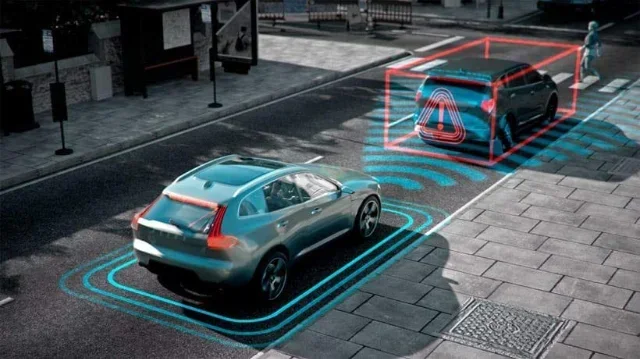
One of the standout features in the XC90 is the Volvo City Safety system. This is a suite of active safety technologies that work together to prevent accidents before they happen. It is not just a single feature. It is a complete safety ecosystem.
The City Safety system includes:
- Automatic emergency braking: The car can brake on its own if it detects an imminent collision.
- Forward collision warning: Alerts you when you are closing in on a vehicle too quickly.
- Cyclist and pedestrian detection: The system can spot vulnerable road users and apply the brakes.
- Auto-swerve: In some situations, the XC90 can steer around an obstacle.
- Oncoming lane mitigation: Helps prevent head-on collisions.
This technology is a game-changer. It means the XC90 does not just protect you in a crash. It actively works to help you avoid crashes altogether.
Crash Test Ratings and Real-World Safety Data
Ratings tell a big part of the safety story. And the Volvo XC90 has impressive numbers across the board. Let us look at what the testing organizations say.
IIHS Ratings
The Insurance Institute for Highway Safety (IIHS) is one of the most trusted names in crash testing. The XC90 has earned the IIHS Top Safety Pick+ rating. This is the highest honor the IIHS bestows. To earn it, a vehicle must score well in all crashworthiness and crash avoidance tests.
The IIHS tests include:
- Small overlap front crash test
- Moderate overlap front crash test
- Side crash test
- Roof strength test
- Head restraint evaluation
- Front crash prevention test
The XC90 performs well in every single one of these. That is not easy to do. Many SUVs struggle in certain categories, but the XC90 stays consistent.
Euro NCAP Scores
In Europe, the XC90 has also received top marks from Euro NCAP. The European New Car Assessment Program tests vehicles using rigorous protocols. The XC90 has scored five stars in every category tested. This includes adult occupant protection, child occupant protection, pedestrian safety, and safety assist features.
Real-World Crash Data
Beyond controlled tests, real-world data also supports the XC90’s safety credentials. Studies of actual crashes show that Volvo vehicles tend to have lower injury rates compared to many competitors. Insurance data backs this up as well. Fewer injury claims mean the XC90 is genuinely protecting its occupants.
That said, no vehicle is crash-proof. How safe is the Volvo XC90 in a real accident? The answer depends on many factors. Speed, angle of impact, and road conditions all play a role. But the XC90 gives you the best possible chance of walking away unharmed.
Advanced Safety Features in the Volvo XC90
The XC90 is packed with technology designed to keep you safe. These features go far beyond what you find in most SUVs. Let us break them down into categories.
Active Safety Features
Active safety features work to prevent accidents. They use sensors, cameras, and radar to monitor your surroundings. The XC90 comes loaded with these technologies.
- Pilot Assist: This semi-autonomous driving system helps with steering, acceleration, and braking on highways.
- Blind spot monitoring: Alerts you when another vehicle is in your blind spot.
- Lane keeping aid: Gently steers the car back into your lane if you drift.
- Adaptive cruise control: Maintains a safe following distance from the vehicle ahead.
- Intersection auto-braking: Can brake if you run a red light or stop sign.
These features work together to create a layered safety net. If one system misses something, another may catch it. This redundancy is a hallmark of Volvo’s approach to safety.
Passive Safety Features
Passive safety features protect you during a crash. The XC90 excels in this area as well.
- Multiple airbags: Front, side, curtain, and knee airbags for all seating positions.
- Safety cage construction: The passenger compartment is reinforced with ultra-high-strength steel.
- Energy-absorbing structures: The front and rear are designed to crumple in a controlled way.
- Advanced seatbelts: Pretensioners and load limiters reduce injury during a collision.
Safety for Families
The XC90 is a three-row SUV, which means it is built for families. Volvo has paid attention to the unique needs of families with children. The second and third rows have ISOFIX anchor points for child seats. The rear airbags can be deactivated to protect smaller passengers. And the wide-opening rear doors make it easy to install car seats.
If you are a parent, how safe is the Volvo XC90 for your kids? The answer is very. Volvo has designed the XC90 with families at the forefront of every decision.
How the XC90 Compares to Other Popular SUVs
Safety is always best understood in context. How does the XC90 compare to other SUVs in its class? Let us look at a few popular competitors.
XC90 vs. BMW X5
The BMW X5 is a well-known luxury SUV. It offers strong performance and a comfortable ride. But when it comes to safety, the XC90 has the edge. Volvo’s safety-first philosophy gives the XC90 a slight advantage in crash test scores and standard safety features.
XC90 vs. Mercedes GLE
The Mercedes GLE is another luxury SUV competitor. It offers a refined interior and strong brand prestige. However, Volvo has historically prioritized safety over luxury flair. The XC90’s standard safety tech often surpasses what comes standard on the GLE.
XC90 vs. Audi Q7
The Audi Q7 is a solid three-row SUV. It offers good safety scores and a spacious interior. But the XC90’s commitment to safety is deeper and more consistent across the lineup. Volvo makes advanced safety features standard on every trim, while some competitors gate them behind higher packages.
XC90 vs. Subaru Ascent
The Subaru Ascent is a more affordable three-row SUV. Subaru also has a strong safety reputation. The Ascent earns good crash test scores. But the XC90 offers more advanced driver-assist features and a more comprehensive safety suite as standard equipment.
Quick Comparison Table
| Feature | Volvo XC90 | BMW X5 | Mercedes GLE |
|---|---|---|---|
| IIHS Top Safety Pick+ | Yes | Yes | Yes |
| Standard AEB | Yes | Yes | Yes |
| Standard Blind Spot Monitor | Yes | Yes | Yes |
| Standard Lane Keeping Aid | Yes | Optional | Optional |
| Pilot Assist / Semi-Auto | Yes | Optional | Optional |
| Euro NCAP 5 Stars | Yes | Yes | Yes |
As you can see, the XC90 holds its own against the best. And in some areas, it leads the pack.
Common Safety Concerns and What Owners Say
No vehicle is perfect. Even the safest SUVs have areas where owners have concerns. Let us look at some common questions and what real XC90 owners are saying.
Warning Lights and Driver Confidence
One thing that can unsettle any driver is a warning light on the dashboard. The XC90 has a sophisticated sensor network, and sometimes lights come on for minor reasons. For example, some owners have reported the wrench light appearing even when nothing is wrong. This can be confusing and scary.
If you ever notice a warning light, it is important not to panic. Many lights indicate routine maintenance needs. But if you are unsure, it is always best to get the vehicle checked. A bad battery can cause the wrench light to come on, which is a common and simple fix. Similarly, if you see the check engine light, you may be able to reset the check engine light without disconnecting the battery using an OBD scanner.
Can You Still Drive Safely With Warning Lights?
This is a question many XC90 owners ask. The answer depends on the light. Some lights are urgent. Others are informational. For instance, if the oil change light is on, you can usually still drive for a short distance. But ignoring it for too long can lead to engine damage. If you are ever unsure about a warning light, it is better to be safe than sorry.
Many owners find that understanding their vehicle’s alerts reduces anxiety. Taking a few minutes to read the owner manual can pay off big time. And if you ever wonder about driving with certain lights on, there are plenty of resources that explain what each warning means.
Maintenance and Long-Term Safety
Keeping your XC90 safe over the long haul requires regular maintenance. This is something that every owner should take seriously. Simple tasks like replacing brake pads, checking tire pressure, and changing the oil go a long way in maintaining your safety on the road.
Some owners ask whether they can handle repairs themselves. For example, changing the brake pads yourself is possible with basic tools and some mechanical know-how. Just make sure you follow the proper procedure and use the right parts. When in doubt, consult a professional.
Regular maintenance also helps you avoid unexpected breakdowns. A well-maintained XC90 is a safe XC90. It is that simple.
Tips to Maximize Your XC90’s Safety
Owning a safe SUV is one thing. Using it safely is another. Here are some practical tips to get the most out of your XC90’s safety features.
- Keep your software updated: Volvo regularly releases updates that improve safety systems.
- Use all driver-assist features: Pilot Assist, blind spot monitoring, and lane keeping aid are there for a reason. Turn them on.
- Check tire pressure regularly: Properly inflated tires improve handling and braking.
- Replace worn brake pads promptly: Brakes are your first line of defense in an emergency.
- Pay attention to warning lights: Do not ignore them. Address issues early.
- Keep the cabin air filter clean: A clean filter helps you stay alert and comfortable on long drives.
These small steps can make a big difference. Safety is not just about the car. It is also about how you use it.
Conclusion
So, how safe is the Volvo XC90? The answer is clear. It is one of the safest SUVs on the market today. From crash test ratings to advanced safety technology, the XC90 delivers peace of mind like few other vehicles can. Volvo has built a reputation for safety, and the XC90 carries that legacy forward with pride.
Whether you are a family looking for a reliable hauler or a safety-conscious buyer searching for the best protection, the XC90 deserves a spot at the top of your list. It combines strong crash protection, smart active safety features, and a design philosophy that puts people first.
Keep up with regular maintenance, pay attention to your vehicle’s signals, and always use the safety features available to you. Your XC90 will take care of you, as long as you take care of it. Drive safe, and enjoy every mile in one of the safest SUVs money can buy.
Frequently Asked Questions
Is the Volvo XC90 the safest SUV on the market?
The XC90 is consistently ranked among the safest SUVs available. It earns top marks from IIHS and Euro NCAP. While other SUVs also score well, Volvo’s commitment to safety gives the XC90 a strong edge in both crash protection and active safety technology.
What safety features come standard on the Volvo XC90?
The XC90 comes with Volvo City Safety as standard. This includes automatic emergency braking, forward collision warning, and pedestrian detection. It also includes blind spot monitoring and lane keeping aid. These features are available on every trim level, which is impressive.
Can a bad battery affect the XC90’s safety systems?
Yes, a weak or failing battery can trigger warning lights and affect electronic systems. If you notice lights like the wrench light coming on, a battery issue could be the cause. It is always best to have the battery and electrical system checked regularly.
How often should I maintain my XC90 for optimal safety?
Volvo recommends following the maintenance schedule in your owner’s manual. Generally, this means oil changes every 7,500 to 10,000 miles, brake inspections every 15,000 miles, and regular tire rotations. Staying on top of maintenance keeps your XC90 performing safely.
Is it safe to drive the XC90 with the oil change light on?
You can usually drive a short distance with the oil change light on. However, you should not ignore it for long. Low oil pressure or degraded oil can lead to engine damage over time. If you are unsure, check your oil level and schedule service promptly.
Does the Volvo XC90 have good crash test ratings?
Absolutely. The XC90 has earned the IIHS Top Safety Pick+ rating and five-star Euro NCAP scores. It performs well in all crashworthiness categories, including small overlap front, side impact, and roof strength tests. These ratings reflect real-world protection for occupants.
=== CONCLUSION ===
The Volvo XC90 proves that safety and luxury can go hand in hand. With top crash test scores, a comprehensive suite of standard safety features, and a brand built on protecting lives, this SUV sets a high bar. Whether you are comparing it to the BMW X5, Mercedes GLE, or any other luxury SUV, the XC90 holds its ground. Keep your vehicle well-maintained, use its safety features, and you will have a safe and enjoyable driving experience for years to come.