What Happens If Key Fob Dies While Driving Right Now
What happens if key fob dies while driving? Most modern cars will continue running normally, but you may lose the ability to restart the engine after turning it off. A dead key fob battery can cause lock, unlock, and push-start features to stop working. The good news is that most vehicles have backup systems to keep you moving safely.
Have you ever been driving down the highway and suddenly noticed your key fob battery died? It is a scary moment. Your hands are on the wheel, traffic is moving, and you wonder if your car is about to shut off. The truth is, most drivers will never face a full engine shutdown because of a dead key fob. But there are some real things that can go wrong. You might lose the ability to restart the engine. You might not be able to lock your doors. You could even get stuck in a parking lot. This article breaks down exactly what happens when your key fob dies while driving. We will cover the science behind it, what to do in the moment, and how to prevent it from happening again.
Modern cars rely heavily on smart key systems and push button start technology. These systems make driving easier, but they also add complexity. When the key fob battery dies, your car does not always behave the way you expect. Understanding how your vehicle responds can save you time, money, and a lot of stress. Let us walk through this step by step so you are fully prepared.
Key Takeaways
- Your car keeps running: A dead key fob usually does not shut off a running engine.
- Restart problems are common: You may not be able to restart the car after parking if the fob battery is dead.
- Backup methods exist: Most cars have a hidden key slot or sensor workaround for dead fobs.
- Battery replacement is simple: Swapping the fob battery takes minutes and costs very little.
- Signal range drops: A weak fob battery reduces your keyless entry range before it dies completely.
- Safety features stay active: The immobilizer and alarm systems still work even with a dead fob.
- Prevention is easy: Regular battery checks and spare fobs help you avoid this situation entirely.
📑 Table of Contents
- How a Key Fob Works With Your Car
- What Happens If Key Fob Dies While Driving
- What Happens After You Turn Off the Engine
- Warning Signs Your Key Fob Battery Is Dying
- What To Do Right Now If Your Key Fob Dies While Driving
- Can You Prevent a Key Fob From Dying While Driving?
- Common Mistakes People Make With a Dead Key Fob
- How Different Car Brands Handle Dead Key Fobs
- When To Seek Professional Help
- Key Takeaways
- Conclusion
How a Key Fob Works With Your Car
Before we dive into what happens when the battery dies, it helps to understand how the system works in the first place. Most modern vehicles use a smart key system. This system relies on a small radio transmitter inside your key fob. The fob sends a low-frequency signal to your car. The car’s antenna picks up this signal. The vehicle security system then verifies the fob is authentic. Once verified, the car allows the engine to start.
This whole process happens in milliseconds. You do not need to insert the fob into the ignition. You just press the start button. The keyless entry system also lets you lock and unlock doors without pressing any buttons. You simply touch the door handle. The car detects the fob nearby and responds. It is convenient, but it also means your car depends entirely on that tiny fob battery.
The Role of the Key Fob Battery
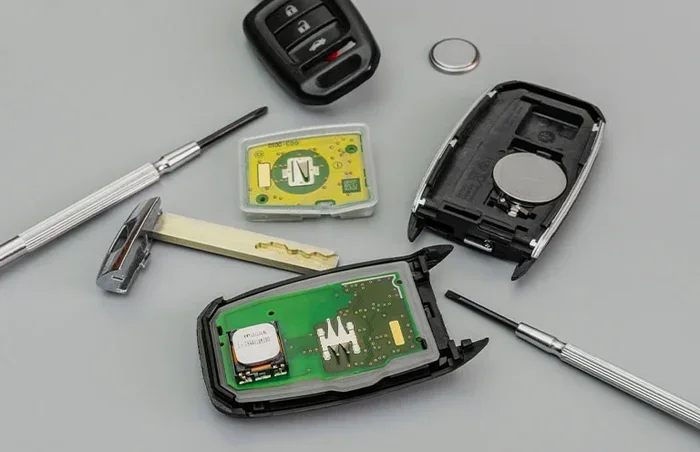
The key fob battery is usually a small coin cell, like a CR2032. These batteries last about two to four years. They power the radio transmitter inside the fob. When the battery weakens, the signal gets weaker too. You might notice you have to stand closer to the car for it to unlock. This is a clear warning sign. Key fob troubleshooting should start with checking the battery level. Most cars will show a warning on the dashboard before the fob stops working entirely.
The battery does not affect the fob’s physical buttons right away. You can still press the lock and unlock buttons manually. But the passive signal that lets the car know the fob is nearby will fade. This is why people often say their key fob not working started with reduced range.
What Happens If Key Fob Dies While Driving
This is the big question. You are cruising along, and the key fob battery gives out completely. What happens next? The answer depends on your car model, but here is the general rule. A running engine does not need the fob to keep going. The car’s computer has already authenticated the fob at startup. Once the engine is running, it stays running.
However, losing the fob signal while driving does create some challenges. You may lose access to certain features. The push button start system might not let you restart the car after you turn it off. The doors might not lock or unlock through the keyless entry system. But your steering, brakes, and accelerator all keep working normally. The car does not stop or slow down.
Can the Engine Shut Off While Driving?
In almost all cases, no. The engine will not shut off just because the fob died. The immobilizer system only prevents the engine from starting without a valid fob. It does not stop a running engine. This is a safety feature designed to keep you moving, not to strand you.
However, some older or less common models might behave differently. If you have a very old smart key system, the behavior could vary. Always check your owner’s manual for your specific vehicle. But for the vast majority of modern cars, the engine keeps running. You will not be stranded in traffic because of a dead key fob battery.
What About the Transmission?
Your transmission will continue working normally. The key fob signal has nothing to do with shifting gears. Whether you drive an automatic or manual, the transmission operates independently of the fob. You can shift from park to drive and back without any issues. The fob only controls the authentication and start functions.
What Happens After You Turn Off the Engine
This is where things get tricky. If your key fob dies while driving and you turn off the engine at a red light or in a parking lot, you might not be able to restart it. The push button start system looks for a valid fob signal before it will allow ignition. Without that signal, the car stays in accessory mode. The dashboard lights come on, but the engine will not crank.
The Hidden Key Slot
Most cars with smart key systems have a backup key slot. This slot is usually hidden inside the center console, the steering column area, or the cup holder. You place the dead fob into this slot. The car reads the embedded transponder chip inside the fob. This chip does not need a battery to work. It is a passive RFID chip. The car will recognize it and allow you to start the engine.
If you do not know where your backup slot is, now is a great time to look. Check your owner’s manual or search online for your specific model. Knowing this ahead of time can save you from a stressful situation on the road.
What If You Do Not Have the Physical Fob?
If the fob is completely dead and you do not have the backup slot, you might need to call for help. Some vehicles allow you to hold the dead fob directly against the start button. This can sometimes work as a last resort. The car reads the transponder through the fob’s casing. But this trick does not work on every model.
Warning Signs Your Key Fob Battery Is Dying
The good news is that a dead key fob battery rarely happens without warning. Your car will usually give you several signs before the fob stops working completely. Catching these signs early can save you from an inconvenient situation.
Here are the most common warning signs:
- Reduced range: You have to stand closer to the car for the doors to unlock.
- Delayed response: The fob takes longer to lock or unlock the car.
- Dashboard warning light: Many cars show a key fob symbol on the dash when the battery is low.
- Intermittent signal loss: The fob works sometimes but not others, especially in cold weather.
- Push start fails occasionally: You might need to press the start button multiple times.
If you notice any of these signs, replace the battery right away. Key fob battery replacement is one of the easiest and cheapest maintenance tasks you can do. A CR2032 battery costs about two to five dollars. You can find them at any grocery store, pharmacy, or auto parts shop.
How to Replace the Key Fob Battery
Replacing the battery is straightforward for most key fobs. Here is a quick guide:
- Find the small seam or groove on your fob.
- Use a small flathead screwdriver or a coin to pry it open.
- Remove the old battery. Note the positive and negative side.
- Insert the new CR2032 battery with the positive side facing up.
- Snap the fob back together.
- Test the fob by standing near your car and pressing the unlock button.
Some fobs require a small flathead screwdriver to open. Others use a sliding mechanism. Watch a quick video online for your specific fob model if you are unsure. Key fob battery replacement should take less than five minutes once you know the steps.
What To Do Right Now If Your Key Fob Dies While Driving
If you find yourself in this situation, stay calm. You are not in immediate danger. Your car will keep running. Here is a step-by-step plan to follow.
Step 1: Keep Driving Safely
First and most important, keep driving safely. Do not panic. The engine will not turn off because of the dead fob. Focus on the road. Signal your turns. Follow traffic rules. Your steering and brakes are completely unaffected.
Step 2: Find a Safe Place to Park
When you can, pull over to a safe location. A parking lot or a side street works well. Turn off the engine normally. Now you need to figure out how to restart the car. This is where the backup key slot comes in handy.
Step 3: Use the Backup Key Slot
Locate the hidden backup slot in your car. Place the dead fob into it. Press the start button as you normally would. The car should recognize the transponder chip and allow ignition. Your engine will start normally.
Step 4: Drive to a Safe Location or Dealer
Once the engine is running again, drive to the nearest auto parts store, dealership, or a safe location where you can replace the battery properly. Drive to nearest dealer if you prefer professional help. Most dealerships will replace the battery for free or a small fee.
Step 5: Replace the Battery
As soon as possible, replace the key fob battery. Do not wait for it to die again. Keep a spare CR2032 battery in your glove box. This simple habit can save you from future headaches.
Can You Prevent a Key Fob From Dying While Driving?
You cannot completely prevent a key fob battery from dying, but you can take steps to reduce the risk. Prevention is always better than dealing with the problem on the road.
Here are some practical tips:
- Replace the battery every two years: Do not wait for it to die. Set a calendar reminder.
- Carry a spare fob: Many cars come with two fobs. Keep the second one charged and in a different location.
- Avoid extreme temperatures: Heat and cold drain batteries faster. Keep your fob in a cool, dry place.
- Check the battery regularly: Some fobs have a battery level indicator. Use it.
- Keep your owner’s manual handy: Know where your backup key slot is before you need it.
These simple habits go a long way. They keep your smart key system working reliably and help you avoid the stress of a dead fob at the wrong moment.
Expert Insights
Automotive experts agree that a dead key fob battery is one of the most common and easily preventable issues drivers face. According to certified mechanics, most people do not check their fob battery until it is too late. The key is proactive replacement. Change the battery on a schedule, just like you change your engine oil. This small habit can save you from a lot of trouble down the road.
Experts also recommend keeping a mechanical spare key in your wallet or purse. Some newer fobs do not have a physical key blade built in. If your fob dies and you do not have the backup slot access, a spare key can get you out of a tight spot. This is a tip many drivers overlook until they are already stuck.
Common Mistakes People Make With a Dead Key Fob
When drivers realize their key fob not working, they often make mistakes that make the situation worse. Here are some common errors to avoid.
- Panicking and turning off the engine: If the fob dies while driving, do not turn off the engine unless you have parked safely. Once it is off, you might not be able to restart it.
- Ignoring the warning signs: If your fob range is getting shorter, do not ignore it. Replace the battery immediately.
- Trying to start the car without the backup slot: Some drivers keep pressing the start button frantically. This will not work. Find the backup slot first.
- Using the wrong battery: Always use the exact battery type recommended for your fob. A mismatched battery can damage the fob.
- Not programming the new fob correctly: If you replace the fob entirely, make sure it is programmed to your car. An unprogrammed fob will not work.
Avoiding these mistakes keeps you safe and saves time. A little knowledge goes a long way when dealing with a dead key fob situation.
How Different Car Brands Handle Dead Key Fobs
Not all cars handle a dead key fob battery the same way. Different brands use different smart key systems. Here is a quick comparison of how some popular brands handle the situation.
| Brand | Backup Method | Signal Loss Behavior |
|---|---|---|
| Toyota | Hidden key slot in steering column or console | Engine keeps running; restart requires backup slot |
| Honda | Mechanical key blade inside fob; backup slot available | Engine keeps running; doors may not unlock via handle |
| Ford | Backup slot in center console; hold fob against start button | Engine keeps running; push start may fail after shutdown |
| BMW | Key slot in center console; can hold fob against start button | Engine keeps running; comfort access may stop working |
| Chevrolet | Backup slot near center stack or steering column | Engine keeps running; may need to hold fob to start button |
As you can see, most brands follow a similar pattern. The engine keeps running while driving. The challenge comes when you try to restart the car. Always check your specific owner’s manual for details on your model.
When To Seek Professional Help
Most of the time, a dead key fob battery is a simple fix. But there are situations where you should seek professional help. If you replace the battery and the fob still does not work, the fob itself might need reprogramming. If the key fob signal loss continues even with a new battery, the internal circuitry could be damaged. In these cases, visit a dealership or a qualified locksmith.
Also, if you do not have access to a backup key slot and the fob is completely dead, you may need roadside assistance. Many insurance policies and new car warranties include roadside help. Call your provider and they can often assist you with a replacement or a jump-start to get you moving.
Key Takeaways
- A dead key fob does not stop a running engine: Your car will keep driving normally even if the fob battery dies mid-trip.
- Restart issues are the real problem: You may not be able to restart the car after turning it off without using the backup key slot.
- All modern cars have backup systems: Hidden key slots and transponder chips ensure you can always start your car, even with a dead fob.
- Warning signs appear early: Reduced range and delayed response tell you the battery is dying. Act on these signs quickly.
- Battery replacement is cheap and easy: A CR2032 battery costs a few dollars and takes minutes to swap.
- Stay calm and safe: If the fob dies while driving, keep your eyes on the road and find a safe place to address the issue.
- Prevention beats reaction: Regular battery checks and spare fobs keep you from getting caught off guard.
Conclusion
So, what happens if key fob dies while driving? The short answer is that your car keeps running. The engine does not shut off. Your steering, brakes, and transmission all work normally. The real challenge comes when you try to restart the car or use keyless entry features. But even then, backup systems like hidden key slots and transponder chips have you covered.
The best approach is prevention. Replace your key fob battery on a regular schedule. Keep a spare battery in your glove box. Carry a backup fob if you can. These small habits make a huge difference. They keep you moving and give you peace of mind every time you get behind the wheel.
Now you know exactly what to expect and what to do. You are better prepared than most drivers. If your key fob dies while driving, you can handle it calmly and safely. Drive smart, stay prepared, and enjoy the ride.
Frequently Asked Questions
Can a dead key fob cause my car to stall while driving?
No, in virtually all modern vehicles, a dead key fob battery will not cause the engine to stall or shut off while you are driving. The immobilizer system only prevents the engine from starting without a valid fob. Once the engine is running, it stays running regardless of the fob’s battery status.
How do I start my car if the key fob battery is completely dead?
Most cars with push button start have a hidden backup key slot. Place the dead fob into this slot and press the start button. The car reads the transponder chip inside the fob, which does not need a battery to work. Check your owner’s manual to find the exact location of the backup slot for your model.
How long can I drive with a dead key fob battery?
You can drive indefinitely with a dead key fob battery as long as the engine is already running. The vehicle security system authenticated the fob at startup and does not need to re-verify it while the engine is on. However, you may lose the ability to lock, unlock, and restart the car.
What type of battery does my key fob need?
Most key fobs use a CR2032 coin cell battery, but some models use CR2025 or other types. Check your owner’s manual or look at the old battery before purchasing a replacement. Using the correct battery type ensures proper key fob signal strength and longevity.
Will my car alarm still work if the key fob battery dies?
Yes, the vehicle security system and alarm will still function even with a dead fob. The alarm system operates independently of the fob battery. Your car will still detect unauthorized entry and trigger the alarm as normal.
How often should I replace my key fob battery?
Most key fob batteries last between two and four years. It is a good practice to replace the battery every two years as a preventive measure. If you notice reduced range or delayed response, replace it immediately rather than waiting for it to die completely.