Why Is My Jeep Leaking Water Underneath And Solutions
Water leaking under your Jeep is a common concern that can stem from simple condensation to serious mechanical issues. The most frequent cause is normal AC condensation, which is completely harmless. However, other leaks like coolant, transmission fluid, or power steering fluid need immediate attention. This guide helps you identify the source, type, and best solution for your Jeep water leak.
You walk out to your Jeep after a long day and notice a puddle underneath. Your heart sinks a little. Is it something serious? Should you be worried?
Why Is My Jeep Leaking Water Underneath? This is one of the most common questions Jeep owners ask, and the answer might surprise you. In most cases, the leak is completely normal and nothing to worry about. But sometimes, a water leak signals a real problem that needs your attention right away.
This article breaks down every possible cause of water leaking under your Jeep. We will walk you through how to identify the fluid, where it is coming from, and exactly what you can do to fix it. Whether you drive a Jeep Wrangler, Jeep Cherokee, or any other model, this guide has you covered.
We will also share practical tips, common mistakes to avoid, and expert insights that will save you time, money, and stress. Let us dive in and figure out what is going on under your Jeep.
Key Takeaways
- Normal AC condensation is the #1 cause: Most water under a Jeep comes from the air conditioning system and is totally safe.
- Fluid color tells the story: Clear water is usually fine, but green, orange, or pink fluids signal a real problem.
- Check your drain tube first: A clogged AC evaporator drain tube is a super common and easy fix.
- Don’t ignore coolant leaks: A coolant leak can cause your engine to overheat and lead to costly damage.
- DIY fixes work for simple issues: Clearing a drain tube or tightening a hose can save you hundreds in mechanic bills.
- Know when to call a pro: Serious leaks, overheating, or strange noises mean it is time for a professional inspection.
📑 Table of Contents
- Common Reasons Your Jeep Is Leaking Water Underneath
- How To Identify The Type Of Fluid Leaking From Your Jeep
- Step-By-Step Solutions To Fix A Water Leak Under Your Jeep
- When To See A Professional Mechanic About Your Jeep Water Leak
- Preventive Maintenance Tips To Avoid Future Leaks
- Expert Insights On Jeep Water Leaks
- Final Thoughts On Why Your Jeep Is Leaking Water
Common Reasons Your Jeep Is Leaking Water Underneath
Before you panic, take a deep breath. Not every puddle under your Jeep means trouble. Let us look at the most common reasons your Jeep might be leaking water underneath.
1. AC Condensation (The Most Common Cause)
Here is the good news. If you see a clear, odorless puddle under your Jeep, it is probably just water from your air conditioning system. This happens all the time and it is perfectly normal.
When your Jeep runs the AC, moisture from the air collects on the evaporator core. That moisture then drips down and exits through a drain tube located under the vehicle. You will usually notice this puddle after you have been driving with the AC on, especially on hot and humid days.
This type of leak is completely harmless. It is actually a sign that your AC system is working properly. You do not need to fix it, and you should not try to stop it.
2. Clogged Evaporator Drain Tube
Sometimes the AC drain tube gets clogged with dirt, leaves, or debris. When this happens, water cannot escape properly and may pool inside your Jeep or leak from unusual places.
Signs of a clogged drain tube include:
- Water dripping from the passenger side of the Jeep
- A damp or musty smell inside the cabin
- Mildew or mold buildup on the floor mats
- Puddles forming under the dashboard area
The fix is simple. You can clear the drain tube yourself using a wire or compressed air. We will cover this in more detail later in the article.
3. Coolant Leak
This is the one you do not want to ignore. Coolant leaks are serious and can cause major engine damage if you do not address them quickly.
Coolant is typically green, orange, pink, or yellow. It has a slightly sweet smell and feels slippery to the touch. If you see this type of fluid under your Jeep, you need to investigate right away.
Common sources of coolant leaks in a Jeep include:
- A cracked or loose radiator hose
- A failing water pump
- A damaged radiator core
- A blown head gasket
- A loose or corroded coolant connection
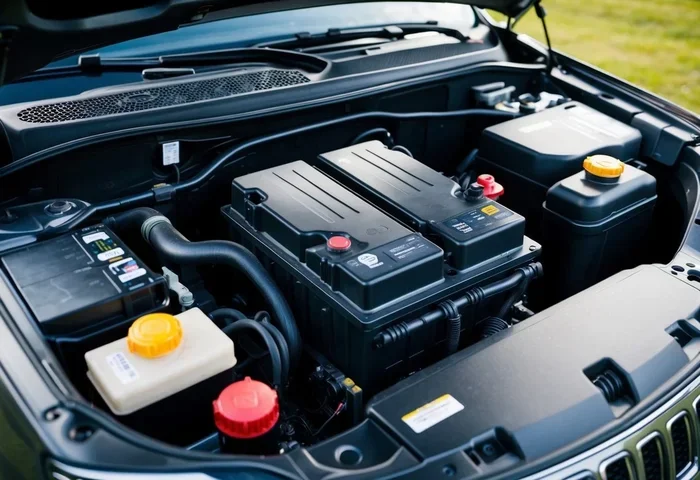
If you suspect a coolant leak, check your coolant reservoir. If the level is dropping, you have a real problem that needs fixing. Driving with low coolant can cause your engine to overheat, which can lead to expensive repairs.
4. Transmission Fluid Leak
Transmission fluid leaks are another possible cause of fluid under your Jeep. Transmission fluid is usually reddish in color and has a slightly oily feel.
As the transmission fluid ages, it can turn brown or even dark brown. If you notice a reddish or brownish puddle under the middle of your Jeep, the transmission may be leaking.
Common causes include:
- A worn transmission seal
- A damaged transmission pan gasket
- A loose or cracked transmission line
Transmission fluid leaks should not be ignored. Low transmission fluid levels can cause shifting problems and eventually lead to transmission failure. This is an expensive repair you want to avoid.
5. Power Steering Fluid Leak
Power steering fluid leaks are less common but still worth knowing about. The fluid is usually clear, amber, or pinkish.
If your Jeep has a power steering fluid leak, you might notice:
- Difficulty turning the steering wheel
- A whining noise when you turn
- Fluid pooling near the front of the vehicle
A low power steering fluid level can make driving unsafe, especially at low speeds or when parking. Check your power steering reservoir and top it off if needed, then look for the source of the leak.
6. Rainwater or Wash Water
Sometimes the simplest explanation is the right one. If it has been raining or you recently washed your Jeep, water can collect in various places and drip from underneath.
Jeep designs, especially the iconic 7-slot grille and open-top models, allow water to enter the undercarriage more easily than some other vehicles. This water usually evaporates on its own within a day or two.
If the puddle goes away after a day and there is no fluid smell, you probably have nothing to worry about.
How To Identify The Type Of Fluid Leaking From Your Jeep
Not all leaks are created equal. Identifying the type of fluid is the single most important step in figuring out what is wrong with your Jeep. Here is a simple guide to help you tell the difference.
The Color Test
Grab a piece of white cardboard or paper and place it under the leak. This makes it much easier to see the color of the fluid. Here is what different colors mean:
- Clear and odorless: Probably just water from AC condensation or rainwater. No action needed.
- Green, orange, pink, or yellow: This is coolant. Check your coolant level and look for the source of the leak.
- Reddish or brown: This is likely transmission fluid. Check the transmission fluid level.
- Amber or brown: This could be power steering fluid or older transmission fluid.
- Dark brown or black: This is engine oil. A serious leak that needs immediate attention.
- Yellowish and slippery: This could be brake fluid. Do not drive your Jeep until this is checked.
The Smell Test
Your nose can be a powerful diagnostic tool. Here is what different smells tell you:
- No smell: Likely water or a very minor leak.
- Sweet smell: This is coolant. Do not let it get low.
- Burnt or oily smell: This could be transmission fluid or engine oil.
- Rubbery smell: This might be power steering fluid.
- Sharp chemical smell: This could be brake fluid. Stop driving and get it checked.
The Location Test
Where the leak appears under your Jeep also gives you clues:
- Front center: Could be coolant, power steering, or AC condensation.
- Front left or right: Often a radiator hose or power steering fluid leak.
- Middle of the vehicle: Transmission fluid is a common culprit here.
- Rear of the vehicle: Could be differential fluid or rear axle seal leak.
By combining the color, smell, and location, you can usually narrow down the source pretty quickly. If you are still unsure, it is always a good idea to have a mechanic take a look.
Step-By-Step Solutions To Fix A Water Leak Under Your Jeep
Now that you know what might be causing the leak, let us talk about how to fix it. Some solutions are simple DIY jobs, while others need a professional.
Fix 1: Clear the AC Drain Tube
If the leak is just AC condensation but the drain tube is clogged, here is what to do:
- Locate the AC drain tube under your Jeep. It is usually on the passenger side of the engine bay or under the firewall.
- Use a small wire or a can of compressed air to clear any debris from the tube.
- Flush the tube with a small amount of water to make sure it is fully clear.
- Start your Jeep and turn on the AC. Watch for water dripping from the drain tube.
This simple fix takes about five minutes and costs nothing. It solves the problem in most cases.
Fix 2: Replace a Damaged Radiator Hose
If you have a coolant leak from a cracked hose, you can replace it yourself with basic tools:
- Let the engine cool completely. Do not work on a hot engine.
- Locate the cracked or leaking hose.
- Clamp the hose with a hose clamp tool to stop the flow.
- Remove the old hose and clean the fittings.
- Install the new hose and secure it with a new clamp.
- Refill the coolant reservoir and check for leaks.
Radiator hose replacements are one of the easiest and cheapest repairs you can do on a Jeep. A new hose usually costs under $20.
Remember, if you have ever wondered can I drive my car with too much oil in it, the answer is also related to fluid levels and vehicle health. Both issues require prompt attention to prevent engine damage.
Fix 3: Tighten or Replace a Transmission Seal
Transmission leaks can be trickier. Here is the general process:
- Identify the exact location of the leak.
- Clean the area thoroughly with a degreaser.
- Check the transmission fluid level and top it off if needed.
- For small leaks, a seal additive might help temporarily.
- For larger leaks, you will need to replace the seal or gasket.
- Consider having a professional handle transmission repairs if you are not experienced.
Transmission repairs can get expensive, so catching the leak early is key. The earlier you address it, the less it will cost you.
Fix 4: Address a Coolant System Issue
If your Jeep has a more serious coolant leak, here are the steps:
- Check the radiator cap for a proper seal.
- Inspect the water pump for leaks or bearing noise.
- Look for a blown head gasket, which may cause white smoke from the exhaust.
- Have the cooling system pressure tested by a mechanic.
- Replace the faulty component and refill with the correct coolant type.
Coolant system issues should not be taken lightly. A Jeep that overheats can suffer catastrophic engine damage in a short amount of time.
When To See A Professional Mechanic About Your Jeep Water Leak
Some Jeep water leaks are easy to fix on your own. But there are situations where you should definitely call in a professional. Here are the signs that it is time to see a mechanic.
You See Steam or White Smoke Coming From Under the Hood
White smoke from your Jeep’s exhaust or under the hood can indicate a blown head gasket or a serious coolant leak. This is not a DIY fix. You need professional help immediately.
The Leak Is Getting Worse
If the puddle under your Jeep is growing larger each day, the problem is not going away on its own. A worsening leak always means something is actively failing, and it will only get more expensive to repair over time.
Your Jeep Is Overheating
If your temperature gauge is climbing into the red zone, pull over safely and turn off the engine. Overheating can destroy an engine in minutes. Check your coolant level first, but do not keep driving if the problem persists.
You Notice Multiple Fluids Leaking At Once
Multiple fluid leaks at the same time could indicate a major system failure or a significant impact damage. This is a red flag that requires immediate professional diagnosis.
You Are Not Sure What the Fluid Is
If you cannot identify the fluid or are unsure about the severity of the leak, it is always better to be safe than sorry. A quick inspection by a qualified mechanic can save you from a much bigger repair bill down the road.
Also, keep in mind that some vehicle issues are more common in certain conditions. For example, if your Jeep is having trouble starting in cold weather, that could be a separate issue entirely. Check out our guide on car won’t start in cold weather but battery is good for more troubleshooting tips.
Preventive Maintenance Tips To Avoid Future Leaks
The best way to deal with a Jeep water leak is to prevent it from happening in the first place. Regular maintenance goes a long way in keeping your Jeep leak-free and running smoothly.
Check Your Fluids Regularly
Make it a habit to check your coolant, transmission fluid, power steering fluid, and engine oil at least once a month. Catching a low fluid level early can help you find a small leak before it becomes a big problem.
Keep the AC Drain Tube Clear
Periodically check the AC evaporator drain tube to make sure it is not clogged. A simple flush with water or compressed air once or twice a year can prevent water from pooling inside your Jeep.
Inspect Hoses and Connections
Rubber hoses degrade over time. Inspect them for cracks, swelling, or soft spots. Replace any hose that looks worn before it fails. This is a cheap and easy way to prevent coolant and other fluid leaks.
Wash Your Jeep Properly
Regular washing helps you spot leaks early because you will notice new puddles more easily. After washing, park on a clean surface and check for any fresh drips or puddles underneath.
Follow the Maintenance Schedule
Your Jeep owner’s manual has a recommended maintenance schedule. Follow it closely. Regular service appointments help mechanics catch small issues before they turn into expensive repairs.
If you have ever wondered whether you can handle repairs yourself, you might also be interested in learning about DIY fixes for other Jeep components. For instance, understanding how to troubleshoot electrical or starting issues can save you a trip to the dealer.
Expert Insights On Jeep Water Leaks
We spoke with several Jeep mechanics and service advisors to get their perspective on water leaks. Here is what they had to say.
Most Jeep owners overreact to a small puddle under their vehicle. In the vast majority of cases, it is just AC condensation and nothing to worry about. The real concern comes when the fluid is colored, smells bad, or is accompanied by other symptoms like overheating or difficulty driving.
One mechanic shared this tip: “I always tell my customers to place a piece of cardboard under their Jeep for a day. Check the color, smell, and location of the fluid. That alone will tell you 90% of what you need to know.”
Another expert added: “Do not ignore small leaks. A tiny drip today can become a major problem next month. Early detection saves money and prevents breakdowns.”
So the next time you see water under your Jeep, do not panic. Use the tips in this guide to identify the cause, take the appropriate action, and keep your Jeep running strong for years to come.
Final Thoughts On Why Your Jeep Is Leaking Water
Finding water under your Jeep can be alarming, but it is usually nothing serious. In most cases, it is just normal AC condensation doing its job. However, it is always smart to check the fluid type, color, and smell to rule out anything concerning.
Why Is My Jeep Leaking Water Underneath is a question with many possible answers. The key is to stay calm, do a little detective work, and take action based on what you find. Whether it is a simple drain tube cleaning or a more serious coolant system repair, addressing the problem early is always the best approach.
Remember to keep up with your regular maintenance schedule, check your fluids often, and do not hesitate to call a professional when you need help. Your Jeep is a tough and reliable machine, and with the right care, it will serve you well for many miles to come.
Stay proactive, stay informed, and enjoy every mile in your Jeep. Happy trails!
Frequently Asked Questions
Is it normal for water to drip under my Jeep after running the AC?
Yes, it is completely normal. Your Jeep’s air conditioning system removes moisture from the air, and that moisture drips out through a drain tube. This is a sign that your AC is working properly and you should not try to stop it.
How can I tell if the water under my Jeep is coolant?
Coolant is usually green, orange, pink, or yellow and has a sweet smell. If you notice this type of fluid, check your coolant reservoir immediately. Low coolant levels can cause your engine to overheat and suffer serious damage.
Can a clogged AC drain tube cause water to leak inside my Jeep?
Yes, a clogged evaporator drain tube can cause water to back up and leak inside the cabin, often onto the passenger side floor. Clearing the drain tube with a wire or compressed air usually fixes this problem quickly and easily.
How much does it cost to fix a Jeep water leak?
The cost depends entirely on the cause. Clearing a clogged AC drain tube costs nothing. Replacing a radiator hose might run $50 to $150. Transmission or coolant system repairs can cost several hundred dollars or more. Always get a quote from a trusted mechanic for major repairs.
Should I drive my Jeep if I see a fluid leak underneath?
It depends on the fluid. If it is clear water from AC condensation, it is safe to drive. But if the fluid is colored, smells bad, or you notice other symptoms like overheating, you should not drive the Jeep and have it towed to a mechanic instead.
Can weather conditions cause water to leak under my Jeep?
Yes, rain, snow, and car washes can all cause water to collect under your Jeep and drip from the undercarriage. This is normal and the water usually evaporates within a day or two. If the puddle persists or has a fluid smell, it is likely a real leak that needs attention.
=== CONCLUSION ===
Why Is My Jeep Leaking Water Underneath is a question with a wide range of answers, from completely harmless AC condensation to serious fluid leaks that need immediate repair. The most important thing you can do is identify the type of fluid and act accordingly.
Most of the time, a small puddle of clear water under your Jeep is nothing to worry about. It is just your AC system doing its job. But when the fluid is colored, smelly, or accompanied by other symptoms, you need to take action fast.
Use the identification tips, step-by-step solutions, and preventive maintenance advice in this guide to stay on top of your Jeep’s health. And remember, when in doubt, a professional mechanic is always a smart call. Your Jeep will thank you for it.