Do Toyotas Come With Tire Pressure Monitoring Systems
Yes, most modern Toyotas come equipped with a tire pressure monitoring system that alerts drivers when tire pressure drops below safe levels. This built-in safety feature helps prevent accidents, improves fuel economy, and extends tire life. Understanding how your Toyota’s TPMS works can save you money and keep you safe on the road.
Do Toyotas come with tire pressure monitoring systems? The short answer is yes. If you own or are thinking about buying a Toyota, you will likely find a TPMS built right into your vehicle. This system watches your tire pressure and warns you when something is off. It is one of those features that you might not think about until you need it.
Tire pressure monitoring systems have become standard on most vehicles sold in the United States since 2007. Toyota was quick to adopt this technology across its lineup. Whether you drive a Camry, a RAV4, a Tacoma, or a Highlander, there is a good chance your Toyota has a TPMS. But how exactly does it work? And what should you do when that little light on your dashboard starts flashing?
In this guide, we will walk you through everything you need to know about Toyota tire pressure monitoring systems. We will cover how they work, why they matter, and what to do when things go wrong. We will also share practical tips to keep your tires in great shape. By the end, you will feel confident about your Toyota’s TPMS and how to use it.
Key Takeaways
- Standard Feature: Most Toyota models manufactured after 2007 include a tire pressure monitoring system as standard equipment.
- Two Types Exist: Toyotas use both direct and indirect TPMS sensors to monitor tire pressure levels.
- Safety Benefit: The TPMS helps prevent blowouts, improves handling, and boosts fuel efficiency.
- Reset is Easy: You can usually reset the TPMS light yourself with simple steps.
- Maintenance Matters: Regular tire pressure checks complement your TPMS and keep your Toyota running smoothly.
- Replacement Costs Vary: TPMS sensor replacement costs depend on your Toyota model and year.
📑 Table of Contents
- What Is a Tire Pressure Monitoring System?
- Do All Toyota Models Have TPMS?
- How Does Toyota’s TPMS Work?
- How to Reset Your Toyota TPMS Light
- How Tire Pressure Affects Your Toyota’s Performance
- TPMS Maintenance Tips for Toyota Owners
- Common TPMS Problems and How to Fix Them
- The Cost of TPMS Service for Toyota Owners
- Expert Tips for Toyota TPMS Owners
- Final Thoughts
What Is a Tire Pressure Monitoring System?
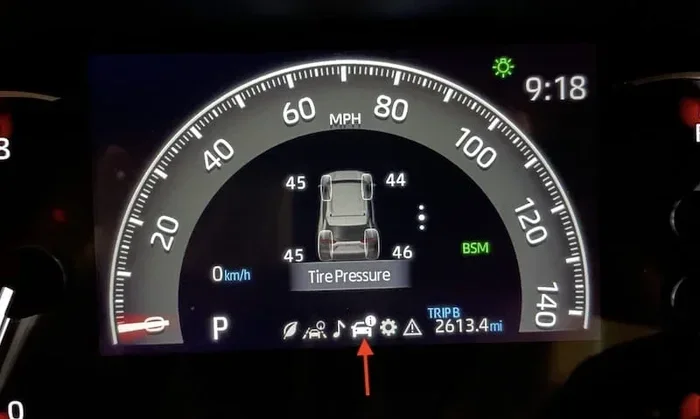
A tire pressure monitoring system, or TPMS, is a safety feature that tracks the air pressure inside your tires. When the pressure drops too low, the system sends a warning to your dashboard. Most Toyotas display this warning as a horseshoe-shaped light with an exclamation point in the center.
The TPMS exists for a very good reason. Underinflated tires can cause serious problems. They reduce your fuel economy. They make your car harder to handle. And in worst-case scenarios, they can lead to blowouts. The TPMS helps you catch these issues early before they turn into expensive repairs or dangerous situations.
Why Tire Pressure Matters for Your Toyota
Tire pressure might seem like a small detail, but it affects your driving in big ways. Here are a few reasons why keeping your tires properly inflated matters:
- Safety: Properly inflated tires grip the road better. This means shorter stopping distances and more stable handling.
- Fuel Economy: Tires with low pressure create more rolling resistance. Your engine has to work harder, which burns more fuel.
- Tire Life: Underinflated tires wear out faster on the outer edges of the tread. You will need to replace them sooner.
- Ride Comfort: The right pressure gives you a smoother, quieter ride.
Your Toyota’s TPMS takes the guesswork out of all of this. It keeps an eye on your tire pressure for you. But it is still a good idea to check your tires manually every few weeks.
Do All Toyota Models Have TPMS?
Most Toyota models come with a tire pressure monitoring system, but there are some exceptions. Newer Toyotas almost always include TPMS as standard equipment. Older models, especially those made before 2007, may not have it. Let us break this down a bit more.
Toyota Models With Standard TPMS
If you buy a new Toyota today, you can expect a TPMS to be part of the package. Here are some popular models that include this feature:
- Toyota Camry: The Camry has included TPMS for many model years now. It is standard on all trims.
- Toyota RAV4: The RAV4 comes with TPMS across all trim levels. This is especially helpful since the RAV4 is a popular family SUV.
- Toyota Tacoma: The Tacoma has TPMS standard. This is important for truck owners who often haul heavy loads that affect tire pressure.
- Toyota Highlander: The Highlander includes TPMS as well. With three rows of seating, keeping all tires properly inflated is crucial.
- Toyota Corolla: The Corolla has had TPMS for many years now. It is standard on all current trims.
Older Toyota Models Without TPMS
If you drive an older Toyota, you might not have a TPMS. Vehicles made before 2007 were not required to have tire pressure monitoring systems. Some Toyotas from the early 2000s may have had them as optional extras, but many did not. If you own an older model, you should consider installing an aftermarket TPMS. It is a relatively affordable upgrade that adds a layer of safety.
When you are looking to know if a car is a good deal, checking for a TPMS is one factor to consider. A Toyota with a working TPMS gives you more peace of mind than one without.
How Does Toyota’s TPMS Work?
Toyota uses two main types of tire pressure monitoring systems. Understanding the difference can help you troubleshoot issues when they come up. The two types are direct TPMS and indirect TPMS.
Direct TPMS
Most modern Toyotas use a direct TPMS. This system has small sensors inside each tire. The sensors measure the actual air pressure and send a signal to your car’s computer. When the pressure drops below the recommended level, the dashboard light turns on.
Direct TPMS is very accurate. It gives you a real reading of the pressure in each tire. Some Toyota models even display the individual pressure readings on the dashboard screen. This makes it easy to see which tire needs attention.
Indirect TPMS
Some Toyota models use an indirect TPMS. This system does not have physical sensors inside the tires. Instead, it uses the anti-lock braking system (ABS) sensors to measure how fast each tire is spinning. A tire with low pressure has a smaller rolling radius, so it spins faster than a properly inflated tire.
Indirect TPMS is less precise than direct TPMS. It cannot tell you the exact pressure in each tire. But it still does a good job of warning you when something is wrong. If your Toyota uses indirect TPMS, you may need to reset the system after you inflate your tires.
What Happens When the TPMS Light Comes On?
When the TPMS light comes on, it means one or more of your tires are underinflated. Here is what you should do:
- Check your tire pressure with a manual gauge as soon as it is safe to do so.
- Inflate the tires to the recommended pressure listed on the driver’s side door jamb.
- Drive for a few miles to see if the light goes off on its own.
- Reset the TPMS if the light stays on after you have inflated the tires.
If the light comes on and stays on, do not ignore it. Low tire pressure is a serious safety issue. Pull over safely and check your tires right away.
How to Reset Your Toyota TPMS Light
Sometimes the TPMS light stays on even after you have fixed the tire pressure issue. This can be frustrating, but it is usually easy to fix. Here are the steps to reset the TPMS light on most Toyota models.
Method 1: Using the Reset Button
Many Toyota models have a TPMS reset button. It is usually located beneath the steering wheel. Follow these steps:
- Turn the ignition to the “On” position (do not start the engine).
- Press and hold the TPMS reset button until the warning light blinks three times.
- Start the engine and let the car idle for about 20 minutes.
- The light should turn off after the system recalibrates.
Method 2: Using the Infotainment System
Some newer Toyota models let you reset the TPMS through the infotainment screen. Here is how:
- Go to the “Settings” menu on your touchscreen.
- Navigate to “Vehicle Settings” or “Maintenance.”
- Look for the TPMS reset option and select it.
- Follow the on-screen prompts to complete the reset.
When to See a Mechanic
If the TPMS light keeps coming back after you reset it, there may be a deeper issue. The sensor battery could be dying. Or one of the sensors might be damaged. In these cases, it is best to visit a Toyota dealership or a trusted mechanic. They can run a diagnostic and replace any faulty parts.
It is also worth noting that reading ABS codes without a scanner can be helpful if your TPMS light is related to an ABS issue. Some indirect TPMS systems rely on ABS data, so a problem with the ABS system can trigger the TPMS light.
How Tire Pressure Affects Your Toyota’s Performance
Tire pressure has a bigger impact on your Toyota’s performance than most people realize. Let us look at some of the key areas where proper tire pressure makes a difference.
Fuel Economy
Underinflated tires are one of the biggest enemies of fuel economy. When your tires do not have enough air, they create more friction with the road. Your engine has to burn more fuel to keep you moving. Studies show that properly inflated tires can improve fuel economy by up to 3 percent. That might not sound like much, but it adds up over time.
Interestingly, the same principle applies to other aspects of vehicle maintenance. For example, a dirty cabin air filter can affect gas mileage in a similar way. Keeping all parts of your Toyota well-maintained helps you save at the pump.
Handling and Braking
Proper tire pressure gives you the best handling and braking performance. Underinflated tires flex more than they should, which can make your Toyota feel sluggish or unresponsive in turns. Overinflated tires, on the other hand, give you a harsh ride and reduce the contact patch with the road. Both extremes are dangerous.
Tire Wear
Tires that are not properly inflated wear out unevenly. Underinflated tires wear down faster on the outer edges of the tread. Overinflated tires wear down faster in the center. Either way, you will need to replace your tires sooner than you should have to. Keeping your TPMS in good working order helps you avoid this costly problem.
Towing and Load Capacity
If you use your Toyota for towing, tire pressure becomes even more important. A loaded trailer puts extra stress on your tires. You may need to increase your tire pressure when towing. Always check your Toyota owner’s manual for the recommended pressure when carrying heavy loads or towing a trailer.
TPMS Maintenance Tips for Toyota Owners
Taking care of your TPMS is not complicated. A few simple habits can keep the system working properly for years. Here are some maintenance tips every Toyota owner should follow.
Check Your Tire Pressure Monthly
Even though your TPMS does the work for you, it is still a good idea to check your tire pressure manually once a month. TPMS sensors can sometimes fail or give inaccurate readings. A quick check with a tire pressure gauge takes only a few minutes and can catch problems early.
Know Your Recommended Pressure
Every Toyota model has a recommended tire pressure. You can find this information on a sticker inside the driver’s door jamb. Do not rely on the numbers printed on the tire sidewall. Those numbers are the maximum pressure the tire can handle, not the recommended pressure for your Toyota.
Replace TPMS Sensors When Needed
TPMS sensors have batteries that typically last about 5 to 10 years. When the battery dies, the sensor will stop working. You may see a flashing TPMS light or a message on your dashboard. Replacing a TPMS sensor costs vary by model, but it is a worthwhile investment for your safety.
Rotate Your Tires Regularly
Tire rotation helps your tires wear evenly. It also gives you a chance to inspect your TPMS sensors. Most Toyota owners should rotate their tires every 5,000 to 7,500 miles. Check your owner’s manual for the exact interval recommended for your model.
Keep Your Tires Clean
Dirt and debris can build up around your tire valves and TPMS sensors. This can cause slow leaks or sensor damage. A quick rinse when you wash your car can help prevent these issues.
Common TPMS Problems and How to Fix Them
Like any car system, the TPMS can develop problems over time. Here are some of the most common issues Toyota owners face and how to address them.
TPMS Light Stays On After Inflating Tires
This is the most common TPMS issue. After you inflate your tires, the light may not turn off right away. Try driving for a few miles at highway speed. The system should recalibrate and turn the light off. If it does not, you may need to reset the system manually.
TPMS Light Flashes Then Stays On
A flashing TPMS light usually indicates a malfunction in the system itself. It could be a dead sensor battery or a damaged sensor. Take your Toyota to a service center as soon as possible to get the problem diagnosed.
Inaccurate Pressure Readings
Sometimes the TPMS gives readings that do not match a manual gauge. This can happen if a sensor is miscalibrated or has a weak battery. In this case, replacing the sensor usually fixes the problem.
TPMS Light Comes on in Cold Weather
Cold weather can cause tire pressure to drop temporarily. This is normal. Air contracts in cold temperatures, which lowers the pressure inside your tires. If the light comes on in winter, check your pressure and add air if needed. The light should go off once the tires warm up from driving.
The Cost of TPMS Service for Toyota Owners
Understanding the costs associated with TPMS service can help you budget for maintenance. Here is a breakdown of what you might expect to pay.
| Service | Average Cost |
|---|---|
| TPMS Sensor Replacement (per sensor) | $50 – $100 |
| TPMS Reset/Recalibration | $0 – $30 |
| TPMS Diagnostic Check | $20 – $50 |
| Full TPMS System Replacement | $200 – $400 |
These costs can vary depending on your Toyota model and where you live. Dealership service centers tend to charge more than independent shops. However, they also have specialized tools and factory-trained technicians who know Toyota systems inside and out.
If you are budgeting for car ownership, keep in mind that monthly car payments should also account for routine maintenance like TPMS service. Setting aside a small amount each month for maintenance can save you from unexpected repair bills down the road.
Expert Tips for Toyota TPMS Owners
Here are some expert tips that can help you get the most out of your Toyota’s tire pressure monitoring system.
- Keep a tire pressure gauge in your glove box. Even though your TPMS does the monitoring, having a manual gauge lets you check your tires anytime.
- Check pressure when tires are cold. Driving heats up your tires and increases the pressure reading. Check before you drive for the most accurate results.
- Do not ignore the TPMS light. Even if your tires look fine, the light means something is wrong. Get it checked promptly.
- Replace all TPMS sensors at once. If one sensor needs replacing, consider replacing all of them at the same time. This ensures consistent readings across all tires.
- Update your Toyota’s software. Some Toyota models have software updates that improve TPMS accuracy. Ask your dealer about available updates.
Final Thoughts
So, do Toyotas come with tire pressure monitoring systems? Absolutely. Toyota has made TPMS a standard feature on nearly all of its models for well over a decade. This system is a valuable safety feature that helps you stay safe, save fuel, and extend the life of your tires.
Understanding how your Toyota’s TPMS works and knowing what to do when the light comes on can make a big difference. Regular maintenance, monthly pressure checks, and prompt attention to warning lights will keep your Toyota running at its best. Your tire pressure monitoring system is always working for you, even when you are not thinking about it.
Take the time to learn your Toyota’s specific TPMS features. Read your owner’s manual. Keep a tire pressure gauge handy. And never ignore that little warning light on your dashboard. With the right knowledge and a little regular care, your Toyota’s TPMS will serve you well for many miles to come.
Frequently Asked Questions
Do all Toyota models come with a tire pressure monitoring system?
Most Toyota models manufactured after 2007 come with a TPMS as standard equipment. However, some older models and certain trim levels may not include it. Check your owner’s manual or look for the TPMS light on your dashboard to confirm.
How much does it cost to replace a Toyota TPMS sensor?
Replacing a single TPMS sensor typically costs between $50 and $100. The exact price depends on your Toyota model and whether you go to a dealership or an independent shop. Some sensors also require programming after installation.
Can I drive my Toyota with the TPMS light on?
You can drive short distances with the TPMS light on, but it is not recommended. The light means one or more tires are underinflated, which can affect safety and handling. Check your tire pressure as soon as possible and inflate to the recommended level.
Why does my Toyota TPMS light come on in cold weather?
Cold weather causes the air inside your tires to contract, which lowers the pressure. This can trigger the TPMS light temporarily. Once the tires warm up from driving, the pressure increases and the light should turn off.
How often should I check my Toyota tire pressure manually?
It is a good idea to check your tire pressure manually at least once a month. TPMS sensors can fail or give inaccurate readings, so a manual check provides a backup. Always check when the tires are cold for the most accurate reading.
Does Toyota’s TPMS work for all tire sizes?
Toyota’s TPMS is designed to work with the factory-installed tire sizes for each model. If you install different tire sizes, the system may not calibrate correctly. Always consult your owner’s manual or a Toyota dealer before changing your tire sizes.