What Type of Mirror Is Used in Car Headlights Explained
The mirror inside a car headlight is typically a parabolic reflector in traditional designs or a polyellipsoidal mirror in projector-style assemblies. These mirrors direct light from the bulb to create a focused beam pattern for nighttime visibility. Understanding which mirror type your vehicle uses helps with upgrades, restoration, and proper alignment.
Have you ever wondered what type of mirror is used in car headlights? It is a question many drivers never think about until their lights start looking dim or uneven. The answer shapes how well you see at night and how safely you drive. The mirror inside your headlight is not just a simple shiny surface. It is a carefully engineered component that directs light to illuminate the road ahead. In this article, we will break down exactly what type of mirror is used in car headlights, how each design works, and why it matters for your driving experience.
Car headlights rely on a mirror to gather and focus the light produced by the bulb. Without this mirror, the light would scatter in all directions and you would have a very weak beam. The two main types of mirrors found in automotive headlights are the parabolic reflector and the polyellipsoidal mirror. Each one has a distinct shape, function, and application. Knowing the difference helps you choose the right bulbs, perform restorations, and even upgrade your vehicle’s lighting system.
What type of mirror is used in car headlights depends on the headlight design. Most older vehicles and many economy cars use a simple reflector system. Modern performance vehicles and luxury cars often use a projector system with a more complex mirror. Both systems aim to do the same job: create a safe, effective beam pattern. Let us explore each one in detail so you can understand exactly what is inside your headlight housing.
Key Takeaways
- Parabolic Reflectors: The classic curved mirror found in standard reflector headlights that uses a concave shape to bounce light forward.
- Polyellipsoidal Mirrors: The specially shaped mirror in projector headlights that creates a sharp, controlled beam cutoff.
- Material Matters: Most headlight mirrors are chrome-plated steel or aluminum with a highly reflective coating that can degrade over time.
- Function: The mirror works with the bulb and lens to focus light into a pattern that illuminates the road without blinding other drivers.
- Upgrades: Swapping from a reflector to a projector assembly can significantly improve beam sharpness and reach.
- Maintenance: Regular cleaning and realignment keeps your headlight mirror performing at its best.
- Common Issues: Cloudy lenses, misaligned mirrors, and worn reflective coatings reduce visibility and safety.
📑 Table of Contents
- What Type of Mirror Is Used in Car Headlights: The Two Main Designs
- Reflector vs Projector: Which Mirror Design Is Better?
- Materials and Coatings Used in Headlight Mirrors
- How to Know Which Mirror Your Headlight Uses
- Upgrading Your Headlight Mirror: What You Need to Know
- Maintaining and Restoring Your Headlight Mirror
- The Future of Headlight Mirrors: Adaptive and Digital Systems
What Type of Mirror Is Used in Car Headlights: The Two Main Designs
When you open a headlight assembly, the first thing you see is the mirror. This mirror works together with the bulb, lens, and sometimes a projector lens to shape the light beam. The two primary mirror types are the parabolic reflector and the polyellipsoidal mirror. Each has a unique geometry that affects how the light is thrown onto the road.
The Parabolic Reflector: The Classic Headlight Mirror
The parabolic reflector is the most common mirror found in car headlights. It looks like a curved bowl that opens toward the front of the vehicle. The bulb sits at the focal point of this parabolic curve. When the bulb emits light, the mirror bounces all the rays forward in a parallel beam. This creates a wide spread of light that is great for general nighttime driving.
Most reflector headlights use a single parabolic mirror that surrounds the bulb. The mirror surface is usually chrome-plated steel or aluminum. Over time, this reflective coating can tarnish or peel. When that happens, the headlight output drops significantly. This is why headlight restoration is so important. A clean, smooth parabolic reflector can restore much of the original brightness.
Here are some key facts about parabolic reflectors in car headlights:
- Shape: A perfect parabola that focuses light from the focal point into a straight beam.
- Common Use: Found in the vast majority of standard reflector headlight assemblies.
- Bulb Position: The filament or LED chip sits exactly at the focal point of the parabola.
- Beam Pattern: Wide and somewhat scattered, which provides good area lighting but less precise cutoff.
- Cost: Very inexpensive to manufacture, making them the default choice for most vehicles.
A quick tip: if your headlight uses a parabolic reflector, keeping the mirror clean is the easiest way to improve output. A simple wipe with a gentle automotive cleaner can remove haze and restore clarity. Never use abrasive pads directly on the reflective surface because you will scratch the chrome coating.
Projector Headlights: The Polyellipsoidal Mirror
Projector headlights use a completely different mirror design. Instead of a simple parabolic curve, they use a polyellipsoidal mirror. This mirror has a more complex shape that looks like a stretched ellipse. The bulb sits at one focal point of this ellipsoid, and the mirror focuses the light onto a second focal point where a projector lens sits. The lens then takes that focused light and projects it forward with a very sharp cutoff line.
The polyellipsoidal mirror is the secret behind the clean, defined beam pattern you see in modern projector headlights. It allows the light to be shaped precisely so it illuminates the road without glaring into the eyes of oncoming drivers. This design is especially popular in higher-end vehicles and LED headlight retrofit kits.
Here is how the polyellipsoidal mirror works in a projector headlight assembly:
- The bulb emits light in all directions inside the housing.
- The polyellipsoidal mirror captures that light and directs it toward the projector lens.
- The projector lens focuses the light into a tight beam with a horizontal cutoff.
- The result is a bright, well-defined pattern that reaches far down the road.
Many people ask what type of mirror is used in car headlights when they see the clear lens and the distinctive bowl shape of a projector assembly. The answer is a polyellipsoidal mirror paired with a convex lens. Together they create the signature sharp beam that projector headlights are known for.
Reflector vs Projector: Which Mirror Design Is Better?
The debate between reflector and projector headlights is common among car enthusiasts. Each design has its strengths and weaknesses. The choice often comes down to your driving needs, budget, and aesthetic preference. Let us compare the two headlight mirror systems side by side.
| Feature | Reflector Headlight (Parabolic Mirror) | Projector Headlight (Polyellipsoidal Mirror) |
|---|---|---|
| Mirror Type | Parabolic concave reflector | Polyellipsoidal mirror with lens |
| Beam Pattern | Wide, soft spread with gradual cutoff | Narrow, sharp cutoff with long reach |
| Bulb Placement | Bulb sits at focal point inside the reflector bowl | Bulb sits at one focal point of the ellipsoid |
| Lens | Usually no separate lens; the reflector does the work | Clear projector lens focuses the beam |
| Glare Control | Less precise, can cause more glare | Excellent cutoff minimizes glare for oncoming traffic |
| Cost | Lower cost, simpler design | Higher cost due to additional lens and mirror complexity |
| Common Applications | Economy cars, older models, standard factory headlights | Luxury vehicles, LED upgrades, modern performance cars |
Both mirror designs have their place. The parabolic reflector is reliable, affordable, and easy to replace. The polyellipsoidal mirror delivers superior beam control and a more modern look. When deciding what type of mirror is used in car headlights for your vehicle, consider how you drive. If you do a lot of nighttime highway driving, a projector-style mirror and lens combo might be a worthwhile upgrade.
Materials and Coatings Used in Headlight Mirrors
The mirror inside a headlight is not just a piece of glass. It is a carefully constructed component with multiple layers. The base material is usually stamped steel or aluminum. This metal is then shaped into the precise parabolic or polyellipsoidal curve. After shaping, the surface receives a highly reflective coating that does the heavy lifting.
The most common reflective coating is chrome plating. Chrome provides excellent reflectivity across the visible light spectrum. It is durable and can last for many years if protected from moisture and road debris. Some modern headlights use aluminum coatings instead of chrome. Aluminum is lighter and can be more resistant to certain types of corrosion, but it may not be quite as reflective as chrome.
In LED and xenon headlight systems, the mirror material must also withstand higher operating temperatures. LED bulbs produce less heat than halogen bulbs, but the mirror still sits close to the light source. The reflective coating is often applied through a process called physical vapor deposition. This creates a very thin, uniform layer that maximizes light output.
Expert Insight: The reflective coating on a car headlight mirror can degrade over time due to heat and moisture. Regular cleaning helps preserve it. If the mirror appears dull or spotted, a headlight restoration kit can often bring it back to life.
How to Know Which Mirror Your Headlight Uses
Identifying the type of mirror in your headlight is easier than you might think. You do not need to be a mechanic to figure it out. A quick visual inspection of the headlight assembly will give you the answer. Here is a simple guide to help you determine what type of mirror is used in your car headlights.
- Look at the Lens: Reflector headlights usually have a translucent or frosted lens that covers the entire assembly. Projector headlights have a clear, smooth lens that looks like a separate piece sitting in front of the housing.
- Check the Housing Shape: Reflector housings tend to be more rounded and bulbous. Projector housings often have a flatter, more angular profile with a distinct bowl shape inside the clear lens.
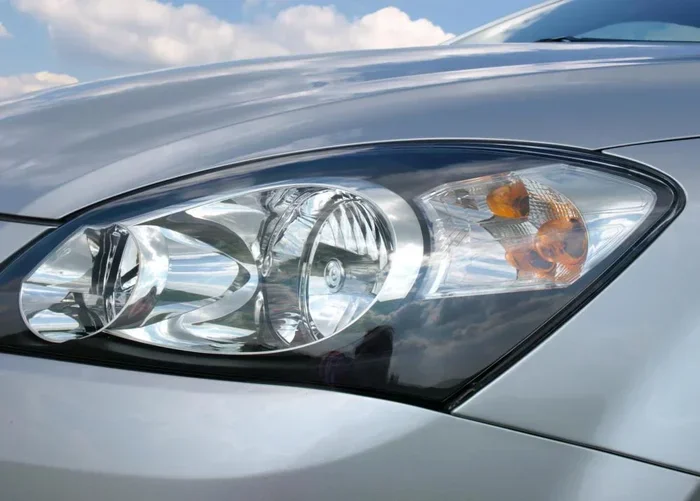
- Peer Inside: If you can safely look into the headlight opening, you will see the mirror. A parabolic reflector looks like a smooth, curved bowl. A polyellipsoidal mirror looks more like an elongated egg shape with a lens at the front.
- Consult Your Owner’s Manual: The manual often specifies whether your vehicle has reflector or projector headlights. This is the most accurate method.
- Search Online: Enter your vehicle make, model, and year into a search engine along with the words headlight type. You will quickly find diagrams and forums that confirm the mirror design.
Quick Tip: If your headlight has a clear lens and you can see a small projector lens inside, you have a polyellipsoidal mirror setup. If the lens is frosted and the housing looks like a simple rounded bowl, you have a parabolic reflector.
Upgrading Your Headlight Mirror: What You Need to Know
Many car owners want to upgrade their headlights for better visibility. One common question is whether you can simply swap out the mirror inside the existing housing. The answer is usually no. The mirror is integrated into the headlight assembly and is designed to work with a specific bulb type and lens configuration.
However, you can upgrade the entire headlight assembly. If your car came with reflector headlights, you can often replace the whole unit with a projector-style assembly. This swap changes the mirror from a parabolic reflector to a polyellipsoidal mirror. The result is a dramatically improved beam pattern with a sharp cutoff and longer throw.
Here are some popular upgrade paths for car headlight mirrors:
- Retrofit Kit: A projector retrofit kit includes a new housing with a polyellipsoidal mirror and a projector lens. You install this in place of the old reflector assembly.
- LED Bulb Swap: Some LED bulbs are designed to work with the existing parabolic reflector. They use a built-in projector lens or reflector cup to shape the beam.
- HID Conversion: High-intensity discharge bulbs can be installed in projector housings. The polyellipsoidal mirror works perfectly with the focused arc of an HID bulb.
- Full LED Assembly: Replacing the entire headlight with a modern LED unit gives you a new mirror designed specifically for LED light output.
Common Mistakes When Upgrading Headlight Mirrors
- Assuming Any Mirror Fits: Every headlight assembly is unique. A mirror from one vehicle will not fit another even if the cars are similar.
- Ignoring the Bulb Type: The mirror is matched to a specific bulb filament position. Using the wrong bulb will ruin the beam pattern.
- Skipping Alignment: After any mirror or assembly swap, you must properly align the headlights. Misaligned mirrors blind other drivers and reduce your own visibility.
- Cheap Replacements: Low-quality aftermarket mirrors may have poor reflective coatings that degrade quickly. Always choose reputable brands.
Maintaining and Restoring Your Headlight Mirror
Your headlight mirror works hard every time you turn on the low beam or high beam. Over thousands of miles, it is exposed to heat, moisture, road grime, and ultraviolet radiation. This can cause the reflective coating to dull or the mirror surface to become pitted. A degraded mirror means less light reaching the road.
Regular maintenance can extend the life of your headlight mirror significantly. Start by cleaning the inside of the headlight housing during routine car washes. Use a soft microfiber cloth and a gentle automotive cleaner. Avoid harsh chemicals that can strip the chrome coating. If you notice fogging inside the lens, this indicates moisture has entered the assembly and could be corroding the mirror from behind.
Headlight restoration is another important maintenance task. If your headlight lens is cloudy or yellowed, it blocks light from passing through. While the lens is not the mirror itself, a cloudy lens makes the mirror appear less effective. A quality headlight restoration kit can sand, polish, and seal the lens to restore clarity.
For the mirror surface itself, you can gently polish it with a non-abrasive metal polish. Apply the polish with a soft cloth in circular motions. Wipe off the residue and inspect the reflection. If the mirror still appears dull after polishing, the reflective coating may be worn through. In that case, you will need to replace the entire headlight assembly.
Quick Tip: After cleaning your headlight mirror, apply a thin coat of automotive wax. This adds a protective layer that shields the chrome from moisture and UV rays. Reapply every few months for best results.
The Future of Headlight Mirrors: Adaptive and Digital Systems
The automotive industry is rapidly evolving, and headlight technology is keeping pace. Traditional mirrors are giving way to more advanced systems in some modern vehicles. Adaptive headlights use motors to physically move the mirror or entire assembly based on steering input and vehicle speed. This allows the beam to follow the curve of the road, dramatically improving nighttime visibility on winding streets.
Matrix LED and laser headlight systems take a different approach. Instead of a single mirror, they use an array of tiny LEDs or laser diodes with individual reflectors or waveguides. A computer controls which individual light sources are active. This allows the system to dim specific parts of the beam to avoid blinding oncoming drivers while still illuminating the rest of the road. In these advanced systems, the traditional mirror concept is still present but distributed across many small reflective surfaces.
Some cutting-edge vehicles now use digital headlights. These replace the physical mirror entirely with a digital micromirror device or a laser projector. The light source is a high-power laser that excites phosphors to create visible light. The beam is shaped entirely by software-controlled optics. While these are not yet common in everyday cars, they represent the future of what type of mirror is used in car headlights. Even in these systems, the principle remains the same: collect light and direct it precisely where it is needed.
As you can see, the humble mirror inside your headlight has come a long way. Whether it is a simple parabolic reflector or a high-tech polyellipsoidal mirror paired with adaptive software, the goal is always the same: safe, effective illumination. Understanding your vehicle’s mirror type empowers you to make smarter choices about maintenance, upgrades, and replacements.
In summary, what type of mirror is used in car headlights depends on the headlight design. Most vehicles use either a parabolic reflector or a polyellipsoidal mirror. The parabolic reflector is the classic, affordable bowl that shapes the beam in reflector headlights. The polyellipsoidal mirror is the advanced, precise component found in projector headlights that creates a sharp cutoff and long-range illumination. Both mirror types work hard to keep you safe on dark roads. By knowing which mirror your car uses, you can clean it properly, restore it when it fades, and even upgrade to a better system if you desire. Take a moment to look at your own headlights and identify the mirror type. That small knowledge can make a big difference in how you care for your vehicle.
Frequently Asked Questions
What type of mirror is used in car headlights?
Most car headlights use either a parabolic reflector in traditional designs or a polyellipsoidal mirror in projector-style assemblies. The parabolic reflector is a simple concave bowl that bounces light forward, while the polyellipsoidal mirror is an elongated ellipsoid shape that focuses light through a projector lens for a sharper beam pattern.
Can I replace just the mirror in my headlight assembly?
In most cases, the mirror is permanently attached to the headlight housing and is not sold as a separate part. If the mirror coating is damaged, the best solution is to replace the entire headlight assembly. Some aftermarket kits allow you to swap the whole reflector bowl, but this is more common in projector headlight retrofits.
How do I clean a headlight mirror?
You can clean the inside mirror surface with a soft microfiber cloth and a gentle automotive glass or plastic cleaner. Avoid abrasive pads or harsh chemicals. For the outside reflective coating, a non-abrasive metal polish applied lightly can restore some shine. Always dry the surface thoroughly to prevent water spots.
What is the difference between a reflector and a projector headlight?
A reflector headlight uses a parabolic mirror to bounce light directly through a translucent lens. A projector headlight uses a polyellipsoidal mirror to focus light onto a projector lens, which then projects a beam with a sharp horizontal cutoff. Projector headlights generally offer better beam control and less glare for oncoming drivers.
Do LED headlights use mirrors?
Yes, LED headlights still use mirrors, but the design is slightly different. LED chips emit light in a wider pattern, so the mirror or reflector cup is shaped to capture and direct that light efficiently. Many LED retrofit bulbs include their own small reflector or projector lens to work with the existing headlight housing.
How often should I restore my headlight mirror?
You should inspect your headlight mirror every time you clean your car or perform routine maintenance. If you notice reduced brightness or a dull, spotted reflection, it is time to clean or restore the mirror. A full headlight restoration, including the mirror surface, is typically needed every few years depending on driving conditions and exposure to road debris and moisture.