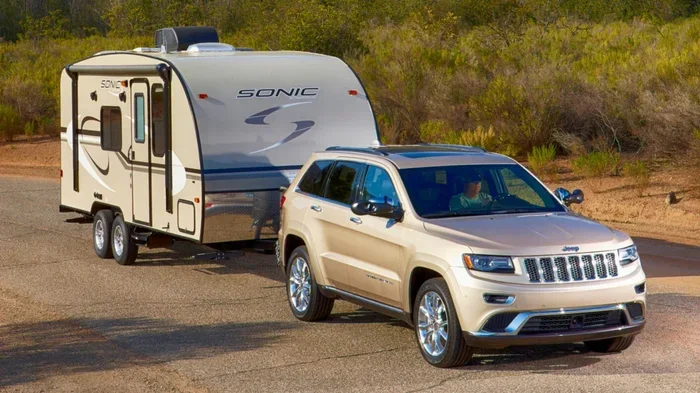
Can a V6 Pull a Travel Trailer and What You Need to Know
Yes, a V6 engine can pull a travel trailer, but the key is knowing your limits. Towing capacity depends on your vehicle, hitch setup, and trailer weight. This guide covers everything you need to tow safely and confidently with a V6.
So you want to tow a travel trailer with a V6 engine. Maybe you just bought a nice SUV or truck and you are wondering if it can handle the job. Or perhaps you are dreaming about weekend camping trips and need to know if your current vehicle is up to the task.
The short answer is yes. A V6 engine can absolutely pull a travel trailer. But the real question is more specific. How much weight can your V6 handle? What equipment do you need? And what are the safety considerations you should never skip?
This guide walks you through everything you need to know about towing a travel trailer with a V6. We will cover towing capacity, essential gear, safety tips, and common mistakes. By the end, you will feel confident and ready to hit the road.
Key Takeaways
- A V6 engine can tow travel trailers: Most modern V6 vehicles handle trailers between 3,000 and 7,000 pounds.
- Know your towing capacity: Check your vehicle’s gross vehicle weight rating and payload limits before towing.
- Equipment matters: A proper hitch, wiring harness, and towing mirrors are essential for safe towing.
- Trailer sway is a real risk: Use a sway control system and distribute weight evenly.
- Fuel economy drops when towing: Expect a 20-30% decrease in MPG when pulling a travel trailer.
- Practice before your trip: Get comfortable with your setup in a safe, empty area first.
- Maintenance checks are critical: Inspect brakes, tires, and lights before every towing trip.
📑 Table of Contents
Understanding V6 Engine Towing Capabilities
A V6 engine is one of the most popular engine configurations in modern vehicles. It offers a great balance of power and fuel efficiency. Many drivers assume a V6 is too small for towing. That is not always true.
Modern V6 engines have come a long way. They produce impressive torque and horsepower that make them capable towing machines. Let us break down what makes a V6 suitable for towing a travel trailer.
What Makes a V6 Good for Towing
A V6 engine has six cylinders arranged in a V configuration. This design provides smooth power delivery and strong low-end torque. Torque is the twisting force that gets your trailer moving from a standstill. It is the most important factor in towing.
Here is what makes a V6 a solid choice for travel trailer towing:
- Strong torque output: Most modern V6 engines produce between 250 and 400 lb-ft of torque.
- Better fuel economy than V8s: You save at the pump while still having enough power.
- Lighter engine weight: A lighter engine means more of your vehicle’s capacity goes toward payload.
- Smooth power delivery: V6 engines pull steadily without jerky transitions.
- Widely available towing packages: Many manufacturers offer factory towing bundles for V6 vehicles.
V6 vs V8 for Towing a Travel Trailer
You might wonder if a V8 is better for towing. In some cases, yes. A V8 typically has more raw power and can handle heavier loads. But a V6 can do the job for most recreational towing needs.
Here is a quick comparison of V6 vs V8 towing:
- V6 engines: Great for travel trailers up to 7,000 pounds. Better fuel economy. Lighter weight.
- V8 engines: Better for heavier trailers and fifth wheels. More raw pulling power. Lower fuel economy.
For the average travel trailer, a V6 is more than enough. You only need a V8 if you are towing very heavy loads or planning to tow frequently in mountainous terrain.
How Much Can a V6 Actually Pull?
This is the question everyone wants answered. The towing capacity of a V6 vehicle varies widely. It depends on the make, model, year, and configuration of your truck or SUV.
Travel Trailer Weight Ratings You Must Know
Before you tow anything, you need to understand the key weight terms. These numbers determine whether your V6 can safely pull your trailer.
- Gross Vehicle Weight Rating (GVWR): The maximum weight your vehicle can carry, including passengers, cargo, and the trailer tongue weight.
- Towing Capacity: The maximum weight your vehicle can pull behind it on a trailer.
- Payload Capacity: The weight your vehicle can carry in its bed or cabin, including passengers and gear.
- Trailer Weight: The total weight of the loaded travel trailer.
- Tongue Weight: The downward force the trailer hitch puts on your vehicle’s receiver hitch. Typically 10-15% of total trailer weight.
Towing Capacity by Popular V6 Vehicles
Here is a general idea of what popular V6 vehicles can tow. Always check your owner’s manual for exact numbers.
- Ford F-150 V6: Up to 7,000 pounds towing capacity with the proper towing package.
- Toyota Tacoma V6: Up to 6,500 pounds when properly equipped.
- Chevrolet Silverado V6: Up to 7,700 pounds depending on configuration.
- Honda Pilot V6: Up to 5,000 pounds for SUV-style towing.
- Toyota 4Runner V6: Up to 5,000 pounds towing capacity.
- Ford Explorer V6: Up to 6,000 pounds when equipped with the towing package.
These numbers represent vehicles with proper towing packages installed. Without the towing package, capacity drops significantly. Always verify your specific vehicle’s rating.
What You Need Before Towing with a V6
Towing a travel trailer is not just about having a powerful engine. You need the right equipment and setup. Skipping any of these steps can lead to dangerous situations on the road.
Towing Packages and Equipment
Most V6 vehicles offer a factory towing package. This package includes upgrades that make towing safer and more effective. Here is what to look for:
- Heavy-duty cooling system: Keeps your engine from overheating under load.
- Upgraded radiator: Provides better heat dissipation during long towing trips.
- Stronger suspension: Handles the extra weight more effectively.
- Trailer sway control: Helps stabilize your trailer in crosswinds or on rough roads.
- Transmission cooler: Prevents overheating of your transmission while towing.
If your V6 does not come with a factory towing package, you can still tow. But you may need aftermarket upgrades. Consult a qualified mechanic to assess your vehicle’s towing readiness.
Hitch and Wiring Setup
The hitch is the connection between your vehicle and your travel trailer. Choosing the right hitch is critical for safety.
- Receiver hitch: The most common type. Comes in Class I, II, III, and IV ratings based on weight capacity.
- Weight distribution hitch: Redistributes trailer tongue weight across all axles for better stability.
- Gooseneck hitch: Typically used for heavier trailers. Not usually needed for V6 towing.
You also need a proper wiring harness to connect your trailer lights. Brake lights, turn signals, and running lights must all work on the trailer. Many jurisdictions require this by law.
Do not forget towing mirrors. Standard mirrors may not give you enough visibility when pulling a wide trailer. Extended towing mirrors are an inexpensive and essential upgrade.
Tips for Safe and Smooth Towing
Once you have your V6, hitch, and trailer set up, it is time to tow. But towing changes how your vehicle drives. These tips will help you stay safe and enjoy the experience.
Managing Trailer Sway
Trailer sway is one of the biggest dangers of towing. It happens when wind or road conditions cause your trailer to swing side to side. A swaying trailer can quickly become uncontrollable.
Here is how to prevent and manage trailer sway:
- Distribute weight evenly: Place heavier items over the axle and lighter items toward the front of the trailer.
- Use a sway control device: These attach to your hitch and resist side-to-side movement.
- Check tongue weight: Aim for 10-15% of total trailer weight on the hitch.
- Drive slower: Reduce speed when you feel any sway. Do not brake suddenly.
- Avoid sudden lane changes: Smooth steering inputs keep your trailer stable.
Fuel Economy Considerations
Towing a travel trailer with a V6 will reduce your fuel economy. This is unavoidable. The extra weight and aerodynamic drag mean your engine works harder.
Here is what to expect:
- City driving: Fuel economy can drop by 25-35% when towing.
- Highway driving: Expect a 20-30% decrease in MPG.
- Hilly terrain: Fuel economy drops further on steep inclines.
Plan your fuel stops accordingly. Do not wait until the tank is nearly empty when towing. Extra weight means more fuel consumption, and running low on fuel under load is never a good idea.
Braking and Following Distance
Your stopping distance increases significantly when towing a travel trailer. A loaded trailer adds momentum that your brakes must overcome.
Follow these braking tips:
- Double your following distance: Give yourself at least 6-8 seconds of stopping room.
- Use trailer brakes if equipped: Many travel trailers over 3,000 pounds require their own braking system.
- Brake gently and early: Avoid slamming on the brakes. Apply pressure smoothly and progressively.
- Test your brakes before every trip: Make sure both vehicle and trailer brakes respond properly.
Common Mistakes to Avoid When Towing with a V6
Even experienced towers make mistakes. Here are the most common errors drivers make when towing a travel trailer with a V6 engine.
Exceeding Towing Capacity
This is the number one mistake. Some drivers assume their V6 can handle more weight than it actually can. Exceeding towing capacity puts extreme stress on your engine, transmission, and brakes.
It can also void your vehicle warranty. Never guess your towing capacity. Look it up in your owner’s manual or check the sticker inside the driver’s door jamb.
Ignoring Tongue Weight
Tongue weight is the downward force the trailer puts on the hitch. Too much tongue weight can make your vehicle rear-heavy and unstable. Too little tongue weight can cause trailer sway.
Invest in a truck scale or use a bathroom scale at home to check your tongue weight before you leave. It is a simple step that makes a huge difference.
Skipping the Pre-Trip Inspection
Too many people skip the pre-trip inspection. They hop in and go. This is a mistake that can lead to blown tires, brake failure, or a detached trailer.
Before every trip, check these items:
- Tire pressure on both the vehicle and the trailer
- Brake lights and turn signals on the trailer
- Hitch connections and pins
- Safety chains crossed under the hitch
- Fluid levels in your vehicle
Not Practicing Before the Trip
If you are new to towing, do not take your first trip on a busy highway. Find an empty parking lot or quiet road and practice turning, backing up, and braking.
Towing a trailer changes your vehicle’s turning radius and handling. Get comfortable with these differences before you face real traffic.
Is a V6 the Right Choice for Your Towing Needs?
A V6 engine works well for most recreational towing situations. If you are pulling a small to mid-size travel trailer for weekend camping trips, a V6 will serve you well.
However, consider your specific needs. If you plan to tow heavy loads regularly or travel through mountainous areas, you may want to explore a V8 or diesel option. The right engine depends on your lifestyle and towing habits.
Here is a quick guide to help you decide:
- Choose a V6 if: You tow a travel trailer under 7,000 pounds, you value fuel economy, and you do not tow every single day.
- Consider a V8 if: You tow frequently, your trailer weighs over 7,000 pounds, or you tow in steep mountain terrain regularly.
For most families and weekend adventurers, a V6 is the perfect balance of capability and efficiency. You get enough power to tow safely without sacrificing too much at the fuel pump.
Final Thoughts on Towing with a V6
Can a V6 pull a travel trailer? Absolutely. A V6 engine provides more than enough power for most travel trailer towing scenarios. The key is knowing your vehicle’s limits, using the right equipment, and following safe towing practices.
Take the time to understand your towing capacity. Invest in proper hitch equipment and safety gear. Practice before your first real trip. And never exceed the weight limits your vehicle was designed to handle.
Towing a travel trailer with a V6 opens up a world of camping and road trip possibilities. You can explore national parks, visit remote campgrounds, and enjoy the outdoors with your family. Just do it safely and responsibly.
Now that you know what it takes to tow with a V6, you are ready to plan your next adventure. Get your gear packed, hit the road, and enjoy the journey.
Frequently Asked Questions
Can a V6 pull a 30-foot travel trailer?
A V6 can pull a 30-foot travel trailer if the trailer weight falls within your vehicle’s towing capacity. A 30-foot trailer typically weighs between 5,000 and 7,000 pounds when loaded. Check your specific V6 vehicle’s towing rating to be sure. Many modern V6 trucks and SUVs can handle this weight range comfortably.
Do I need a special transmission for towing with a V6?
Most modern V6 vehicles come with automatic transmissions designed for towing. Some manufacturers offer an optional towing package that includes a transmission cooler. This helps prevent overheating during long towing trips. Check your owner’s manual to confirm your transmission is rated for towing.
How does towing affect my V6 engine’s lifespan?
Towing within your vehicle’s rated capacity should not significantly shorten your engine’s lifespan. Regular maintenance becomes even more important when you tow. Change your oil more frequently, check coolant levels, and inspect your brakes regularly. Proper care keeps your V6 engine running strong for years of towing.
What is the best hitch for a V6 towing a travel trailer?
A weight distribution hitch is often the best choice for V6 towing. It helps distribute the trailer’s tongue weight across all axles for better stability. For lighter trailers under 5,000 pounds, a standard receiver hitch may be sufficient. Always match your hitch class to your trailer weight.
Can I tow a travel trailer with a V6 in the mountains?
Yes, but you need to be more cautious in mountainous terrain. V6 engines may work harder on steep inclines, which can cause overheating if you are not careful. Use lower gears on steep grades, take breaks to let your engine cool, and never exceed your towing capacity. Mountain towing with a V6 is very doable with proper planning.
Do I need trailer brakes if my V6 is towing a travel trailer?
In many states, trailers over 3,000 pounds require their own braking system. Even if it is not legally required, trailer brakes greatly improve stopping power and safety. They reduce the strain on your vehicle’s brakes and help prevent trailer sway. Consider installing a brake controller if your trailer weighs more than 3,000 pounds.
=== CONCLUSION ===
Can a V6 pull a travel trailer? Yes, and it can do so safely and efficiently when done right. Understanding your vehicle’s towing capacity, investing in proper equipment, and following safe towing practices are all essential steps. A V6 engine gives you the perfect combination of power and efficiency for most recreational towing needs.
Take the time to prepare before every trip. Check your weight ratings, inspect your equipment, and practice your driving with the trailer attached. These small steps make a big difference in safety and enjoyment.
Now you have the knowledge to tow confidently with your V6. Plan your next camping trip, pack your trailer, and hit the road with peace of mind. Happy travels!