Can Nissan Rogue Tow What You Need to Know Before Buying
The Can Nissan Rogue Tow question is on many buyers’ minds. The Nissan Rogue has a towing capacity of up to 1,102 pounds when properly equipped. This guide covers everything you need to know about towing limits, hitch setups, and safety tips.
Can Nissan Rogue Tow? If you are shopping for a compact SUV and need to pull a trailer, this is the question that keeps you up at night. The Nissan Rogue is a popular family hauler, but many buyers wonder if it can handle a boat, a camper, or a load of firewood. The short answer is yes, but there are important limits and setup details you must know before you hit the road. This guide breaks down everything about the Nissan Rogue towing capacity, from hitch types to safety tips. By the end, you will know exactly what your Rogue can pull and how to do it safely.
Towing is not just about hooking up a trailer and driving. It involves understanding payload, weight distribution, and your vehicle’s mechanical limits. The Nissan Rogue is a capable SUV towing machine for light-duty tasks. However, it is not built for heavy hauling. This article will walk you through the numbers, the equipment, and the common mistakes to avoid. Whether you own a Rogue Sport or a full-size Rogue, you will find practical advice here. Let us dive into the world of towing with a Nissan.
Key Takeaways
- Maximum Towing Capacity: The Nissan Rogue can tow up to 1,102 pounds when equipped with the proper towing package.
- Hitch Setup Matters: A Class II receiver hitch is standard, and proper wiring is essential for safe towing.
- Know Your Limits: Exceeding the towing capacity can damage the transmission and void your warranty.
- Safety First: Always use a weight distribution hitch and trailer brakes for loads over 500 pounds.
- Model Year Differences: Towing specs vary by year, so check your specific model’s owner’s manual.
- Real-World Use: The Rogue is best for small trailers, jet skis, and camping gear, not heavy boats.
📑 Table of Contents
How Much Can the Nissan Rogue Tow?
The towing capacity of the Nissan Rogue depends on the model year and trim level. Most modern Rogues can tow between 1,100 and 1,102 pounds. This is enough for a small utility trailer, a pair of ATVs, or a lightweight camping setup. The key is to stay within the rated limit. Going over can strain the engine, transmission, and brakes. Always check the owner’s manual for your specific year.
Towing Capacity by Model Year
Here is a quick look at how the towing numbers have changed over the years. The 2014–2020 Nissan Rogue had a towing capacity of 1,102 pounds. The 2021 and newer models also rate at 1,102 pounds when equipped with the towing package. The Rogue Sport has a slightly lower rating in some years, so always verify. The table below compares the Rogue to similar compact SUVs.
| Vehicle | Max Towing Capacity | Drivetrain |
|---|---|---|
| Nissan Rogue (2014–2024) | 1,102 lbs | FWD / AWD |
| Honda CR-V | 1,500 lbs | FWD / AWD |
| Toyota RAV4 | 1,500 lbs | FWD / AWD |
| Ford Escape | 2,000 lbs | FWD / AWD |
| Mazda CX-5 | 2,000 lbs | FWD / AWD |
As you can see, the Nissan Rogue sits in the lower half of its class for max tow rating. It is still a solid choice for light towing. If you need to pull heavier loads, you might consider a different vehicle. But for many families, the Rogue’s capacity is more than enough.
What Can You Actually Tow with a Nissan Rogue?
So, what does 1,102 pounds mean in real life? You can safely tow a small pop-up camper, a tandem kayak trailer, or a motorcycle hauler. A jet ski on a trailer typically weighs between 600 and 900 pounds, so the Rogue can handle that. A utility trailer loaded with lawn furniture or a small rowboat also fits within the limit. The payload capacity of the Rogue is another factor. You must account for the weight of passengers and cargo inside the vehicle as well.
Always refer to the towing guide in the owner’s manual. The manual lists the exact tongue weight limit, which is usually around 10% of the total trailer weight. For a 1,100-pound trailer, the tongue weight should be about 110 pounds. This weight rests on the hitch ball and affects steering and balance.
Hitch and Towing Equipment for the Nissan Rogue
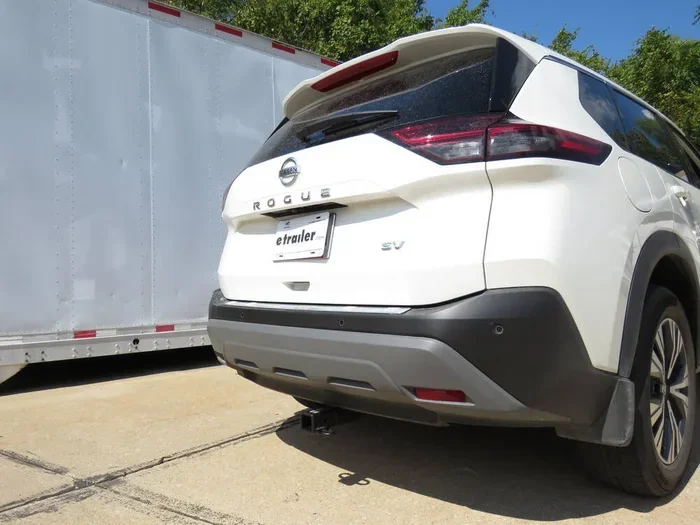
To tow safely, you need the right equipment. The Nissan Rogue comes with a tow hitch receiver as standard on many trims. This is a Class II receiver, which is common for compact SUVs. The receiver has a 1-1/4 inch square opening. You can attach a ball mount, a hitch pin, and a trailer wiring harness to it.
Hitch Types and Accessories
Here are the key components you will need for towing with a Nissan Rogue:
- Class II Receiver Hitch: This is the base mount. It bolts to the frame under the rear bumper. Most Rogues come with one already installed.
- Ball Mount and Ball: Choose a ball size that matches your trailer coupler. 1-7/8 inch and 2 inch are the most common sizes.
- Weight Distribution Hitch: For trailers over 500 pounds, this system helps level the tow vehicle. It redistributes tongue weight to all four wheels.
- Trailer Wiring Harness: This connects the trailer lights to the Rogue’s electrical system. It ensures your brake lights and turn signals work.
- Towing Mirror: If the trailer is wide, you may need extended side mirrors for better visibility.
- Brake Controller: Some trailers have electric brakes. A brake controller in the Rogue activates them when you slow down.
You can buy a factory towing package from the dealer. This package often includes the hitch, wiring, and a weight distribution system. It is the easiest way to ensure everything is compatible. Aftermarket kits are also available, but make sure they are rated for the Rogue’s towing capacity.
Quick Tips for Towing with a Nissan Rogue
Before you set out on your trip, follow these quick tips:
- Always check the hitch connections before every trip.
- Make sure the trailer tires are properly inflated.
- Distribute the load evenly inside the trailer.
- Do not exceed the 1,102-pound towing limit.
- Practice driving with the trailer in an empty parking lot first.
- Increase your following distance when towing.
Safety Tips for Towing with a Rogue
Safety is the most important part of towing with a Nissan Rogue. A poorly loaded or unsecured trailer can cause a serious accident. Here are the essential safety steps you must follow.
Weight Distribution and Stability
The biggest risk when towing is trailer sway. This happens when the trailer starts to fishtail behind the vehicle. To prevent sway, keep the heaviest items over the trailer axles. Use a weight distribution hitch to balance the load. Check the tire pressure on both the vehicle and the trailer. Under-inflated tires are a leading cause of trailer accidents.
Braking and Speed
The Nissan Rogue is not a heavy-duty towing machine. It has a smaller engine compared to trucks or full-size SUVs. When you are towing, give yourself more time to stop. Avoid sudden braking. Keep your speed under 60 mph on highways, especially on hot days. The transmission works harder when towing, and overheating can occur if you push it too hard.
If you are towing a trailer with its own brakes, make sure the brake controller is properly adjusted. The controller should apply the trailer brakes smoothly and proportionally. Test the brakes in a safe area before your long trip.
Fuel Economy While Towing
Towing will reduce your fuel economy. The Nissan Rogue gets about 25–30 mpg on the highway without a trailer. When you tow, you can expect a drop of 3–5 mpg, depending on the load and speed. Plan your fuel stops accordingly. Towing also increases wear on the brakes and transmission, so regular maintenance is even more important.
Common Mistakes When Towing a Nissan Rogue
Many drivers make avoidable mistakes when they first start towing. Learning from others can save you time, money, and stress. Here are the most common errors.
Exceeding the Towing Capacity
This is the number one mistake. Some owners see the 1,102-pound rating and assume it is a suggestion. It is a hard limit. The Rogue’s braking system, suspension, and transmission are engineered for that weight. Exceeding it can cause brake fade, transmission failure, and loss of control. Always weigh your trailer and cargo before you leave.
Ignoring Tongue Weight
Tongue weight is the downward force the trailer puts on the hitch. Too much tongue weight lifts the rear of the Rogue, reducing steering control. Too little tongue weight makes the trailer prone to sway. Aim for 10–15% of the total trailer weight on the hitch. Use a tongue weight scale to check this before you drive.
Skipping the Break-In Period
The Nissan Rogue’s owner’s manual often advises against towing during the first 500–1,000 miles. This break-in period allows the engine and transmission to seat properly. Towing too early can increase wear and affect long-term reliability. Check the manual for your specific model year.
Using the Wrong Hitch Ball
Using a ball that does not match the trailer coupler is dangerous. The trailer could disconnect while driving. Always verify the ball size and weight rating. A 1-7/8 inch ball is rated for up to 2,000 pounds, but the vehicle’s towing capacity is still the limiting factor.
Neglecting Trailer Maintenance
Your trailer needs regular care too. Check the trailer bearings, lights, and tires before every trip. A flat tire on a trailer at highway speed is extremely dangerous. Keep the trailer clean and lubricate the hitch components to prevent rust.
Expert Insights and Real-World Towing
What do automotive experts say about towing with a Nissan Rogue? Many reviewers praise the Rogue for its comfortable ride and easy handling when towing light loads. The Rogue’s all-wheel drive system provides good traction, which helps when pulling a trailer on wet roads. However, experts note that the Rogue is not the best choice for heavy-duty towing. If you need to pull a large boat or a horse trailer, you should look at a truck or a larger SUV.
What the Experts Say About Nissan Rogue Towing
According to Car and Driver and Edmunds, the Nissan Rogue is a solid compact SUV for towing small loads. The steering feel remains predictable when towing within the limits. The Rogue’s continuously variable transmission (CVT) is designed to handle the extra strain, but it can overheat if pushed too hard on long mountain grades. Experts recommend using the manual shift mode on steep downhills to engage engine braking.
Real-world owners often share their experiences on forums. Many report towing pop-up campers and utility trailers without any issues. The key is to stay within the weight limit and to take frequent breaks on long trips. Let the engine cool down during rest stops. This simple habit can extend the life of your transmission.
Key Takeaways for Towing with a Nissan Rogue
Here is a quick recap of the most important points:
- The Nissan Rogue towing capacity is 1,102 pounds for most model years.
- Use a Class II receiver hitch and proper wiring harness.
- Always use a weight distribution hitch for loads over 500 pounds.
- Never exceed the towing limit, and check tongue weight before every trip.
- Practice safe driving habits: increase following distance, avoid hard braking, and keep speeds moderate.
- The Rogue is ideal for small trailers, jet skis, and camping gear, not heavy-duty hauling.
By following these guidelines, you can tow safely and confidently with your Nissan Rogue. The vehicle is well-suited for light-duty towing tasks that many families face. Just remember that knowing your limits is the first step to safe towing.
Conclusion
The answer to Can Nissan Rogue Tow is a clear yes, with some important caveats. The Nissan Rogue offers a respectable towing capacity of up to 1,102 pounds. This makes it a practical choice for pulling small trailers, ATVs, and camping gear. However, it is not a heavy-duty towing vehicle. You must use the right hitch, respect the weight limits, and follow all safety guidelines. By equipping your Rogue properly and driving with care, you can enjoy many worry-free towing trips. Always consult your owner’s manual for the exact specs of your model. Happy towing, and stay safe on the road.
Frequently Asked Questions
What is the maximum towing capacity of a Nissan Rogue?
The Nissan Rogue can tow up to 1,102 pounds when equipped with the proper towing package. This limit applies to most model years from 2014 to 2024. Always check your specific owner’s manual for the exact rating.
Do I need a special hitch to tow with a Nissan Rogue?
Most Nissan Rogues come with a Class II receiver hitch already installed. You will also need a ball mount, a wiring harness for trailer lights, and a weight distribution hitch for loads over 500 pounds. A factory towing package makes this process easier.
Can a Nissan Rogue tow a boat?
A Nissan Rogue can tow a small boat or a jet ski, as long as the total trailer weight stays under 1,102 pounds. Larger boats with heavy hulls will exceed the towing capacity and are not safe to pull with a Rogue.
Is the Nissan Rogue good for towing in terms of fuel economy?
Towing will reduce your fuel economy by about 3–5 mpg. The Rogue is not designed for efficient towing. If fuel economy is a top priority and you rarely tow, the Rogue is still an excellent choice for daily driving.
Can you tow a travel trailer with a Nissan Rogue?
Yes, you can tow a small travel trailer or pop-up camper. The key is to keep the trailer weight under 1,102 pounds, including cargo and passengers. Always check the trailer’s GVWR (Gross Vehicle Weight Rating) before loading it up.
What happens if you exceed the Nissan Rogue towing capacity?
Exceeding the towing limit can cause transmission overheating, brake wear, and loss of steering control. It may also void your vehicle’s warranty. Always stay within the rated capacity and distribute weight evenly for safe towing.