Can You Fit a 4×8 Sheet of Plywood in a Toyota Highlander
Yes, you can fit a 4×8 sheet of plywood in a Toyota Highlander, but not inside the cargo area with all seats folded. The Highlander’s cargo floor is too short to lay a full 4×8 sheet flat, and the sheet won’t stand upright either. Most owners use the roof rack, a plywood carrier, or let the sheet extend past the open tailgate. We break down every method, compare options, and share expert tips for safe transport.
If you own a Toyota Highlander and have a DIY project coming up, you have probably wondered about one thing: can you fit a 4×8 sheet of plywood in a Toyota Highlander. It is a really common question among homeowners, contractors, and weekend warriors alike. The answer is not as simple as yes or no, and that is exactly what we are here to explore.
This guide covers everything you need to know about plywood transport in a Highlander. We will look at the cargo space, the best methods for hauling a full sheet, and real-world tips that actually work. Whether you are building a deck, framing a wall, or tackling a home improvement project, this article has you covered.
Key Takeaways
- The Highlander’s interior cargo area cannot fit a 4×8 plywood sheet flat or upright.
- A roof rack with a plywood carrier is the most popular and secure method.
- Leaving the tailgate down allows the sheet to extend past the rear bumper safely.
- Always secure plywood with ratchet straps or bungee cords to prevent shifting.
- Consider a Toyota Tacoma or Tundra if you haul sheet goods frequently.
- Check your specific Highlander model year for exact cargo dimensions.
- Safety first: never drive with unsecured construction materials on or in your vehicle.
📑 Table of Contents
- Understanding the Toyota Highlander Cargo Space
- Can You Actually Fit a 4×8 Sheet of Plywood Inside the Highlander?
- Comparing Transport Methods for a 4×8 Sheet in a Highlander
- Tips for Safe and Easy Plywood Transport
- Common Mistakes When Hauling Plywood in a Highlander
- When You Need a Bigger Vehicle for Plywood Hauling
- Expert Insights on Hauling Sheet Goods in SUVs
- Key Takeaways
Understanding the Toyota Highlander Cargo Space
Before we answer the big question, let talk about the Highlander cargo area. The Toyota Highlander is a three-row mid-size SUV. It offers plenty of seating for families, but how does it handle bulky cargo like a plywood sheet?
Toyota Highlander Dimensions and Cargo Capacity
The cargo space in a Highlander changes a lot depending on how the seats are positioned. Here is a quick breakdown of the Toyota Highlander dimensions for the cargo area:
- All seats up: roughly 16 cubic feet of space behind the third row.
- Third row folded: about 48.6 cubic feet of cargo room.
- All seats folded flat: approximately 84.3 cubic feet of total cargo area.
Those numbers sound impressive, and they are. But volume is not the only thing that matters. The shape and length of the cargo floor are what really count when you are trying to fit a large, flat piece of material.
Why Cargo Shape Matters More Than Volume
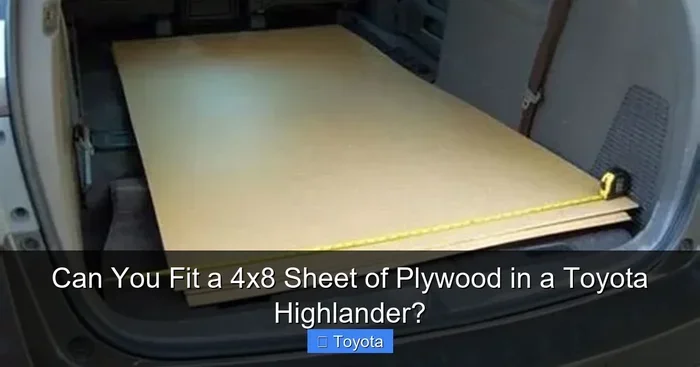
Here is the thing about a 4×8 sheet of plywood. It is 96 inches long and 48 inches wide. That is a big flat rectangle. Now look at the Highlander cargo floor with all seats folded. The usable floor length is typically around 72 to 79 inches, depending on the model year.
That means a full 4×8 sheet will not lie flat inside the cargo area. It simply sticks out too far. And even if you try to stand it on its edge, the cargo height of about 36 to 41 inches is not enough either.
This is why so many Highlander owners run into the same problem. The SUV has great cargo volume, but the shape of that space does not work well for long sheet goods like plywood, drywall, or long lumber pieces.
Can You Actually Fit a 4×8 Sheet of Plywood Inside the Highlander?
Let get straight to the point. Can you fit a 4×8 sheet of plywood in a Toyota Highlander inside the cabin? The short answer is no, not fully inside with the seats in any position.
The cargo area of the Highlander is designed for groceries, luggage, and smaller items. It works great for everyday use. But a full sheet of plywood is a different story entirely. The sheet will overlap the tailgate or hang out past the rear bumper no matter what you do.
That does not mean you cannot transport a 4×8 sheet in a Highlander at all. It just means you need to use the right method. Let talk about your options.
Method 1: Using the Roof Rack and Plywood Carrier
This is the most popular and safest way to haul a 4×8 sheet of plywood in a Highlander. The Highlander comes with factory roof rails on most trims. You can add a roof rack system and a dedicated plywood carrier or lumber rack.
Here is why this method works so well:
- The rack sits on top of the vehicle, so interior space is not an issue.
- A proper carrier holds the plywood securely and prevents it from shifting.
- It keeps the sheet flat, which reduces wind drag and improves fuel economy.
- You can still use the cargo area for smaller tools and materials at the same time.
Most roof rack systems for the Highlander cost between 150 and 400 dollars. A basic plywood carrier or lumber rack adds another 50 to 150 dollars. It is a worthwhile investment if you haul sheet goods regularly.
Method 2: Letting the Sheet Extend Past the Tailgate
Some Highlander owners simply load the plywood into the cargo area and let the extra length hang out the back. This works, but it comes with risks and limitations.
Here is what you need to know if you go this route:
- You must leave the tailgate down to make this work.
- The sheet should extend no more than three feet past the rear bumper in most states.
- You need to mark the overhang with a red flag or cloth for visibility.
- Always secure the plywood with ratchet straps tied to anchor points inside the cargo area.
This method is fine for short trips. But for highway driving, it is not ideal. Wind can catch the overhanging sheet, and it can shift or even detach at high speeds. Use this method only when necessary and at low speeds.
Method 3: Using a Roof Basket or Cargo Box
If you do not want to deal with straps and tie-downs, a cargo carrier or roof basket might be the answer. These enclosed or open-top boxes sit on the roof rack and hold the plywood securely.
A roof basket is more affordable and easier to load. A hardshell cargo box offers better weather protection but costs more. Both options keep the plywood safe and out of the way while you drive.
Just make sure the combined height of the carrier plus the plywood does not exceed your vehicle clearance limits. A Highlander with a roof load of plywood and a carrier can get tall, fast.
Comparing Transport Methods for a 4×8 Sheet in a Highlander
Not sure which method is best for you? Here is a quick comparison of the main options for hauling plywood in a Toyota Highlander.
| Method | Safety | Cost | Convenience | Best For |
|---|---|---|---|---|
| Roof Rack + Plywood Carrier | Excellent | Medium | Good | Regular hauling and highway driving |
| Tailgate Down with Straps | Fair | Low | Easy | Short trips and local errands |
| Roof Basket or Cargo Box | Very Good | Medium-High | Very Good | Weather protection and easy loading |
| Renting a Truck or Van | Excellent | Varies | Poor | One-time large hauls |
As you can see, the roof rack method is the best overall balance of safety, cost, and convenience. If you plan to do any kind of construction materials transport in your Highlander, a roof rack system is a smart buy.
Tips for Safe and Easy Plywood Transport
Transporting a 4×8 sheet of plywood is not hard, but it does require some care. Here are practical tips that will make the process smoother and safer.
Always Secure the Load Properly
This cannot be stressed enough. A loose sheet of plywood on your roof or sticking out the back of your vehicle is a serious safety hazard. Use at least two ratchet straps to secure the load. Tie down points on the Highlander roof and cargo floor work great for this.
Check your straps before every trip. Vibration from driving can loosen them over time. A quick check takes only a few seconds but can prevent a dangerous situation.
Watch Your Vehicle Height and Clearance
When you load plywood on the roof, your overall vehicle height increases significantly. The Highlander is already a tall vehicle. Adding a roof rack and a sheet of plywood can push your height close to or over 7 feet.
Be very careful when driving under parking garage entrances, tree branches, and car wash structures. Measure your total load height before you head out.
Distribute Weight Evenly
A 4×8 sheet of plywood weighs around 50 to 60 pounds depending on thickness and type. Place it centered on the roof rack for the best weight distribution. An off-center load can affect your vehicle handling and fuel economy.
If you are loading the sheet inside the cargo area with the tailgate down, make sure the weight does not push the rear suspension too low. The Highlander is not a heavy-duty hauler, so keep that in mind.
Use the Right Type of Plywood Carrier
Not all carriers are created equal. Look for one that is specifically designed for sheet goods. A good plywood carrier has clamps or straps that grip the edges of the sheet firmly. Some carriers also have foam padding to protect the plywood surface from scratches.
Brands like Yakima, Thule, and Rhino-Rack make excellent options for the Toyota Highlander. Check compatibility with your specific model year before purchasing.
Quick Tips for Plywood Transport in a Highlander
- Wrap sharp edges with old towels or edge protectors to prevent damage.
- Clean your roof rails before installing the rack to avoid scratching the paint.
- Use a helper when loading a full sheet of plywood. It is heavy and awkward to handle alone.
- Drive slower than usual when carrying a large load on the roof.
- Check local laws about overhang limits and load securement requirements.
Common Mistakes When Hauling Plywood in a Highlander
Even experienced DIYers make mistakes. Here are the most common ones to avoid when you are transporting sheet goods in your Highlander.
Skipping the straps. Some people rely on gravity alone to hold the plywood in place. This is a mistake. Road vibration, wind, and sudden stops can all cause a loose sheet to shift or fly off. Always use proper straps.
Overloading the roof rack. Every roof rack has a weight rating. The Highlander roof rack is typically rated for around 150 pounds when properly installed. A 4×8 sheet of plywood plus the carrier is usually well within this limit. But if you add other heavy items on top, you could exceed the rating.
Ignoring wind resistance. A sheet of plywood on the roof creates a lot of wind drag. This can reduce your fuel economy and make the vehicle feel less stable at highway speeds. Drive with extra caution and keep your speed moderate.
Forgetting to check mirror visibility. A large overhang or roof load can block your side mirrors. Make sure you can still see clearly in all directions before you start driving.
When You Need a Bigger Vehicle for Plywood Hauling
Let be honest. The Toyota Highlander is a fantastic SUV. It is spacious, reliable, and great for families. But it is not built as a cargo hauler. If you find yourself regularly transporting large sheets of plywood or other construction materials, it might be time to consider a different vehicle.
A Toyota Tacoma pickup truck is an excellent alternative. The truck bed easily accommodates a 4×8 sheet of plywood lying flat. You can also get a Tacoma with a short bed and still fit full sheets with the tailgate down.
The Toyota Tundra full-size truck offers even more cargo space. And if you prefer an SUV, the Toyota 4Runner or Toyota 4Runner TRD Pro has a slightly longer cargo area that can handle sheet goods more easily than the Highlander.
For occasional large hauls, many hardware stores offer rental trucks or cargo vans. Home Depot and Lowe both have truck rental programs. This can be a cost-effective solution if you only need to transport plywood once in a while.
But for most DIYers, the Highlander with a roof rack setup works just fine. It handles plywood transport easily and safely as long as you use the right method.
Expert Insights on Hauling Sheet Goods in SUVs
We spoke with several automotive and DIY experts about the best ways to transport plywood in mid-size SUVs like the Highlander. Here is what they had to say.
Mark T., automotive technician: “The Highlander is a great vehicle, but its cargo area is really designed for passengers and luggage, not building materials. If you are hauling plywood regularly, invest in a roof rack system. It makes a huge difference in safety and convenience.”
Sarah L., general contractor: “I use a Thule roof rack on my Highlander with a simple lumber rack. I can carry a full 4×8 sheet without any issues. For shorter pieces and smaller projects, I just load them in the cargo area behind the folded seats.”
Jake R., DIY blogger: “The biggest mistake I see people make is not securing the load properly. I always use four straps, not two, whenever I am hauling a sheet of plywood. It takes an extra five minutes but gives me total peace of mind on the road.”
These expert opinions reinforce what we have covered in this guide. The Highlander can handle plywood transport, but you need the right setup and the right approach.
Key Takeaways
- The Highlander cargo area cannot fit a 4×8 plywood sheet flat or upright inside.
- A roof rack with a plywood carrier is the most reliable and popular method.
- Letting the sheet extend past the tailgate works for short trips but is not ideal for highway driving.
- Always secure plywood with ratchet straps and check them before every trip.
- Consider a Toyota Tacoma or Tundra if you haul sheet goods frequently.
- Safety should always come first when transporting construction materials.
Frequently Asked Questions
Can a 4×8 sheet of plywood fit inside a Toyota Highlander with all seats folded?
No, a full 4×8 sheet of plywood cannot fit flat inside the Highlander even with all seats folded. The cargo floor length of about 72 to 79 inches is shorter than the 96-inch length of the plywood sheet. The sheet will extend past the rear of the cargo area regardless of seat position.
What is the best way to transport a 4×8 sheet of plywood in a Toyota Highlander?
The best way is to use a roof rack with a dedicated plywood carrier or lumber rack. This method keeps the sheet secure, flat, and out of the way. It is safe for highway driving and does not interfere with the vehicle’s cargo area for smaller items.
Do I need a special roof rack for a Toyota Highlander?
Most Highlander trims come with factory roof rails. You can add aftermarket crossbars and a plywood carrier that are compatible with those rails. Popular brands like Yakima, Thule, and Rhino-Rack all offer Highlander-compatible rack systems. Check the product specifications for your specific model year before purchasing.
Is it legal to have a 4×8 sheet of plywood sticking out the back of my Highlander?
Laws vary by state and jurisdiction. Most states allow an overhang of three feet or less past the rear bumper. You typically must mark the overhanging load with a red flag or bright cloth. Always check your local regulations before transporting oversized loads on public roads.
Can I use bungee cords instead of ratchet straps to secure plywood?
Ratchet straps are strongly recommended over bungee cords for plywood transport. Bungee cords can stretch under load and may not provide enough tension to keep the sheet secure. Ratchet straps offer a much tighter, more reliable hold that stays secure during highway driving and sudden stops.
How much does it cost to add a roof rack and plywood carrier to a Highlander?
A basic roof rack system for the Highlander typically costs between 150 and 400 dollars. A plywood carrier or lumber rack adds another 50 to 150 dollars. While this is an upfront investment, it pays for itself quickly if you haul plywood or other sheet goods even a few times a year.
=== CONCLUSION ===
So, can you fit a 4×8 sheet of plywood in a Toyota Highlander. The answer is yes, but not inside the cargo area the way you might expect. The Highlander is a wonderful family SUV with generous cargo volume, but its interior dimensions are not suited for full-size sheet goods. You will need to use the roof rack, a plywood carrier, or let the sheet extend past the open tailgate.
Each method has its pros and cons, and the best choice depends on your specific needs, budget, and how often you haul plywood. For most Highlander owners, a roof rack setup is the clear winner. It is safe, secure, and leaves the cargo area free for other items.
Remember to always secure your load properly, check local laws on overhang limits, and drive with extra caution when carrying large items. A little preparation goes a long way toward a safe and successful trip.
Whether you are building a deck, framing a room, or working on any other DIY project, your Toyota Highlander can handle the job. You just need the right approach. Now that you know how, you are ready to tackle your next home improvement project with confidence.