Best Car Buffing Machine Pads for a Flawless Finish
Finding the right car buffing machine pads can transform your vehicle’s paint from dull to dazzling. Whether you are correcting swirl marks, applying wax, or achieving a mirror finish, the correct pad makes all the difference. This guide covers foam, wool, and microfiber options with expert recommendations. You will learn how to match pad types to compounds, avoid common mistakes, and get professional results at home.
There is nothing more satisfying than seeing your car shine like it just rolled off the lot. But getting that flawless finish takes more than just a good wax and a dream. The truth is, car buffing machine pads are the unsung heroes of any paint correction or detailing job. Pick the wrong pad, and you risk leaving swirl marks, holograms, or even burning through your clear coat. Pick the right one, and the process becomes smooth, fast, and incredibly rewarding.
Whether you are a weekend warrior or a serious car enthusiast, understanding buffing pads for cars is essential. This guide breaks down every type, every grade, and every use case so you can make confident choices. By the end, you will know exactly which polishing pads for car paint to buy, how to use them, and how to avoid the mistakes that trip up most beginners.
Let us dive in and get your paint looking its absolute best.
Key Takeaways
- Foam pads work best for polishing and waxing: they come in cutting, medium, and finishing grades for different stages of paint correction.
- Wool pads are ideal for heavy cutting: they remove deep scratches and oxidation but require careful technique to avoid burning the paint.
- Microfiber pads are gentle and versatile: perfect for final polishing and applying sealants or waxes evenly.
- Pad grit rating matters more than brand name: always match the pad aggressiveness to your compound or polish.
- Using the wrong pad can damage your paint: avoid common mistakes like using a cutting pad for finishing work.
- Pad size and shape affect coverage and control: choose based on the panel size and your experience level.
- Proper maintenance extends pad life: clean pads after each use and store them in a cool, dry place.
📑 Table of Contents
- What Are Car Buffing Machine Pads?
- Types of Buffing Pads for Your Car
- How to Choose the Right Pad for Your Project
- Top Car Buffing Machine Pads We Recommend
- How to Use Buffing Pads Like a Pro
- Common Mistakes to Avoid
- Expert Insights on Car Buffing Machine Pads
- Pads vs. Manual Buffing: Which Is Better?
- How to Maintain Your Buffing Pads
- Conclusion
What Are Car Buffing Machine Pads?
Car buffing machine pads are abrasive or soft accessories that attach to a polisher or buffer. They work together with compounds, polishes, and waxes to reshape, refine, and protect your car’s paint. Think of them as the hands that do the actual work while the machine provides the speed and pressure.
These pads come in many materials, densities, and grades. Each one serves a specific purpose in the paint correction process. A cutting pad removes imperfections aggressively. A finishing pad gently blends and enhances shine. Understanding this hierarchy is the first step to mastering machine polishing.
The two most common machine types are dual action (DA) polishers and rotary buffers. DA polishers are safer for beginners because they reduce the risk of burning paint. Rotary buffers offer more cutting power but demand more skill. Both machines use the same basic car detailing pads, though some are designed specifically for one type of machine.
Why Pad Choice Matters
Your pad determines how much paint is removed and how smooth the final result looks. Using a heavy-cutting pad where a gentle one is needed can leave deep swirl patterns. Using a finishing pad where heavy cutting is required means you will never remove those stubborn scratches. The right match between pad, compound, and machine is what separates a mediocre result from a flawless finish.
Also, pad durability plays a big role. Cheap pads wear out fast and lose their shape mid-job. Quality pads hold their structure and deliver consistent results across multiple uses. Investing in good pads saves time, product, and frustration.
Types of Buffing Pads for Your Car
Not all pads are created equal. Different materials and constructions serve different purposes. Here is a breakdown of the main types you will encounter in machine polishing.
Foam Polishing Pads
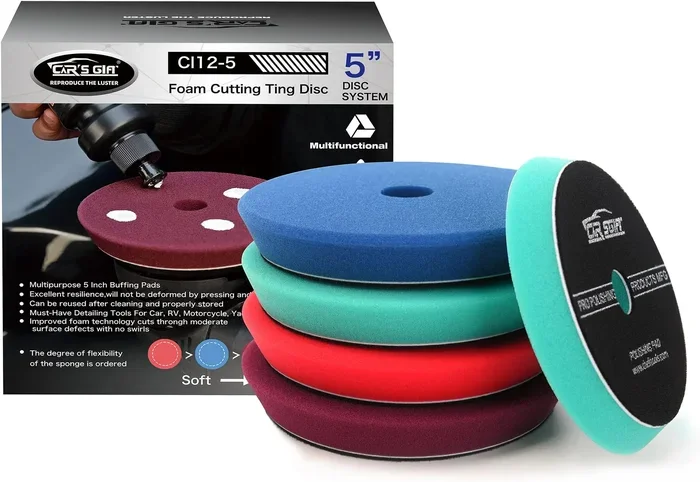
Foam polishing pads are the most popular choice for car detailing. They come in three main grades: cutting, polishing, and finishing. Cutting foam pads have an open cell structure that pulls compound away from the surface, preventing clogging. Polishing pads are denser and smoother, perfect for refining the paint after cutting. Finishing pads are soft and gentle, designed to add the final layer of gloss.
Most dual action polisher pads are foam-based. They work well with both DA and rotary machines. Foam pads are easy to clean and maintain, making them a favorite for both beginners and professionals.
- Cutting foam pads: Remove heavy swirl marks, scratches, and oxidation.
- Polishing foam pads: Refine the paint after cutting and reduce holograms.
- Finishing foam pads: Add final gloss and prepare the surface for wax or sealant.
Wool Buffing Pads
Wool pads for car buffing are aggressive and powerful. They are made from natural or synthetic wool fibers and excel at heavy cutting. If your car has deep scratches, heavy oxidation, or years of neglect, a wool pad paired with a heavy compound can work wonders.
However, wool pads generate significant heat. This heat can burn through the clear coat if you linger in one spot too long. They also leave more marring than foam pads, which means you will need to follow up with a foam polishing pad to refine the surface. Wool pads are best suited for experienced users who understand paint correction techniques.
There are two main types of wool pads:
- Compressed wool pads: Very aggressive, ideal for heavy cutting on single-stage paint or severe defects.
- Fleece wool pads: Slightly less aggressive, better for two-stage paint systems where you want to remove defects without damaging the base coat.
Microfiber Buffing Pads
Microfiber buffing pads are the gentlest option available. They are perfect for applying wax, sealant, or glaze evenly across the paint. Unlike foam or wool, microfiber pads do not remove paint. Instead, they distribute products smoothly and leave a soft, silky finish.
These pads are also great for the final step after polishing. A microfiber finishing pad can remove any remaining haze from your polish and leave the paint ready for protection. They are soft, non-abrasive, and safe on all paint types.
One advantage of microfiber is that they are less likely to cause swirl marks. If you are working on a dark-colored car where every imperfection shows, microfiber pads give you peace of mind.
Velvet and Suede Pads
Velvet and suede pads are specialty finishing pads used by professional detailers. They are extremely soft and create a high-gloss, wet-looking finish. These pads work best with fine polishes and finishing compounds. They are not suitable for cutting or heavy correction but excel at the final refinement stage.
You will often see velvet pads used in ceramic coating preparation because they leave the paint in a pristine, uncontaminated state.
How to Choose the Right Pad for Your Project
Choosing the right car buffing machine pads depends on three factors: the condition of your paint, the type of machine you are using, and the product you plan to apply. Let us walk through each factor.
Assess Your Paint Condition
Before you buy a single pad, inspect your car’s paint closely. Use a clay bar to remove surface contaminants and then examine the panels under good lighting. Look for swirl marks, scratches, oxidation, and haze.
If your paint has light swirl marks and dullness, you probably only need a polishing pad and a mild polish. If there are deep scratches and heavy oxidation, start with a cutting foam pad or a wool pad paired with an abrasive compound.
Remember this simple rule: start with the least aggressive pad and step up only if needed. It is always easier to remove more paint than to fix a burn-through.
Match the Pad to Your Machine
Not all pads fit all machines. Check the backing plate size of your polisher before purchasing pads. Most DA polishers use 150mm or 165mm plates, while rotary buffers typically use 210mm or 230mm plates. Using the wrong size pad can cause uneven coverage and poor results.
Also, consider the pad attachment system. Some pads hook onto the plate, while others use a velcro-style backing. Velcro pads are easier to swap and provide a more secure fit, but hook-style pads tend to last longer.
Match the Pad to Your Product
Every compound and polish has a recommended pad type on the label. Follow these guidelines closely. A heavy compound needs an aggressive cutting pad. A fine polish needs a soft finishing pad. Mismatching product and pad is one of the fastest ways to get poor results.
Here is a quick reference guide:
- Heavy compound + cutting foam or wool pad: For deep scratches and heavy defects.
- Medium polish + polishing foam pad: For moderate swirl marks and refinement.
- Finishing polish + finishing foam or microfiber pad: For high gloss and final enhancement.
- Wax or sealant + microfiber pad: For even application and smooth coverage.
Top Car Buffing Machine Pads We Recommend
With so many brands on the market, choosing the right pads can feel overwhelming. Here are some of the top-rated buffing pads for cars that deliver consistent, professional-quality results.
Lake Country CCS Foam Pads
Lake Country is a go-to brand for professional detailers. Their CCS (Clear Coat Safe) foam pads come in a complete system of cutting, polishing, and finishing grades. The foam is high-quality and resists loading even during long sessions. These pads fit most DA polishers and rotary machines and are known for their durability and consistent cut.
Rupes LHR21 Mark III Foam Pads
Rupes is an Italian brand that has earned a reputation for premium polishing pads for car paint. The LHR21 Mark III pads are designed specifically for DA polishers and feature a soft, flexible foam that conforms to panel curves. They produce excellent results with minimal effort and are a favorite among detailers who prioritize a flawless, hologram-free finish.
Meguiar’s DA Ultimate Compound Pads
Meguiar’s offers an affordable yet effective option for beginners. Their DA Ultimate Compound Pads are designed to work with Meguiar’s Ultimate Compound and provide a reliable cutting action without being overly aggressive. They are a great starting point for anyone new to machine polishing.
Meguiar’s DA Ultimate Finishing Pads
These finishing pads pair perfectly with the compound pads mentioned above. They are soft and gentle, designed to refine the paint after the cutting stage. The result is a deep, glossy shine that looks professional and lasts.
3M Perfect-It Wool Pads
For heavy-duty cutting, 3M wool pads are hard to beat. They are durable, consistent, and designed for use with 3M Perfect-It compounds. These pads handle severe defects with ease and are a staple in many professional detailer toolkits.
Griot’s Garage G9 Polishing Pads
Griot’s Garage offers a well-rounded pad system that covers cutting, polishing, and finishing stages. The G9 pads are known for their balance of cut and finish, making them versatile enough for a wide range of paint conditions. They are also reasonably priced, which makes them a solid choice for enthusiasts on a budget.
How to Use Buffing Pads Like a Pro
Having the right car buffing machine pads is only half the battle. How you use them makes the real difference. Follow these steps and tips to get the best results every time.
Step-by-Step Buffing Process
- Wash and decontaminate your car: Start with a clean surface. Use a clay bar to remove embedded contaminants that could scratch the paint during polishing.
- Tape off trim and seals: Use painter’s tape to protect rubber seals, chrome trim, and plastic pieces from compound splatter.
- Apply compound to the pad: Place 4-5 pea-sized drops of compound on the pad and spread it across the surface before starting the machine.
- Work in small sections: Divide your car into manageable sections like doors, hood, and fenders. Work one section at a time.
- Use slow, overlapping passes: Move the polisher slowly and overlap each pass by about 50%. Keep the pad flat and avoid pressing too hard.
- Check your progress frequently: Wipe the section with a microfiber towel to see if the defects are gone before moving on.
- Switch to a polishing pad for refinement: After cutting, use a finer pad with a lighter polish to remove any haze left by the compound.
- Finish with a microfiber pad: Apply your final polish or glaze with a microfiber pad for maximum gloss.
- Apply protection: Finish with a wax, sealant, or ceramic coating to lock in your hard work.
Quick Tips for Better Results
- Keep your pads clean: Use a pad cleaning spray or a microfiber towel to remove product buildup between sections.
- Use a splash guard: A splash guard on your DA polisher prevents compound from splattering onto the paint and causing contamination.
- Work in the shade: Direct sunlight heats the paint and causes compounds to dry too fast, leading to haze and swirl marks.
- Replace pads when they wear out: Worn pads lose their cutting ability and can leave marks on the paint.
- Use a pad washer: A pad washer cleans pads quickly and extends their lifespan significantly.
Common Mistakes to Avoid
Even experienced car enthusiasts make mistakes with buffing pads for cars. Here are the most common errors and how to avoid them.
Using the Wrong Pad for the Job
This is the number one mistake people make. Using a finishing pad with a heavy compound wastes product and time because the pad cannot cut effectively. Conversely, using a cutting pad for finishing work leaves deep swirl marks that are difficult to remove.
Always match your pad to the product and the stage of work. When in doubt, start gentler and work your way up.
Applying Too Much Pressure
Let the machine do the work. Pressing too hard on the polisher generates excess heat, which can burn the paint and damage the pad. Keep the machine moving at a steady pace and let the weight of the tool do the cutting.
Skipping the Cleaning Step
Product buildup inside the pad reduces its effectiveness and can reintroduce contaminants to the paint. Clean your pads between sections and replace them when they become saturated.
Polishing in Direct Sunlight
Direct sunlight causes compounds and polishes to dry almost instantly on the paint. This creates a haze that is very difficult to remove and can leave behind micro-marring. Always polish in a shaded area or in a garage.
Not Testing on a Hidden Area First
Every car’s paint is different. Before you start a full job, test your pad, compound, and machine combination on a hidden area like the inside of a door panel. This helps you understand how the paint responds and adjust your approach accordingly.
Expert Insights on Car Buffing Machine Pads
Professional detailers spend years perfecting their technique with car detailing pads. Here are some insights from the experts that can elevate your results.
Most professionals agree that a three-pad system is all you need for most jobs. A cutting pad, a polishing pad, and a finishing pad cover every stage of paint correction. You do not need to buy every pad on the market. Start with these three and add specialty pads as your skills grow.
Another expert tip is to pre-cut your pads. Some detailers lightly sand the face of a new cutting pad with fine-grit sandpaper to open up the cell structure. This improves product absorption and prevents the compound from bouncing off the pad surface.
Temperature control is also critical. Professionals use IR thermometers to monitor paint temperature during polishing. If the surface exceeds 180°F, they stop and let it cool. This prevents clear coat damage and ensures a safer, more controlled process.
Finally, experts emphasize that pad maintenance is just as important as pad selection. A well-maintained pad performs better and lasts longer. Invest in a good pad washer or cleaning solution, and store your pads flat in a cool, dry place away from direct sunlight.
Pads vs. Manual Buffing: Which Is Better?
Some car owners wonder if they can achieve the same results by hand-buffing instead of using a machine. The short answer is no, not for serious paint correction.
Manual buffing can work for light waxing and applying quick detailers, but it lacks the consistent pressure and speed needed to remove swirl marks, scratches, and oxidation. Machine polishing with the right car buffing machine pads delivers results that are impossible to achieve by hand.
That said, hand-buffing has its place. It is a good option for people who are uncomfortable using a machine or who only need light enhancement on a well-maintained paint surface. For anything beyond basic maintenance, a machine and the right pads are the way to go.
How to Maintain Your Buffing Pads
Proper maintenance extends the life of your polishing pads for car paint and keeps them performing at their best. Here is how to care for your pads.
- Clean pads after every use: Remove product residue with a pad cleaner or a dedicated pad washing machine.
- Let pads dry completely before storing: Moisture trapped in foam pads promotes mold and degrades the material.
- Store pads flat or rolled: Avoid folding pads as this creates creases that affect performance during the next use.
- Replace pads when they lose their shape: Worn pads cannot maintain consistent pressure and will leave marks on the paint.
- Keep cutting and finishing pads separate: Label your pads so you never accidentally use a cutting pad for finishing work.
Conclusion
The right car buffing machine pads are the foundation of any great paint correction or detailing job. From aggressive cutting foam pads to gentle microfiber finishing pads, each type plays a specific role in achieving a flawless finish. By understanding what each pad does, matching it to your product and machine, and avoiding common mistakes, you can achieve professional results in your own garage.
Start with the basics, invest in quality pads, and take your time. Buffing machine pads for cars are not just accessories, they are the tools that bring your paint to life. Follow the steps in this guide, practice your technique, and you will see a dramatic improvement in your car’s appearance. Your vehicle deserves that flawless, mirror-like shine, and now you have everything you need to make it happen.
Frequently Asked Questions
What is the best car buffing machine pad for beginners?
Foam polishing pads are the best choice for beginners because they are forgiving and versatile. Start with a medium-grade foam pad and a mild polish to learn the basics of machine polishing without risking damage to your paint.
Can I use a wool pad on clear coat paint?
Yes, but with caution. Wool pads are aggressive and can burn through clear coat if used incorrectly. Always use a wool pad with a heavy compound, work in short bursts, and keep the pad moving constantly to avoid heat buildup.
How often should I replace my buffing pads?
Replace your pads when they lose their shape, become hardened, or no longer cut effectively. With proper cleaning and storage, foam pads can last 10-15 uses, while microfiber pads may last even longer.
What is the difference between a cutting pad and a finishing pad?
A cutting pad has an open cell structure and is designed to remove paint defects aggressively. A finishing pad is soft and smooth, designed to refine the paint and add gloss without removing any paint. They serve different stages in the polishing process.
Do I need different pads for DA polishers and rotary buffers?
The same basic pad types work with both machines, but some pads are specifically designed for one type. DA polisher pads are typically softer and more controlled, while rotary buffer pads can handle more aggressive cutting. Check your pad manufacturer’s recommendations.
Can I wash my buffing pads and reuse them?
Absolutely. Washing your pads after each use removes product buildup and extends their lifespan. Use a dedicated pad cleaner or a pad washing machine, and let them dry completely before storing them.