Car Window UV Protection Everything You Should Know
Car window UV protection is one of the most overlooked yet essential parts of vehicle maintenance. Harmful UV rays pass through your car windows and cause skin damage, interior fading, and long-term health risks. This guide covers every type of protection, from window tinting films to sunshades, so you can make informed choices. Whether you drive daily or take occasional road trips, car window uv protection keeps you and your vehicle safer.
You probably wear sunscreen at the beach. You probably wear sunglasses on bright days. But do you ever think about the UV rays hitting you while you sit behind the wheel? Car window uv protection is a topic that most drivers ignore until something goes wrong. Maybe you notice your dashboard looking cracked and faded. Or perhaps a dermatologist mentions sun damage on the left side of your face. Whatever the trigger, the truth is simple. Your car windows let in more harmful rays than you think.
Every time you drive, your skin gets exposed to ultraviolet radiation. Over months and years, this adds up. The damage is gradual but real. That is why car window uv protection deserves your attention right now. This guide walks you through everything you need to know. You will learn about different types of protection, how to choose the right one, and why it matters for your health and your vehicle. Let us get into it.
Key Takeaways
- UV rays penetrate car windows: Both UVA and UVB rays can reach your skin even while driving, increasing long-term health risks.
- Multiple protection options exist: From ceramic tint to removable window films, there is a solution for every budget and need.
- Interior damage is real: Prolonged sun exposure cracks leather, fades dashboards, and degrades plastics over time.
- Skin health matters: Studies show that drivers who spend long hours on the road face higher risks of skin damage on the left side of their body.
- Legal limits apply: Every state has window tinting laws you must follow to avoid fines and failed inspections.
- Professional installation beats DIY: While DIY kits work, professional tinting delivers better durability and a cleaner finish.
- Year-round protection is key: UV rays are present in all seasons, not just summer, so protection should be consistent.
📑 Table of Contents
Why Car Window UV Protection Matters
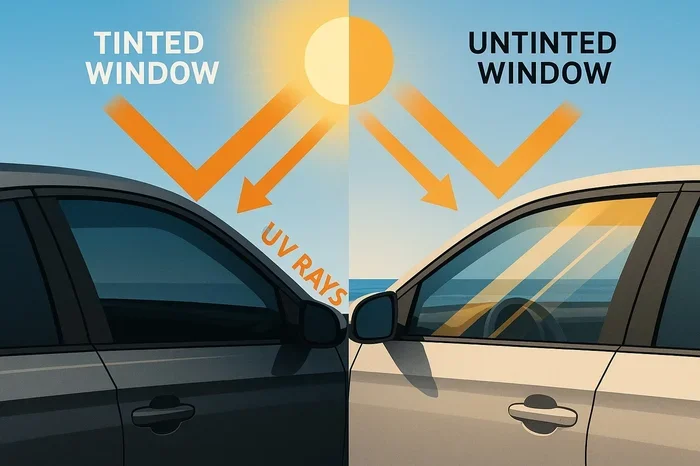
Most people do not realize that car windows are not built to block all UV rays. Your windshield might filter out a good portion of UVB rays. But your side and rear windows often let in large amounts of UVA radiation. These rays go deep into your skin and cause damage that you cannot see right away.
The Science Behind UV Rays and Driving
There are two main types of ultraviolet radiation that reach us. UVB rays cause sunburns and play a big role in skin cancer. UVA rays penetrate deeper into the skin and lead to premature aging and wrinkles. Here is the problem. Standard car glass blocks most UVB rays but allows UVA rays to pass through freely. That means during your daily commute or a long road trip, your skin keeps absorbing UVA radiation hour after hour.
A study published in the Journal of the American Academy of Dermatology found that skin cancer on the left side of the body is more common among drivers in countries where they drive on the right side of the road. This is not a coincidence. It is a direct result of prolonged UV exposure through the driver-side window. Car window uv protection directly addresses this hidden risk.
Who Is Most at Risk?
Some people face higher risks from UV exposure while driving. If you fit any of these categories, you should pay extra attention to protecting yourself.
- Daily commuters who spend one or more hours on the road each day
- Long-haul truck drivers and rideshare operators
- People with fair or sensitive skin who burn easily
- Individuals with a family history of skin cancer
- Children riding in the back seat whose skin is especially delicate
- People with existing skin conditions that worsen with sun exposure
If any of these sound familiar, investing in car window uv protection is one of the smartest health decisions you can make.
Types of Car Window UV Protection
Not all UV protection solutions are the same. There are several options available, and each comes with its own set of benefits and trade-offs. Let us look at the most popular choices so you can find the right fit for your car and your lifestyle.
Automotive Window Tinting
Window tinting is the most popular form of car window uv protection. A thin film is applied to the inside of your car windows, and it blocks a significant percentage of UV rays. Tint films come in different materials and shades, and they offer varying levels of protection.
Here are the main types of automotive window tint you will encounter:
- Dyed tint: The most affordable option. It uses a dye layer to absorb heat and block some UV rays. It is a solid budget choice but tends to fade over time.
- Metalized tint: Contains tiny metallic particles that reflect heat and UV radiation. It is more durable than dyed tint but can interfere with cell phone and GPS signals.
- Carbon tint: A premium option that does not fade and provides excellent heat rejection. It gives your windows a matte finish and strong UV protection.
- Ceramic tint: The top-tier choice. It blocks the highest percentage of UV rays and heat without interfering with electronics. It is also the most expensive option.
When shopping for tint, look for films that block at least 99% of UV rays. This is the standard you want for effective car window uv protection. Ceramic and high-quality carbon tints are the best at achieving this level of coverage.
Removable UV Window Films
If you do not want a permanent tint, removable UV window films are a great alternative. These thin, adhesive films stick to the inside of your windows and can be removed whenever you want. They are especially popular among renters or people who live in areas with strict tinting laws.
Removable films offer several advantages:
- Easy to install and remove without leaving residue
- Affordable compared to professional tinting
- No permanent changes to your vehicle
- Effective UV blocking when you choose quality films
The downside is that they may not look as sleek as permanent tint. They can also bubble or peel over time if not applied correctly. Still, for many drivers, removable UV films are a practical and effective form of car window uv protection.
Sunshades and Window Covers
Sunshades are the simplest and most affordable way to protect yourself from UV rays. You place them on your windshield and side windows when the car is parked. They reflect sunlight and keep the interior cooler.
While sunshades are not as effective as tinting while you are driving, they play an important role in reducing UV exposure when your car is parked. They also protect your dashboard, seats, and steering wheel from sun damage. For a quick and easy addition to your car window uv protection routine, sunshades are hard to beat.
UV-Blocking Windshield Treatments
Some manufacturers offer special treatments or coatings that you can apply to your windshield. These treatments add an extra layer of UV protection without changing the look of your glass. They are often combined with other tinting solutions for maximum coverage. If your windshield already has good UV filtering, adding a treatment can boost protection even further.
How to Choose the Right UV Protection for Your Car
With so many options available, choosing the right car window uv protection can feel overwhelming. But it does not have to be. A few key factors will guide your decision and help you find the best solution for your needs.
Consider Your Local Tinting Laws
Every state and region has its own laws about how dark your window tint can be and which windows you can tint. These laws are called Visible Light Transmission (VLT) regulations. They determine how much light the tint allows to pass through your windows.
Before you buy any tint or film, check your local regulations. Some states allow very dark tints on rear windows but restrict front side windows. Other states have strict limits on tint darkness everywhere. Violating these laws can lead to fines, failed vehicle inspections, and even orders to remove your tint. Always choose a car window uv protection solution that keeps you on the right side of the law.
Think About Your Climate
Where you live plays a big role in how much UV protection you need. If you live in a sunny, warm climate, you will benefit from high-heat-rejecting tints like ceramic or carbon films. These options keep your car cooler and reduce the strain on your air conditioning system.
If you live in a cooler or cloudier climate, you might not need the most premium tint. A good quality dyed or standard film can still provide solid car window uv protection without breaking the bank.
Budget Matters
Cost is always a factor. Here is a rough breakdown of what you can expect to pay:
- Removable UV films: $20 to $60 per window, DIY-friendly
- Dyed tint (professional): $100 to $200 for full vehicle
- Carbon tint (professional): $200 to $400 for full vehicle
- Ceramic tint (professional): $400 to $800+ for full vehicle
Professional installation costs more than DIY kits, but the results are usually much better. A properly installed tint lasts longer, looks cleaner, and provides more consistent UV protection. If you can afford it, going with a professional installer is the smarter choice for long-term car window uv protection.
Check the UV Blocking Percentage
Not all tint films are created equal. Some block 99% of UV rays, while others only block a fraction. Always ask the installer or check the product specifications for the UV rejection rate. The higher the number, the better the protection. For serious car window uv protection, aim for films that block at least 99% of both UVA and UVB rays.
Benefits of UV Protection Beyond Sun Safety
Most people think of skin protection when they hear about UV rays. But the benefits of car window uv protection go far beyond keeping your skin safe. Your vehicle itself gets a lot out of proper UV defense.
Interior Protection and Longevity
UV rays are one of the biggest enemies of your car’s interior. The dashboard, seats, steering wheel, and trim all suffer from prolonged sun exposure. Over time, you will notice leather cracking, vinyl fading, and plastic becoming brittle. These changes make your car look older and reduce its resale value.
Good car window uv protection keeps UV rays from reaching your interior surfaces. This means your dashboard stays looking new longer. Your seats retain their color and texture. Your steering wheel does not become dry and cracked. In short, UV protection helps your car age more gracefully.
Cooler Cabin and Better Fuel Economy
When your car windows block UV rays and heat, the interior stays cooler. This is especially noticeable during summer months. A cooler cabin means your air conditioning system does not have to work as hard. And when your AC works less, your fuel economy improves slightly. Over time, this adds up to real savings at the pump.
Glare Reduction for Safer Driving
Sun glare is a serious safety hazard, especially during early morning and late afternoon drives. UV protection films and treatments reduce the amount of glare that enters your car. This makes it easier to see the road, react to hazards, and stay comfortable during long drives. Less glare means less eye strain and fewer squinting moments. It is a simple upgrade that makes a real difference in your driving experience.
Common Mistakes to Avoid
Even with the best intentions, many people make mistakes when it comes to car window uv protection. Here are the most common ones and how to avoid them.
Skipping UV Protection on Overcast Days
Cloudy skies do not block UV rays. Up to 80% of UV radiation can pass through clouds. This means your skin is still getting damaged on overcast days, especially while driving with the windows down or through lighter-tinted windows. Never skip your protection just because the sky is gray.
Choosing the Cheapest Film Available
Budget films might seem like a good deal, but many of them offer poor UV blocking. Some cheap films block only 50% or 60% of UV rays, which gives you a false sense of security. Always check the UV rejection rate and choose a reputable brand. When it comes to car window uv protection, you get what you pay for.
Ignoring the Rear and Back Windows
People often focus only on the front windows because those are the ones they sit behind. But UV rays hit all your windows equally. Passengers in the back seat, especially children, need just as much protection. Make sure your car window uv protection plan covers every window in the vehicle.
Not Maintaining Your Tint or Films
Once you have invested in UV protection, take care of it. Use gentle, ammonia-free cleaners on tinted windows. Avoid abrasive materials that can scratch or peel the film. Proper maintenance extends the life of your tint and keeps it performing at its best for years.
Expert Tips for Maximum UV Defense
Want to get the most out of your car window uv protection? Here are some expert-backed tips that make a real difference.
- Combine multiple protection methods. Use a quality tint on your windows and pair it with a sunshade for parked situations. This layered approach gives you the best overall defense.
- Apply sunscreen to exposed skin. Even with tint, your hands and face can get UV exposure through the windows. A broad-spectrum SPF 30 sunscreen applied before driving adds an extra layer of safety.
- Wear UV-blocking sunglasses. Good sunglasses protect your eyes from both UVA and UVB rays. Look for lenses that block 99% to 100% of UV radiation.
- Keep your windows clean. Dirty windows scatter UV rays and can increase exposure. Clean windows allow your tint or film to work at its full potential.
- Replace old or peeling tint. Over time, tint can bubble, peel, or lose its effectiveness. If your tint looks worn out, consider replacing it to maintain strong car window uv protection.
- Educate your passengers. Make sure everyone in the car understands the importance of UV protection. Encourage passengers to apply sunscreen on long trips and to keep sunshades in place when parked.
These small habits add up over time. They keep you healthier and help your car look better for longer.
Final Thoughts on Car Window UV Protection
Car window uv protection is not a luxury. It is a practical, health-conscious choice that every driver should make. The risks of UV exposure while driving are real and well-documented. From skin damage to interior degradation, the effects accumulate over time and can be costly to fix.
The good news is that protection is easier than ever. Whether you choose professional ceramic tint, a removable UV film, or a combination of solutions, you can significantly reduce your UV exposure every time you get behind the wheel. The key is to act now and make car window uv protection a regular part of your vehicle maintenance routine.
Take a few minutes today to evaluate your current setup. Check your tint condition. Consider adding a sunshade or window film. Talk to a local tinting professional about your options. Your future self, your skin, and your car will all thank you.
Protecting yourself from UV rays while driving is one of those simple habits that pays off for years. Do not wait until the damage is done. Start with car window uv protection today and enjoy a safer, healthier, and more comfortable driving experience every single day.
Frequently Asked Questions
Can UV rays really pass through car windows?
Yes, absolutely. While your windshield blocks most UVB rays, your side and rear windows often allow UVA rays to pass through freely. This is why prolonged driving without protection can lead to sun damage, especially on the left side of your body for drivers in right-hand traffic countries.
What is the best type of tint for UV protection?
Ceramic tint is widely considered the best option for car window uv protection. It blocks up to 99% of UV rays, rejects significant heat, and does not interfere with your phone or GPS signals. Carbon tint is another excellent choice that offers strong UV blocking at a slightly lower price point.
Is car window tinting legal everywhere?
No, tinting laws vary by state and region. Most places have rules about how dark your tint can be and which windows you are allowed to tint. Before getting any tint installed, check your local regulations to avoid fines or legal issues. Always choose a car window uv protection solution that complies with your area’s Visible Light Transmission limits.
Can I install UV window film myself?
Yes, removable UV window films are designed for DIY installation. They come with adhesive backing and can be applied at home with some patience and care. However, professional installation usually delivers a cleaner, more durable result. If you go the DIY route, follow the instructions carefully to avoid bubbles and peeling.
Do sunshades really help with UV protection?
Sunshades are most effective when your car is parked. They block direct sunlight from entering through the windshield and side windows, which keeps the interior cooler and reduces UV exposure. While they are not a replacement for tinting while driving, they are a valuable addition to your overall car window uv protection strategy.
How often should I replace my window tint?
A quality tint typically lasts between five and ten years, depending on the material and how well it is maintained. Signs that it is time to replace your tint include bubbling, peeling, fading, or a significant drop in UV blocking performance. Regular inspection helps you catch these issues early and maintain effective car window uv protection.