Does an Audi Q7 Qualify for Section 179 Tax Deductions
Yes, the Audi Q7 may qualify for Section 179 tax deductions if you use it more than 50% for business purposes. The IRS allows you to deduct the full purchase price of a qualifying SUV up to the annual limit, which can save you thousands of dollars. Understanding the rules around vehicle classification, weight limits, and business use percentage is essential to claiming this valuable deduction.
You just bought a beautiful Audi Q7, and you are wondering whether you can write it off on your taxes. The short answer is maybe. The longer answer depends on how you use the vehicle, what the IRS classifies it as, and whether you meet the specific rules for Section 179 deductions.
The Section 179 tax deduction is one of the most powerful tools available for business owners. It allows you to deduct the full purchase price of qualifying equipment and vehicles in the year you buy them, rather than depreciating the cost over several years. For a luxury SUV like the Audi Q7, this can translate into thousands of dollars in tax savings.
But the IRS has specific rules that determine whether your Audi Q7 qualifies. Not every vehicle on the road is eligible, and the line between a personal car and a business SUV can sometimes feel blurry. This guide breaks down everything you need to know about the Audi Q7 Section 179 eligibility, the limits, and how to make the most of this deduction.
Key Takeaways
- The Audi Q7 often qualifies as a SUV under IRS rules: Its Gross Vehicle Weight Rating (GVWR) may push it into the SUV category, which has higher deduction limits than luxury sedans.
- Business use must exceed 50%: You need to prove that the vehicle is used primarily for business activities to claim the full Section 179 deduction.
- The Section 179 deduction limit changes yearly: For 2024, the maximum deduction is $1,160,000, but the SUV cap is $31,600 for vehicles exceeding the weight threshold.
- Bonus depreciation can stack with Section 179: You may be able to combine both deductions for even greater tax savings on your Audi Q7 purchase.
- Documentation is critical: Keep detailed records of mileage, business trips, and vehicle usage to support your deduction claim during an audit.
- Consult a tax professional: Every business situation is unique, and a CPA can help you maximize your vehicle deduction strategy.
📑 Table of Contents
- What Is Section 179 and How Does It Work?
- How the IRS Classifies the Audi Q7
- Can You Deduct the Full Price of an Audi Q7?
- Business Use Percentage: The Most Important Factor
- Common Mistakes Business Owners Make with Vehicle Deductions
- How to Claim Section 179 for Your Audi Q7
- Expert Insights on Vehicle Tax Deductions
- Final Thoughts on the Audi Q7 and Section 179
What Is Section 179 and How Does It Work?
Section 179 is a federal tax code that lets business owners deduct the full cost of qualifying purchases in the year they are placed in service. Instead of spreading the deduction over several years through depreciation, you get to take a large chunk off your taxable income right away.
This deduction applies to tangible personal property, which includes vehicles used for business. The idea is simple: if you buy something your business needs, the government wants to encourage that investment by letting you deduct the cost faster.
How the Section 179 Deduction Limit Works
Each year, the IRS sets a maximum Section 179 deduction amount. For 2024, the total limit is $1,160,000. However, there is also a phase-out threshold. Once your total qualifying purchases exceed $2,890,000, the deduction amount starts to decrease dollar for dollar.
For vehicles specifically, the IRS imposes additional caps. If a vehicle does not meet the SUV weight classification, the deduction is limited. For SUVs and trucks that exceed a certain gross vehicle weight, the vehicle expense deduction limit is higher than for standard passenger cars.
This is where the Audi Q7 becomes interesting. Because it is a larger, heavier luxury SUV, it may fall into a more favorable category for business vehicle deductions.
Who Can Claim Section 179?
Any business that purchases qualifying property can claim the Section 179 deduction. This includes sole proprietors, partnerships, S corporations, and C corporations. The key requirement is that the property must be used more than 50% for business purposes.
If you use the Audi Q7 60% for business and 40% for personal trips, you can deduct 60% of the purchase price under Section 179. If your business use drops below 50%, you may need to use a different depreciation method instead.
How the IRS Classifies the Audi Q7
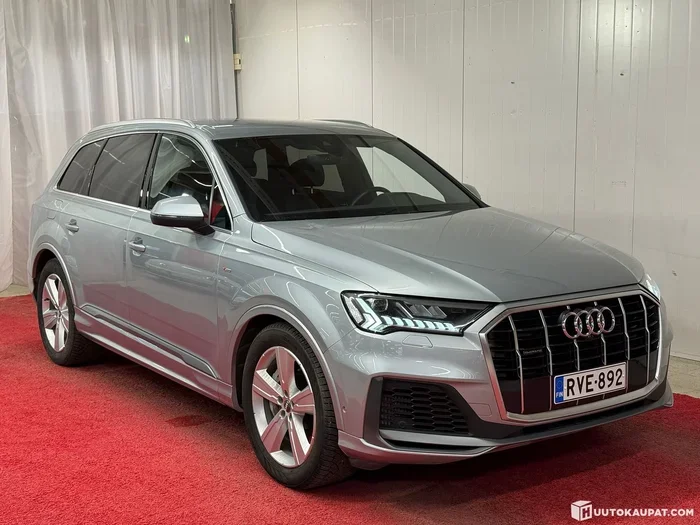
The IRS does not care what brand or model you drive. What matters is the vehicle classification. The Audi Q7 is a three-row luxury SUV, and its classification determines how much you can deduct under Section 179.
SUV vs. Sedan: Why Classification Matters
The IRS classifies vehicles into two main categories for tax deduction purposes: passenger cars and SUVs, trucks, and vans. Passenger cars have lower deduction limits, while SUVs and similar vehicles have higher limits.
The Audi Q7 typically falls into the SUV category because of its size and weight. The IRS looks at the Gross Vehicle Weight Rating (GVWR) to make this determination. If the GVWR exceeds 6,000 pounds, the vehicle qualifies as an SUV for tax purposes, which opens up higher deduction limits.
Here is a quick comparison of how the IRS treats different vehicle types:
- Passenger cars (GVWR under 6,000 lbs): The Section 179 SUV cap limits the deduction to around $31,600 for 2024.
- SUVs, trucks, and vans (GVWR over 6,000 lbs): These vehicles qualify for the higher SUV deduction limit, which can be significantly more.
- Heavy trucks and equipment: These may qualify for the full Section 179 deduction with fewer restrictions.
Audi Q7 Specifications and Weight Class
The Audi Q7 is a large luxury SUV. Depending on the model year and configuration, its GVWR typically falls around 6,000 pounds or slightly above. This is the critical threshold that determines whether the Audi Q7 qualifies for the higher SUV deduction limits.
You should always check the exact GVWR listed on the vehicle window sticker or in the owner manual. The curb weight and the GVWR are different numbers. The GVWR includes the maximum load capacity, including passengers and cargo.
For example, the 2024 Audi Q7 has a GVWR that places it in the SUV category for IRS purposes. This means it is treated differently from a luxury sedan like the Audi A8, which would face much stricter deduction limits.
Can You Deduct the Full Price of an Audi Q7?
This is the question most business owners want answered. The short answer is that you may not be able to deduct the full purchase price, but you can deduct a significant portion.
The SUV Cap Under Section 179
Even though the Audi Q7 qualifies as an SUV, the IRS still imposes a cap on how much you can deduct for any single vehicle. For 2024, the SUV section 179 limit is $31,600. This cap applies regardless of the vehicle price.
If you buy an Audi Q7 for $75,000, you can deduct $31,600 under Section 179 for the first year. The remaining cost is recovered through regular depreciation over several years. This is still a substantial tax benefit compared to the passenger car cap, which is much lower.
Here is a simple breakdown of how this works in practice:
- Audi Q7 purchase price: $75,000
- Section 179 SUV deduction: $31,600
- Remaining amount to depreciate: $43,400
- First-year total deduction (with bonus depreciation): Potentially much higher
Bonus Depreciation: Stacking Deductions for Greater Savings
Bonus depreciation is another tool that can help you maximize your tax savings. Under current law, you can deduct 60% of the remaining cost of a qualifying vehicle in the first year, after applying the Section 179 deduction.
This means you can combine the Section 179 deduction with bonus depreciation to reduce your taxable income even more. For the Audi Q7 example above, after taking the $31,600 Section 179 deduction, you could potentially deduct an additional 60% of the remaining $43,400 in the first year.
Bonus depreciation is scheduled to phase down in future years, so acting sooner can save you more money. This is an important consideration for business owners planning a vehicle purchase.
Business Use Percentage: The Most Important Factor
The IRS requires that you use the vehicle primarily for business to claim the Section 179 deduction. Business use percentage is the single most important factor in determining whether you qualify and how much you can deduct.
What Counts as Business Use?
Business use includes any driving related to your trade or profession. This covers trips to client meetings, visits to suppliers, commuting between job sites, and running business errands. Personal commuting between your home and your regular workplace does not count as business use.
Here are some common examples of qualifying business use for an Audi Q7:
- Driving to meet with clients or customers
- Traveling between multiple job sites or offices
- Transporting equipment or supplies for business purposes
- Visiting vendors or attending industry events
- Making deliveries if you run a service-based business
How to Track Your Business Use
The IRS requires solid documentation to support your business use percentage claim. A simple mileage log is the most effective way to track this. Record the date, destination, purpose, and miles driven for every trip.
Many business owners use apps or spreadsheets to maintain their mileage logs. Whatever method you choose, be consistent and thorough. If you are ever audited, your records will be the evidence that supports your deduction.
A good rule of thumb is to aim for at least 50% business use to qualify for the Section 179 deduction. The higher your business use percentage, the larger your deduction will be.
Common Mistakes Business Owners Make with Vehicle Deductions
Claiming a vehicle deduction seems straightforward, but many business owners make avoidable mistakes that can trigger IRS audits or reduce their savings.
Failing to Separate Business and Personal Use
The biggest mistake is mixing business and personal use without keeping proper records. If you use the Audi Q7 for both business and personal trips, you must allocate the deduction proportionally. Claiming 100% deduction when the vehicle is also used for personal errands is a red flag for the IRS.
Ignoring the SUV Weight Classification
Some business owners assume any large SUV automatically qualifies for the higher deduction limits. This is not always true. You need to verify the GVWR on the vehicle, not just the size or appearance of the SUV. A vehicle that looks big but has a GVWR under 6,000 pounds will be classified as a passenger car.
Not Consulting a Tax Professional
Tax laws change every year, and the rules around Section 179 and vehicle deductions are complex. Many business owners try to handle their taxes without professional help and miss out on deductions they are entitled to. A qualified CPA or tax advisor can help you navigate the rules and maximize your savings.
Overlooking State-Level Deductions
Section 179 is a federal deduction, but many states also offer vehicle deduction incentives. Your state may have its own limits and rules that differ from the federal guidelines. Checking your state tax code can uncover additional savings opportunities.
How to Claim Section 179 for Your Audi Q7
If you have determined that your Audi Q7 qualifies and you are ready to claim the deduction, the process is relatively straightforward. Here is a step-by-step guide.
Step 1: Confirm Business Use Percentage
Calculate your business use percentage based on your mileage log. Make sure it exceeds 50% to qualify for the Section 179 deduction.
Step 2: Gather Your Purchase Documentation
Keep the purchase contract, title, registration, and window sticker. These documents provide the vehicle specifications, including the GVWR, that the IRS needs to verify your classification.
Step 3: Complete Form 4562
Form 4562 is the IRS form used to claim Section 179 deductions and depreciation. Fill out the vehicle section carefully, entering the purchase price, the Section 179 deduction amount, and the business use percentage.
Step 4: Attach Supporting Documentation
Attach your mileage log and any other supporting documents to your tax return. While you do not need to send these with your return, you should keep them for at least three years in case of an audit.
Step 5: Consult a Tax Professional
Even if you handle your own taxes, a quick consultation with a CPA can help ensure you are not missing any opportunities. The cost of a tax advisor is often far less than the additional deductions they can help you uncover.
Expert Insights on Vehicle Tax Deductions
Tax professionals who specialize in small business deductions often see the same patterns when it comes to luxury SUV write-offs. The Audi Q7 sits in a sweet spot for business owners because it combines luxury appeal with a weight class that qualifies for better deduction treatment.
One tax advisor shared this insight: “The Section 179 SUV cap has been a game-changer for many of my clients who drive luxury vehicles for business. The Audi Q7, with its higher GVWR, often qualifies for the full SUV deduction limit, which can save thousands in the first year.”
Another expert emphasized the importance of timing: “If you are planning a business vehicle purchase, consider buying before the end of the tax year. Placing the vehicle in service before December 31st ensures you can claim the deduction for that tax year.”
The key takeaway is that the Audi Q7 Section 179 eligibility is real, but it requires careful planning and documentation. The vehicle classification, business use percentage, and IRS limits all play a role in determining your final deduction amount.
Final Thoughts on the Audi Q7 and Section 179
The Audi Q7 is a premium luxury SUV that offers comfort, performance, and style. But for business owners, it can also serve as a powerful tax savings vehicle. When you understand the Section 179 rules and how the IRS classifies the Audi Q7, you can take advantage of deductions that make the purchase more affordable from a tax perspective.
The combination of the Section 179 deduction, bonus depreciation, and proper business use tracking can result in significant tax savings in the first year of ownership. Just remember to keep your records, verify the vehicle classification, and consult a tax professional if you have any doubts.
Whether you use the Audi Q7 to impress clients or to haul equipment across state lines, the tax benefits are real and achievable. The key is to approach the deduction strategically and with full transparency. That way, you get to enjoy your luxury SUV while keeping more money in your business bank account.
Take the time to understand the rules, do your homework, and make the most of every deduction available to you. Your Audi Q7 is not just a status symbol. With the right approach, it is also a smart business investment that pays dividends on your tax return.
Frequently Asked Questions
Can I deduct the full purchase price of an Audi Q7 under Section 179?
Not necessarily. The Section 179 SUV cap for 2024 is $31,600 for vehicles that qualify as SUVs. You can deduct this amount in the first year, and the remaining cost is recovered through depreciation over time. However, if your business use percentage is below 100%, the deduction is reduced proportionally.
What is the gross vehicle weight rating and why does it matter?
The GVWR is the maximum weight a vehicle can safely carry, including its own weight, passengers, and cargo. The IRS uses the GVWR to classify vehicles for tax deduction purposes. If the Audi Q7 has a GVWR over 6,000 pounds, it qualifies as an SUV with higher deduction limits than a standard passenger car.
How do I prove my business use percentage for the Audi Q7?
You need to maintain a detailed mileage log that records every trip, including the date, destination, purpose, and miles driven. Apps like MileIQ or QuickBooks Self-Employed can simplify this process. The IRS expects clear and consistent documentation to support your claimed business use percentage.
Does bonus depreciation apply to the Audi Q7?
Yes. Bonus depreciation allows you to deduct a large percentage of the remaining vehicle cost in the first year, after applying the Section 179 deduction. For 2024, the bonus depreciation rate is 60%. This can significantly increase your first-year tax savings on the Audi Q7 purchase.
What happens if I use the Audi Q7 for personal use only?
If the vehicle is used 100% for personal purposes, you cannot claim the Section 179 deduction. The deduction requires more than 50% business use. If your use shifts from business to personal after the purchase, you may need to adjust your deductions accordingly.
Should I consult a tax professional before claiming this deduction?
Absolutely. Tax laws are complex and change frequently. A qualified CPA or tax advisor can review your specific situation, verify the Audi Q7 eligibility, and ensure you are maximizing every available deduction while staying compliant with IRS rules.
=== CONCLUSION ===
The Audi Q7 is a fantastic vehicle that can also serve as a valuable business asset. When you understand how Section 179 works and whether the Audi Q7 qualifies, you open the door to meaningful tax savings. The SUV classification, combined with the right business use percentage and proper documentation, can make a real difference in your tax bill.
Remember that the Section 179 deduction is not automatic. You need to take deliberate steps to track your business use, keep your purchase documentation, and file the correct forms. The effort you put in during the first year pays off through lower taxes and better financial clarity for your business.
Take action today. Review your Audi Q7 specifications, calculate your business use percentage, and talk to a tax professional about your Section 179 deduction strategy. The sooner you plan, the more you save.