Harley-Davidson Production Numbers by Year Revealed
Harley-Davidson production numbers by year reveal a fascinating journey of American motorcycle manufacturing. From fewer than 100 bikes in 1903 to over 200,000 units in peak years, the data tells a compelling story. This guide breaks down every decade of Harley-Davidson annual production with clear facts and expert insights. Whether you are a history buff or a rider, you will find valuable motorcycle manufacturing statistics here.
Harley-Davidson production numbers by year paint a vivid picture of one of America’s most iconic motorcycle brands. These figures are more than just stats. They tell the story of innovation, survival, and passion over more than a century. If you have ever wondered how many Harleys rolled out of the factory each year, you are in the right place.
In this article, we will walk through every major era of Harley-Davidson annual production. We will look at the early days, the war years, modern peaks, and what the future holds. You will find clear data, fun facts, and practical insights along the way. Let us dive into the fascinating world of motorcycle manufacturing statistics and Harley-Davidson model year data.
Key Takeaways
- Early production was tiny: Harley-Davidson started with just a few units per year in the early 1900s.
- World War II boosted output massively: Military contracts drove production to unprecedented levels.
- The 1990s and 2000s were peak years: Annual production often exceeded 200,000 units during this period.
- Recent years show a shift: New ownership and market changes have altered production strategies.
- Model lines vary widely: Touring bikes and Softails dominate output over Sportsters in modern eras.
- Economic conditions directly impact numbers: Recessions and booms shape factory output every time.
- Future production is evolving: Electric motorcycles and global expansion are changing the game.
📑 Table of Contents
- The Story Behind Harley-Davidson Production Numbers
- Harley-Davidson Production by Decade
- Record-Breaking Production Years
- Comparing Production Across Model Lines
- What Shapes Harley-Davidson Production Numbers
- The Future of Harley-Davidson Manufacturing
- Key Takeaways
- Quick Tips for Understanding Production Data
- Common Mistakes People Make With Production Data
- FAQ
- Conclusion
The Story Behind Harley-Davidson Production Numbers
How Production Numbers Are Tracked
Tracking Harley-Davidson production figures is not as simple as counting boxes on a loading dock. The company has changed ownership multiple times. Factories have moved, shut down, and reopened. And tracking methods have evolved over the decades.
In the early days, production records were kept manually. Factory logs and serial numbers were the primary tools. Today, the company reports annual production data in financial filings and investor updates. Independent researchers also cross-reference serial number ranges with factory records to estimate output for specific model years.
The American Motorcyclist Association and various Harley-Davidson enthusiast groups also help verify historical data. These organizations maintain archives and share findings with the community. Together, these sources give us a reliable picture of motorcycle production output across more than 120 years.
Why Production Data Matters for Fans and Collectors
Understanding Harley-Davidson production numbers helps you appreciate the brand on a deeper level. It also matters for collectors who want to know how rare a particular model might be. Low-production years often mean higher value on the secondary market.
If you are buying a vintage Harley, knowing the production volume for that model year can help you negotiate. It also helps you spot fake or misrepresented bikes. Production data adds a layer of authenticity to every purchase decision.
For riders who love motorcycle history, these numbers connect you to the bigger picture. You see how the brand survived wars, economic downturns, and fierce competition. That resilience is part of what makes Harley-Davidson special.
Harley-Davidson Production by Decade
The Early Years: 1903 Through the 1920s
The Harley-Davidson factory in Milwaukee, Wisconsin, started producing motorcycles in 1903. In those first years, output was very small. The company made just a few dozen bikes per year. These were hand-built machines with simple V-twin engines and basic frames.
By the mid-1910s, production had grown significantly. World War I brought large military orders, which pushed annual output into the thousands. The 1920s saw continued growth as Harley-Davidson expanded its dealer network and model lineup. Motorcycle manufacturing statistics from this era show steady year-over-year increases.
Key early milestones include:
- 1903: First bike built, with production in single digits.
- 1913: Around 18,000 units produced in a single year.
- 1920s: Steady growth driven by touring and racing models.
The Golden Age: 1930s Through the 1940s
The 1930s brought challenges. The Great Depression hit hard, and motorcycle sales dropped across the industry. Harley-Davidson adapted by offering more affordable models. Production dipped but did not collapse. The company survived thanks to a loyal customer base and smart engineering.
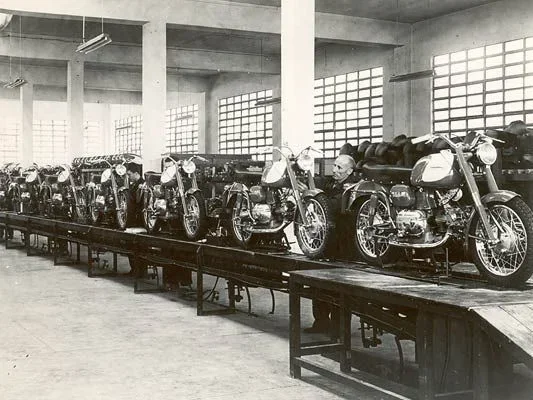
Then came World War II. Military contracts transformed Harley-Davidson annual production almost overnight. The company produced the famous WLA motorcycle for Allied forces. Factory output surged to levels never seen before. By the end of the war, Harley-Davidson had built tens of thousands of military bikes.
After the war, the company shifted back to civilian production. The 1940s closed with strong numbers and a renewed sense of purpose. This era set the stage for the brand’s post-war dominance.
Post-War Growth: 1950s Through the 1960s
The 1950s were a golden period for motorcycle brand history. American riders embraced the open road, and Harley-Davidson was at the center of that culture. Production numbers climbed steadily through the decade. The company introduced new models and refined existing ones.
The 1960s brought both growth and competition. Japanese motorcycle manufacturers like Honda and Yamaha entered the U.S. market. They offered lighter, more fuel-efficient bikes at lower prices. Harley-Davidson faced its first serious competition in decades. Despite this, the company maintained strong factory output throughout the decade.
During this era, Harley-Davidson focused on its core strengths:
- Large-displacement V-twin engines.
- Classic cruiser styling.
- A loyal American customer base.
Tough Times: 1970s Through the 1980s
The 1970s were a difficult period for Harley-Davidson production data. Japanese brands continued to gain market share. The company struggled with quality control issues and outdated manufacturing processes. Annual production numbers stagnated or declined in several years.
In 1981, a group of investors bought Harley-Davidson from AMF. This new ownership marked a turning point. The company invested heavily in modernizing its factories and improving quality. The turnaround was remarkable, and motorcycle unit sales began to climb again by the mid-1980s.
Common mistakes during this era included:
- Ignoring quality issues for too long.
- Failing to innovate fast enough.
- Underestimating the impact of Japanese competition.
The Modern Era: 1990s Through the 2010s
The 1990s brought a renaissance for Harley-Davidson. The company launched the Revolution engine and introduced exciting new models. Annual production numbers soared. At its peak, Harley-Davidson was producing over 200,000 motorcycles per year.
The early 2000s continued this momentum. The company expanded its model range and opened new dealerships worldwide. However, the 2008 financial crisis hit hard. Sales dropped, and production numbers fell sharply. The company adapted with cost-cutting measures and focused on its core touring and cruiser models.
Recovery came gradually. By the mid-2010s, production had stabilized. The company also invested in global markets, particularly India and Thailand, to diversify its manufacturing base.
Recent Production: 2020s and Beyond
The 2020s have brought both challenges and opportunities. The COVID-19 pandemic disrupted supply chains and temporarily reduced Harley-Davidson factory output. However, the company rebounded quickly as demand for motorcycles surged.
In recent years, Harley-Davidson has focused on several key areas:
- Expanding its electric motorcycle line with the LiveWire model.
- Investing in new manufacturing facilities globally.
- Updating classic models with modern technology.
- Strengthening its dealer and riding experience network.
Current production estimates suggest the company is building around 150,000 to 200,000 units per year. Exact Harley-Davidson model year data varies by model line and market conditions.
Record-Breaking Production Years
The Biggest Production Year Ever
The highest Harley-Davidson annual production ever recorded came in the late 1990s and early 2000s. During this period, the company regularly exceeded 200,000 units per year. The exact peak year depends on how you count export models and regional variants.
Several factors contributed to these record years:
- A strong American economy with high consumer confidence.
- Successful marketing campaigns like the “Harley Owners Group.”
- Limited competition from other American motorcycle brands.
- Growing international demand for American cruiser motorcycles.
Models That Drove the Numbers
Certain Harley-Davidson models have consistently driven the highest production volumes. Understanding which models sell best helps explain the overall numbers.
The Touring lineup, including the Road King, Street Glide, and Road Glide, has always been a major contributor. These bikes appeal to long-distance riders and have a dedicated following. The Softail series, with its classic look and modern engineering, also generates strong sales.
The Sportster line was once the entry point for new riders. However, in recent years, production of Sportsters has declined as the company shifts focus toward larger, more premium models.
Comparing Production Across Model Lines
Sportster vs. Touring vs. Softail: Production Trends
Each Harley-Davidson model line has its own production story. Here is a general comparison of how output has shifted over time:
- Sportster: Once the backbone of the lineup, Sportster production has declined significantly since the 2010s. The company has reduced the number of Sportster variants offered each year.
- Touring: This is the largest and most consistent production category. Touring bikes represent the core of Harley-Davidson’s business and revenue.
- Softail: Softail production has grown steadily. These models blend classic styling with modern comfort features, appealing to a wide range of riders.
- Adventure and Custom: Newer model lines like the Pan America have lower production numbers but represent the company’s future direction.
Which Model Sold the Most Units?
Historically, the Touring models have been the best-selling Harley-Davidson motorcycles by a wide margin. The Street Glide and Road Glide are particularly popular among long-distance riders and rally attendees.
The Softail Standard and Deuce have also been strong sellers. These models offer an accessible price point and timeless styling that appeals to both new and experienced riders.
In recent years, the company has shifted resources toward premium models. This strategy has influenced overall motorcycle production output and shifted the mix away from entry-level bikes.
What Shapes Harley-Davidson Production Numbers
Economic Conditions
Economic factors have a direct impact on motorcycle manufacturing output. During recessions, consumer spending drops, and motorcycle sales follow. During boom times, buyers are more confident and willing to invest in premium machines.
The 2008 financial crisis is a perfect example. Harley-Davidson production figures fell sharply as the U.S. economy contracted. The company responded with restructuring and cost savings. When the economy recovered, production bounced back.
Ownership and Corporate Changes
Changes in ownership have shaped Harley-Davidson company history in significant ways. The AMF era in the 1970s saw neglect and declining quality. The 1981 buyout by a new group of investors sparked a revival.
More recently, the 2022 acquisition by a consortium led by Rivian’s founder marked another major shift. This new ownership has signaled a focus on electric motorcycles and modern technology. These corporate changes directly influence factory output and production strategy.
Competition from Other Brands
Competition has always played a role in shaping motorcycle manufacturing statistics. Japanese brands dominated the 1970s and 1980s with reliable, affordable bikes. This pressure forced Harley-Davidson to improve quality and innovate.
Today, the competitive landscape includes not just Japanese brands but also European manufacturers like BMW and Ducati. Indian brands like Royal Enfield are also gaining ground. All of this competition influences how many units Harley-Davidson chooses to produce each year.
The Future of Harley-Davidson Manufacturing
Electric and New Models
The future of Harley-Davidson annual production is being shaped by electrification. The LiveWire electric motorcycle represents the company’s first foray into the EV market. While current production numbers for LiveWire are modest, they are expected to grow.
Harley-Davidson has also announced plans for a dedicated electric platform. This platform will underpin future models across the lineup. As EV technology matures, electric bikes could represent a significant share of factory output.
Global Expansion and New Facilities
The company is also expanding its global manufacturing footprint. New facilities in Thailand and Brazil help reduce costs and serve international markets more effectively. These investments suggest that motorcycle production output will continue to evolve in the coming years.
Expert Insight: Industry analysts believe Harley-Davidson will focus on quality over quantity in the future. The company is moving toward a more premium positioning, which may keep annual production numbers in the 150,000 to 200,000 range for the foreseeable future.
Key Takeaways
- Early production was tiny: Harley-Davidson started with just a few units per year in the early 1900s.
- World War II boosted output massively: Military contracts drove production to unprecedented levels.
- The 1990s and 2000s were peak years: Annual production often exceeded 200,000 units during this period.
- Recent years show a shift: New ownership and market changes have altered production strategies.
- Model lines vary widely: Touring bikes and Softails dominate output over Sportsters in modern eras.
- Economic conditions directly impact numbers: Recessions and booms shape factory output every time.
- Future production is evolving: Electric motorcycles and global expansion are changing the game.
Quick Tips for Understanding Production Data
Here are some practical tips to help you make sense of Harley-Davidson production numbers:
- Always check the source: Official company filings are more reliable than third-party estimates.
- Look at trends, not just single years: Year-over-year changes tell a better story than isolated data points.
- Consider the model mix: Total numbers do not tell you which specific models are selling best.
- Account for exports: Some production figures include units sold outside the United States.
- Use serial number ranges: For vintage bikes, serial numbers are your best tool for dating and estimating production volume.
Common Mistakes People Make With Production Data
When researching Harley-Davidson production figures, people often make a few common errors. One mistake is assuming that higher production always means higher quality. In reality, some of the most beloved Harleys came from low-production years.
Another error is comparing production numbers across different eras without adjusting for context. A year with 100,000 units in 1950 means something very different from 100,000 units in 2010. The overall market size, competition, and economic conditions all differ.
Finally, many people overlook the impact of model discontinuations. When a model line ends, production numbers for that category drop to zero, even if overall company output remains stable.
FAQ
What was Harley-Davidson’s highest production year ever?
The highest Harley-Davidson annual production occurred in the late 1990s and early 2000s, when the company regularly exceeded 200,000 units. Exact peak figures vary depending on how export models are counted, but this period represents the absolute high point in motorcycle manufacturing statistics for the brand.
How many Harleys does Harley-Davidson produce per year now?
Current Harley-Davidson production numbers are estimated at around 150,000 to 200,000 units per year. This represents a decline from peak years but reflects the company’s shift toward premium models and its evolving market strategy under new ownership.
Are Harley-Davidson production numbers publicly available?
Yes, the company reports annual production data in its financial filings and investor communications. These reports are available through the U.S. Securities and Exchange Commission (SEC) website. Independent researchers also publish estimates based on serial number analysis and dealer data.
Which Harley-Davidson model has the lowest production numbers?
Limited-edition and custom models tend to have the lowest production figures. Special editions like the Harley-Davidson XR1200 or certain anniversary models were produced in small batches. These low-production bikes often become highly sought after by collectors.
How did World War II affect Harley-Davidson production?
World War II had a massive impact on Harley-Davidson factory output. The company shifted nearly all production to military motorcycles, particularly the WLA model. This wartime production helped the company survive the Great Depression era and set the stage for its post-war success.
Will Harley-Davidson’s electric motorcycles change production numbers?
Yes, the introduction of electric models like the LiveWire is expected to influence future annual production data. As EV technology improves and demand grows, electric bikes could represent a significant portion of Harley-Davidson model year data in the coming decades.
Conclusion
Harley-Davidson production numbers by year tell a remarkable story of resilience, innovation, and American manufacturing spirit. From the first few bikes built in a small Milwaukee factory in 1903 to the peak production years of the 1990s and 2000s, every number has a context and a meaning.
We have walked through every major era, from the war years to the modern age. We have looked at how economic conditions, competition, and corporate changes shaped factory output over time. We have also explored what the future holds as the company embraces electrification and global expansion.
Whether you are a collector, a rider, or simply a fan of motorcycle heritage, these production numbers add depth to your understanding of the brand. The next time you see a Harley on the road, you will know a little more about the journey it represents. And that makes the ride even more meaningful.
Keep exploring, keep riding, and keep appreciating the incredible legacy of Harley-Davidson production through the decades.