How Many Man-Hours Does It Take to Build a Car – Full Breakdown
Building a car requires thousands of man-hours across multiple stages, from stamping parts to final inspection. On average, a modern car assembly line needs about 19 to 35 labor hours per vehicle, depending on the model and factory. This guide breaks down exactly where those hours go and what affects production time.
Key Takeaways
- Average Build Time: A typical mass-produced car needs 19 to 35 man-hours on the assembly line.
- Vehicle Type Matters: SUVs and luxury models take more hours than compact cars.
- Hand-Built Cars: A bespoke hand-built vehicle can require 3,000 to 5,000 man-hours.
- Automation Helps: Robots reduce manual labor but increase setup and programming hours.
- Supply Chain Delays: Parts shortages can add hours to the production schedule.
- Future Trends: Electric vehicles and new battery tech are shifting labor needs.
📑 Table of Contents
What Are Man-Hours in Car Manufacturing?
A man-hour is a unit that measures how much work one person completes in one hour. In car factories, it tracks the total labor needed to build a single vehicle. This number includes every task from moving parts to tightening bolts. It does not count machine time alone. Only human effort counts toward man-hours.
Manufacturers use labor hours to plan shifts, set budgets, and improve efficiency. A production line supervisor watches these numbers closely. If a task takes too many hours, the team finds ways to speed it up. This tracking helps keep vehicle manufacturing costs down.
Here is what counts as a man-hour:
- Assembling doors and windows
- Welding body panels
- Painting and drying time (when workers handle it)
- Installing the engine and transmission
- Quality checks and final testing
Quick Tip: Many factories use digital timers to log each worker’s tasks. This gives an accurate production time per car.
How Many Man-Hours Does It Take to Build a Car?
The short answer is it depends. A small economy car takes fewer hours than a large luxury SUV. On average, a mass-produced sedan needs about 19 to 35 man-hours. A compact crossover might sit at 25 hours. A full-size pickup truck can push past 35 hours. These numbers come from modern car assembly plants that use both robots and human workers.
Let us look at a typical breakdown for a popular midsize sedan:
- Stamping and body shop: 4 man-hours
- Welding and bonding: 3 man-hours
- Painting and curing: 5 man-hours
- Final assembly (engine, interior, electronics): 12 man-hours
- Quality control and road testing: 3 man-hours
That adds up to about 27 man-hours. Of course, this varies by factory speed and model complexity.
Comparison Table: Average Man-Hours by Vehicle Type
- Compact car (e.g., Honda Civic): 19–22 man-hours
- Midsize sedan (e.g., Toyota Camry): 25–28 man-hours
- SUV (e.g., Ford Explorer): 30–35 man-hours
- Luxury sedan (e.g., BMW 5 Series): 35–40 man-hours
- Hand-built sports car (e.g., McLaren): 3,000–5,000 man-hours
Expert Insight: According to automotive engineers, the biggest variable is customization. A base model rolls off the line faster than a fully loaded version with every option selected.
Key Takeaway: The more complex the vehicle, the more man-hours it demands. Factory teams plan for this by setting standard time goals for each model.
The Assembly Line Process: Where the Hours Go
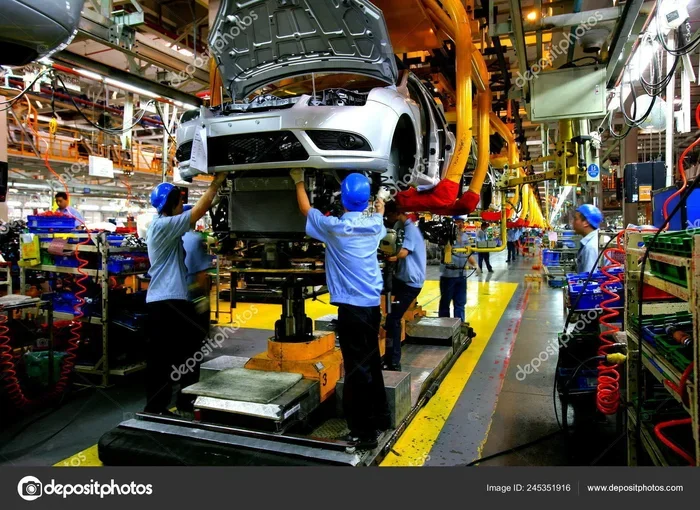
A car does not get built in one spot. It moves through many stations. Each station adds a slice of the total production time. Let us walk through the main stages.
1. Stamping and Body Shop
Large steel sheets get pressed into car parts like doors, hoods, and roofs. Workers load and unload presses. Robots handle most heavy stamping now. Still, human hourly workers oversee quality. This stage uses about 4 to 6 man-hours per vehicle.
2. Welding and Bonding
Robots weld the body shell together with amazing speed. Humans then check the welds for strength. They also apply adhesive bonds. This step adds roughly 3 man-hours. A strong body is the foundation of a safe car.
3. Painting and Curing
Cars dip into paint booths. Robots spray the primer, base coat, and clear coat. Workers clean booths and prep cars between runs. The curing ovens do the drying. Human labor here focuses on inspection and touch-ups. Painting takes about 5 man-hours.
4. Final Assembly
This is the longest phase. Workers install the engine, transmission, seats, dashboard, and wiring. They fit the tires and load the battery. Every bolt gets tightened to exact specs. Final assembly can take 10 to 15 man-hours.
5. Quality Control and Testing
Each car goes through a final check. Technicians scan for defects. They test the brakes, lights, and engine on a short track. This ensures every vehicle meets safety standards. Quality control adds about 3 man-hours.
Common Mistake: People often think robots do all the work. In reality, humans still handle the most delicate and complex tasks, especially in final assembly.
Factors That Change Build Time
Not every car takes the same hours to build. Several factors shift the production time up or down.
Vehicle Complexity and Options
A base model with few features builds quickly. A fully loaded model with leather seats, advanced tech, and all-wheel drive takes more time. Each added option means extra steps. Workers must install special parts and run extra checks.
Factory Location and Setup
A factory in a high-wage country may use more automation to save labor hours. A plant in a region with lower labor costs might rely more on manual work. The supply chain also matters. If parts arrive late, workers wait, which adds idle hours to the schedule.
Level of Automation
Robots speed up repetitive tasks like welding and painting. But they need setup, programming, and maintenance. Lean manufacturing aims to balance human and robot work. The goal is to cut waste and keep production efficiency high.
New Technology Shifts
Electric vehicles (EVs) have fewer moving parts than gas cars. That could reduce assembly hours. However, battery pack installation is heavy and complex. It adds new labor steps. The automotive manufacturing landscape is always changing.
Quick Tip: If you want to reduce build time, focus on the supply chain. A smooth flow of parts keeps workers busy and cuts waiting time.
Hand-Built vs. Mass-Produced Cars
The difference between a hand-built car and a factory car is huge. A mass-produced vehicle follows a tight schedule. A hand-built car gets crafted with extreme care. This changes the man-hours completely.
For example, a Rolls-Royce or Bentley may take 3,000 to 5,000 labor hours to complete. Skilled craftspeople hand-stitch leather, polish metal, and align every panel by sight. They do not race against a clock. Each car becomes a unique piece of art.
On the other hand, a Toyota Corolla rolls off the line in under 30 man-hours. The factory uses mass production methods to keep build time low. Both approaches have value. One makes cars affordable. The other makes them into luxury treasures.
Comparison Table: Hand-Built vs. Mass-Produced
- Hand-built luxury car: 3,000–5,000 man-hours, 6–12 months to complete
- Mass-produced sedan: 19–35 man-hours, 2–3 days on the line
- Hand-built sports car (e.g., Ferrari): 2,000–4,000 man-hours
- Mass-produced SUV: 30–40 man-hours
Expert Insight: Even in hand-built shops, modern tools like CAD software help speed up design. Yet the final assembly remains a deeply human craft.
The Future of Car Manufacturing Labor
What will car manufacturing look like in ten years? Automation and robotics will play an even bigger role. Electric vehicles need new skills, like battery module installation. Workers will need training in high-tech systems.
Some factories already use AI to predict production time delays. Machines can adjust their speed based on real-time data. This boosts production efficiency. Yet humans remain essential for problem-solving and final quality checks.
Key Takeaway: The number of man-hours per car will likely drop as automation grows. But the nature of the work will shift from physical labor to technical oversight.
Understanding how many man-hours it takes to build a car helps us appreciate the effort behind every vehicle. Next time you see a car on the road, remember the thousands of hours that went into making it.
Conclusion
So, how many man-hours does it take to build a car? For most factory-built vehicles, the answer is between 19 and 40 man-hours. For hand-built masterpieces, it can be thousands. The car assembly process is a mix of human skill and machine power. Many factors like vehicle type, factory setup, and automation level shape the final number.
Whether it is a compact car or a luxury SUV, every vehicle represents real labor and expertise. By tracking labor hours and improving production time, manufacturers keep getting faster and more efficient. The future of automotive manufacturing will bring even more changes. But the core idea remains the same: people build cars, one hour at a time.
Now you know the real effort behind every vehicle. Share this article with a car enthusiast who loves to dig into the details of vehicle manufacturing.
Frequently Asked Questions
How many man-hours does it take to build a car on average?
A mass-produced car typically takes 19 to 35 man-hours. Luxury models and SUVs may reach 40 hours. Hand-built vehicles can require thousands of hours. The exact number depends on the model, factory, and level of automation.
What is the difference between man-hours and labor hours?
The terms are often used interchangeably. Both measure the total human effort spent on a task. In car manufacturing, they refer to the hours workers spend assembling, welding, painting, and inspecting a vehicle.
Do robots reduce man-hours in car factories?
Yes, robots handle repetitive tasks like welding and painting, which cuts manual labor hours. However, they add setup and programming time. The overall production time still drops with smart automation.
How long does it take to build a hand-built car?
A hand-built luxury or sports car can take 3,000 to 5,000 man-hours. Skilled craftsmen work on each car for months. The result is a highly customized vehicle with extreme attention to detail.
Does building an electric vehicle take fewer man-hours?
EVs have fewer moving parts, which can reduce assembly time. But battery installation is complex and heavy. Overall, the man-hour difference between an EV and a gas car is still small and depends on the factory process.
What factors most affect the build time of a car?
The biggest factors are vehicle complexity, number of options, factory automation level, and supply chain reliability. A base model builds faster than a fully loaded one. Smooth parts delivery keeps the line moving.