How to Reset Loss of Tire Pressure in Audi Vehicles
Resetting the loss of tire pressure warning in your Audi is simple once you know the right steps. This guide walks you through the TPMS reset process for popular Audi models like the A4, A6, and Q5. We cover the common causes, the tools you need, and expert tips to prevent the warning from coming back.
If you are driving your Audi and suddenly see that little horseshoe-shaped warning light glow on your dashboard, you are not alone. The loss of tire pressure warning is one of the most common alerts drivers face. It can pop up out of nowhere, especially during seasonal temperature drops. But here is the good news: resetting it is usually quick and easy.
This guide will show you exactly how to reset the tire pressure light in Audi vehicles. We will cover the reasons the light comes on, the tools you need, and the step-by-step process for different Audi models. Whether you drive an Audi A4, A6, Q5, or another model, you will find practical advice here. Let us get your tires back to the right pressure and that annoying light off your dashboard.
Key Takeaways
- Quick Reset: Most Audi models let you reset the tire pressure light through the dashboard menu in under five minutes.
- Check First: Always verify your tire pressure with a gauge before resetting the warning light.
- Common Causes: Temperature changes, slow leaks, and faulty sensors are the top reasons the light appears.
- Safety Matters: Driving with low tire pressure reduces fuel efficiency and increases the risk of a blowout.
- Battery Tip: Disconnecting the battery can reset codes, but it is not always the best first step for Audi models.
- Prevention: Regular tire checks and seasonal adjustments keep the TPMS light from triggering.
📑 Table of Contents
- Understanding the Tire Pressure Warning in Audi Vehicles
- How to Reset Loss of Tire Pressure in Audi Vehicles
- Common Causes of Tire Pressure Loss in Audi Cars
- Tools and Equipment You Will Need
- How to Prevent Future Tire Pressure Alerts
- When to See a Professional Mechanic
- Comparing DIY Reset vs. Professional Reset
- Key Takeaways
- Conclusion
Understanding the Tire Pressure Warning in Audi Vehicles
The tire pressure monitoring system, or TPMS, is a smart feature in your Audi. It uses sensors inside each tire to track the air pressure. When the pressure drops below the recommended level, the system triggers a warning on your dashboard. This is your car telling you something needs attention.
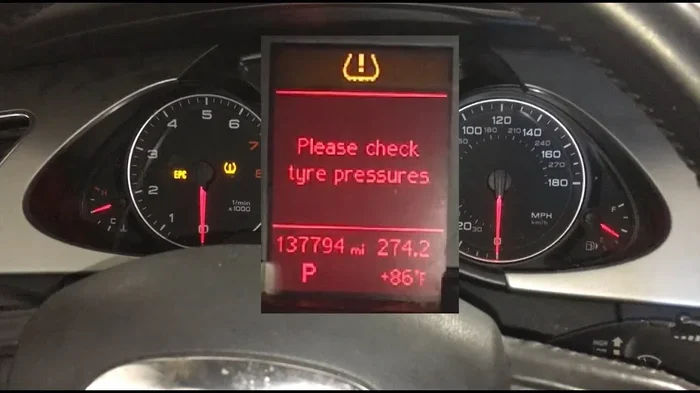
Most Audi models display the warning as a flat tire icon with an exclamation mark. Sometimes it shows as a text message on the digital display. The light may flash once and then stay solid, or it may blink repeatedly. Each pattern can mean something slightly different.
Why Does the Tire Pressure Light Come On?
Several things can cause the tire pressure warning to activate. Understanding the root cause helps you fix the problem correctly.
- Temperature Changes: Cold weather causes air inside tires to contract. A drop of 10 degrees Fahrenheit can lower pressure by about 1 PSI.
- Slow Leaks: A small puncture or a worn valve stem can let air out slowly over days or weeks.
- Faulty TPMS Sensor: The sensor itself may malfunction or have a dead battery.
- Recent Tire Work: Rotating tires or changing them can sometimes trigger a false alert.
- Altitude Changes: Driving at high altitudes can temporarily affect tire pressure readings.
Before you reset the light, make sure you address the actual problem. Resetting without fixing the cause will only bring the light back. Use a reliable tire pressure gauge to check each tire. You can find these at any auto parts store for under fifteen dollars.
How to Reset Loss of Tire Pressure in Audi Vehicles
Resetting the tire pressure light in an Audi is a straightforward process. The exact steps vary slightly depending on your model and year. Below, we cover the most common methods.
Method 1: Reset Through the Dashboard Menu
Most modern Audi models with the MMI system allow you to reset the TPMS directly from the dashboard. Here is how to do it:
- Start your Audi and let the engine run for a few minutes.
- Press the Menu button on the steering wheel or the MMI controller.
- Navigate to Vehicle settings on the display.
- Look for Tyre Pressure or TPMS in the menu list.
- Select Reset Tire Pressure or System Check.
- Confirm the reset when prompted.
- Drive your Audi at a steady speed of 25 mph or above for a few minutes. The system will relearn the tire pressure.
After driving for a short distance, the warning light should turn off. If it does not, try the method below.
Method 2: Using the Steering Wheel Controls
Some Audi models let you access the TPMS reset through steering wheel buttons. This method works well on Audi A4 and A6 models from 2015 and newer.
- Press the down arrow on the steering wheel to scroll to the vehicle menu.
- Press OK to enter the menu.
- Navigate to Settings then Tyre Pressure Monitoring.
- Select Reset and hold the button for three seconds.
- The system will start the relearning process automatically.
Method 3: Hard Reset by Disconnecting the Battery
If the dashboard method does not work, you can try a hard reset. This involves disconnecting the car battery to clear the fault codes. Does disconnecting battery reset codes? Yes, it can. But this method should be your last resort.
Here is how to do it safely:
- Turn off your Audi and remove the key from the ignition.
- Open the hood and locate the negative battery terminal.
- Use a wrench to loosen the cable on the negative terminal.
- Remove the cable and wait for 15 minutes.
- Reconnect the cable and tighten it securely.
- Start your Audi and check if the warning light is off.
Keep in mind that disconnecting the battery may also reset other settings in your car, like radio presets and clock. Also, you can reset the check engine light without disconnecting the battery on some models, which is a less disruptive option. If the tire pressure light stays on after a battery reset, the sensor itself may need replacement.
Common Causes of Tire Pressure Loss in Audi Cars
Understanding why your Audi loses tire pressure helps you prevent future issues. Here are the most common culprits.
Temperature and Weather Changes
Audi vehicles are engineered for performance, and their TPMS is sensitive. A sudden drop in temperature can trigger the warning even if your tires are fine. During fall and winter, many Audi owners see this light appear overnight. The air inside the tire contracts with the cold, dropping the pressure by a few PSI.
Quick Tip: Check your tire pressure every month during cold seasons. The recommended pressure for most Audi models is between 32 and 35 PSI. You can find the exact number on the sticker inside the driver’s door frame.
Valve Stem and Wheel Seal Issues
The valve stem is the small metal or rubber piece that lets you add air to your tire. Over time, these can crack or wear out. A damaged valve stem causes a slow leak that is hard to notice without a gauge. Similarly, the seal between the wheel and the tire can corrode, especially if you drive in areas with road salt.
TPMS Sensor Battery Failure
Each TPMS sensor has a small battery that lasts about 5 to 7 years. When the battery dies, the sensor cannot send accurate readings. This triggers the tire pressure fault light on your dashboard. If your Audi is more than five years old and the light keeps coming back, the sensor battery is likely the issue.
Punctures and Road Hazards
Nails, screws, and sharp debris on the road can puncture your tire. These punctures are often small and slow, so you may not notice a flat tire right away. The TPMS picks up the gradual pressure drop and alerts you. If you recently drove through a construction zone or a rough road, inspect your tires carefully.
Tools and Equipment You Will Need
Resetting the tire pressure light is only half the job. You need the right tools to make sure your tires are properly inflated.
Tire Pressure Gauge
A digital tire pressure gauge is the most important tool. Analog gauges work too, but digital ones are more accurate and easier to read. Look for one that measures in PSI and has a range up to 65 PSI to cover most vehicles.
Air Compressor or Portable Inflator
You need a way to add air to your tires. A portable air compressor works great for this. You can plug it into your Audi’s 12V outlet. Can you pump a car tire with a bike pump? Yes, but it takes a lot more effort and time. A small electric compressor is much faster and more convenient.
TPMS Reset Tool
For older Audi models or stubborn sensors, a dedicated TPMS reset tool can help. These tools communicate directly with the TPMS system. You can find them at auto parts stores or online. They range from 20 to 100 dollars depending on the brand.
How to Prevent Future Tire Pressure Alerts
Prevention is always better than cure. Here are simple habits that keep your Audi’s tire pressure system happy.
- Check your tires monthly: A quick check with a gauge takes only a few minutes and catches slow leaks early.
- Adjust for temperature: Add a couple of PSI during winter months when temperatures drop significantly.
- Inspect valve stems: Look for cracks or damage during your monthly tire check.
- Replace TPMS sensors on schedule: If your Audi is over five years old, consider replacing the sensor batteries proactively.
- Keep a tire repair kit in your trunk: A small kit with sealant and a portable inflator can save you in emergencies.
- Reset the light after every tire change: Just like you do you have to reset the light after an oil change, you should reset the TPMS after rotating or replacing tires.
These small habits add up. They keep your tires in great shape and prevent annoying dashboard warnings.
When to See a Professional Mechanic
Most tire pressure issues are easy to fix at home. But some situations need a professional touch. Here are signs that you should visit a mechanic or Audi dealership.
- The warning light stays on after you reset it and all tires are at the correct pressure.
- You notice a hissing sound coming from one of your tires.
- Your tire pressure drops rapidly, more than 2 PSI per week.
- The TPMS sensor light (a small wrench icon) appears alongside the tire pressure warning.
- You need to replace a TPMS sensor or reprogram a sensor after a tire change.
A certified Audi technician has the right diagnostic tools to read sensor data and identify hidden problems. Can you take a Toyota to any Toyota dealership? Similarly, for Audi vehicles, visiting an authorized Audi dealer ensures you get genuine parts and expert service. If you are near an Audi service center, it is worth a visit for persistent TPMS issues.
Comparing DIY Reset vs. Professional Reset
Here is a quick comparison to help you decide between fixing the issue yourself or visiting a shop.
| Factor | DIY Reset | Professional Reset |
|---|---|---|
| Cost | Free | 50 to 150 dollars |
| Time | 10 to 15 minutes | 30 to 60 minutes |
| Tools Needed | Gauge and compressor | None, shop has everything |
| Best For | Simple resets and minor leaks | Recurring issues and sensor failures |
| Risk | Low if done carefully | None |
For most drivers, the DIY approach works perfectly. But do not hesitate to seek professional help if the problem keeps coming back.
Key Takeaways
- Reset the light through the dashboard menu on most Audi models for a quick fix.
- Always check tire pressure first before resetting the warning light.
- Temperature changes, slow leaks, and sensor failure are the top causes of the tire pressure alert.
- Keep a tire pressure gauge and portable compressor in your garage for regular maintenance.
- Replace TPMS sensor batteries every 5 to 7 years to avoid false alerts.
- Visit a professional if the light persists after multiple reset attempts.
Conclusion
Dealing with a loss of tire pressure warning in your Audi does not have to be stressful. With the right knowledge and a few simple tools, you can reset the light and get back on the road in minutes. The key is to check your tire pressure first, fix any actual leaks, and then follow the reset steps for your specific model.
Regular tire maintenance keeps your Audi running smoothly and safely. It also improves fuel efficiency and extends the life of your tires. Make it a habit to check your pressure monthly, especially during seasonal changes. Your Audi will thank you with better performance and fewer dashboard warnings.
Remember, the tire pressure system is there to protect you. When it lights up, pay attention. Reset it properly, address the root cause, and drive with confidence knowing your tires are in great shape.
Frequently Asked Questions
Can I drive my Audi with the tire pressure light on?
It is not recommended. Low tire pressure affects handling, braking, and fuel efficiency. It also increases the risk of a tire blowout. Check your tires as soon as the light appears and add air if needed before driving long distances.
How long does the TPMS reset take on an Audi?
The reset process itself takes about 5 minutes. However, you need to drive your Audi at 25 mph or above for 10 to 15 minutes afterward so the system can relearn the tire pressure readings.
Why does my Audi tire pressure light come back after resetting?
The light usually comes back because the underlying issue was not fixed. This could be a slow leak, a faulty sensor, or a valve stem problem. Check your tire pressure with a gauge and inspect each tire for visible damage.
How much does it cost to replace a TPMS sensor in an Audi?
TPMS sensor replacement typically costs between 50 and 250 dollars per sensor, depending on the Audi model and whether you use OEM or aftermarket parts. Labor costs may add another 50 to 100 dollars per sensor.
Can cold weather cause the tire pressure light to come on in an Audi?
Yes, absolutely. Cold weather causes the air inside your tires to contract, which lowers the pressure. A temperature drop of just 10 degrees can reduce pressure by about 1 PSI. This is why many Audi owners see the light appear during fall and winter.
Is it safe to reset the tire pressure light without checking the tires?
No. Resetting the light without checking the tires is not safe. The warning exists to tell you something is wrong. Always verify your tire pressure with a gauge first, and add air if any tire is below the recommended level before resetting the system.