Does Tesla Use Micro Inverters or Standard Inverters
Tesla does not use micro inverters in its solar roof or panel systems. Instead, Tesla relies on a centralized string inverter design with optional power optimizers for panel-level performance. Understanding how Tesla’s inverter setup works helps homeowners make informed decisions about their solar energy system and whether it meets their needs for efficiency, shading handling, and battery storage integration.
If you are exploring solar energy systems for your home, you have likely heard about micro inverters. These small devices attach to each individual panel and convert DC to AC power right at the rooftop. They are popular because they boost inverter efficiency and handle shading better than traditional setups.
But when it comes to Tesla, the answer is not as straightforward as a simple yes or no. Does Tesla use micro inverters? The short answer is no. Tesla uses a different approach. But the full story is more interesting, and it matters a lot if you are planning a rooftop solar installation.
In this article, we will break down exactly what type of inverter Tesla uses, how it compares to microinverter technology, and what that means for your solar panel system. We will also look at the pros, cons, and practical tips to help you decide if Tesla’s setup is right for your home.
Key Takeaways
- Tesla uses a string inverter, not micro inverters: Tesla solar systems rely on a centralized inverter unit rather than individual micro inverters on each panel.
- Power optimizers are optional: Tesla offers power optimizers as an add-on to improve performance in shaded or complex roof conditions.
- Tesla’s inverter integrates with Powerwall: The system works seamlessly with Tesla battery storage for energy backup and self-consumption.
- String inverters are cost-effective: Choosing a string inverter over micro inverters keeps the overall solar installation price lower.
- Panel-level monitoring is still possible: Even without micro inverters, Tesla provides individual panel performance data through its app.
- Warranty and service matter: Tesla’s inverter warranty and service options should be weighed when choosing any solar setup.
📑 Table of Contents
- What Are Micro Inverters and How Do They Work?
- What Type of Inverter Does Tesla Use?
- Micro Inverters vs Standard Inverters: Key Differences
- How Tesla’s Inverter System Works with Powerwall
- Pros and Cons of Tesla’s Inverter Setup
- Should You Choose Tesla’s Inverter for Your Solar Setup?
- Common Mistakes Homeowners Make When Choosing Inverters
- Expert Insights on Tesla’s Inverter Strategy
- Conclusion
What Are Micro Inverters and How Do They Work?
Before we dive into Tesla’s approach, let us quickly cover what micro inverters are and why they are so popular in the solar industry. Understanding the basics makes the Tesla comparison much easier.
How Micro Inverters Work
A microinverter is a tiny device that attaches to the back of each individual solar panel. Instead of sending DC power from all panels to one big central box, each panel converts its own electricity into AC power right on the roof. This is called panel-level power electronics, and it has some big advantages.
Here is how the process works in simple terms:
- Each solar panel generates DC electricity from sunlight.
- A microinverter attached to that panel converts the DC power into usable AC power immediately.
- The AC power from all panels combines at a junction box and flows into your home.
Why Micro Inverters Are Popular
Microinverter technology has grown in popularity because of several key benefits. First, they allow maximum power point tracking on a per-panel basis. This means each panel works at its best, even if other panels are underperforming.
Second, micro inverters handle shading much better. If one panel is shaded by a tree or chimney, it does not drag down the entire solar array. Each panel operates independently.
Third, most micro inverter brands offer long warranties, often 25 years. That matches the lifespan of the panels themselves, which gives homeowners peace of mind about warranty coverage.
What Type of Inverter Does Tesla Use?
Now let us get to the core question: does Tesla use micro inverters? The answer is no. Tesla uses a centralized string inverter system for both its Tesla Solar Roof and its Tesla Solar Panels.
Tesla’s String Inverter Setup
A string inverter is a single, centralized unit that handles the energy conversion for your entire solar panel system. All of the panels are wired together in a series, or “string,” and their combined DC power flows to one inverter box. That box converts all the electricity into AC power at once.
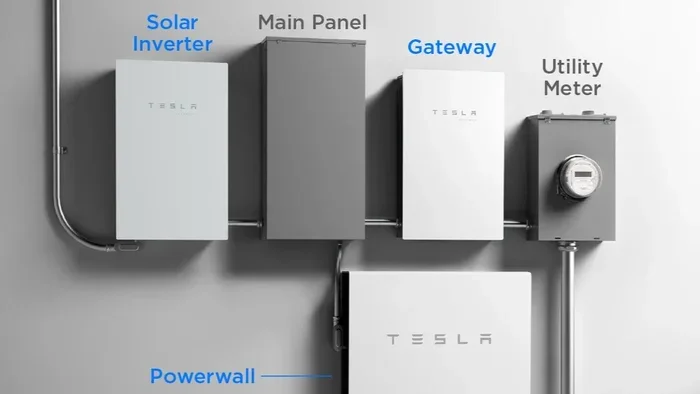
Tesla typically uses inverters from trusted partners like SolarEdge or its own proprietary Tesla inverter units. The setup is clean, simple, and usually installed near your main electrical panel or battery storage unit.
The Role of Power Optimizers
Here is where things get interesting. Tesla does not just use a basic string inverter. It often pairs the inverter with power optimizers on each panel. Power optimizers are not the same as micro inverters, but they serve a similar purpose.
A power optimizer sits on the back of each panel and conditions the DC power before sending it to the central string inverter. This gives you some of the benefits of microinverter technology without switching to a fully decentralized system.
With power optimizers, each panel can adjust its output to maximize energy production. This helps a lot in situations where part of your roof gets shaded during the day or where panels face different directions.
Micro Inverters vs Standard Inverters: Key Differences
To really understand Tesla’s choice, it helps to compare micro inverters side by side with standard string inverters. Both have their place in the solar energy system world, and each comes with trade-offs.
Cost Comparison
String inverters are generally less expensive upfront. Since you only need one unit for the whole system, the hardware costs are lower. Micro inverters cost more because you need one for every single panel. Over a large rooftop solar installation, this adds up quickly.
That said, the price gap has been narrowing in recent years. Many homeowners find that the long-term energy savings from micro inverters offset the higher initial cost.
Efficiency and Shading
When it comes to inverter efficiency, micro inverters have the edge. Because each panel operates independently, a problem with one panel does not affect the others. String inverters are limited by the weakest panel in the string.
If you have a simple, unshaded roof with all panels facing the same direction, a string inverter works great. If your roof has multiple angles, chimneys, or tree coverage, microinverter technology or power optimizers can make a noticeable difference.
Monitoring and Maintenance
Most microinverter brands offer detailed, panel-level monitoring through a phone app. You can see exactly how much energy each panel is producing. String inverters usually give you system-level data, though Tesla’s app does include panel-level insights when paired with power optimizers.
Maintenance is another factor. A string inverter typically needs replacement after 10 to 15 years, while micro inverters often come with 25-year warranties. This can affect your long-term costs and solar installation planning.
Quick Comparison Table
| Feature | Micro Inverters | String Inverters (Tesla) |
|---|---|---|
| Cost | Higher upfront | Lower upfront |
| Panel-Level Optimization | Yes | With power optimizers |
| Shading Performance | Excellent | Good with optimizers |
| Warranty Length | Usually 25 years | 5 to 15 years typical |
| Maintenance | Minimal | |
| Monitoring | Panel-level | System-level (panel-level with optimizers) |
| Best For | Complex roofs, shading | Simple roofs, budget setups |
Note: The table above is a general comparison. Tesla’s specific inverter warranty and features may vary by region and product version. Always check the latest details on Tesla’s official website.
How Tesla’s Inverter System Works with Powerwall
One of the biggest advantages of Tesla’s solar energy system is how well it integrates with the Tesla Powerwall. This battery storage unit stores excess solar energy for use at night or during a power outage.
The Energy Flow
Here is how the system works step by step:
- Your Tesla solar panels absorb sunlight and generate DC electricity.
- The power optimizers (if included) condition the DC power from each panel.
- The string inverter converts the conditioned DC power into AC power for your home.
- Excess energy flows into the Tesla Powerwall for storage.
- When the sun goes down, stored energy powers your home through the battery storage system.
This integrated approach is one reason Tesla’s solar installation appeals to so many homeowners. The whole system works together as a unified energy ecosystem.
Net Metering and Grid Interaction
When your panels produce more energy conversion than you need, the extra power goes back to the grid. This is called net metering, and it can earn you credits on your electricity bill. Tesla’s string inverter handles this grid interaction smoothly.
The Tesla app lets you monitor your energy production, battery storage levels, and grid export in real time. This level of solar monitoring helps you get the most out of your system every day.
Pros and Cons of Tesla’s Inverter Setup
Like any solar energy system, Tesla’s inverter choice comes with both advantages and disadvantages. Let us break them down clearly.
Pros of Tesla’s String Inverter with Power Optimizers
- Lower upfront cost: A single centralized inverter is cheaper than buying a micro inverter for every panel.
- Clean aesthetic: One small inverter unit is less visible than dozens of micro inverters on the roof.
- Easy integration with Powerwall: Tesla designed the whole system to work together seamlessly.
- Panel-level monitoring: With power optimizers, you still get detailed data on each panel’s performance.
- Reliable brand partnerships: Tesla works with established inverter manufacturers known for quality.
Cons of Tesla’s String Inverter Setup
- Single point of failure: If the central inverter fails, your entire solar panel system goes down until it is repaired or replaced.
- Shorter warranty: Most string inverters have shorter warranties than micro inverters, typically 5 to 10 years.
- Less shade tolerance: Even with power optimizers, a string inverter setup is not quite as resilient as full microinverter technology in heavily shaded conditions.
- Less modular: Adding panels later may require upgrading or replacing the central inverter.
Should You Choose Tesla’s Inverter for Your Solar Setup?
The right inverter choice depends on your specific situation. Let us look at a few scenarios to help you decide.
Choose Tesla’s Setup If
- You want a simple, integrated solar energy system with battery storage.
- Your roof has minimal shading and a straightforward layout.
- You want to keep the upfront solar installation cost lower.
- You value a clean, minimal look with fewer visible components.
- You plan to use a Tesla Powerwall for energy backup.
Consider Micro Inverters If
- Your roof has significant shading from trees, chimneys, or nearby buildings.
- You have a complex roof with multiple angles and directions.
- You want the longest possible warranty coverage without worrying about replacement.
- You prioritize panel-level monitoring and maximum energy production from every panel.
- You are building a new rooftop solar system from scratch and want the best inverter efficiency from day one.
Quick Tips for Choosing Your Inverter
Here are some practical tips to keep in mind as you make your decision:
- Assess your roof: Walk around your property and note any shading issues. A shade analysis tool can help too.
- Check your electricity usage: Higher usage may benefit more from panel-level optimization.
- Think long-term: Consider replacement costs for string inverters over the 25-year lifespan of your panels.
- Ask about incentives: Some regions offer tax credits or rebates that favor certain solar inverter types.
- Consult a professional: A certified solar installation expert can evaluate your roof and recommend the best setup.
Common Mistakes Homeowners Make When Choosing Inverters
Avoid these common pitfalls when deciding on your solar panel system inverter:
- Ignoring shade analysis: Many homeowners underestimate how much shade affects energy production. Always get a professional shade assessment.
- Focusing only on upfront cost: A cheaper inverter today could cost more in replacements and lost energy over time.
- Skipping warranty details: Not all inverter warranty coverage is the same. Read the fine print carefully.
- Overlooking monitoring features: Good monitoring helps you catch issues early and maximize solar energy savings.
- Assuming all inverters are equal: Different brands and types vary widely in quality, efficiency, and lifespan.
Expert Insights on Tesla’s Inverter Strategy
Industry experts generally agree that Tesla’s choice of a centralized string inverter with power optimizers is a smart, cost-effective approach for most residential installations. It balances performance with affordability, which aligns with Tesla’s broader mission of making solar energy accessible to more homeowners.
Some experts note that as microinverter technology continues to drop in price, Tesla may eventually adopt it for certain product lines. For now, the company’s integrated approach with Powerwall and its own monitoring software gives it a unique advantage in the solar market.
Pro tip: Whether you choose Tesla or another brand, always ask your installer about the expected lifespan of the inverter and what the replacement process looks like. This can save you from unexpected costs down the road.
Conclusion
So, does Tesla use micro inverters? No, Tesla uses a centralized string inverter paired with optional power optimizers to deliver strong energy conversion across your solar panel system. This setup keeps costs down, integrates beautifully with Tesla Powerwall, and still offers solid panel-level monitoring and performance.
While microinverter technology has its advantages, Tesla’s approach makes a lot of sense for most homeowners. It is practical, reliable, and designed to work as a complete energy system rather than a collection of individual parts.
If you are considering rooftop solar, take time to evaluate your roof, your shading, your budget, and your long-term energy goals. The best inverter choice is the one that fits your specific needs. And now that you understand the differences, you are well-equipped to make that decision with confidence.
Start by getting a quote from Tesla or a certified installer, compare it with micro inverter options, and weigh the long-term savings against the upfront investment. Your future self will thank you for doing the homework now.
Frequently Asked Questions
Can I add micro inverters to a Tesla solar system later?
In most cases, no. Tesla’s solar panel system is designed to work with its specific string inverter setup. Switching to microinverter technology after installation would require significant rework. It is best to decide on your inverter type before installation begins.
How long does a Tesla string inverter last?
Tesla’s string inverter typically lasts 10 to 15 years, though this can vary based on usage and conditions. This is shorter than the 25-year lifespan of most solar panels, so you may need to replace the inverter once during the system’s life.
Are power optimizers the same as micro inverters?
No, they are not the same. A power optimizer conditions the DC power from each panel and sends it to a central string inverter. A microinverter converts the power to AC right at the panel. Power optimizers offer some similar benefits but work within a centralized system.
Is Tesla’s inverter system good for shaded roofs?
It is good, but not the best. With power optimizers, Tesla’s system handles moderate shading well. For heavily shaded roofs, microinverter technology may offer better energy production because each panel operates completely independently.
Does Tesla’s inverter come with a warranty?
Yes, Tesla provides warranty coverage for its inverter system. The length and terms can vary, so always check the latest warranty details on Tesla’s website or ask your installer before signing a contract.
How much does Tesla’s solar inverter cost compared to micro inverters?
Tesla’s string inverter setup is generally less expensive upfront than a full micro inverter system. The savings can be significant, especially for larger solar installations. However, factor in potential replacement costs over the system’s lifetime when comparing total ownership costs.