Can No Coolant Make a Car Overheat and Cause Damage
Yes, running a car with no coolant can absolutely cause it to overheat and lead to severe engine damage. Without coolant, your engine cannot regulate its temperature, which means overheating can happen within minutes of driving. This guide covers what happens when coolant is missing, the warning signs to watch for, and how to protect your vehicle from expensive repairs.
You turn the key, the engine roars to life, and everything seems fine. But after a few minutes of driving, you notice steam curling from under the hood. Your temperature gauge is climbing fast. You remember that you haven’t checked the coolant in weeks. Now a scary thought hits you — can no coolant make a car overheat?
The short answer is a firm yes. Driving without coolant is one of the fastest ways to destroy your engine. Coolant, also called antifreeze or radiator fluid, plays a critical role in keeping your engine at a safe operating temperature. Without it, heat builds up with nowhere to go. What starts as a minor warning quickly turns into a major breakdown.
In this article, we will walk through exactly what happens when your car runs without coolant. We will cover the signs to watch for, the damage it can cause, and what you should do right now if you find yourself in this situation. Whether you are a new car owner or a seasoned driver, this guide will help you protect your engine and your wallet.
Key Takeaways
- No coolant causes rapid overheating: Your engine relies on coolant to absorb and dissipate heat. Without it, temperatures spike dangerously fast.
- Engine damage can be catastrophic: Prolonged driving without coolant can warp cylinder heads, blow head gaskets, and crack the engine block.
- Early warning signs save money: Recognizing overheating symptoms early helps you avoid thousands of dollars in engine repair costs.
- Coolant leaks are common culprits: A puddle under your car or a dropping coolant level often signals a leak that needs immediate attention.
- Prevention is simple and affordable: Regular coolant checks and timely flushes keep your cooling system working properly all year long.
- Never ignore the temperature gauge: If your temperature gauge rises into the red zone, pull over safely and turn off the engine immediately.
📑 Table of Contents
- What Does Coolant Do in Your Car?
- Can No Coolant Make a Car Overheat?
- Warning Signs Your Car Is Overheating
- What Damage Can No Coolant Cause?
- Common Causes of Coolant Loss
- How to Prevent Overheating and Protect Your Engine
- What to Do If Your Car Overheats
- How Much Does It Cost to Fix Overheating Damage?
- Expert Insights on Coolant Maintenance
- Key Takeaways
What Does Coolant Do in Your Car?
Before we dive into the damage, it helps to understand the basic job of coolant. Your engine produces a tremendous amount of heat during normal operation. The combustion process inside each cylinder generates extreme temperatures that can exceed 2,000 degrees Fahrenheit. Without a way to manage that heat, engine parts would warp, melt, and fail within minutes.
Coolant circulates through channels inside the engine block and cylinder head. It absorbs heat from these hot surfaces and carries it to the radiator. The radiator then releases that heat into the air. This cycle repeats constantly while your engine runs. The cooling system also includes a water pump, thermostat, hoses, and a coolant reservoir.
Most people think coolant only works in winter. That is a common misconception. Coolant raises the boiling point of the liquid in your system, which means it can absorb more heat before turning to steam. It also prevents the liquid from freezing in cold weather. So coolant works year-round to keep your engine temperature in the safe zone.
The Role of Antifreeze in Heat Dissipation
Antifreeze is the primary ingredient in most coolant mixtures. It is combined with water in a roughly 50/50 ratio for optimal performance. This mixture flows through the engine and picks up heat far more efficiently than water alone. The heat dissipation process depends on a steady flow of coolant through the system.
When the coolant level drops too low or runs completely dry, the water pump has nothing to circulate. The thermostat cannot regulate flow properly. The radiator has no fluid to cool down. Every component of the cooling system depends on having enough coolant present. Even a short drive without adequate coolant can cause serious problems.
Can No Coolant Make a Car Overheat?
The direct answer is yes — no coolant makes a car overheat very quickly. Your engine generates so much heat that it needs a continuous cooling cycle to stay safe. Remove that cycle, and the temperature climbs fast. Most engines begin to overheat within 5 to 10 minutes of running without any coolant at all.
However, the timeline depends on several factors. Ambient temperature, traffic conditions, how hard the engine is working, and the type of vehicle all play a role. Driving on a hot summer day in stop-and-go traffic will cause overheating much faster than cruising on a cool highway. But regardless of conditions, running without coolant is never safe.
Some drivers wonder if they can just use water as a temporary substitute. While water can provide some cooling, it is not a long-term solution. Water has a lower boiling point than coolant and does not protect against corrosion. If you are stranded and need to add something, plain water is better than nothing. But you should get proper coolant levels restored as soon as possible.
How Fast Can an Engine Overheat Without Coolant?
In most vehicles, the temperature gauge will start climbing within 3 to 5 minutes of driving without coolant. Within 10 to 15 minutes, you may see steam coming from the hood. The engine may start to run rough, lose power, or make unusual knocking sounds. These are all signs that the overheating engine is already causing internal damage.
The damage happens because metal engine parts expand under extreme heat. Pistons swell in their cylinders. Cylinder heads warp. Gaskets fail under the pressure. All of this occurs while you are still driving, which makes it even more dangerous. The longer you keep driving, the worse the damage becomes.
Warning Signs Your Car Is Overheating
Catching the early signs of overheating can save your engine from catastrophic failure. Most modern vehicles have warning systems built in. But not all signs are obvious, especially if you are not paying close attention to what your car is telling you.
Here are the most common overheating symptoms to watch for:
- Temperature gauge in the red zone: Your dashboard temperature gauge is the most direct indicator. If it climbs into the red or shows H for hot, pull over immediately.
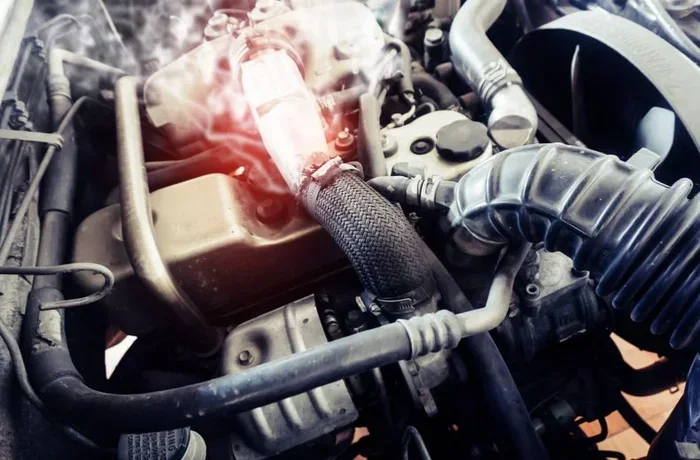
- Steam or smoke from the hood: This is often the most visible sign. Steam can be white or translucent and usually smells sweet because of the coolant.
- Sweet smell from the engine bay: Coolant has a distinctive sweet odor. If you smell something sweet while driving, check your coolant reservoir level.
- Coolant leaks on the ground: A puddle of green, orange, or pink fluid under your parked car signals a coolant leak that needs urgent attention.
- Engine running rough or misfiring: High temperatures can cause the fuel mixture to ignite improperly, leading to rough idling or stalling.
- Loss of heating inside the cabin: Your car’s heater uses excess engine heat. If the heater suddenly stops working, it may mean coolant is not flowing properly.
- Check engine light: Modern vehicles may trigger the check engine light when the engine temperature exceeds safe limits.
Why the Temperature Gauge Matters
Many drivers ignore the temperature gauge until something dramatic happens. The gauge is your best early warning tool. It tells you exactly what is happening inside the engine. Get in the habit of glancing at it during your drive, especially on long trips or in hot weather.
If you notice the gauge creeping higher than normal, do not ignore it. Pull over safely, turn off the air conditioning, and turn the heater to full blast. This helps pull some heat away from the engine. But these are only temporary measures. You need to address the root cause, which is often low coolant levels or a coolant leak.
What Damage Can No Coolant Cause?
This is where things get serious. Driving without coolant does not just cause temporary overheating. It can lead to permanent, expensive damage to multiple engine components. The longer you drive, the more extensive the damage becomes.
Warped Cylinder Heads
The cylinder head sits on top of the engine block and seals the combustion chambers. It is made of metal that expands when exposed to extreme heat. Without coolant to keep temperatures in check, the cylinder head can warp out of shape. A warped head will not seal properly, leading to compression loss, poor engine performance, and further overheating.
Replacing or machining a warped cylinder head is an expensive repair. In many cases, it costs several hundred to over a thousand dollars. And if the warping is severe, a full replacement is the only option.
Blown Head Gasket
The head gasket sits between the engine block and the cylinder head. It seals the combustion chambers and prevents coolant and oil from mixing. When the engine overheats from no coolant, the head gasket can fail or blow entirely.
A blown head gasket is one of the most serious and costly engine repairs. Coolant can leak into the cylinders, oil passages, or outside the engine. Symptoms include white smoke from the exhaust, milky oil, and persistent overheating. Repairing a blown head gasket often requires hundreds of dollars in parts and labor.
Cracked Engine Block
In the worst cases, extreme overheating can cause the engine block itself to crack. The engine block is the foundation of the entire engine. It houses the cylinders, crankshaft, and other critical components. A cracked block usually means the engine needs to be replaced entirely.
This is the most catastrophic outcome of driving without coolant. Engine replacement costs can range from several thousand dollars to the cost of a whole new vehicle. This is exactly why paying attention to coolant levels and addressing overheating early is so important.
Damaged Water Pump and Thermostat
The water pump is responsible for circulating coolant through the engine. Without enough coolant, the pump can overheat and fail. Similarly, the thermostat regulates coolant flow based on engine temperature. Extreme heat can cause the thermostat to stick or break, further compromising the cooling system.
Replacing a water pump or thermostat is less expensive than a head gasket or engine block repair. But it is still an unnecessary expense that can be easily prevented. Simply keeping your coolant levels where they should be protects all of these components.
Common Causes of Coolant Loss
Understanding why coolant disappears in the first place can help you prevent the problem. You should never lose coolant without a reason. If your levels are dropping, something is wrong.
Coolant Leaks
The most common cause of low coolant is a leak. Leaks can occur in several places:
- Radiator hoses: These rubber hoses crack and deteriorate over time, especially in hot weather.
- Radiator itself: Rocks and debris on the road can puncture the radiator. Corrosion can also cause small holes to develop.
- Water pump seals: The water pump has seals that wear out over time, allowing coolant to seep out.
- Heater core: A leaking heater core can cause coolant to leak inside the cabin, often seen as damp floor mats.
- Head gasket: A failing head gasket can allow coolant to enter the combustion chambers or oil system.
- Coolant reservoir and cap: The plastic reservoir can crack, and the cap seal can wear out, causing slow coolant loss.
Evaporation and Normal Loss
Over time, a small amount of coolant evaporation is normal. However, it should never be significant. If you are topping off your coolant every few weeks, you have a leak or another problem that needs attention. A coolant flush and system inspection can identify the source before it causes major damage.
How to Prevent Overheating and Protect Your Engine
The good news is that preventing overheating is straightforward and affordable. A little regular maintenance goes a long way toward keeping your engine safe and your cooling system functioning properly.
Check Coolant Levels Regularly
Make it a habit to check your coolant level at least once a month. The coolant reservoir has minimum and maximum markers that make this easy. Always check the level when the engine is cool. Opening the radiator cap on a hot engine can cause serious burns from pressurized steam.
Watch for Warning Signs
Pay attention to your temperature gauge and any unusual smells or sounds. The earlier you catch an overheating problem, the less damage occurs. Do not wait for steam to appear under the hood. By then, damage may already be underway.
Follow the Manufacturer’s Maintenance Schedule
Your vehicle owner’s manual includes a recommended schedule for coolant flushes and replacements. Follow it. Old coolant loses its effectiveness over time and can become acidic, which damages cooling system components from the inside out.
Use the Right Coolant
Not all coolants are the same. Different vehicles require different types of coolant, such as ethylene glycol or propylene glycol formulations. Using the wrong type can cause compatibility issues and reduce cooling performance. Check your owner’s manual or ask your mechanic for the right antifreeze for your vehicle.
Address Leaks Immediately
If you notice a coolant puddle under your car, do not ignore it. Even a small leak can lead to dangerously low coolant levels over time. Have a mechanic inspect the system and fix the leak before it results in overheating and engine damage.
Keep an Emergency Coolant Supply
It is always smart to keep a bottle of coolant or distilled water in your trunk. If you ever notice your temperature gauge rising, you can add fluid temporarily to get to a safe location. Just remember that this is a temporary fix, not a permanent solution.
What to Do If Your Car Overheats
If you are driving and your car starts to overheat, follow these steps to minimize damage:
- Turn off the air conditioning: The A/C puts extra strain on the engine. Turning it off reduces the heat load immediately.
- Turn the heater to maximum: This sounds counterintuitive, but it pulls heat away from the engine and into the cabin.
- Pull over safely and turn off the engine: Do not keep driving if the temperature gauge is in the red zone.
- Do not open the radiator cap immediately: Wait at least 15 to 20 minutes for the engine to cool. Opening it too early can cause hot coolant to spray out and burn you.
- Call for help or get to a mechanic: Once the engine has cooled, check the coolant level and add fluid if you have it. But do not continue driving long distances with low or no coolant.
Taking these steps quickly can mean the difference between a minor repair and a complete engine replacement. Always treat an overheating engine as a serious situation that requires immediate action.
How Much Does It Cost to Fix Overheating Damage?
The cost of repairing overheating damage varies widely depending on what was damaged. Here is a general breakdown of common repair costs:
- Coolant flush and refill: $100 to $200
- Water pump replacement: $300 to $750
- Thermostat replacement: $150 to $300
- Head gasket repair: $1,000 to $2,500
- Cylinder head resurfacing or replacement: $500 to $2,000
- Engine replacement: $3,000 to $7,000 or more
As you can see, the cost increases dramatically the longer you ignore the problem. A simple coolant top-off costs almost nothing. A full engine replacement costs thousands. The choice is clear — take care of your cooling system before problems develop.
Expert Insights on Coolant Maintenance
Experienced mechanics consistently emphasize that coolant maintenance is one of the simplest and most cost-effective things a car owner can do. Most overheating emergencies are preventable with regular checks and timely flushes. The cooling system is designed to be maintenance-friendly, but it does require your attention.
Many drivers only think about coolant when something goes wrong. By that point, the damage is often already done. A proactive approach — checking levels, watching for leaks, and following the flush schedule — keeps the entire system in good working order and protects your engine for years to come.
One mechanic shared that he sees the same mistake over and over: drivers who ignore the temperature gauge until steam appears. By then, the repair bill is already steep. He advises all his customers to treat the temperature gauge like a fuel gauge — check it regularly and respond to any warning immediately.
Key Takeaways
- No coolant makes a car overheat rapidly: Your engine needs coolant to manage extreme heat. Without it, temperatures become dangerous within minutes.
- Overheating causes serious engine damage: Warped heads, blown gaskets, and cracked blocks are all possible outcomes of driving without coolant.
- Warning signs are your best defense: Watch your temperature gauge, smell for sweet odors, and check for leaks regularly.
- Prevention is simple and affordable: Regular coolant checks and flushes cost very little compared to engine repair bills.
- Act quickly when problems arise: Pull over, turn off the engine, and get help if your car shows signs of overheating.
- Coolant maintenance protects your investment: Your engine is the most expensive part of your car. Protecting it through proper coolant care saves you money and stress in the long run.
The bottom line is clear. Can no coolant make a car overheat? Absolutely yes. And the damage it causes can be devastating and expensive. Your cooling system is the unsung hero of your vehicle, working silently every time you drive. Give it the attention it deserves by checking your coolant levels regularly, addressing leaks promptly, and never ignoring the signs of overheating.
Your engine works hard every day to keep you moving. In return, it just needs you to keep the coolant flowing. A few minutes of maintenance each month can prevent thousands of dollars in repairs and keep your car running strong for years to come. Take care of your cooling system today, and your engine will thank you tomorrow.
Frequently Asked Questions
How long can you drive a car without coolant?
Most cars will begin to overheat within 5 to 10 minutes of running without coolant. The exact time depends on driving conditions, ambient temperature, and engine load. Even a short drive without coolant can cause damage, so never drive without proper coolant levels.
Can I use water instead of coolant in an emergency?
Yes, plain water can be used as a temporary substitute if you are stranded. However, water has a lower boiling point and does not protect against corrosion like proper coolant does. Get your cooling system flushed and refilled with the correct coolant mixture as soon as possible.
What happens if coolant runs out while driving?
If coolant runs out while driving, the engine will overheat quickly. This can warp cylinder heads, blow the head gasket, or crack the engine block. Pull over safely, turn off the engine, and call for roadside assistance if this happens.
How often should I check my coolant level?
You should check your coolant level at least once a month and before any long trips. Also check it whenever you notice any overheating symptoms or see a puddle of colored fluid under your parked car.
Is a coolant leak an emergency?
A coolant leak should be treated as urgent. Even a small leak can lead to dangerously low coolant levels and engine overheating. Have the leak repaired as soon as possible to prevent more serious and expensive damage.
How much does it cost to fix overheating damage?
Costs range from around $100 for a simple coolant top-off to several thousand dollars for engine replacement. The key factor is how quickly you address the problem. Early intervention keeps repair costs low and protects your engine from severe damage.