How Long Does It Really Take a Factory to Build a Car
So, how long does it really take a factory to build a car? The answer might surprise you. On a modern assembly line, a factory can build a complete vehicle in roughly 18 to 35 hours. However, the full car manufacturing process involves many complex stages. From stamping and welding to painting and final inspection, every step matters. Understanding this timeline gives you a new appreciation for the vehicles you drive every day.
Have you ever wondered what happens inside a massive automotive manufacturing facility before a shiny new car rolls off the lot? The car building steps are fascinating. They involve thousands of parts, hundreds of workers, and highly coordinated machinery. Yet, the entire vehicle production time from raw steel to a finished automobile is surprisingly short.
The question “How long does it take a factory to build a car?” comes up more often than you might think. People are genuinely curious about the automotive production timeline. They want to know what happens behind those giant factory doors. The answer is both complex and incredibly efficient.
In this article, we will walk you through every major stage of the car manufacturing process. We will look at real timelines, compare different automakers, and explore the factors that speed up or slow down production. Whether you are a car enthusiast or just curious, this guide has something valuable for you.
The modern automotive plant is a marvel of engineering and logistics. Robots weld car bodies with precision. Conveyors move parts from station to station. And skilled workers oversee every critical step. Let us dive into how all of this comes together.
Key Takeaways
- Average build time: A factory typically takes 18 to 35 hours to assemble a complete car from start to finish.
- Multiple stages involved: The car manufacturing process includes stamping, welding, painting, engine installation, and quality control.
- Automation plays a big role: robotic automation and advanced production line efficiency help factories build cars faster than ever before.
- Brand differences matter: Different automakers have varying production cycle times based on their factory setup and vehicle complexity.
- Many factors affect timeline: Vehicle type, factory location, supply chain issues, and model complexity all influence how long it takes.
- Quality checks are critical: Every car goes through multiple quality control inspection stages before it reaches the customer.
📑 Table of Contents
- The Car Manufacturing Process: An Overview
- What Happens on the Assembly Line
- How Long Does Each Stage Take
- Factors That Affect Build Time
- How Different Car Brands Compare
- What Happens After the Car Leaves the Factory
- Common Mistakes That Slow Down Production
- Quick Tips: How Factories Improve Build Speed
- Key Takeaways
- Conclusion
The Car Manufacturing Process: An Overview
Building a car is not like assembling a piece of furniture. It is a multi-phase operation that involves dozens of specialized departments. Each department handles a specific part of the factory assembly process. Let us break down the big picture first.
A typical vehicle assembly stage journey starts with raw materials. Steel, aluminum, glass, rubber, and plastic arrive at the factory. These materials are transformed into car parts through stamping and molding. Then, those parts come together on the assembly line. The whole production cycle moves quickly, but every single step is carefully planned.
Here is a quick look at the major phases:
- Body Shop: Where metal panels are stamped and welded together.
- Paint Shop: Where the car body gets cleaned, primed, painted, and sealed.
- General Assembly: Where the engine, transmission, interior, and chassis are put together.
- Quality Control: Where every car is tested and inspected before shipment.
Each of these phases plays a vital role. Skipping or rushing any one of them can lead to serious problems. That is why automakers invest billions in their manufacturing facility infrastructure every year.
Why Understanding Build Time Matters
Knowing how long it takes to build a car helps you appreciate the industry. It also helps car buyers understand why certain models might have longer wait times. If you have ever waited months for a new car delivery, the production cycle is often the reason. Factories operate on tight schedules, and demand can exceed capacity.
Also, understanding the timeline helps you see why supply chain disruptions cause delays. A shortage of one small part can halt an entire assembly line. This is something the auto industry learned the hard way during recent global chip shortages.
What Happens on the Assembly Line
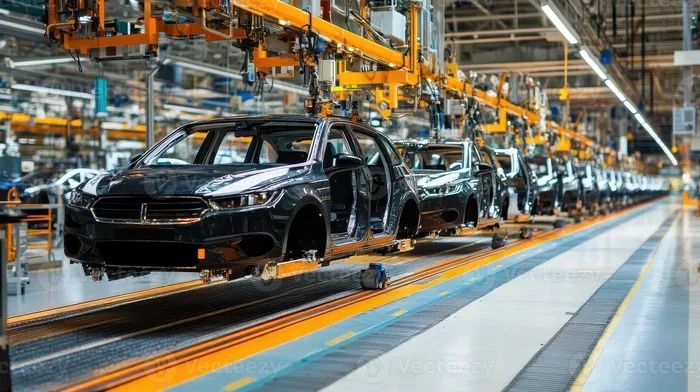
The assembly line is the heart of any automotive production facility. It is where raw parts become a functioning vehicle. The line moves at a steady pace, and each station has a specific job. Workers and robots collaborate to bring the car to life.
Stage 1: Stamping and Body Construction
The first real step in the car building steps is stamping. Giant presses crush flat sheets of steel into body panels. Doors, hoods, roofs, and fenders all start as flat metal. These presses apply thousands of tons of force to shape the metal precisely.
Once the panels are stamped, they move to the welding robots. These robots join the panels into a complete car body or “body-in-white.” The welding process is incredibly fast and accurate. A single car body can be welded in just a few minutes. This is where robotic automation truly shines.
Stage 2: The Paint Shop
After welding, the bare car body enters the paint shop. This is a fascinating part of the car manufacturing process. The body goes through a series of baths and sprays.
First, it gets cleaned and treated with anti-corrosion chemicals. Then it receives a primer coat. Next comes the base color coat. Finally, a clear coat is applied for shine and protection. Each layer needs time to dry. The entire painting process takes several hours per vehicle.
Modern paint shops are highly automated. They use electrostatic painting guns that charge the paint particles. This ensures even coverage with minimal waste. The result is a flawless, durable finish that protects the car for years.
Stage 3: General Assembly
This is where the car really starts to take shape. The painted body moves to the general assembly area. Here, the engine, transmission, axles, suspension, and brakes are installed. The interior gets added too. Seats, dashboard, steering wheel, and carpeting all go in.
The engine and transmission are often installed together as a single unit. This speeds up the process significantly. After that, the wiring harness gets connected. This harness is essentially the nervous system of the car. It links all the electrical components together.
Finally, the wheels are mounted, and the car is lowered onto its chassis. At this point, it looks like a real car. But it is not ready yet. There are still several important steps left.
Stage 4: Engine Installation and Systems Testing
Once the major components are in place, technicians perform detailed systems checks. They verify that the engine starts properly. They test the brakes, steering, and electrical systems. The quality control inspection process is thorough.
Each car goes through a dyno test. This measures engine performance and power output. Technicians also check for fluid leaks. They inspect the paint for any imperfections. Every single vehicle must pass these tests before moving forward.
How Long Does Each Stage Take
Now let us get to the heart of the question: how long does it take a factory to build a car? The total vehicle production time varies, but we can break it down by stage.
Keep in mind that these times are averages. Different factories and different car models will vary. But this gives you a solid general picture.
| Stage | Approximate Time |
|---|---|
| Stamping and Body Construction | 3 to 5 hours |
| Paint Shop | 4 to 6 hours |
| General Assembly | 6 to 10 hours |
| Engine and Systems Testing | 2 to 4 hours |
| Final Inspection and Quality Check | 1 to 3 hours |
| Total Factory Build Time | 18 to 35 hours |
As you can see, the car factory timeline is surprisingly efficient. A car goes from bare metal to a finished vehicle in less than two days of active factory time. Of course, the car then needs to be transported to dealerships. That adds additional time, sometimes weeks or even months.
What Is the Fastest a Car Can Be Built?
Some highly optimized factories can build a car in as little as 18 hours. This is the absolute fastest production cycle achievable. These factories use the latest production line efficiency techniques. They minimize downtime between stations. They also have excellent supply chain management.
However, most factories aim for a 24 to 35 hour window. This allows for proper drying times in the paint shop. It also allows time for thorough quality checks. Speed is important, but not at the expense of quality.
Factors That Affect Build Time
Not all cars are built in the same amount of time. Several key factors influence the vehicle assembly stages timeline. Let us explore the most important ones.
Vehicle Type and Complexity
A simple sedan takes less time to build than a luxury SUV. Why? Because there are more components in a larger vehicle. A luxury car also has more features. Advanced driver assistance systems, premium interiors, and specialized electronics all add time.
Electric vehicles present their own unique challenges. The battery pack installation requires special handling and safety protocols. This adds extra time to the automotive manufacturing process. But overall, EV production times are getting shorter as factories gain experience.
Factory Location and Setup
Where a factory is located matters. Factories in countries with highly automated manufacturing facilities tend to build cars faster. Japanese and German factories are known for their efficiency. They have spent decades refining their processes.
Factory layout also plays a role. A well-designed assembly line minimizes wasted movement. Parts are delivered to the right station at the right time. This is called “just-in-time” manufacturing. It keeps the production cycle moving smoothly.
Supply Chain and Parts Availability
This factor has become increasingly important in recent years. If a factory cannot get the parts it needs, production slows down or stops. The global semiconductor shortage of 2021 and 2022 is a perfect example.
Even a missing sensor or a single chip can halt an entire assembly line. Automakers have learned to diversify their supply chains. But disruptions still happen. When they do, the car manufacturing process gets delayed for everyone.
Model Year Changes and Customization
When a car model gets a redesign, factories need time to adjust. New tooling must be installed. Workers need training on updated procedures. This can temporarily slow down the automotive production timeline.
Customization also affects build time. If a customer orders a car with specific options, the factory must accommodate those choices. Special orders may take longer to complete than standard configurations.
How Different Car Brands Compare
Different automakers have different approaches to manufacturing. Some focus on speed. Others prioritize craftsmanship. Here is how some major brands compare in terms of build time.
Toyota and Lean Manufacturing
Toyota is famous for its lean manufacturing philosophy. This approach minimizes waste and maximizes efficiency. Toyota factories can build a car in about 20 to 25 hours on average. The company pioneered the assembly line improvements that many automakers still use today.
Toyota also uses the famous “kanban” system. This is a visual scheduling method that keeps parts flowing smoothly. It prevents bottlenecks and keeps the production line efficiency high.
Tesla and Modern Automation
Tesla has invested heavily in robotic automation. Their factories use advanced robots for most tasks. This allows for very fast build times. Tesla’s Fremont factory can produce a vehicle in roughly 20 hours.
However, Tesla has also faced challenges. Their push for maximum automation sometimes led to production bottlenecks. They have since adjusted their approach. They now balance automation with human oversight. This has improved their overall vehicle production time.
BMW and Luxury Manufacturing
BMW builds premium vehicles that require more attention to detail. Their car building steps involve more hand-fitting and quality checks. As a result, BMW factories typically take 30 to 35 hours per vehicle.
But the extra time pays off. BMW vehicles are known for their fit and finish. The additional quality control ensures that each car meets the brand’s high standards.
What Happens After the Car Leaves the Factory
The car factory timeline does not end when the car rolls off the assembly line. There is still a journey ahead. The vehicle must be transported to dealerships. It goes through inspections and preparations along the way.
First, the car is driven off the line and onto a transport truck. These trucks carry multiple vehicles at once. They deliver cars to regional distribution centers. From there, they are sent to individual dealerships.
Some cars also go through a pre-delivery inspection at the dealership. Technicians check fluid levels, tire pressure, and electronics. They also charge the battery if the car has been sitting in transit. This final step ensures the customer receives a perfect vehicle.
In total, from the moment production starts to the moment you drive the car home, the process can take several weeks to several months. The actual factory assembly is just one part of the journey.
The Role of Logistics in Delivery Time
Logistics is a huge part of the automotive production timeline. A finished car sitting in a factory lot is not earning money. Automakers work hard to move vehicles quickly. They use rail, truck, and sometimes even ship transport for international deliveries.
During peak demand periods, logistics can become a bottleneck. Dealerships may have long waitlists. This is why some car buyers wait months after production starts to receive their vehicle.
Common Mistakes That Slow Down Production
Even the best automotive plant can face slowdowns. Some mistakes are more common than others. Understanding these helps you appreciate how complex car manufacturing really is.
- Underestimating supply chain needs: Ordering too few parts can halt production entirely.
- Skipping quality checks: This leads to costly recalls and reputation damage.
- Poor factory layout: A badly designed assembly line creates bottlenecks.
- Ignoring worker training: Untrained workers make mistakes that slow everything down.
- Over-automating: Too much automation without human oversight creates new problems.
Smart factories learn from these mistakes. They continuously improve their processes. This ongoing improvement is a key part of the car manufacturing process.
Quick Tips: How Factories Improve Build Speed
If you are curious how automakers keep the production cycle moving fast, here are some practical tips they use:
- Invest in automation: Robots handle repetitive tasks quickly and accurately.
- Use just-in-time delivery: Parts arrive exactly when needed, reducing storage costs.
- Train workers continuously: Skilled workers work faster and make fewer mistakes.
- Monitor the assembly line in real time: Data helps identify bottlenecks immediately.
- Standardize processes: Consistent methods reduce variation and speed up production.
These strategies are not just for car factories. Many other industries use them too. But the auto industry has perfected them over more than a century of automotive manufacturing evolution.
Key Takeaways
- Average build time: A factory typically takes 18 to 35 hours to assemble a complete car from start to finish.
- Multiple stages involved: The car manufacturing process includes stamping, welding, painting, engine installation, and quality control.
- Automation plays a big role: Robotic automation and advanced production line efficiency help factories build cars faster than ever before.
- Brand differences matter: Different automakers have varying production cycle times based on their factory setup and vehicle complexity.
- Many factors affect timeline: Vehicle type, factory location, supply chain issues, and model complexity all influence how long it takes.
- Quality checks are critical: Every car goes through multiple quality control inspection stages before it reaches the customer.
Conclusion
The answer to “how long does it take a factory to build a car” is more nuanced than most people think. On the factory floor, a car takes between 18 and 35 hours of active assembly time. But the full journey from raw materials to a finished vehicle involves much more.
Every stage of the car manufacturing process matters. The stamping, welding, painting, assembly, and quality control all work together. They create the vehicles we rely on every single day. The automotive production timeline is a testament to human ingenuity and engineering excellence.
Next time you see a car on the road, take a moment to appreciate it. That vehicle went through an incredible journey. It was shaped by robots, painted by automated systems, and tested by skilled technicians. The factory assembly process is truly remarkable.
Understanding how cars are built gives you a deeper appreciation for the automotive industry. It also helps you make smarter buying decisions. When you know what goes into building a car, you value it more. And that is something worth knowing.
The future of automotive manufacturing is exciting. Electric vehicles, autonomous factories, and AI-driven quality control are changing the game. Build times will likely get even shorter. But the commitment to quality will remain the same. One thing is certain: the car factory timeline will continue to evolve, and that is a great thing for all of us.
Frequently Asked Questions
How long does it take to build a car from scratch in a factory?
On average, a factory takes between 18 and 35 hours to fully assemble a car from raw materials to a finished vehicle. This includes stamping, welding, painting, engine installation, and final inspection. However, the total time from order to delivery can be several weeks or months.
Why does it take so long to build a car?
Building a car involves thousands of individual parts and dozens of specialized processes. Each stage requires precision and quality checks. Painting alone needs multiple coats and drying time. Every step is essential to ensure the final vehicle is safe and reliable.
Do electric cars take longer to build than gas cars?
Electric vehicles can sometimes take slightly longer due to battery pack installation. The battery requires special handling and safety procedures. However, as EV factories gain more experience, build times are getting closer to traditional vehicles.
What is the fastest time a factory has built a car?
The fastest recorded factory build times can be as low as 18 hours. These are achieved by highly optimized factories using advanced robotic automation and lean manufacturing techniques. Most factories aim for a 24 to 35 hour window to balance speed with quality.
Can supply chain issues delay car production?
Absolutely. Supply chain disruptions are one of the biggest factors that slow down the car manufacturing process. A shortage of even one small component, like a microchip, can halt an entire assembly line until the part becomes available again.
How do different car brands compare in build time?
Build times vary by brand. Toyota averages around 20 to 25 hours, while luxury brands like BMW may take 30 to 35 hours. This difference comes down to vehicle complexity, customization options, and the level of hand-fitting involved in the vehicle assembly stages.