How Long Does a Factory Take to Build a Car From Scratch
So how long does a factory take to build a car? On average, it takes about 18 to 35 hours for a modern assembly line to turn raw materials into a finished vehicle. However, the full car manufacturing process from design to final inspection spans weeks or even months. Understanding each step gives you a real appreciation for the incredible automotive manufacturing feat happening every single day.
Have you ever wondered what happens inside a massive car factory? It is fascinating to think about how thousands of parts come together to create a vehicle you can drive home the same day. The car manufacturing process is a well-orchestrated dance of machines, robots, and skilled workers.
When you ask how long does a factory take to build a car, the answer might surprise you. On the assembly line, a finished vehicle rolls off the line in under 35 hours. But the full journey from raw steel to a shiny new car involves many stages, each with its own timeline and challenges.
In this article, we will walk through every step of vehicle assembly. You will learn what happens inside the factory production timeline, what slows things down, and how modern technology makes the whole process faster. Whether you are a car enthusiast or just curious, this guide has everything you need.
Key Takeaways
- Average build time is 18-35 hours: A modern factory can assemble a car in less than a day on the production line.
- Multiple stages are involved: From stamping and welding to painting and final inspection, each step has its own timeline.
- Factory type matters a lot: Mass production facilities build cars faster than custom or low-volume manufacturers.
- Technology speeds things up: Robots, automation, and smart factory systems dramatically cut production time.
- Supply chain delays can stretch timelines: Part shortages and logistics issues are real factors that slow things down.
- Quality control adds time but saves lives: Every vehicle goes through rigorous checks before leaving the factory floor.
- Custom builds take much longer: Bespoke or specialty vehicles can take weeks or months compared to standard models.
📑 Table of Contents
- The Car Manufacturing Process Explained
- How Long Does Each Stage Take?
- Factors That Affect Production Time
- A Day in the Life of a Car Factory
- How Factories Compare: Mass Production vs. Custom Builds
- The Future of Car Manufacturing Speed
- Quick Tips for Understanding Factory Production
- Common Mistakes People Make About Factory Build Times
- Expert Insights on Automotive Manufacturing
- Key Takeaways on Factory Build Times
- Conclusion
The Car Manufacturing Process Explained
The car building steps follow a clear path. Each stage depends on the one before it. A delay in any single step can hold up the entire production line speed. Let us break down the main stages so you can see exactly what happens.
Stage 1: Stamping and Body Panels
It all starts with giant sheets of steel and aluminum. These raw metal sheets get fed into massive stamping presses. The presses crush the metal into exact shapes. Think of it like a giant cookie cutter, but with thousands of tons of force.
Each stamp creates a body panel. Doors, hoods, roofs, and fenders all come from this process. Modern stamping lines can produce a panel in seconds. The speed here sets the pace for everything that follows. Without fast stamping, the whole factory production timeline slows down.
Stage 2: Welding and Body Assembly
Once the panels are ready, robots take over. Welding robots join the body panels together with precision. These robots work at incredible speed and accuracy. A single car body can be welded in just a few minutes.
Humans still play a role, but robots do the heavy lifting. The welded body, often called the body shop output, moves on to the next station. At this point, the car starts to look like something you would recognize on the road.
Stage 3: Painting and Coating
Next comes the paint shop. This stage is critical. The body gets cleaned, primed, and painted in multiple layers. Each layer needs time to dry before the next one goes on.
Factories use automated painting systems to ensure even coverage. The paint process adds several hours to the total timeline. But it is essential for durability and appearance. A flawless finish is what customers expect, and factories take this very seriously.
Stage 4: Chassis and Powertrain Installation
While the paint dries, another line works on the chassis. The chassis is the skeleton of the car. It holds the engine, transmission, and suspension components.
Workers install the engine and powertrain onto the chassis. This step requires careful alignment and torque specifications. Once the powertrain is in, the body gets mounted on top. This is a pivotal moment in the car manufacturing stages. Now the vehicle really starts to take shape.
Stage 5: Final Assembly and Interior Fitting
Interior installation is a detailed process. Seats, dashboards, wiring harnesses, and carpeting all get added. Workers install thousands of individual components inside each vehicle.
The dashboard alone contains dozens of parts. Screens, buttons, sensors, and wiring all need precise placement. This stage is labor-intensive and requires attention to detail. It is where the car starts to feel like a finished product.
Stage 6: Quality Control and Final Inspection
Before any car leaves the factory, it goes through rigorous quality control. Every vehicle gets a thorough inspection. Workers check for defects, misalignments, and functional issues.
Modern factories use advanced diagnostic systems. Computers scan every electronic module. Test drives verify that everything works as it should. Only after passing all checks does a car get approved for shipment. This final step ensures that every vehicle meets safety and performance standards.
How Long Does Each Stage Take?
The total production time for a single car on the line is about 18 to 35 hours. But that number hides a lot of variation. Let us look at how long each major stage typically takes.
Stamping and body panel production runs continuously. Factories operate 24 hours a day, seven days a week. Welding and body assembly take roughly 3 to 4 hours per vehicle. The paint shop adds another 4 to 6 hours due to drying times.
Chassis and powertrain installation take about 2 to 3 hours. Interior fitting can take 4 to 6 hours depending on the model. Final inspection and testing add another 2 to 3 hours. When you add it all up, you get that 18 to 35-hour window.
Keep in mind that these numbers vary by manufacturer. A high-volume factory like Toyota or Ford operates at a different pace than a luxury brand. The car factory timeline depends on many factors we will explore next.
Factors That Affect Production Time
Not all factories build cars at the same speed. Several key factors influence how fast a factory take to complete a vehicle. Understanding these factors gives you a clearer picture of the whole process.
Factory Size and Capacity
Larger factories can produce more cars per day. They have more assembly lines running in parallel. A massive plant might build thousands of vehicles daily. Smaller facilities produce fewer units and may take longer per vehicle.
Vehicle Complexity
A simple compact car takes less time to build than a luxury SUV. More features mean more installation steps. Advanced driver-assistance systems add wiring and sensor work. Electric vehicles have different powertrain requirements that change the assembly process.
Supply Chain and Parts Availability
Factories need a constant flow of parts. If a supplier is delayed, the assembly line may slow down or stop. This is called a supply chain disruption. Even a short delay can cascade through the entire vehicle assembly process.
Automation Level
Factories with more robots and automation build cars faster. Automated systems work without breaks. They maintain consistent speed and precision. Human workers are still essential, but automation dramatically boosts production line speed.
Customization and Model Variety
Factories that build many different models face more complexity. Each model has different parts and requirements. Switching between models takes time and effort. This is why some factories focus on fewer models for higher efficiency.
A Day in the Life of a Car Factory
Imagine walking through a car factory at 6 a.m. The lights are already on. Robots hum to life along the assembly line. The first shift of workers arrives and prepares for a full day of mass production.
By 8 a.m., stamping presses are roaring. Sheets of steel feed into machines and emerge as perfectly shaped body panels. Welding robots spark and dance, joining panels with laser precision. The rhythm never stops.
Midday brings the paint shop to full operation. Car bodies hang from overhead conveyors, moving slowly through painting booths. Each one receives layers of primer, base coat, and clear coat. The drying ovens work around the clock.
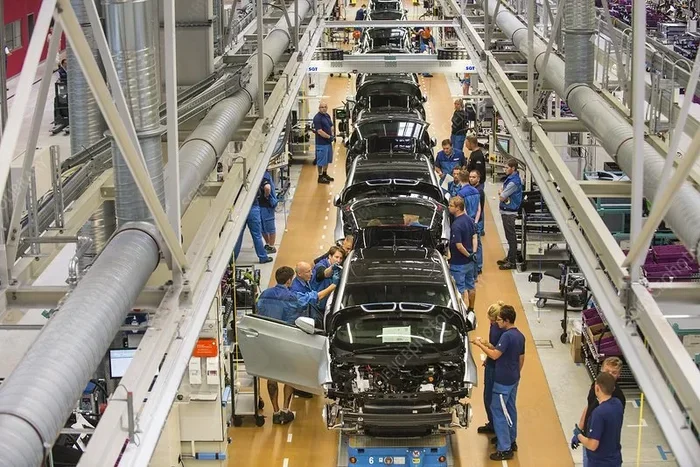
By afternoon, the final assembly area buzzes with activity. Workers install seats, dashboards, and engines. Forklifts deliver parts from warehouses across the plant. Every minute counts when thousands of vehicles are in various stages of completion.
As the sun sets, the night shift takes over. The factory never truly stops. This continuous operation is what allows manufacturers to meet global demand. The dedication behind every vehicle is truly remarkable.
How Factories Compare: Mass Production vs. Custom Builds
The speed of car manufacturing varies wildly depending on the type of factory. Let us compare the two main approaches.
Mass Production Factories
Mass production factories build cars fast and efficiently. They produce thousands of identical vehicles. The assembly line is optimized for speed and consistency. Companies like Ford, Toyota, and Volkswagen operate these types of facilities.
These factories can build a car in as little as 18 hours. The key is standardization. Every vehicle follows the same path. Parts arrive on schedule. Robots handle repetitive tasks. Humans focus on quality checks and complex installations.
Custom and Low-Volume Builders
Custom builders take a completely different approach. Companies like McLaren or Ferrari produce far fewer vehicles. Each car may receive more individual attention. The production time for a custom vehicle can stretch to days or even weeks.
Low-volume factories often build cars to order. Customers choose their options, and the factory starts production. This personalized approach sacrifices speed for uniqueness. The result is a one-of-a-kind vehicle built with exceptional care.
| Factor | Mass Production | Custom / Low-Volume |
|---|---|---|
| Build Time Per Car | 18-35 hours | 3-14 days |
| Annual Output | Thousands to millions | Dozens to hundreds |
| Automation Level | Very high | Moderate to high |
| Customization | Limited options | Extensive personalization |
| Cost Per Unit | Lower | Higher |
| Quality Control Focus | Consistency across units | Individual attention per unit |
As you can see, the approach changes everything. Mass production prioritizes speed and volume. Custom builds prioritize uniqueness and craftsmanship. Both have their place in the automotive world.
The Future of Car Manufacturing Speed
The automotive industry is changing fast. New technologies are reshaping how factories operate. The future of factory production looks incredibly exciting.
Artificial intelligence is playing a bigger role every year. AI systems can predict supply chain issues before they happen. They optimize assembly line speeds in real time. Some factories already use AI to detect defects on the production line.
Electric vehicles are also changing the game. EV manufacturing has fewer moving parts than traditional cars. This means simpler assembly processes. Factories building EVs often report faster production line speed and lower costs.
3D printing is another emerging technology. Some manufacturers now print plastic and metal parts directly. This could reduce stamping and welding time in the future. While still in early stages, the potential is enormous.
Smart factory systems connect every part of the production process. Sensors track every vehicle in real time. Data flows seamlessly between stations. This connected approach minimizes delays and maximizes efficiency.
The bottom line is that factories will keep getting faster. But speed will never come at the expense of quality. The best manufacturers balance both perfectly.
Quick Tips for Understanding Factory Production
- Watch factory tour videos online. Many manufacturers publish behind-the-scenes content that shows the real pace of production.
- Follow automotive news. New factory openings and expansions often come with details about production capacity and timelines.
- Compare model years. Changes in a car model can affect how long it takes to build. New designs sometimes slow initial production.
- Think about the supply chain. Global events like chip shortages can significantly impact factory timelines and delivery dates.
- Remember that speed is not everything. A fast build time means nothing if the quality is not there.
Common Mistakes People Make About Factory Build Times
There are several misconceptions about how long it takes to build a car. Let us clear some of them up.
Mistake 1: Assuming the factory builds the entire car in one location. In reality, many parts come from suppliers around the world. The factory mainly assembles these parts into a finished vehicle.
Mistake 2: Thinking the build time includes shipping. The 18 to 35-hour figure covers only factory assembly. Shipping the finished vehicle to a dealership adds additional days or weeks.
Mistake 3: Believing all factories work at the same speed. As we covered earlier, factory size, automation, and vehicle complexity all affect timelines. A sports car factory will operate very differently from a truck plant.
Mistake 4: Ignoring the design and engineering phase. Before any factory builds a car, engineers spend years designing and testing it. The factory build time is just the final step in a much longer journey.
Expert Insights on Automotive Manufacturing
Industry experts agree that the car manufacturing process has never been more efficient. Modern factories use data-driven approaches to optimize every second of the assembly line. According to automotive analysts, the average time to build a car has decreased by about 30% over the past two decades.
One expert from a major automotive consultancy noted that the biggest factor in production speed is not technology. It is the human ability to continuously improve processes. Workers and engineers constantly find ways to save time and reduce waste.
Another insight from factory managers is that flexibility is key. The best factories can switch between models with minimal downtime. This flexibility allows them to respond quickly to market demand. It also helps them manage supply chain disruptions more effectively.
Sustainability is also becoming a major focus. Factories are investing in renewable energy and waste reduction. These efforts sometimes add time to the process but create long-term value for the environment and the brand.
Key Takeaways on Factory Build Times
- Average assembly time is 18 to 35 hours: This is the time a vehicle spends on the factory floor from start to finish.
- Six main stages make up the process: Stamping, welding, painting, powertrain installation, interior fitting, and final inspection.
- Multiple factors influence production speed: Factory size, vehicle complexity, supply chain, automation, and customization all play a role.
- Mass production is faster than custom builds: Standardized processes allow high-volume factories to build cars in hours, not days.
- Technology continues to improve speed: AI, robotics, and smart factory systems are making vehicle assembly faster every year.
- Quality control adds time but is non-negotiable: Every vehicle must pass rigorous inspections before leaving the factory.
- The full journey takes much longer than factory time: Design, engineering, parts sourcing, and shipping all add to the total timeline.
Conclusion
The answer to how long does a factory take to build a car is both simpler and more complex than most people think. On the assembly line, a finished vehicle emerges in under 35 hours. But the complete car manufacturing process involves years of design, months of parts sourcing, and hours of precise assembly.
Every car you see on the road represents thousands of hours of work. From the stamping press that shapes the first panel to the quality control inspector who gives the final approval, every person and machine plays a vital role. The automotive manufacturing industry is a marvel of modern engineering and organization.
Next time you visit a car dealership or see a factory on the highway, remember what happens inside. Hundreds of workers and thousands of robots collaborate to build vehicles that take us everywhere. The speed, precision, and scale of modern factory production is truly something to appreciate.
Whether you are buying a mass-produced sedan or a hand-built luxury SUV, you now understand the journey each vehicle takes. The factory floor is where dreams become reality, one car at a time.
Frequently Asked Questions
How long does it take to build a car from start to finish?
The factory assembly takes about 18 to 35 hours. But the full process from design to delivery can take several months. This includes engineering, parts sourcing, assembly, quality checks, and shipping to dealerships.
What is the fastest a factory can build a car?
The fastest mass-production factories can build a car in as little as 18 hours. This requires high automation, standardized parts, and a well-optimized assembly line. Companies like Toyota and Volkswagen are known for their speed.
Do electric cars take longer to build than gas cars?
Not necessarily. Electric vehicles often have simpler assembly processes because they have fewer moving parts. Many EV factories report comparable or even faster build times than traditional car factories.
Why do some cars take longer to build than others?
Vehicle complexity is the main factor. Luxury cars with more features take longer to assemble. Custom builds and low-volume production also extend the timeline significantly compared to mass production.
What happens if a parts shipment is delayed?
A parts delay can slow down or temporarily stop the assembly line. Factories maintain buffer inventories to handle short disruptions. But major supply chain issues can delay production for days or weeks.
Can you visit a car factory to see the build process?
Yes, many manufacturers offer factory tours. Companies like Toyota, Ford, and Tesla have visitor centers and tour programs. It is a great way to see the car manufacturing process in action and understand how long it really takes to build a car.