Car Interior Dry Cleaning Secrets for a Fresh Ride
Car interior dry cleaning is the fastest and easiest way to keep your vehicle looking and smelling great without the mess of water and steam. This guide covers the best products, step-by-step methods, and expert tips that make interior cleaning simple for any car owner. You will learn how to tackle stains, eliminate odors, and protect your surfaces using dry foam cleaner and other effective tools.
There is nothing worse than climbing into your car after a long week only to be hit by a stale smell or a sticky dashboard. Car interior dry cleaning solves that problem fast, and it does not require a single drop of water. Whether you drive a compact sedan or a spacious SUV, keeping the inside of your vehicle clean is about more than just looks. A fresh interior boosts your mood, improves air quality, and even helps with resale value.
Many car owners skip interior care because they think it is too time-consuming or expensive. But car interior dry cleaning breaks that myth completely. With the right tools and a little know-how, you can transform your car’s cabin in under an hour. No steam machines, no wet towels, and no waiting around for things to dry. This approach is perfect for busy people who want professional results without the hassle.
In this guide, we walk you through everything you need to know about interior cleaning the dry way. You will discover the best products on the market, a simple step-by-step process, common pitfalls to avoid, and pro tips that make the job easier. By the end, you will have all the confidence to tackle car detailing at home like a seasoned expert.
Key Takeaways
- Dry cleaning saves time and money: No water, no drying time, and no risk of moisture damage to your electronics or leather.
- The right products make all the difference: Dry foam cleaners, microfiber cloths, and odor eliminators are essential for a thorough car interior dry cleaning routine.
- Regular maintenance prevents buildup: Simple weekly habits keep your car looking fresh and reduce the need for deep cleaning sessions.
- Avoid common mistakes: Using too much product or skipping spot treatment can lead to dull surfaces and lingering smells.
- Prevention works better than cure: Seat covers, stain repellent, and a car freshener go a long way in keeping your ride pristine.
- Dry cleaning is safe for all surfaces: From leather seats to vinyl surfaces and fabric carpets, dry methods work everywhere.
📑 Table of Contents
Why Car Interior Dry Cleaning Matters
Your car interior takes a beating every single day. Coffee spills, food crumbs, pet hair, dust, and sunlight all work together to wear down surfaces and create unpleasant odors. Traditional wet cleaning methods can leave moisture behind, which leads to mold, mildew, and even electrical issues. Car interior dry cleaning eliminates these risks entirely.
The Problem with Traditional Wet Cleaning
Wet cleaning might feel thorough, but it comes with real downsides. Excess water can seep into your dashboard and damage wiring. Fabric carpets that stay damp for too long can develop mold within 24 to 48 hours. Leather seats exposed to too much moisture can crack or peel over time. Wet cleaning also means waiting for everything to dry before you can drive safely.
Dry cleaning avoids all of these problems. It uses minimal moisture, so there is no risk of water damage. The cleaning agents work on contact, lifting dirt and stains without soaking into the material. This makes dry foam cleaner and similar products ideal for everyday interior cleaning tasks.
How Dry Cleaning Saves Time and Money
Time is money, and car interior dry cleaning saves you both. A full wet detailing session can take three to four hours, including drying time. A dry cleaning session takes 30 to 60 minutes at most. You do not need special equipment or a garage with proper ventilation. You can clean your car in your driveway, parking lot, or even your living room.
Cost-wise, dry cleaning products are generally affordable. A can of dry foam cleaner costs between $10 and $20 and lasts for multiple uses. Microfiber cloths are reusable and inexpensive. When you compare the cost of regular professional car detailing visits to the price of DIY dry cleaning supplies, the savings add up quickly.
| Method | Time Required | Cost per Session | Risk of Damage |
|---|---|---|---|
| Wet Steam Cleaning | 3-4 hours | $100-$200 (professional) | High (moisture damage) |
| Dry Foam Cleaning | 30-60 minutes | $10-$25 (DIY supplies) | Low (minimal moisture) |
| Spot Cleaning Only | 10-15 minutes | $5-$10 (spot products) | Very Low |
| Full Dry Detailing | 1-2 hours | $20-$40 (DIY supplies) | Very Low |
Best Products for Car Interior Dry Cleaning
Choosing the right products is the foundation of effective car interior dry cleaning. Not all products are created equal, and using the wrong one can leave residue or damage sensitive surfaces. Here is a breakdown of the essential product categories you need.
Dry Foam Cleaners
A quality dry foam cleaner is the star of any dry cleaning routine. These products spray a light foam directly onto surfaces, which you then wipe away with a cloth. The foam lifts dirt, grime, and stains without soaking the material. Look for formulas that are safe on leather, fabric, and plastic. Popular brands like Chemical Guys and Meguiar’s offer reliable options for car detailing enthusiasts.
When selecting a dry foam cleaner, check the label for terms like “waterless,” “no-rinse,” or “quick-dry.” These indicate the product is designed specifically for dry application. Avoid cleaners that require rinsing, as they defeat the purpose of dry cleaning.
Microfiber Cloths and Brushes
Microfiber cloths are a must-have for any interior cleaning toolkit. They trap dirt and dust effectively without scratching surfaces. Use different colors for different areas to avoid cross-contamination. For example, use one cloth for the dashboard and another for the seats.
Soft-bristle brushes help loosen dirt from fabric and textured surfaces. A small detailing brush works wonders on air vents, seams, and crevices where dust likes to hide. Pair your brush with a vacuum cleaner for best results during the debris removal step.
Odor Eliminators and Car Fresheners
After cleaning, your car should smell fresh and clean. An odor eliminator neutralizes smells at the source rather than just masking them with fragrance. Look for enzymatic odor eliminators that break down the molecules causing bad smells. For ongoing freshness, a quality car freshener or car smell freshener keeps the cabin pleasant between cleanings.
Dashboard Polish and Stain Repellent
A good dashboard polish adds a protective layer to your plastic and vinyl surfaces. It prevents UV damage, reduces fading, and gives your dashboard a rich, matte finish. Stain repellent sprays create an invisible barrier on fabric seats and carpets, making future spills easier to clean.
Step-by-Step Guide to Dry Cleaning Your Car Interior
Now that you have your products ready, let us walk through the actual process of car interior dry cleaning. Follow these steps in order for the best results.
Step 1: Remove Loose Debris
Start by removing all trash, personal items, and floor mats from your car. Take everything out so you can access every surface. Use a vacuum cleaner with a crevice attachment to sweep out crumbs, dust, and debris from seats, carpets, and floor wells. This step is quick but essential for effective spot cleaning later on.
Step 2: Shake Out and Beat Floor Mats
Take your floor mats outside and give them a good shake. For rubber mats, use a hose to rinse them off and let them air dry. For fabric mats, a light beating against a hard surface dislodges embedded dirt. This is one of the simplest yet most overlooked parts of car maintenance.
Step 3: Apply Dry Foam Cleaner to Surfaces
Spray a light mist of dry foam cleaner onto a microfiber cloth or directly onto the surface, depending on the product instructions. Work in small sections, starting with the dashboard and center console. Use gentle circular motions to lift dirt and grime. Wipe away the foam with a clean, dry cloth.
For leather seats, use a leather-specific dry foam cleaner. Apply it sparingly and buff gently. Leather is more delicate than plastic or vinyl, so less is more. For vinyl surfaces and hard plastics, the standard dry foam cleaner works perfectly.
Step 4: Tackle Fabric Stains with Dry Method
For fabric stain removal, spray a small amount of dry foam cleaner directly onto the stain. Let it sit for 30 to 60 seconds. Then blot with a clean microfiber cloth. Do not rub aggressively, as this can push the stain deeper into the fabric. Repeat if necessary until the stain lifts.
For stubborn stains, a soft-bristle brush can help work the cleaner into the fabric fibers. After treating the stain, blot the area dry with a separate cloth. The fabric stain removal process should leave no visible residue or moisture behind.
Step 5: Wipe Down All Surfaces
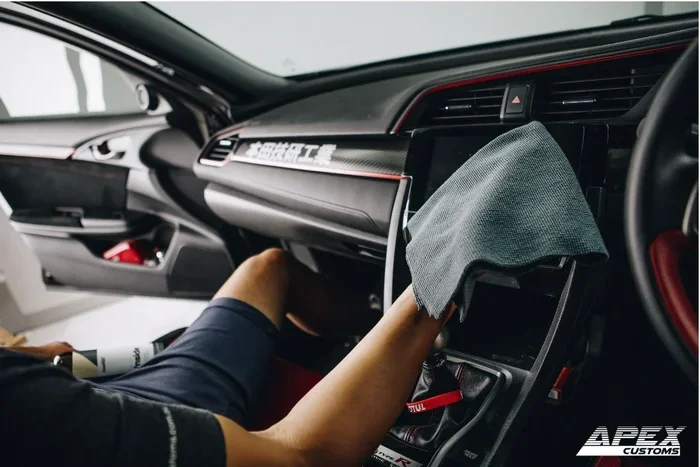
Go over every surface in your car with a clean, dry microfiber cloth. This includes the steering wheel, door panels, center console, and any other plastic or vinyl areas. This final wipe removes any remaining residue and gives surfaces a clean, polished look.
For hard-to-reach areas like air vents and button crevices, use a detailing brush or a cotton swab dipped in a small amount of cleaner. This level of detail is what separates a basic clean from a professional-looking car detailing job.
Step 6: Freshen the Interior
Once all surfaces are clean and dry, it is time to freshen up the interior. Spray an odor eliminator into the air and onto fabric seats if needed. Place a car freshener or car smell freshener in a discreet location. Choose a scent that is subtle and not overpowering. You want your car to smell clean, not like a fragrance store.
Step 7: Apply Protective Treatments
The final step in car interior dry cleaning is protection. Apply a dashboard polish to plastic and vinyl surfaces using a microfiber cloth. This creates a barrier against UV rays and daily wear. Spray stain repellent on fabric seats and carpets to make future spills easier to manage.
For leather seats, use a leather conditioner after cleaning. This keeps the leather supple and prevents cracking. Regular conditioning is one of the best car maintenance habits you can build.
Common Mistakes to Avoid
Even with the best products, mistakes can happen. Here are the most common errors people make during car interior dry cleaning and how to avoid them.
Using Too Much Product
More product does not mean better cleaning. Over-spraying dry foam cleaner can leave a sticky residue on surfaces. Always spray onto your cloth first, not directly onto the car surface. A light, even application works best for interior cleaning.
Skipping Spot Treatment
Waiting too long to treat a stain makes it harder to remove. As soon as you notice a spill, blot it with a dry cloth and apply a small amount of cleaner. Early spot cleaning prevents stains from setting in and becoming permanent.
Using the Wrong Cloth
Avoid paper towels and rough towels. They can scratch delicate surfaces like dashboards and leather seats. Always use a soft, high-quality microfiber cloth for wiping and buffing. Keep several on hand so you always have a clean one available.
Neglecting the Air Vents and Crevices
Dust and grime build up in air vents, seat seams, and small crevices. If you skip these areas, your car will look clean at first glance but feel dirty up close. Use a detailing brush or compressed air to keep these spots free of debris.
Forgetting to Clean the Floor Mats
The floor mats are the dirtiest part of your car interior. If you clean everything else but ignore the mats, you are only halfway done. Make floor mat cleaning a non-negotiable part of your car interior dry cleaning routine.
Pro Tips for a Long-Lasting Fresh Ride
Prevention Is Better Than Cure
The best way to keep your car interior clean is to prevent dirt and stains from accumulating in the first place. Use seat covers to protect fabric seats from spills and wear. Apply stain repellent every few months to create a protective shield. Keep a small trash bag in your car and empty it daily.
A car freshener or car smell freshener also helps maintain a pleasant atmosphere. Choose long-lasting options that release fragrance gradually. Avoid cheap air fresheners that turn overpowering after a few days.
Seasonal Interior Care Tips
Different seasons bring different challenges for your car interior. In summer, UV rays fade dashboards and seats. Use a dashboard polish with UV protection during the warmer months. In winter, salt and moisture from boots can stain carpets and seats. Keep a set of removable floor mats that you can shake out and clean regularly.
During allergy season, dust and pollen can accumulate quickly. A weekly vacuum session with a vacuum cleaner and a quick wipe-down with a damp microfiber cloth keeps allergens at bay. This simple habit makes a huge difference in air quality and overall cleanliness.
Build a Cleaning Schedule
Consistency is key to maintaining a fresh car interior. Create a simple schedule that works for your lifestyle. A quick wipe-down every week, a deeper dry cleaning session once a month, and a full car detailing session every three months will keep your vehicle looking and smelling its best.
Set a reminder on your phone or mark it on your calendar. When cleaning becomes a habit rather than a chore, it takes less time and effort each time. Soon, car interior dry cleaning will feel as natural as washing your hands.
Quick Tips for Busy Car Owners
Not everyone has time for a full cleaning session. Here are some quick tips that make car interior dry cleaning fast and easy even on your busiest days.
- Keep a cleaning kit in your trunk: Store a microfiber cloth, a small bottle of dry foam cleaner, and a portable vacuum in your car at all times.
- Clean as you go: Wipe up spills immediately instead of letting them sit. This prevents stains from setting and reduces the need for deep cleaning.
- Use a handheld vacuum during gas stops: A quick 2-minute vacuum session at the gas station keeps debris from building up between deep cleanings.
- Invest in washable seat covers: They protect your seats and can be tossed in the laundry when they get dirty.
- Use dryer sheets on fabric seats: A light wipe with a dryer sheet adds a fresh scent and helps repel dust.
- Set a 10-minute timer: Even a quick 10-minute cleanup session makes a noticeable difference in how your car looks and feels.
Car interior dry cleaning does not have to be complicated or time-consuming. With the right products and a consistent approach, you can enjoy a fresh, clean car every single day. The key is to stay proactive, clean regularly, and never let stains or odors settle in for too long.
Whether you are a daily commuter or an occasional driver, taking care of your car interior pays off in comfort, appearance, and even health. Clean air inside your vehicle means fewer allergens, less dust, and a more enjoyable driving experience. Start with the basics, build your routine, and watch how a little effort transforms your entire ride.
The beauty of car interior dry cleaning is that anyone can do it. You do not need special skills, expensive equipment, or a professional background. All you need is the right products, a few minutes of your time, and the willingness to keep your car in great shape. Follow the steps in this guide, avoid the common mistakes, and make car maintenance a regular part of your routine. Your car will thank you every time you get behind the wheel.
Frequently Asked Questions
What is car interior dry cleaning and how does it work?
Car interior dry cleaning is a method of cleaning your vehicle’s cabin without using water or steam. It relies on dry foam cleaners, microfiber cloths, and specialized sprays that lift dirt and stains on contact. The process is quick, mess-free, and safe for all interior surfaces including leather, fabric, plastic, and vinyl.
How often should I dry clean my car interior?
A light dry cleaning session every one to two weeks keeps your car looking fresh. A deeper session once a month addresses buildup and stubborn stains. The frequency depends on how often you use your car, whether you eat or drink inside, and if you have pets. Regular car maintenance makes each session faster and more effective.
Can dry cleaning remove tough stains from car seats?
Yes, most surface stains respond well to dry foam cleaner and gentle blotting. For older or deeply set stains, you may need to repeat the treatment a few times. Fabric stain removal works best when you treat the stain as soon as possible. For leather seats, always use a product specifically formulated for leather to avoid damage.
Is car interior dry cleaning safe for leather seats?
Absolutely. Dry cleaning is one of the safest methods for leather seats because it uses minimal moisture. Excess water can cause leather to crack or dry out, so the low-moisture approach of dry cleaning actually protects your leather. Always follow up with a leather conditioner to keep the material supple and hydrated.
What products do I need to start dry cleaning my car interior?
You need a dry foam cleaner, several microfiber cloths, a soft detailing brush, and an odor eliminator. Optionally, you can add a dashboard polish, stain repellent, and a car freshener for extra protection and freshness. These supplies are affordable and last for multiple cleaning sessions.
How does dry cleaning compare to professional car detailing?
Car interior dry cleaning at home is faster, cheaper, and more convenient than visiting a professional detailer. While professional car detailing offers deeper results for heavy buildup, regular dry cleaning keeps your car in excellent condition between professional visits. Many car owners find that a consistent DIY routine reduces the need for expensive professional sessions.
=== CONCLUSION ===
Car interior dry cleaning is one of the simplest and most effective ways to keep your vehicle looking and feeling like new. It saves time, saves money, and protects your car from the damage that water-based methods can cause. With the right auto detailing products and a consistent routine, anyone can achieve professional-level results at home.
Start with the basics: a good dry foam cleaner, quality microfiber cloths, and a vacuum cleaner for loose debris. Work through your car section by section, treating stains promptly and protecting surfaces with polish and repellent. Avoid the common mistakes we covered, and build a schedule that fits your lifestyle.
The secret to a truly fresh ride is not one big cleaning session. It is the small, regular habits that add up over time. Make interior cleaning a part of your weekly routine, keep your supplies stocked, and enjoy the satisfaction of stepping into a clean, fresh-smelling car every single day. Your car interior dry cleaning journey starts now, and the results will speak for themselves.