Arkansas Window Tint Law Guide Everything You Must Know
Arkansas window tint law sets clear rules on how dark you can tint your car windows. The state regulates Visible Light Transmission (VLT) percentages for front, rear, and side windows. Knowing these legal tint limits helps you avoid fines and stay safe on the road.
Key Takeaways
- Front windshield tint: Must allow over 25% light transmission, with a non-reflective strip on top.
- Front side windows: Must allow more than 25% VLT for passenger vehicles.
- Rear windows: Can be darker, but dual side mirrors are required if rear tint is applied.
- Medical exemptions: Arkansas allows special permits for those with sun sensitivity.
- Penalties: Illegal tint can result in fines up to $100 per violation.
- Reflective tint: Not allowed on front or rear windows in Arkansas.
- Certification matters: Always buy tint film from a certified tint installer to stay compliant.
📑 Table of Contents
- Understanding Arkansas Window Tint Law: A Complete Overview
- Legal Tint Limits for Each Window in Arkansas
- Medical Exemptions for Window Tint in Arkansas
- Tint Installation Rules and Requirements in Arkansas
- Pennalties for Illegal Tint in Arkansas
- Tips for Choosing the Right Tint Film
- Common Mistakes People Make with Window Tint
- Key Takeaways
- Conclusion
Understanding Arkansas Window Tint Law: A Complete Overview
Car window tinting is popular. It keeps your vehicle cooler. It adds privacy. It can even protect your skin from harmful UV rays. But in Arkansas, there are rules you must follow. The Arkansas window tint law sets limits on how dark or reflective your tint can be.
If you drive in Arkansas, you need to know these rules. A tint violation can lead to fines. It can also cause trouble during vehicle inspections. This guide breaks down everything you need to know. We will cover legal limits, exemptions, and practical tips. Let us dive in.
The state of Arkansas regulates car window tinting based on Visible Light Transmission, or VLT. VLT measures how much light passes through your window film. The lower the VLT number, the darker the tint. Understanding this concept is the first step to staying legal on Arkansas roads.
What Is VLT and Why Does It Matter?
VLT stands for Visible Light Transmission. It is a percentage. This percentage tells you how much light your window film lets through. A film with 50% VLT lets in half the light. A film with 5% VLT is very dark. Almost no light passes through.
Arkansas law uses VLT percentages to set legal tint limits. Different windows have different rules. For example, your front side windows must let in more light than your rear windows. This helps drivers see clearly. It also helps law enforcement see inside your vehicle during traffic stops.
The tint darkness rules in Arkansas apply to passenger cars and other vehicles. The rules are not the same for every vehicle type. We will look at each window category in detail below.
Legal Tint Limits for Each Window in Arkansas
Arkansas breaks down its window tint regulations by vehicle window. Each window has its own VLT requirement. Here is a clear breakdown of what the law says.
Windshield Tint Rules
The windshield is the most important window for visibility. Arkansas law is strict here. You can tint the top portion of your windshield. But the tint must be above the manufacturer’s AS-1 line. If your vehicle has no AS-1 line, the tint cannot go below five inches from the top.
The tint on your windshield must be non-reflective. It must also allow more than 25% of light to pass through. Any tint below this limit is illegal. This rule helps drivers see the road clearly, especially at night or in bad weather.
Front Side Window Tint Rules
For passenger vehicles, the front side windows must allow more than 25% VLT. This means your front doors’ windows cannot be too dark. The goal is to let enough light in so the driver can see side mirrors and surroundings clearly.
Some drivers like a very dark look. But going below 25% VLT on front windows is a tint violation in Arkansas. The fine can be costly. And you may have to remove the tint before your next inspection.
Rear Side Window and Rear Window Tint Rules
Here is where Arkansas allows more flexibility. The rear side windows and rear window can be tinted darker. There is no specific VLT minimum for these windows on passenger vehicles. You can go as dark as you want on the back.
But there is a catch. If your rear windows are tinted, your vehicle must have dual side mirrors. This ensures you can still see behind you. Without dual mirrors, dark rear tint becomes a safety issue. And it becomes illegal under Arkansas state law.
Medical Exemptions for Window Tint in Arkansas
Not everyone can tolerate regular tint film darkness. Some people have medical conditions that make them sensitive to sunlight. Arkansas understands this. The state offers a tint exemption for those with qualifying medical needs.
Who Qualifies for a Medical Exemption?
You may qualify if you have a condition that makes you sensitive to sunlight. Conditions like lupus, eczema, or certain forms of skin cancer can qualify. Your doctor must provide documentation. This documentation must explain why you need darker tint than what the law normally allows.
The exemption process in Arkansas is straightforward. You need a signed letter from a licensed physician. The letter must state the medical condition and the need for darker vehicle window tint. You must carry this documentation in your vehicle at all times.
How to Apply for an Exemption
You do not need to submit the letter to a state office. But you must have it with you during traffic stops. Law enforcement officers may ask to see it. Having the documentation ready prevents misunderstandings and tint tickets.
Keep in mind that the exemption allows darker tint. But it does not waive all rules. Your tint must still meet basic safety standards. Reflective tint is still not allowed, even with an exemption.
Tint Installation Rules and Requirements in Arkansas
It is not just about how dark your tint is. Arkansas also has rules about how tint is installed. These rules ensure safety and quality. Following them keeps you on the right side of the law.
Certified Tint Film and Materials
Arkansas requires that tint film used on vehicles meet certain standards. The film must be labeled with its VLT percentage. This label helps law enforcement verify compliance. If your tint does not have a label, you may face questions during a traffic stop.
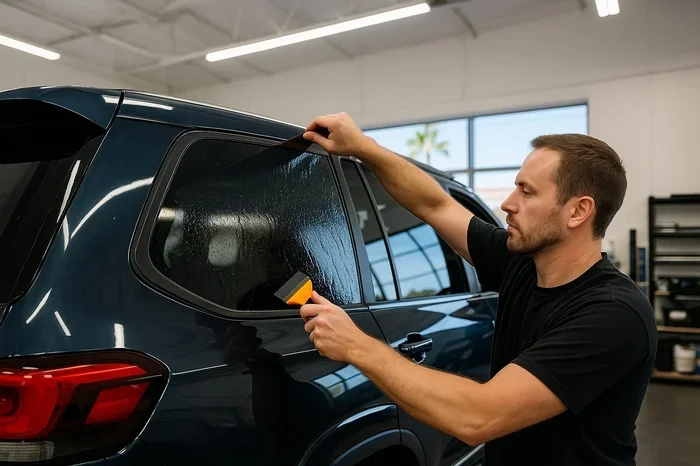
Always buy tint from a reputable tint installer. A certified installer knows the legal tint limits in Arkansas. They can recommend the right film for your vehicle. They also ensure the installation meets state requirements.
Side Mirrors and Tint Compliance
As mentioned earlier, dual side mirrors are required if your rear windows are tinted. This rule applies to both the rear side windows and the rear windshield. The mirrors must be in good working condition.
Some drivers remove factory mirrors and install aftermarket ones. This is fine, as long as the mirrors meet Arkansas safety standards. The mirrors must provide a clear view of the road behind you.
Pennalties for Illegal Tint in Arkansas
Breaking Arkansas window tint law comes with consequences. Understanding the penalties can help you make better choices. Nobody wants a tint ticket, especially when it is easy to avoid.
Fines and Costs
In Arkansas, illegal window tint can result in a fine. The fine can be up to $100 per violation. This may not sound like much. But if you have multiple windows out of compliance, the costs add up fast.
Beyond fines, you may be ordered to remove the illegal tint. This means paying for removal and then paying for new, legal tint. It is a waste of money that can easily be avoided.
Vehicle Inspection Issues
Arkansas requires vehicles to pass safety inspections. Illegal tint can cause your vehicle to fail inspection. This means you cannot register your car until the tint is fixed. It can be a hassle, especially if you rely on your vehicle daily.
Some drivers try to hide illegal tint before inspections. This is not a good idea. Officers know the common tricks. And getting caught can lead to bigger problems, including additional fines.
Tips for Choosing the Right Tint Film
Now that you know the rules, let us talk about choosing the right tint film. There are many options on the market. Not all of them are equal. Here are some tips to help you make the best choice.
Consider Your Climate
Arkansas gets hot in the summer. A good tint film can block heat and UV rays. Look for films with high infrared rejection. This keeps your car cooler and protects your interior from fading.
Ceramic tint films are excellent for heat rejection. They do not interfere with electronic signals. This means your GPS, phone, and toll transponders work fine. They are also very durable and long-lasting.
Check Local Tint Shops
Not all tint installers are the same. Ask friends for recommendations. Read online reviews. Visit a few shops and ask questions. A good installer will explain the legal tint limits and help you choose compliant film.
Ask to see the film labels. Make sure they show the VLT percentage. A trustworthy shop will be transparent about this. They will also offer warranties on their work.
Balance Style and Safety
Dark tint looks great. But safety comes first. Choose a tint that looks good and meets Arkansas state law. Remember that too-dark tint can reduce visibility at night. It can also make it harder for first responders to see inside your vehicle during emergencies.
A medium tint level often strikes the best balance. It looks sleek. It provides privacy. And it keeps you within the legal limits. Think about your daily driving needs when choosing your tint darkness.
Common Mistakes People Make with Window Tint
Many drivers run into trouble with car window tinting because of simple mistakes. Avoiding these errors keeps you compliant and saves money.
Buying Tint Online Without Checking the Law
Online shopping is convenient. But not all tint film sold online is legal in every state. Some films are too dark for Arkansas. Always check the VLT before you buy. Make sure the film meets the legal tint limits for each window.
Ignoring the Dual Mirror Rule
This is one of the most common mistakes. Drivers tint their rear windows dark but forget about the mirrors. Without dual side mirrors, dark rear tint is illegal. Double-check this requirement before you finalize your installation.
Skipping the Certificate
Some tint installers forget to provide the required certificate. This certificate proves your tint meets VLT standards. Without it, you may have trouble proving compliance during a traffic stop. Always ask for the certificate and keep it in your glove box.
Key Takeaways
- Windshield tint: Must be non-reflective and above the AS-1 line, allowing over 25% VLT.
- Front side windows: Must allow more than 25% VLT on passenger vehicles.
- Rear windows: Can be darker, but dual side mirrors are required.
- Medical exemptions: Arkansas allows darker tint with proper doctor documentation.
- Reflective tint: Not allowed on any window in Arkansas.
- Penalties: Fines up to $100 and potential inspection failure for illegal tint.
- Certified film: Always use labeled, certified tint from a reputable installer.
Conclusion
Understanding Arkansas window tint law is essential for every vehicle owner. The rules are clear and reasonable. They balance style, privacy, and safety on the road. By following the VLT limits and installation requirements, you can enjoy your tinted windows without worry.
Remember to keep your documentation handy. If you have a medical exemption, carry the letter with you. Choose your tint film wisely. Work with a certified tint installer who knows the local regulations. And always double-check your mirrors if your rear windows are tinted.
Staying compliant with Arkansas state law is simple when you know the rules. Use this guide as your go-to resource. Share it with friends who are considering car window tinting. And most importantly, drive safely and enjoy the benefits of legal window tint.
Whether you want to beat the heat or add a sleek look to your ride, legal window tint in Arkansas is within your reach. Just stay informed, stay compliant, and enjoy the ride.
FAQs
Can I tint my windshield in Arkansas?
Yes, but only the top portion. The tint must be above the AS-1 line or at least five inches from the top. It must also be non-reflective and allow more than 25% VLT. Any tint below these limits is not allowed.
What happens if I get caught with illegal tint in Arkansas?
You can be fined up to $100 per violation. You may also be ordered to remove the illegal tint. In some cases, your vehicle may fail its safety inspection until the tint is fixed.
Are there any exceptions to Arkansas window tint law?
Yes. Arkansas offers medical exemptions for people with sun-sensitive conditions. You need a signed letter from a licensed physician. Keep this documentation in your vehicle at all times during traffic stops.
Can I use reflective tint on my windows in Arkansas?
No. Reflective tint is not allowed on any window in Arkansas. This includes the windshield, front side windows, rear side windows, and rear window. The law prohibits any tint that has a metallic or reflective appearance.
Do I need dual side mirrors if I tint my rear windows?
Yes. If your rear side windows or rear windshield are tinted, Arkansas law requires dual side mirrors. This ensures you have adequate visibility behind your vehicle. Without dual mirrors, the tint is considered illegal.
What VLT percentage is best for rear windows in Arkansas?
There is no specific VLT minimum for rear windows on passenger vehicles in Arkansas. You can choose any darkness level you prefer. Just make sure you have dual side mirrors installed to stay compliant with the law.