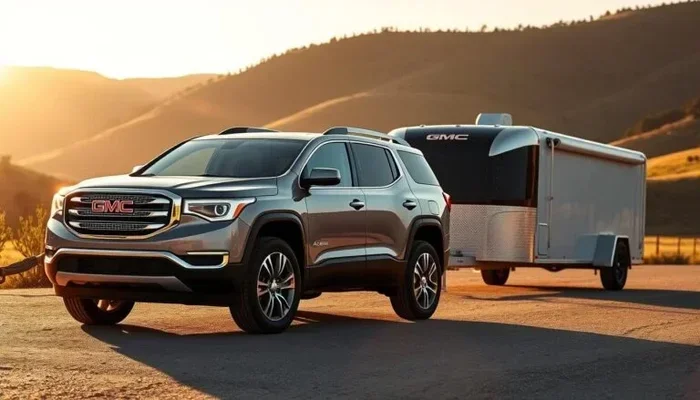
How Much Does a GMC Sierra Weigh Compared to Other Trucks
The GMC Sierra weight varies by trim and configuration, ranging from about 4,500 pounds for a base crew cab to over 6,000 pounds for a heavy-duty Sierra 3500. This guide breaks down the curb weight, payload, and towing capacity of every Sierra model and compares it head-to-head with rivals like the Ford F-150 and Ram 1500. You will leave with a clear picture of which Sierra fits your needs.
When you are shopping for a new full-size pickup, the numbers on the spec sheet can feel overwhelming. One of the first questions buyers ask is, how much does a GMC Sierra weigh? The answer depends on the trim, cab style, bed length, and engine option. In this article, we will break down the GMC Sierra weight in a simple, easy-to-understand way. You will learn the curb weight for every major model, see how it stacks up against the Ford F-150 and Ram 1500, and understand why payload and towing numbers matter. We will also share quick tips and common mistakes to avoid when interpreting truck weight specs.
The GMC Sierra is a full-size pickup truck built for work and play. Its weight affects everything from fuel economy to towing capacity. Knowing the numbers helps you choose the right configuration. Whether you need a light-duty Sierra 1500 or a beefy Sierra 3500, the pounds add up fast. Let us walk through the details step by step.
Key Takeaways
- GMC Sierra weight ranges from 4,500 to 6,000+ pounds depending on the model.
- The Sierra 1500 is a half-ton truck, while the 2500 and 3500 are heavy-duty pickups.
- Bed length and cab style significantly impact the overall truck weight.
- Payload and towing capacity are directly tied to the vehicle’s curb weight and GVWR.
- The Sierra competes closely with the Ford F-150 and Ram 1500 in weight and capability.
- Understanding your truck’s weight helps you stay within safe limits and avoid overloading.
- Factory build time and component choices add to the final weight of the vehicle.
📑 Table of Contents
What Is the Curb Weight of a GMC Sierra?
Curb weight is the weight of the truck with a full tank of fuel and all standard equipment, but no passengers or cargo. It is the baseline number you see on the door jamb sticker. For the GMC Sierra, curb weight changes dramatically from model to model. A base Sierra 1500 with a standard cab weighs around 4,500 pounds. A fully loaded Sierra 3500 Diesel with a long bed can push past 6,200 pounds. These numbers matter because they set the ceiling for what the truck can safely carry.
Curb Weight vs. Gross Weight
Curb weight is not the same as gross vehicle weight rating (GVWR). GVWR is the maximum safe weight of the fully loaded truck, including passengers, cargo, and trailer tongue weight. The difference between curb weight and GVWR is your payload capacity. If your Sierra weighs 5,200 pounds curb and has a GVWR of 7,000 pounds, you have about 1,800 pounds of payload room. Staying under this limit protects your brakes, suspension, and frame.
GMC Sierra Weight by Trim and Cab Style
Every trim level adds features, and features add weight. The base Sierra 1500 WT starts light, but adding leather seats, a sunroof, or a luxury package pushes the number higher. Cab style also plays a big role. A regular cab with a short bed is the lightest configuration. A crew cab with a full-size bed is the heaviest because it needs a longer wheelbase and more structural support.
Sierra 1500 Weight Overview
The Sierra 1500 is the half-ton model in the lineup. It is designed for daily driving and light hauling. The curb weight for a 2024 Sierra 1500 with a regular cab and short bed starts near 4,500 pounds. Moving to a crew cab with a 5.8-foot bed adds about 400 pounds. The Denali trim adds even more luxury weight, often pushing the scale to 5,300 pounds or more. Engine choice matters too. The standard 5.3-liter V8 adds weight compared to the turbocharged 2.7-liter four-cylinder.
Sierra 2500 and 3500 Weight Overview
The Sierra 2500 is a three-quarter-ton truck, and the 3500 is a one-ton truck. These heavy-duty models use larger frames, stronger axles, and bigger brakes. A Sierra 2500 crew cab with a long bed weighs around 6,000 pounds. The Sierra 3500 with the diesel engine can exceed 6,500 pounds. These trucks are built to tow massive fifth-wheel trailers and haul heavy equipment. Their weight is a feature, not a flaw, because it provides stability under load.
| Model | Curb Weight (lbs) | GVWR (lbs) | Payload (lbs) |
|---|---|---|---|
| Sierra 1500 Base | 4,500 | 6,900 | 2,400 |
| Sierra 1500 Crew Cab | 5,300 | 7,200 | 1,900 |
| Sierra 2500 Crew Cab | 6,000 | 9,000 | 3,000 |
| Sierra 3500 Crew Cab Diesel | 6,500 | 10,000 | 3,500 |
How Does the Sierra Compare to Other Full-Size Trucks?
The GMC Sierra does not fight alone. It goes head-to-head with the Ford F-150, Ram 1500, and Chevy Silverado. Each truck has a different weight profile based on its platform and engineering choices. The F-150 uses an aluminum body to shave pounds, while the Sierra sticks with a steel body for durability. The Ram 1500 offers a lighter frame in some trims, but its interior luxury can add weight. When you compare the Sierra 1500 to the F-150, the difference is often just a few hundred pounds.
In the heavy-duty segment, the Sierra 2500 and 3500 compete with the Ford Super Duty and Ram 2500/3500. The Sierra 3500 Diesel weighs more than the Ram 3500 Cummins in some configurations, but it offers a strong towing package. For a lighter truck, the Tacoma can still tow impressively, but the Sierra’s weight gives it a towing edge, as we compare in this guide on whether a 6-cylinder Tacoma can pull a trailer. The Tacoma is a mid-size pickup, so its weight is much lower, typically around 4,300 pounds.
Weight Comparison Table
| Truck | Curb Weight (lbs) | Max Towing (lbs) |
|---|---|---|
| GMC Sierra 1500 | 4,500–5,300 | 13,300 |
| Ford F-150 | 4,000–5,200 | 14,000 |
| Ram 1500 | 4,200–5,400 | 12,750 |
| Chevy Silverado 1500 | 4,500–5,400 | 13,300 |
| GMC Sierra 3500 Diesel | 6,500+ | 36,000 |
Payload and Towing: Why Truck Weight Matters
Truck weight is not just a number on a spec sheet. It directly controls how much you can safely carry and tow. Payload is the weight of passengers and cargo inside the bed. Towing is the weight of the trailer behind the truck. Both numbers depend on the truck’s curb weight, wheelbase, and axle ratio. A heavier truck often has a higher GVWR, which means it can handle more total weight. But a heavier truck also uses more fuel and may be harder to maneuver in tight spaces.
Understanding Payload Capacity
If your Sierra weighs 5,200 pounds curb and you have four passengers at 200 pounds each plus 200 pounds of gear, you are already at 6,200 pounds. If the GVWR is 7,200 pounds, you have 1,000 pounds left for the bed. Overloading the bed can damage the suspension and tires. Always check the payload rating before loading up your truck. The Sierra 2500 and 3500 have much higher payload numbers because they are built on a heavier frame.
Towing Capacity and Weight Distribution
Towing capacity is the maximum weight of a trailer the truck can pull. The Sierra 1500 can tow up to 13,300 pounds when properly equipped with the max tow package. The Sierra 3500 can tow over 36,000 pounds with the diesel engine. Heavier trucks need weight-distribution hitches to keep the trailer from squatting the rear. A proper hitch setup keeps the truck level and maintains steering control. The truck’s weight helps keep the trailer stable at highway speeds.
Factors That Affect the GMC Sierra Weight
Several factors push the scale up or down when you configure a Sierra. Bed length, cab size, engine type, and added packages all play a role. Even the type of bed material—steel versus carbon fiber—changes the number. Understanding these factors helps you choose a configuration that balances capability with everyday usability.
Bed Length and Cab Size
A longer bed adds weight because it requires more metal and a longer frame. A 6.5-foot bed is a popular choice for crew cab owners who need more cargo space without a full-size bed. A longer bed adds weight, which you can explore further in our article on 6.5-foot truck bed length. The extra steel also raises the center of gravity slightly, which can affect handling. Short beds are lighter and often better for daily driving, while long beds suit haulers and campers.
Engine and Drivetrain Weight
The engine is one of the heaviest single components. The standard 5.3-liter V8 weighs about 600 pounds, while the 6.2-liter V8 adds another 100 pounds. The 2.7-liter turbocharged four-cylinder is much lighter, around 400 pounds. The 10-speed automatic transmission also adds weight compared to an 8-speed. Four-wheel drive adds a transfer case and front drive axle, which can add 200 to 300 pounds to the truck.
Factory Build Time and Component Choices
Because the Sierra is a large vehicle, its factory build time is longer than a compact car, as explained in this article on how long it takes a factory to build a car. The assembly line spends extra time fitting heavy-duty frames, larger axles, and reinforced suspension components. These choices increase the final weight but also increase durability. A Sierra 3500 spends more time on the line than a Sierra 1500, and that shows up in the scale weight.
Common Mistakes When Interpreting Truck Weight
Many buyers confuse curb weight with payload capacity. Curb weight is the truck by itself; payload is what you can add. Another mistake is ignoring the tongue weight of a trailer. A 10,000-pound trailer puts about 1,000 pounds of force on the hitch, which counts against your payload. Always add the trailer tongue weight to your cargo when calculating total weight. Also, do not forget that aftermarket accessories like bumpers, winches, and tool boxes add pounds quickly. A steel front bumper can weigh 100 pounds or more.
Quick Tips for Understanding Your Truck’s Weight Specs
- Always check the door jamb sticker for the exact GVWR and curb weight.
- Use a public scale to weigh your truck fully loaded before hitting the road.
- Subtract curb weight from GVWR to find your true payload capacity.
- Remember that a full tank of fuel adds about 100 pounds.
- Choose lighter aftermarket parts when possible to keep weight down.
Expert Insights on Truck Weight and Safety
Experienced truck owners know that weight management is a safety issue. An overloaded truck takes longer to stop and handles poorly in emergency maneuvers. The GMC Sierra is engineered to carry its rated payload, but exceeding that limit stresses every system. Brakes, shocks, and tires all have weight limits printed on the door sticker. Staying within those limits keeps you safe and preserves your warranty. If you regularly haul heavy loads, consider a Sierra 2500 or 3500 with a higher GVWR.
Conclusion
The GMC Sierra weight is a key factor in choosing the right truck for your needs. From the light-duty Sierra 1500 at around 4,500 pounds to the heavy-duty Sierra 3500 Diesel at over 6,500 pounds, each model is built for a specific purpose. Understanding curb weight, payload, and towing capacity helps you stay safe and get the most out of your truck. Compare the numbers against the Ford F-150, Ram 1500, and Silverado to find the best fit. Whether you need a workhorse or a daily driver, the Sierra lineup offers a weight and capability balance that is hard to beat. Take the time to review the spec sheet, and you will drive away confident in your choice.
Frequently Asked Questions
What is the curb weight of a GMC Sierra 1500?
The curb weight of a base GMC Sierra 1500 with a regular cab is around 4,500 pounds. A fully loaded crew cab model with the max tow package can reach 5,300 pounds or more, depending on the engine and bed length.
How much does a GMC Sierra 3500 weigh?
A GMC Sierra 3500 crew cab with the diesel engine typically weighs over 6,500 pounds curb. The exact number depends on the cab style, bed length, and additional equipment like the max tow package or off-road suite.
Is the GMC Sierra heavier than the Ford F-150?
In many configurations, the Sierra 1500 is slightly heavier than the F-150 because Ford uses a mostly aluminum body. The difference is usually a few hundred pounds, but both trucks are in the same class and offer similar capability.
Why does truck weight matter for towing?
Truck weight affects towing because a heavier truck has a higher gross vehicle weight rating (GVWR) and can handle more total load. The curb weight also influences how much weight is left for the trailer and payload combined.
Can I reduce my GMC Sierra’s weight?
You can reduce weight by removing unnecessary aftermarket accessories, choosing lighter seat trim, or opting for a smaller engine. However, removing factory safety features or structural components is not recommended and can be dangerous.
How do I find the exact weight of my GMC Sierra?
The exact weight is printed on the door jamb sticker on the driver’s side. You can also check the owner’s manual or use a public truck scale to get a precise reading of your specific vehicle.