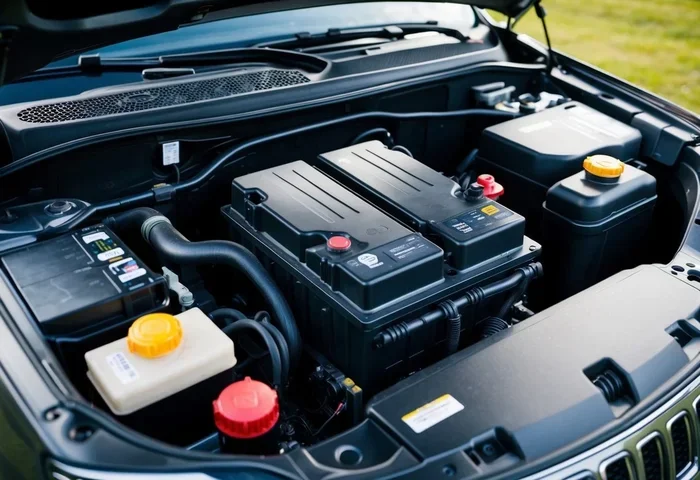
What Should My Jeep Cherokee Battery Voltage Be Exactly
Your Jeep Cherokee battery voltage should read around 12.6 volts when fully charged and idle. When the engine is running, the alternator should push that number to 13.7–14.7 volts. Knowing your correct battery voltage helps you avoid unexpected breakdowns and catch problems early. This guide walks you through everything from testing your battery to understanding what different readings mean.
If you have been asking yourself, what should my Jeep Cherokee battery voltage be exactly, you are in the right place. Your Jeep Cherokee is a rugged, capable SUV that deserves a battery that works every single time you turn the key. But battery voltage is not always straightforward, and a lot of drivers get confused by the numbers they see on their multimeter.
The good news is that understanding battery voltage is simpler than most people think. Once you know what the numbers mean, you can spot trouble early and keep your Cherokee running strong. Whether you are dealing with a slow start or just want to do routine maintenance, this guide covers everything you need to know about Jeep Cherokee battery voltage. Let us dive in.
Key Takeaways
- Normal resting voltage: A healthy Jeep Cherokee battery reads 12.6 volts when the engine is off.
- Running voltage: The alternator should maintain 13.7–14.7 volts while the engine runs.
- Low voltage warning: Anything below 12.4 volts at rest signals a weakened or failing battery.
- Testing tools: A simple digital multimeter gives you accurate voltage readings in seconds.
- Replacement signs: Dim lights, slow cranking, and frequent jump-starts mean it is time for a new battery.
- Maintenance matters: Cleaning terminals and checking connections regularly extends battery life significantly.
📑 Table of Contents
- Understanding Battery Voltage Basics
- How to Test Your Jeep Cherokee Battery Voltage
- Common Causes of Low Battery Voltage in Jeep Cherokees
- When Should You Replace Your Jeep Cherokee Battery?
- Tips for Extending Your Jeep Cherokee Battery Life
- Expert Insights on Jeep Cherokee Battery Health
- Key Takeaways
- Conclusion
Understanding Battery Voltage Basics
Before we get into Cherokee-specific numbers, let us cover the fundamentals. Every car battery operates on a 12-volt system, but the actual voltage changes depending on whether your engine is running or off. Think of it like your blood pressure, it fluctuates based on what your body is doing at the moment.
What Is a Normal Battery Voltage for a Jeep Cherokee?
A fully charged Jeep Cherokee battery should read 12.6 volts when the engine is completely off. This is called the resting voltage. When you start your vehicle and the engine is running, the alternator takes over and the voltage should rise to 13.7 to 14.7 volts. That is perfectly normal and shows your charging system is working correctly.
Here is a quick breakdown of what different voltage readings mean for your Cherokee:
- 12.6V or higher: Your battery is fully charged and healthy.
- 12.4V: Your battery is about 75% charged. Time to keep an eye on it.
- 12.2V: Your battery is at 50% charge. Consider testing or replacing soon.
- 12.0V or below: Your battery is deeply discharged and may be damaged.
- 14.7V or higher while running: The alternator may be overcharging, which can harm the battery.
Why Does Voltage Matter for Your Cherokee?
Voltage is the pressure that pushes electrical current through your vehicle. Without the right voltage, your Jeep Cherokee simply will not start. The starter motor needs a strong burst of power to crank the engine, and everything from your lights to your infotainment system depends on a stable electrical supply.
Low voltage can also cause strange electrical gremlins. You might notice flickering dashboard lights, a dimming headlight beam, or even error messages on your instrument cluster. These are all signs that your battery is struggling to deliver enough power.
On the flip side, if your alternator is putting out too much voltage, it can damage sensitive electronics over time. Your Cherokee has a lot of modern tech, from the Uconnect system to safety sensors, and all of it needs a steady, regulated voltage to function properly.
How to Test Your Jeep Cherokee Battery Voltage
Testing your battery voltage is one of the easiest things you can do as a Jeep owner. You do not need to be a mechanic. All you need is a basic digital multimeter, which you can pick up at any auto parts store for under thirty dollars.
If you want to learn more about testing your battery properly, check out our guide on can you test a car battery with a multimeter for a detailed walkthrough.
Step-by-Step Voltage Testing
Follow these simple steps to get an accurate reading on your Cherokee battery:
- Turn off the engine and all electrical accessories. This includes the radio, headlights, and any plugged-in devices. You want a true resting voltage reading.
- Locate the battery terminals. On most Jeep Cherokees, the battery is in the engine bay. Look for the positive (red) and negative (black) terminals.
- Set your multimeter to DC voltage. The setting is usually marked with a “V” and a straight dashed line for direct current.
- Touch the red probe to the positive terminal and the black probe to the negative terminal. Make sure the metal tips make solid contact.
- Read the display. Write down the number. A reading of 12.6V or above means your battery is in great shape.
Testing While the Engine Is Running
After you get your resting voltage, start the engine and test again. This tells you what the alternator is producing. A reading between 13.7 and 14.7 volts while idling is exactly what you want. If the number is below 13.5 volts, your alternator might not be charging the battery properly. If it is above 15 volts, the alternator could be overcharging, which is equally problematic.
One thing to watch out for is voltage drop. This happens when there is resistance in the circuit, often caused by corroded battery terminals or loose cables. Even if your multimeter shows a good voltage, a voltage drop test can reveal hidden problems that affect how much power actually reaches your starter motor.
Common Causes of Low Battery Voltage in Jeep Cherokees
So what happens when your voltage reading comes back low? There are several common culprits that can drain or weaken your Cherokee battery. Understanding these causes helps you prevent problems before they leave you stranded.
Battery Age and Wear
Car batteries do not last forever. Most 12-volt batteries last between three and five years, depending on driving conditions and maintenance. If your Jeep Cherokee battery is older than four years, it is worth getting it tested regularly. An old battery might hold a charge fine when the engine is off but struggle to deliver the cranking amps needed to start the engine in cold weather.
Parasitic Draw
Parasitic draw happens when something in your vehicle continues to draw power after you turn off the ignition. This could be a glove box light that stays on, an aftermarket accessory wired incorrectly, or even a faulty module that never goes to sleep. Over time, parasitic draw drains your battery and leaves it below its normal resting voltage.
If you have been experiencing a dead battery frequently, you might want to check whether a bad key fob battery could be contributing to the issue. A weak key fob can cause the vehicle to stay partially awake, drawing small amounts of power throughout the night.
Extreme Temperatures
Jeep Cherokees are built to handle tough conditions, but extreme heat and cold both take a toll on batteries. Cold weather slows down the chemical reactions inside the battery, reducing its ability to deliver power. Hot weather accelerates internal corrosion and fluid evaporation. If you live somewhere with harsh winters or scorching summers, your battery will work harder and may need replacement sooner.
Corroded or Loose Battery Terminals
Take a look at your battery terminals. If you see a white, blue, or greenish crusty buildup, that is corrosion. Corrosion creates resistance between the battery and the cables, which means less power reaches your electrical system. Even a thin layer of corrosion can cause voltage drops that lead to slow cranking and electrical issues.
Cleaning your terminals is simple. Use a mixture of baking soda and water with an old toothbrush to scrub away the buildup. Make sure to disconnect the battery before cleaning and always reconnect the positive terminal first.
Faulty Alternator
Your alternator is responsible for recharging the battery while the engine runs. If the alternator is failing, your battery will slowly drain because it is never getting fully recharged. Signs of a bad alternator include a dimming dashboard light, a whining or grinding noise from the engine bay, and frequent jump-starts.
If you suspect your alternator is the problem, have it tested at a parts store or by a mechanic. Many shops will test it for free. A failing alternator can also trigger the check engine light, so if you see that warning on your dash, do not ignore it.
When Should You Replace Your Jeep Cherokee Battery?
Replacing your battery at the right time saves you from the frustration of a no-start situation. But how do you know when it is time? Here are the clearest signs that your Cherokee battery needs to be replaced.
Slow Engine Crank
If your engine takes longer than usual to turn over when you turn the key, your battery may be losing its ability to deliver the necessary power. A healthy battery should start your Cherokee quickly and confidently. A slow, labored crank is one of the first warning signs that the battery is weakening.
Frequent Jump-Starts
Needing a jump-start once in a while is not unusual. But if you find yourself jumping your Cherokee more than twice in a few weeks, the battery is likely on its way out. Frequent jump-starts put extra stress on the battery and can shorten its remaining lifespan.
Dashboard Battery Warning Light
The battery-shaped warning light on your dash is a clear signal that something is wrong with your charging system. It could be the battery itself, the alternator, or a loose connection. Either way, this light should never be ignored. If it comes on, get your vehicle checked as soon as possible.
Swollen or Bloated Battery Case
Take a visual look at your battery. If the case looks swollen or bloated, that is a sign of internal damage, usually caused by excessive heat or overcharging. A swollen battery is a safety risk and should be replaced immediately.
If you are dealing with a completely dead battery and wondering whether you can push through without replacing it, you might have asked yourself, can I drive my car with a low key battery. The short answer is you can get away with it for a short distance, but it is risky and not recommended for your Cherokee.
Electrical Issues and Dim Lights
Flickering headlights, dim interior lights, or a struggling infotainment system all point to insufficient voltage. When your battery cannot maintain a steady electrical supply, every system in your Cherokee feels the impact. Replacing the battery often resolves these issues quickly and affordably.
Tips for Extending Your Jeep Cherokee Battery Life
Nobody wants to replace their battery sooner than necessary. The good news is that a few simple habits can significantly extend the life of your Cherokee battery and keep the voltage where it should be.
- Drive your Jeep regularly. Short trips that do not give the alternator enough time to recharge the battery can lead to a chronically low charge. If you only drive occasionally, take your Cherokee on a longer drive at least once a week.
- Turn off accessories before shutting off the engine. This reduces the load on the battery during the next start cycle and prevents unnecessary drain.
- Keep the battery terminals clean. Regularly inspect and clean the terminals to prevent corrosion buildup that causes resistance and voltage drops.
- Use a battery maintainer for long-term storage. If your Cherokee sits for extended periods, a trickle charger or battery maintainer keeps the voltage at a healthy level.
- Check the alternator output regularly. A healthy alternator is the battery’s best friend. Have it inspected as part of your routine maintenance schedule.
- Avoid extreme temperature exposure when possible. Park in a garage or shaded area when you can. Extreme heat and cold are the biggest enemies of battery longevity.
Expert Insights on Jeep Cherokee Battery Health
We spoke with several Jeep technicians who shared their top tips for maintaining battery health in Cherokee models. One recurring theme was the importance of not waiting until the battery dies to address voltage issues. By the time your Cherokee will not start, the damage to the battery may already be done.
“The best thing Jeep owners can do is check their battery voltage once a month,” says a certified technician at a major Jeep dealership. “It takes thirty seconds with a multimeter and can save you from a lot of headaches. Most drivers do not think about their battery until something goes wrong.”
Another technician emphasized the role of the charging system. “A lot of people blame the battery when the real problem is the alternator. If your voltage is low while the engine is running, get the alternator checked before you buy a new battery. You might be throwing money at the wrong problem.”
One more insight worth noting is about battery brand and specifications. Not all batteries are created equal. Your Jeep Cherokee needs a battery with the right cold cranking amps (CCA) rating for your climate. Choosing a battery with a CCA rating that matches or exceeds the factory specification ensures reliable starts in all conditions.
If you are wondering about what happens when a battery completely fails while driving, it is worth understanding that a car battery can die while driving, especially if the alternator has already failed. In that situation, your vehicle will lose power steering and power brakes, so it is important to pull over safely.
Key Takeaways
- Resting voltage of 12.6V is your target: This tells you your Cherokee battery is fully charged and healthy.
- Running voltage should be 13.7–14.7V: This confirms your alternator is charging properly.
- Test your battery monthly: A quick multimeter check takes seconds and catches problems early.
- Low voltage causes electrical issues: Dim lights, slow cranking, and warning lights all point to voltage problems.
- Replace batteries that are over four years old: Even if they seem fine, age is the biggest risk factor.
- Clean terminals and drive regularly: These simple habits go a long way toward extending battery life.
Conclusion
So, what should your Jeep Cherokee battery voltage be exactly? The answer is clear. At rest, your battery should read 12.6 volts. While the engine is running, the alternator should push the voltage to 13.7 to 14.7 volts. These numbers are your baseline for a healthy electrical system.
Keeping an eye on your battery voltage is one of the simplest and most effective things you can do as a Jeep Cherokee owner. It costs nothing more than a few minutes and a multimeter, yet it can prevent the frustration of a no-start situation and save you from expensive repairs down the road.
Remember that your battery is the heart of your vehicle’s electrical system. When it is working properly, everything else follows. When it starts to fail, the effects ripple through every electronic component in your Cherokee. Stay proactive, test regularly, and replace your battery before it leaves you stranded.
If you ever find yourself dealing with a completely dead battery and wondering whether you can still get your vehicle moving, you might wonder, can a car run without a battery. The honest answer is that modern vehicles like the Cherokee rely heavily on the battery for stable voltage, and running without one is not a practical or safe option.
Take care of your battery, and it will take care of you. Your Jeep Cherokee will start strong, run smooth, and keep you on the road for miles to come.
Frequently Asked Questions
What is the normal resting voltage for a Jeep Cherokee battery?
The normal resting voltage for a Jeep Cherokee battery is 12.6 volts. This reading should be taken with the engine off and all electrical accessories turned off. Anything below 12.4 volts indicates the battery is partially discharged and may need charging or replacement.
What voltage should my Jeep Cherokee battery show when the engine is running?
When your Jeep Cherokee engine is running, the alternator should produce a voltage between 13.7 and 14.7 volts. If the reading is below 13.5 volts, your alternator may not be charging the battery properly. A reading above 15 volts suggests overcharging, which can damage the battery and electrical components.
Can a low battery voltage cause the check engine light to come on in a Jeep Cherokee?
Yes, a low battery voltage can trigger the check engine light in your Jeep Cherokee. The vehicle’s computer relies on a stable voltage supply, and when the battery drops below acceptable levels, it can cause sensor malfunctions and error codes. If your check engine light is on, testing your battery voltage should be one of the first steps you take.
How often should I test my Jeep Cherokee battery voltage?
You should test your Jeep Cherokee battery voltage at least once a month. This simple habit helps you catch voltage drops early before they turn into a no-start situation. It is especially important to test your battery before winter, as cold weather puts extra strain on battery performance.
What should I do if my Jeep Cherokee battery voltage reads below 12.0 volts?
If your battery reads below 12.0 volts at rest, the battery is deeply discharged and likely damaged. Try charging it with a proper battery charger first. If the voltage does not recover to 12.6 volts after a full charge, the battery needs to be replaced. Continuing to drive on a deeply discharged battery can cause further damage to the electrical system.
Does cold weather affect Jeep Cherokee battery voltage readings?
Yes, cold weather significantly affects battery voltage readings. In freezing temperatures, a fully charged battery may read slightly lower than 12.6 volts because the chemical reactions inside slow down. However, if the voltage drops below 12.2 volts in cold weather, the battery is weak and may struggle to start your Jeep Cherokee. Consider using a battery warmer in extremely cold climates.