What Size Rims Fit a Dodge Challenger The Ultimate Guide
Choosing the right rim size for your Dodge Challenger depends on your model year, trim level, and performance goals. Stock Dodge Challengers typically accept wheels ranging from 18 to 20 inches in diameter, with specific bolt patterns and offsets that ensure proper fitment. Whether you want OEM wheels for a clean look or aftermarket performance rims for added style and grip, this guide covers everything you need to know about what size rims fit a Dodge Challenger.
So you want to upgrade the wheels on your Dodge Challenger. Maybe the stock rims look a bit plain, or maybe you are chasing better performance on the track. Either way, picking the right rim size for a Dodge Challenger is one of the most important decisions you will make. Get it wrong and you could end up with rubbing fenders, poor handling, or even unsafe driving conditions. Get it right and your Challenger will look and feel incredible.
This guide breaks down everything you need to know about what size rims fit a Dodge Challenger. We will cover stock specifications, aftermarket options, bolt patterns, offset, backspacing, and much more. By the end, you will know exactly what wheels will work best for your ride. Let us dive in.
Key Takeaways
- Stock Rim Sizes: Most Dodge Challengers come with 18 to 20 inch rims from the factory, depending on the trim and model year.
- Bolt Pattern Matters: The standard bolt pattern for the Dodge Challenger is 5×114.3mm, and this must match any new rim you buy.
- Aftermarket Options Are Vast: You can go up to 22 inches with aftermarket wheels, but you need to consider tire size, offset, and backspacing.
- Plus Sizing Improves Handling: Upgrading to larger rims with lower-profile tires can enhance cornering grip and overall appearance.
- Fitment Is Critical: Always check the center bore, offset, and backspacing before purchasing new rims to avoid rubbing or clearance issues.
- Staggered Setups Look Great: Many Challenger owners prefer wider rear rims for a more aggressive stance and better traction.
- Installation Takes Time: Fitting new rims is similar to other car fitting jobs, such as how long it takes to fit a new bumper, and typically takes a few hours.
📑 Table of Contents
- Understanding Dodge Challenger Wheel Specifications
- Stock Rim Sizes by Dodge Challenger Model
- Aftermarket Rim Options for the Dodge Challenger
- Bolt Pattern and Fitment Explained
- Common Rim Sizes and What They Mean
- Tips for Choosing the Right Rims
- Common Mistakes to Avoid When Choosing Rims
- Final Thoughts on Rim Size for the Dodge Challenger
Understanding Dodge Challenger Wheel Specifications
Before you start shopping for new rims, you need to understand the basic wheel specifications that apply to the Dodge Challenger. Every car has specific measurements that dictate what will fit, and the Challenger is no different. Knowing these numbers saves you time, money, and a lot of headaches.
The Dodge Challenger has been around since 2008, and while the core specs have stayed fairly consistent, there are slight variations between model years and trims. The SRT and Hellcat versions sometimes have different fitment requirements than the base V6 or V8 models. Always double check your specific model before making a purchase.
Bolt Pattern and Center Bore
The bolt pattern is the arrangement of lug nuts on your wheel hub. For the Dodge Challenger, the standard bolt pattern is 5×114.3mm. This means there are five lug nuts spaced evenly around a circle that measures 114.3 millimeters in diameter.
The center bore is the hole in the center of the rim that slides onto the wheel hub. For the Challenger, the factory center bore is typically around 73mm. When you buy aftermarket wheels, they should either match this center bore exactly or come with hub-centric rings to fill any gap. A proper center bore ensures your wheel sits perfectly centered and vibrates freely at highway speeds.
Offset and Backspacing Explained
Offset is the distance between the wheel’s mounting surface and its true center line. A positive offset means the mounting surface is closer to the outer face of the wheel. A negative offset pushes the wheel outward from the fender well.
Backspacing measures from the back edge of the rim to the mounting surface. More backspacing means the wheel sits deeper inside the wheel well. Less backspacing pushes the wheel outward. Both measurements affect how your tires sit relative to the fenders and suspension components.
For the Dodge Challenger, most factory wheels have a positive offset somewhere around 35 to 45mm. If you go with aftermarket wheels that have a much lower offset, your wheels will stick out further. This can look great but may require wheel spacers or fender modifications to avoid rubbing.
Stock Rim Sizes by Dodge Challenger Model
When you pull your Dodge Challenger off the lot, the OEM wheels already installed are designed specifically for that model. Here is a breakdown of what comes from the factory.
The base V6 models of the Dodge Challenger typically come with 18-inch rims. These are steel or alloy wheels that prioritize comfort and durability over looks. The tire sizes are usually 225/60R18 on the front and 225/60R18 on the rear.
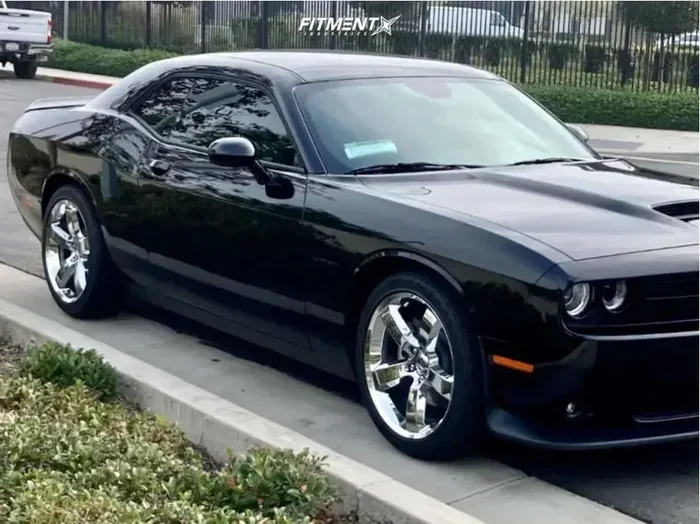
The V8 models, including the R/T and Scat Pack trims, often come with 20-inch rims as standard. These look more aggressive and improve the overall stance of the car. Tire sizes for the 20-inch setup are typically 245/45R20 up front and 275/40R20 in the rear.
The Dodge Challenger SRT and Hellcat variants usually feature 20-inch wheels from the factory, sometimes with a staggered setup where the rear wheels are wider than the front. This helps put all that horsepower down on the road without spinning the tires.
Why Stick With Stock Sizes?
Staying with your stock rim size has several advantages. First, your ride quality stays consistent because the tire sidewall height remains the same. Second, you avoid any clearance issues with the fenders or suspension components. Third, your speedometer and odometer readings stay accurate since the overall tire diameter has not changed.
However, many Challenger owners feel that the stock wheels look too plain. This is where aftermarket upgrades come into play, and that is perfectly fine. Just make sure you understand the implications of going bigger or changing the setup.
Aftermarket Rim Options for the Dodge Challenger
The world of aftermarket wheels is massive, and the Dodge Challenger is one of the most popular platforms for customization. Whether you want a subtle upgrade or a full stance change, there are rims out there that will work.
When browsing aftermarket wheels, you will see sizes ranging from 18 inches all the way up to 22 inches and beyond. The most popular upgrades for the Challenger fall between 19 and 21 inches. These sizes give you a noticeably different look without sacrificing too much ride comfort or requiring major modifications.
18-Inch Aftermarket Rims
Going with an 18-inch aftermarket rim is the safest choice for fitment. You stay close to the factory rim specifications and can easily find tires that match. This size also gives you the thickest tire sidewall, which means a smoother ride over bumps and potholes.
Many Challenger owners who use their cars as daily drivers prefer 18-inch wheels. They offer a good balance between looks, comfort, and performance. You can find lightweight forged 18-inch rims that actually reduce unsprung weight and improve handling.
19 to 20-Inch Aftermarket Rims
The 19 to 20-inch range is the sweet spot for most Dodge Challenger enthusiasts. These sizes offer a great visual impact while still maintaining reasonable tire sidewall heights. Most aftermarket wheel manufacturers design their lines specifically with this size range in mind.
At 19 or 20 inches, you can choose from a wide variety of designs, from sleek multi-spoke styles to aggressive five-spoke or herringbone patterns. The tire sidewall is thinner than stock, which means slightly firmer ride quality but better cornering response.
21 to 22-Inch Aftermarket Rims
If you want maximum stance and the most aggressive look possible, 21 or 22-inch rims are the way to go. However, there are trade-offs. The tire sidewall becomes very thin, which means less cushioning over rough roads. You may also need to modify your suspension or use wheel spacers to fit larger rims without rubbing.
Plus sizing is the practice of increasing rim diameter while reducing tire sidewall height to maintain the same overall tire diameter. This technique works well on the Dodge Challenger and is commonly used by enthusiasts who want the look of large wheels without changing the gearing or speedometer accuracy.
Bolt Pattern and Fitment Explained
Getting the bolt pattern right is non-negotiable. The Dodge Challenger uses a 5×114.3mm pattern, and any rim you buy must match this exactly. You cannot use a rim with a different bolt pattern without using adapters, and adapters add complexity and potential safety risks.
Wheel fitment goes beyond just the bolt pattern, though. You also need to consider the rim width, diameter, offset, and center bore. All of these factors work together to determine how the wheel sits in relation to the car’s body and suspension.
Rim Width Considerations
The rim width affects how the tire sits on the wheel. A wider rim allows the tire to bulge out more, giving you a larger contact patch. A narrower rim makes the tire sit more rounded, reducing the contact patch.
For the Dodge Challenger, typical rim widths range from 8.5 inches to 11 inches depending on the tire size. The factory 20-inch wheels are usually around 8.5 to 9 inches wide on the front and 9.5 to 10 inches wide on the rear for staggered setups.
When choosing aftermarket wheels, always check the manufacturer’s recommended rim width range for the tire size you plan to use. Putting a very wide tire on a narrow rim or vice versa can lead to poor handling, uneven tire wear, and even dangerous blowouts.
Staggered vs. Square Setups
A staggered setup means the rear wheels are wider than the front wheels. This is very common on the Dodge Challenger, especially for the higher-performance trims. A staggered setup gives you more grip at the rear, which helps with acceleration and stability.
A square setup uses the same size wheels and tires on all four corners. This is simpler, cheaper, and makes tire rotation easier. Some Challenger owners prefer the square look because it gives the car a more uniform appearance.
Both setups work well on the Dodge Challenger. Your choice depends on whether you prioritize performance or aesthetics. For track use, a staggered setup is generally better. For daily driving and a clean look, a square setup is perfectly fine.
If you are curious about how long it takes to complete a car fitting job like this, it is worth noting that the process is similar in time commitment to other car modifications, such as how long it takes to fit a new bumper on the vehicle.
Common Rim Sizes and What They Mean
Let us break down the most common rim sizes you will encounter for the Dodge Challenger and what each one means for your driving experience.
- 18-inch rims: Best for daily driving and comfort. Thick tire sidewalls absorb road imperfections well. Good fuel economy. Classic look that stays close to factory specs.
- 19-inch rims: A popular middle ground. Slightly firmer ride than 18s but with improved cornering response. Wide selection of aftermarket designs available.
- 20-inch rims: The most common upgrade size for the Challenger. Great balance of looks and performance. Thinner sidewalls provide better road feel and handling feedback.
- 21-inch rims: Aggressive stance with a sporty appearance. Ride quality becomes noticeably firmer. May require suspension modifications or spacers for proper fitment.
- 22-inch rims: Maximum visual impact. Very thin tire sidewalls mean a harsh ride over bumps. Best suited for show cars or occasional spirited driving rather than daily use.
Keep in mind that the factory rim specifications for your Challenger are designed by engineers who tested every combination for safety and performance. Deviating too far from those specs can compromise your driving experience.
Tips for Choosing the Right Rims
Now that you understand the technical side, here are some practical tips to help you choose the perfect rims for your Dodge Challenger.
Know Your Car First
Before you buy anything, look up the factory specs for your specific Challenger model and year. You can find this information in your owner’s manual or on the tire information placard inside the driver’s door jamb. Write down the bolt pattern, offset, center bore, and recommended tire size.
You should also consider how you use your car. If it is your daily driver, prioritize comfort and durability. If it is a weekend toy, you can go more aggressive with larger rims and lower-profile tires.
Consider the Total Cost
Rims are not cheap, and neither are the tires that go with them. Larger rims require more expensive tires, and performance tires can add hundreds of dollars to your budget. Make sure you factor in the total cost of the wheel and tire package before you commit.
Also consider installation costs. Fitting new wheels and mounting tires takes time and skill. If you are not doing it yourself, budget for professional installation. The process is similar to other car fitting tasks, and the labor involved is comparable to how many man hours it takes to build a car from start to finish, even though wheel installation is much quicker.
Quality Over Style
It is tempting to buy the cheapest rims you can find, but quality matters. Cheap wheels are often made from lower-grade materials and may not hold up to road conditions. Look for reputable brands that offer proper certifications and warranties.
Forged wheels are lighter and stronger than cast wheels, but they cost more. If you are serious about performance, forged performance wheels are worth the investment. For a casual upgrade, quality cast wheels will serve you just fine.
Test Fit Before You Commit
If possible, test fit the wheels before you fully commit. Many tire shops will let you mount the wheels temporarily to check for clearance issues. This step can save you from buying rims that look great online but do not fit your car properly.
Pay attention to how the wheels sit in the fender wells. There should be a small gap between the tire and the fender. If the tire rubs against the fender or suspension components, you need to adjust your choice or consider wheel spacers to push the wheels outward.
Think About Future Maintenance
Larger rims mean larger tires, and larger tires cost more to replace. If you go with a 22-inch setup, a single tire replacement could cost significantly more than a 20-inch setup. Think about the long-term maintenance costs before you commit to a size.
Also consider how the rims will affect your tire diameter and overall gearing. Going too large can change your effective gear ratio, which affects acceleration and fuel economy. Keep these factors in mind when choosing your new rim size.
Common Mistakes to Avoid When Choosing Rims
Even experienced car enthusiasts make mistakes when selecting new rims for their Dodge Challenger. Here are the most common errors to avoid.
Ignoring the offset. Many people focus only on the rim diameter and width while forgetting about offset. A rim with the wrong offset will not sit properly in the wheel well and can cause rubbing or an ugly stance.
Buying wheels without checking the center bore. If the center bore is too large and you do not use hub-centric rings, your wheel will not sit properly on the hub. This causes vibrations and can be dangerous at highway speeds.
Oversizing the rims. It is easy to get caught up in the look of massive 22 or 23-inch rims, but going too big ruins ride quality and can compromise safety. Stick to sizes that are proven to work well with the Challenger platform.
Skipping the tire size calculation. When you change rim size, you must also adjust your tire size to maintain the correct overall diameter. Use a tire size calculator to make sure your new combination will not throw off your speedometer or cause rubbing.
Forgetting about load rating. The Dodge Challenger is a heavy car, especially the V8 and Hellcat versions. Your new rims and tires must have a sufficient load rating to safely support the weight of the vehicle.
Remember, the factory engineers who designed the original wheel specifications spent countless hours testing every combination. While aftermarket upgrades are fun and can improve performance, staying within reasonable parameters ensures your Challenger remains safe and reliable.
Final Thoughts on Rim Size for the Dodge Challenger
Choosing the right rim size for your Dodge Challenger comes down to understanding your car’s specifications, knowing your goals, and making informed decisions. Whether you stay with the factory 18 or 20-inch wheels or go aftermarket with a 19, 21, or even 22-inch setup, the key is proper fitment and balance.
The bolt pattern of 5×114.3mm is your constant. The offset and backspacing determine how the wheel sits. The rim width affects tire shape and contact patch. And the tire size completes the picture by ensuring proper clearance and performance.
Take your time, do your research, and do not be afraid to ask questions at your local tire shop or wheel retailer. A great set of rims transforms the look and feel of your Dodge Challenger, and with the right choice, you will enjoy every mile you drive.
The Dodge Challenger is an iconic American muscle car, and your wheels are one of the easiest ways to make it stand out from the crowd. Choose wisely, install properly, and enjoy the ride.
Just as with any car modification, proper planning makes all the difference. Whether you are replacing a bumper or upgrading your entire wheel setup, understanding the specifications upfront saves you time, money, and frustration down the road.
Frequently Asked Questions
What is the stock rim size for a Dodge Challenger?
The stock rim size varies by trim level. Base V6 models typically come with 18-inch rims, while V8 models like the R/T and Scat Pack usually have 20-inch rims. The SRT and Hellcat trims also feature 20-inch wheels, often in a staggered setup with wider rear wheels.
Can I put 22-inch rims on a Dodge Challenger?
Yes, you can put 22-inch rims on a Dodge Challenger, but you will need to carefully consider offset, backspacing, and tire size. Going this large often requires wheel spacers or suspension modifications to avoid rubbing. The ride quality will also become noticeably firmer with very thin tire sidewalls.
What bolt pattern does a Dodge Challenger use?
The Dodge Challenger uses a 5×114.3mm bolt pattern. This means five lug nuts arranged in a circle with a diameter of 114.3 millimeters. Any aftermarket rim you purchase must match this bolt pattern for proper fitment.
Do I need hub-centric rings for aftermarket rims?
If the aftermarket rim has a larger center bore than your Challenger’s wheel hub, you will need hub-centric rings to ensure the wheel sits properly centered. This prevents vibrations and ensures safe driving at highway speeds.
What is plus sizing for Dodge Challenger rims?
Plus sizing means increasing the rim diameter while decreasing the tire sidewall height to maintain the same overall tire diameter. For example, going from 18-inch to 20-inch rims with thinner tires keeps the total rolling diameter the same, preserving speedometer accuracy and gearing.
How long does it take to install new rims on a Dodge Challenger?
Installing new rims typically takes one to two hours at a tire shop, depending on whether you are also getting new tires mounted and balanced. The process is straightforward but requires proper torque on the lug nuts and a careful check of fitment before driving.
=== CONCLUSION ===
Choosing the right rim size for your Dodge Challenger does not have to be overwhelming. With the right knowledge about bolt patterns, offset, backspacing, and rim width, you can confidently pick wheels that look amazing and perform beautifully. Whether you stay with the factory OEM wheels or go all-in on a custom aftermarket setup, the key is proper fitment and informed decision-making.
Remember to always check your specific model year and trim specifications before purchasing. Consider your driving habits, budget, and long-term maintenance costs. And most importantly, enjoy the process of making your Dodge Challenger truly yours. The right set of rims does not just change how your car looks, it changes how it feels on the road.