How to Fix Code P0420 on a Nissan Step by Step Guide
The P0420 code on a Nissan means your catalyst system is not working as efficiently as it should. This step by step guide walks you through diagnosing the root cause, replacing faulty parts, and clearing the error for good. You will learn what triggers P0420, which tools you need, and how to save money on the repair.
P0420 is one of the most common error codes Nissan owners encounter. If your check engine light just came on and you saw P0420, take a breath. This guide will walk you through fixing it step by step. You do not need to be a professional mechanic to handle this repair.
The P0420 code points directly to your catalytic converter. That part cleans up harmful exhaust gases before they leave your car. When it stops working right, your Nissan sends out more pollution. It also means your engine is not running as efficiently as it should. The good news is that many P0420 fixes are simple and affordable.
Many Nissan models are known to trigger this code, especially as they age. Whether you drive a Nissan Altima, Pathfinder, or Sentra, the fix process is similar. In this guide, we cover every step you need. You will learn what causes P0420, which parts to inspect, and exactly how to replace them. Let us get your Nissan running right again.
Key Takeaways
- P0420 means your catalytic converter is not performing at peak efficiency.
- Common causes include faulty oxygen sensors, exhaust leaks, and a worn out converter.
- You can diagnose the issue yourself with an OBD-II scanner and basic tools.
- Replacing an oxygen sensor costs $100 to $300, while a full converter replacement runs $500 to $2,200.
- Regular maintenance like using quality fuel and fixing misfires early helps prevent P0420.
- Driving with P0420 for too long can cause further engine and exhaust damage.
- Always check your Nissan warranty before paying for a costly converter replacement.
📑 Table of Contents
- What Does Code P0420 Mean on a Nissan?
- Common Causes of P0420 on a Nissan
- Tools and Preparation for the Repair
- Step by Step Fix for P0420 on a Nissan
- Cost Breakdown and Repair Options for P0420
- Can You Drive with Code P0420?
- Prevention Tips and When to Seek Professional Help
- Final Thoughts on Fixing P0420 on a Nissan
What Does Code P0420 Mean on a Nissan?
Code P0420 is a diagnostic trouble code that signals low efficiency in your catalytic converter. Your car’s computer, also called the ECU, constantly monitors how well the converter is doing its job. It compares readings from two oxygen sensors. One sits before the converter (upstream) and one sits after it (downstream). When the readings look too similar, the ECU knows the converter is not cleaning the exhaust properly. That is when it triggers P0420.
Think of your catalytic converter like a filter for your exhaust gases. Over time, it can get clogged, worn out, or physically damaged. When that happens, your Nissan exhaust system cannot clean the gases the way it should. The P0420 code is your car’s way of telling you something is wrong with this system. Ignoring it will only make things worse.
Common Symptoms You Will Notice
- Check engine light stays on steadily
- Reduced fuel economy
- A rotten egg smell coming from the exhaust
- Engine runs rough or idles unevenly
- Failed emission or smog test
- Sluggish acceleration under load
- Dark or unusual exhaust smoke
If you notice any of these signs, do not ignore them. Addressing P0420 early saves you money and prevents bigger problems later. The longer you drive with a failing converter, the more damage it can cause to other parts of your exhaust system.
Common Causes of P0420 on a Nissan
Several things can trigger the P0420 code on your Nissan. Understanding the root cause is the most important step toward a proper fix. Here are the most common reasons this code appears.
Faulty Oxygen Sensors
Your Nissan has two key oxygen sensors in the exhaust system. The upstream sensor measures gases before the catalytic converter. The downstream sensor measures gases after it. When either sensor fails or gives wrong readings, your ECU may flag P0420. Oxygen sensors wear out over time, especially after 60,000 to 90,000 miles. Replacing a sensor is usually the cheapest fix available. A new oxygen sensor costs between $50 and $200, and the job takes less than an hour.
Failing Catalytic Converter
Over time, the catalytic converter itself can wear out completely. Heat, mileage, fuel quality, and engine condition all play a role. A damaged converter cannot clean exhaust gases properly. This is the most common reason for P0420 on older Nissans with high mileage. If you hear a rattling sound from under the car, the internal honeycomb structure may be broken. That is a clear sign the converter needs replacement.
Exhaust System Leaks
Even a small leak in your exhaust system can throw off the sensor readings. Gases can escape before reaching the downstream oxygen sensor. This makes the ECU think the converter is not working right. Check your exhaust manifold and pipes carefully for any cracks, holes, or rust spots. A leak near the manifold is especially common on older Nissans and can usually be fixed with a new gasket.
Engine Misfire
An engine misfire sends unburned fuel into the exhaust system. This raw fuel can overheat and damage the catalytic converter quickly. If your Nissan is misfiring, fix that problem first. Otherwise, a brand new converter may fail again in a short time. Common causes of misfires include worn spark plugs, bad ignition coils, and clogged fuel injectors.
Rich or Lean Fuel Mixture
Your engine needs the right balance of fuel and air to run properly. A rich mixture means too much fuel. A lean mixture means too little. Either condition can harm the catalytic converter over time. The fuel injectors, the MAF sensor, and the ECU all play a role in keeping this balance right. A dirty MAF sensor or a leaking injector can both cause fuel mixture problems that eventually trigger P0420.
Tools and Preparation for the Repair
Before you start, gather everything you need. Having the right tools ready makes the job much smoother and safer. You do not need anything fancy, but you do need the basics.
- An OBD-II scanner to read and clear codes
- A basic socket set and combination wrench set
- A jack and jack stands or drive ramps
- Safety gloves and protective eyewear
- Penetrating oil like WD-40 for stuck bolts
- New oxygen sensors if testing shows they are bad
- A wire brush and exhaust cleaner spray
- A rubber mallet for tapping the converter
If you do not own an OBD-II scanner, you can borrow one from most auto parts stores. Many stores offer free code reading too. This is a great first step before you start any repair work. You should also make sure your Nissan is parked on a flat surface and the engine is cool before you begin.
Step by Step Fix for P0420 on a Nissan
Now let us get into the actual repair process. Follow these steps in order for the best results. Take your time and do not rush.
Step 1: Read the Code and Confirm P0420
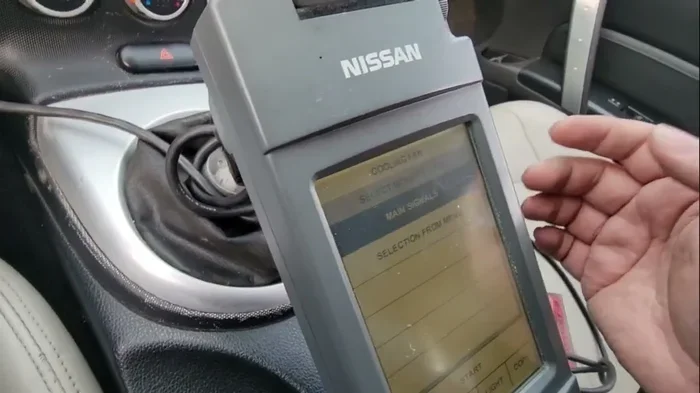
Plug your OBD-II scanner into the diagnostic port under your dashboard. Turn the key to the on position but do not start the engine. Read the code and confirm it is P0420. Write down any other codes you see too. Sometimes P0420 comes with other codes that point to a different root cause. For example, if you also see a misfire code, that could be the real problem causing the converter to fail. Just like reading ABS codes without a scanner requires understanding the bigger picture, diagnosing P0420 means looking at all the data together before replacing parts.
Step 2: Inspect the Exhaust System
First, pop open your exterior bonnet to access the engine area and check the exhaust manifold. Then get safely under the car using a jack and jack stands. Look at the entire exhaust system for visible holes, cracks, or rust spots. Pay close attention to the pipes near the catalytic converter and the connections at the manifold. Even a tiny leak can cause the P0420 code to trigger. Use penetrating oil on any bolts that look stuck or rusty. Let it sit for a few minutes before trying to loosen them.
Step 3: Check the Oxygen Sensors
The upstream oxygen sensor is located before the catalytic converter in the exhaust pipe. The downstream sensor sits after the converter. Unplug the electrical connectors on both sensors. Use a proper oxygen sensor socket to remove them. Inspect each sensor for heavy soot buildup, physical damage, or corroded connectors. If either sensor looks worn out, replace it. New sensors usually cost between $50 and $200 each. This is the cheapest and easiest fix for P0420, and it solves the problem in many cases.
Step 4: Inspect the Catalytic Converter
Tap the catalytic converter gently with a rubber mallet while it is cool. If you hear a rattling sound from inside, the converter’s internal honeycomb structure is likely broken apart. You can also look for discoloration, melting, or warping on the outside. A healthy converter should be solid and heavy with no internal noise. If the converter is damaged, you will need to replace it entirely.
Step 5: Replace the Faulty Part
Once you have identified the problem part, go ahead and replace it. For oxygen sensors, simply unclip the old one and thread in the new one by hand first, then tighten with the socket. For the catalytic converter, you will need to unbolt it from the exhaust system. Apply penetrating oil to all bolts a day before the repair if they are rusty. Use a new gasket when reinstalling to prevent exhaust leaks. Make sure all bolts are tightened to the proper torque specification.
Step 6: Clear the Code and Test Drive
After the repair, plug your OBD-II scanner back in and clear the P0420 code. Start the engine and let it idle for a few minutes. Check for any exhaust leaks by listening carefully around the connections. Take your Nissan for a test drive around the block. Monitor the check engine light closely. If it stays off and the code does not return after a few drive cycles, your fix worked. If the light comes back on, you may need to dig deeper into the root cause or check for additional problems.
Cost Breakdown and Repair Options for P0420
The cost to fix P0420 varies a lot depending on what is causing the code. Here is a quick breakdown of common repair costs so you can plan your budget.
| Repair | Parts Cost | Labor Cost | Total Estimate |
|---|---|---|---|
| Oxygen Sensor Replacement | $50 – $200 | $50 – $100 | $100 – $300 |
| Exhaust Leak Repair | $20 – $100 | $100 – $200 | $120 – $300 |
| Catalytic Converter Replacement | $400 – $2,000 | $100 – $200 | $500 – $2,200 |
| Engine Misfire Repair | $100 – $400 | $100 – $200 | $200 – $600 |
As you can see, the cost depends heavily on the root cause. Replacing an oxygen sensor is the most affordable option and often solves the problem. A full catalytic converter replacement is the most expensive repair. If your Nissan is still under warranty, the converter may be covered. Many Nissan warranties cover the catalytic converter for 8 years or 80,000 miles, whichever comes first. Check with your dealer before paying out of pocket.
Can You Drive with Code P0420?
Technically, yes, you can drive short distances with a P0420 code. Your Nissan will still run. However, it is not a good idea to drive with it for long periods. A failing catalytic converter can cause your engine to run poorly. It can also lead to overheating issues. In fact, one of the best ways to prevent a car from overheating in summer is to address exhaust and emission issues promptly. A damaged converter restricts exhaust flow, which can cause heat to build up in the engine and exhaust system.
Over time, a bad catalytic converter can also damage your oxygen sensors and other expensive parts of the exhaust system. The longer you wait, the more expensive the repair becomes. So while you do not need to panic, you should plan to fix it soon. If the code is flashing rather than steady, pull over safely and stop driving immediately. A flashing P0420 means severe damage is happening right now.
Prevention Tips and When to Seek Professional Help
Once you fix P0420, you want to make sure it stays fixed. Prevention is always better than repair. Here are some simple tips to keep your Nissan’s catalytic converter healthy for the long haul.
- Use high-quality fuel. Cheap fuel contains more impurities that can clog your converter over time. Stick with reputable gas stations.
- Fix engine misfires right away. Unburned fuel from a misfire will damage the converter fast. Do not ignore a rough-running engine.
- Check your oxygen sensors regularly. Replace them every 60,000 to 90,000 miles as part of routine maintenance.
- Avoid short trips when possible. Short trips do not let the converter reach proper operating temperature, which causes harmful buildup inside.
- Address warning signs early. If you notice reduced fuel economy or a strange exhaust smell, get it checked before it becomes a bigger problem.
There are also times when you should call in a professional. If you have replaced the oxygen sensors and the code keeps coming back, the converter itself is likely the real issue. Replacing a catalytic converter requires more advanced tools and experience. It also involves properly sealing the exhaust system to prevent leaks. If you are not comfortable working under your car, there is no shame in visiting a trusted mechanic.
A professional can run advanced diagnostics that go beyond what a basic OBD-II scanner can show. They can also perform a catalyst monitor test to see exactly how your converter is performing in real time. If your Nissan is still under warranty, always check with your dealer first. Replacing the converter yourself could void the warranty. The dealer can often do the repair at a reduced cost or even for free if it is covered under your warranty plan.
Final Thoughts on Fixing P0420 on a Nissan
Fixing code P0420 on a Nissan is a manageable repair for most car owners who are willing to get their hands a little dirty. The key is to start with a proper diagnosis. Do not just replace parts blindly. Use your OBD-II scanner, inspect the exhaust system, and check your oxygen sensors first. In many cases, a simple sensor swap is all it takes to clear the code and get your Nissan running smoothly again.
If the catalytic converter itself is the problem, budget for a more significant repair. But remember, the cost is worth it for a properly running Nissan. A healthy converter means better fuel economy, cleaner emissions, and a smoother, more reliable ride. Do not ignore the P0420 code. Tackle it early, follow the steps in this guide, and you will have your Nissan running right again in no time. Your car will thank you for taking care of it.
Frequently Asked Questions
What does P0420 mean on a Nissan?
P0420 means your catalytic converter is not working as efficiently as it should. Your car’s computer detects that the exhaust cleaning system is underperforming. This usually triggers the check engine light and requires prompt attention to prevent further damage.
Can I drive my Nissan with a P0420 code?
Yes, you can drive short distances with a P0420 code. However, driving for long periods with this code can cause further damage to your exhaust system and engine. It is best to diagnose and fix the issue as soon as possible to avoid costly repairs down the road.
How much does it cost to fix P0420 on a Nissan?
The cost ranges from $100 for an oxygen sensor replacement to $2,200 for a catalytic converter replacement. The final cost depends on what is causing the code in your specific Nissan model and year. Always get a quote before committing to a major repair.
Will clearing the P0420 code fix the problem?
No, clearing the code only erases the error message from the ECU memory. It does not fix the underlying problem. The code will return if the root cause is not addressed. Always diagnose the real issue first before clearing any check engine code.
What is the most common cause of P0420 on a Nissan?
The most common cause is a failing catalytic converter or faulty oxygen sensors. Older Nissans with high mileage are especially prone to converter failure. Regular maintenance like timely sensor replacements and using quality fuel can help prevent this issue from developing.
How long does it take to fix P0420 on a Nissan?
A simple oxygen sensor replacement takes about 30 minutes to an hour. A catalytic converter replacement can take one to three hours depending on the Nissan model and how rusty the exhaust bolts are. Factor in extra time if the exhaust system is corroded and bolts are difficult to remove.