How to Read ABS Codes Without a Scanner for Beginners
How to Read ABS Codes Without a Scanner is a straightforward process that anyone can master right from their vehicle. You can decode warning lights and use the onboard diagnostic link to pinpoint exactly what is triggering your anti-lock brake system alert. Understanding these manual methods empowers you to diagnose braking issues quickly, saving costly mechanic visits and keeping your car safe.
How to Read ABS Codes Without a Scanner for Beginners
Knowing how to read ABS codes without a scanner can save you time, money, and a lot of frustration. Your car’s anti-lock braking system works hard every time you drive, and when something goes wrong, it tells you through warning lights and fault codes. You do not need an expensive diagnostic tool to start understanding what your vehicle is trying to say.
This guide walks you through simple, practical methods to check ABS codes using basic tools and your own senses. Whether your ABS warning light just came on or you want to learn more about vehicle diagnostic basics, you are in the right place. By the end, you will feel confident tackling common brake system issues on your own.
Many drivers panic when they see a warning light on the dashboard. But reading ABS codes without a scanner is easier than most people think. You just need a little patience and the right approach. Let us break it down together.
Key Takeaways
- ABS codes reveal specific braking system faults that need immediate attention and repair.
- Use the OBD-II port or brake pedal method to retrieve codes without a scanner.
- Each code starts with a letter and number indicating the system and exact problem.
- Wheel speed sensor issues are the most common ABS codes you will encounter.
- Look up codes online or in a repair manual to understand what each one means.
- Resetting codes does not fix the actual problem — always diagnose and repair first.
- Some ABS issues need a professional mechanic — don’t ignore warning lights on your dash.
📑 Table of Contents
- Understanding ABS and Why It Matters
- Common ABS Warning Signs to Watch For
- The DIY Methods to Read ABS Codes Without a Scanner
- Step-by-Step Guide to Checking ABS Codes Manually
- Interpreting ABS Fault Codes and What They Mean
- Common Mistakes to Avoid When Reading ABS Codes
- When to Seek Professional Help
- Key Takeaways
Understanding ABS and Why It Matters
The anti-lock braking system, or ABS, prevents your wheels from locking up during hard braking. This is especially important on wet or icy roads. When ABS works properly, you can steer while stopping hard, which can save lives.
How the ABS System Works
Your ABS system relies on several key parts working together. Each component plays a role in keeping your brakes responsive and safe.
- Wheel speed sensors monitor how fast each wheel spins.
- The ABS module processes sensor data in real time.
- The ABS pump adjusts brake pressure when needed.
- The hydraulic unit controls the flow of brake fluid.
When one of these parts fails, the system stores a fault code. This code triggers the ABS warning light on your dashboard. The challenge is figuring out what the code means without a scan tool.
Why You Might Need to Read ABS Codes Without a Scanner
There are many reasons you might not have access to a diagnostic scanner. Maybe your scanner is broken, or perhaps you are on the road and need answers fast. Other times, you simply do not want to pay a shop to read a code that might be a simple fix.
Learning to read ABS codes manually gives you independence. You can diagnose problems early and avoid costly repairs down the road. Even if you do own a scanner, knowing the manual methods adds another tool to your skill set.
Common ABS Warning Signs to Watch For
Before you dive into reading codes, it helps to recognize the physical signs of ABS problems. Your car often gives you clues before the dashboard light even comes on.
Dashboard Warning Lights
The most obvious sign is the ABS warning light glowing on your dash. Some vehicles also show a check engine light when ABS issues occur. If both lights appear at the same time, pay close attention.
- A steady ABS light usually means a stored fault code.
- A flashing ABS light often signals a more urgent problem.
- Both lights together may point to a shared sensor or wiring issue.
Physical Symptoms of ABS Problems
Your brakes will often behave differently when something is wrong. Trust your instincts. If something feels off, it probably is.
- The brake pedal vibrates or pulses during hard stops.
- Brakes feel unresponsive or spongy.
- You hear unusual grinding or clicking noises.
- Your vehicle pulls to one side when braking.
- The traction control light also comes on alongside the ABS light.
These symptoms often point to specific ABS fault codes. Noticing them early helps you narrow down the problem before you start digging deeper.
The DIY Methods to Read ABS Codes Without a Scanner
You have several options for reading ABS codes without a traditional scanner. Each method has its strengths, and some work better depending on your vehicle model.
Method 1: The Brake Pedal Pulse Test
This simple test uses your own senses to detect ABS activity. It does not give you a specific code number, but it confirms whether the ABS system is engaging at all.
Start by parking on a safe, flat surface. Turn the ignition on without starting the engine. Press the brake pedal firmly. You should feel a slight vibration or pulse under the pedal. This means the ABS hydraulic unit is receiving power.
If you feel nothing, the issue could be a blown ABS fuse or a faulty relay. Check the fuse box under your hood first. A dead fuse is one of the easiest brake system problems to fix.
Method 2: Using the OBD2 Port for Basic Codes
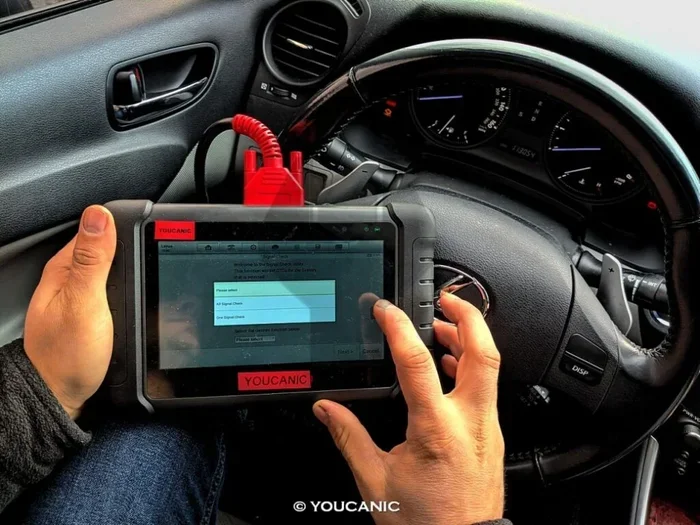
Many people do not realize that the OBD2 port can sometimes reveal ABS-related codes even without a full scanner. You will need a basic diagnostic reader or an OBD2 adapter connected to your phone.
Find your OBD2 port. It is usually located under the steering column. Plug in your reader and turn the ignition to the “on” position. Look for codes starting with the letter “C.” These are chassis codes, and many of them relate to the ABS module and wheel speed sensor systems.
While this is not a full replacement for a professional scanner, it gives you a starting point. You can often find the meaning of these codes online or in your vehicle manual.
Method 3: The Blinking Light Code System
Some older vehicles use a blinking light method to communicate fault codes. This technique works without any electronic tools at all.
Locate the diagnostic connector under your dash. It is often near the steering column. Use a paperclip or jumper wire to bridge the two specific terminals marked for diagnostic purposes. Turn the ignition to the “on” position and watch the ABS warning light.
The light will blink in a pattern. Count the number of blinks, then the pause, then the next set of blinks. For example, two blinks, a pause, then three blashes might mean code C0234. You can look up your specific vehicle’s blinking code chart online. This method works well for older models from the 1990s and early 2000s.
Method 4: Checking Wiring and Connectors Manually
Sometimes the error codes are not stored electronically at all. Instead, the problem lives in the physical wiring. A visual inspection can reveal a lot.
Look at the wiring harnesses connected to your wheel speed sensors. Check for frayed wires, corroded connectors, or loose plugs. Pay special attention to the sensor near each wheel, as these are exposed to road debris, water, and salt.
Clean any corroded connectors with electrical contact cleaner. Re-seat any loose plugs. You would be surprised how often a simple loose connection triggers the ABS warning light.
Method 5: Using a Multimeter to Test ABS Components
A basic multimeter is one of the best tools for reading ABS codes indirectly. You can test the resistance and voltage of your wheel speed sensors to find the faulty component.
Set your multimeter to the ohms setting. Disconnect the sensor connector and measure the resistance across the sensor terminals. Compare your reading to the manufacturer specifications in your repair manual.
Next, check the signal voltage by spinning the wheel slowly while the multimeter is connected. A healthy sensor should produce a steady AC voltage that increases with wheel speed. No signal or an erratic reading usually means the sensor needs replacement.
Step-by-Step Guide to Checking ABS Codes Manually
Now that you know the methods, let us walk through a practical sequence you can follow the next time your ABS warning light comes on.
- Start with a visual inspection. Look under the hood for any obvious damage to brake lines, connectors, or wiring.
- Check the ABS fuse and relay. Replace a blown fuse and see if the light goes out. This solves the problem more often than you might think.
- Perform the brake pedal pulse test. Confirm whether the ABS hydraulic unit is receiving power.
- Plug into the OBD2 port. Use a basic reader or phone adapter to pull any chassis-related codes.
- Inspect each wheel speed sensor. Look for damage, debris, or corrosion on the sensors and their wiring.
- Use the multimeter to test sensor resistance and signal. Compare your readings to factory specs.
- Clear the codes and test drive. If the light does not return, you likely fixed the issue. If it does come back, the problem is deeper and needs further investigation.
Following these steps in order saves you time. You avoid replacing parts that are not actually broken. This methodical approach is the best way to handle ABS codes without a full scan tool.
Interpreting ABS Fault Codes and What They Mean
Once you have a code number, the next step is understanding what it tells you. ABS fault codes follow a standard format that gives you clues about the problem.
Understanding ABS Code Categories
ABS codes generally fall into a few main categories. Each category points to a different part of the system.
- C0xxx codes usually relate to the hydraulic unit or pump motor.
- C1xxx codes often indicate wheel speed sensor problems.
- C2xxx codes may point to the ABS module internal errors.
- C3xxx codes typically involve electrical or wiring faults.
For example, a code like C0035 almost always means a problem with the left front wheel speed sensor. Code C0040 often points to the right front sensor. These patterns make it easier to diagnose issues even without a full diagnostic manual.
Common ABS Codes and Their Meanings
Here is a quick reference table of some of the most common ABS codes you might encounter.
| Code | Description | Likely Cause |
|---|---|---|
| C0035 | Left Front Wheel Speed Sensor Malfunction | Faulty sensor, wiring damage, or debris |
| C0040 | Right Front Wheel Speed Sensor Malfunction | Sensor failure or corroded connector |
| C0045 | Left Rear Wheel Speed Sensor Malfunction | Wiring issue or sensor damage |
| C0050 | Right Rear Wheel Speed Sensor Malfunction | Faulty sensor or broken tone ring |
| C0034 | ABS Pump Motor Malfunction | Pump failure or hydraulic blockage |
| C1215 | Brake Fluid Pressure Sensor Malfunction | Low brake fluid or sensor defect |
| C1234 | ABS Hydraulic Unit Internal Fault | Internal pump or valve failure |
Use this table as a starting point. Always cross-reference the code with your specific vehicle make and model. A code that means one thing on a Ford might have a slightly different cause on a Honda.
Quick Tips for Accurate Code Interpretation
- Always write down the exact code number before looking it up.
- Check for multiple codes. A single root cause often triggers several related codes.
- Note when the light appeared. Did it come on after driving through water? After a brake job? Context matters.
- Use your vehicle repair manual for model-specific code definitions.
- Do not ignore codes that come and go. Intermittent faults can become permanent problems.
Common Mistakes to Avoid When Reading ABS Codes
Even experienced DIYers make mistakes when working on ABS codes. Knowing what to avoid keeps you safe and saves you from unnecessary part replacements.
Skipping the Fuse Check
This is the most common mistake. Many people jump straight to replacing sensors when a simple blown fuse was the real culprit. Always check the ABS fuse first. It takes two minutes and can save you hundreds of dollars.
Ignoring Wiring Issues
A new sensor will not fix the problem if the wiring to that sensor is damaged. Corroded connectors and chafed wires cause just as many ABS issues as faulty parts. Always inspect the entire wiring harness before replacing any component.
Replacing Parts Without Testing
Do not guess which sensor is bad. Use your multimeter to test each sensor. Replacing parts blindly leads to wasted money and unresolved problems. Test first, replace second.
Clearing Codes Too Early
Some people clear the codes and drive away before confirming the fix. If the underlying problem persists, the light will return. Always complete your repair, clear the codes, and then take a test drive to verify the fix.
When to Seek Professional Help
Not every ABS problem can be solved without a professional scanner. Knowing when to call for help is just as important as knowing how to do it yourself.
If you have checked the fuses, wiring, and sensors and the ABS warning light still does not go away, the problem may be inside the ABS module itself. Internal module failures require specialized tools and software to diagnose properly.
Also, if you notice your brakes behaving erratically or the ABS system engaging randomly, stop driving and get professional assistance. Brake problems affect your safety, and guessing is not worth the risk.
Many local auto parts stores will read ABS codes for free using their in-store scanners. This is a great middle ground between DIY and a full repair shop visit. You get the code reading without the cost of a professional diagnostic fee.
Key Takeaways
Learning how to read ABS codes without a scanner is a valuable skill for any car owner. You do not need expensive equipment to start understanding your vehicle’s brake system warnings.
- Start with simple visual inspections and fuse checks.
- Use the blinking light method on older vehicles.
- Plug into the OBD2 port with a basic reader for chassis codes.
- Test sensors with a multimeter before replacing parts.
- Use the code reference table to narrow down the problem.
- Know when to call a professional for safety.
The more you practice these methods, the more confident you will become. Reading ABS codes manually puts you in control of your vehicle maintenance. You save money, learn valuable skills, and keep your brakes working the way they should.
Your car talks to you through lights, sounds, and sensations. Pay attention, trust your instincts, and take action early. A small brake system issue today can become a serious safety problem tomorrow. With the knowledge in this guide, you are better equipped to handle ABS codes and keep your vehicle safe on the road.
Frequently Asked Questions
What are ABS codes and why should you care about them?
ABS codes are diagnostic trouble codes stored by your vehicle’s anti-lock braking system when it detects a problem. Understanding how to read ABS codes without a scanner helps you identify issues like faulty wheel sensors or low brake fluid early. Catching these codes quickly can prevent costly repairs and keep you safe on the road.
Can you really read ABS codes without a scanner tool?
Yes, you can access some ABS codes using your vehicle’s built-in dashboard lights and a simple paperclip or jumper wire method. This trick works on many older models by bridging specific diagnostic terminals in the OBD port. However, newer vehicles may require a basic Bluetooth scanner or a dedicated ABS code reader for accurate results.
What do I need to read ABS codes manually at home?
You will need your vehicle’s repair manual, a flathead screwdriver, a paperclip or jumper wire, and a pen to note down the flashing light patterns. The repair manual provides the specific ABS code definitions for your exact make and model. Having these simple tools on hand makes the entire process of reading ABS codes without a scanner much easier and more reliable.
Are ABS codes the same as regular check engine light codes?
No, ABS codes are specific to the anti-lock braking system and are separate from the standard OBD-II engine codes. While both systems use a similar flashing light pattern to communicate codes, they address completely different vehicle functions. Mixing them up can lead to misdiagnosis, so always confirm which system triggered the warning light.
How do I know which ABS code applies to my specific vehicle?
Every vehicle manufacturer uses its own set of ABS code definitions, so you must reference your model’s specific repair manual or online database. The flashing pattern of the ABS light gives you a two-digit code number, which you then cross-reference with your manual. This step is essential because a code that means one thing on a Ford might mean something entirely different on a Honda.
When should you stop DIY diagnosing and visit a mechanic?
You should see a professional if the ABS light stays on after you reset the code, if you hear grinding noises, or if your brakes feel spongy or unresponsive. Some ABS issues involve internal hydraulic problems that require specialized tools and expert knowledge to fix safely. Trusting a mechanic for serious braking concerns ensures your vehicle remains reliable and road-ready.