How Long Does a Full Tank of Gas Last in a Toyota Camry
A full tank of gas in a Toyota Camry typically lasts between 450 and 600 miles, depending on the model year, engine type, and driving conditions. The Camry’s gas tank holds about 15.8 to 16 gallons, and its fuel economy ranges from 28 to 40 MPG. Understanding your Camry’s fuel range helps you plan road trips, avoid unexpected stops, and save money at the pump.
Have you ever filled up your Toyota Camry and wondered how far you can really go before you need to stop for gas again? It is a question that comes up more often than you might think, especially if you are planning a long road trip or just trying to budget your weekly fuel costs. The answer depends on several factors, but the good news is that the Camry is known for being a reliable and fuel-efficient sedan.
In this guide, we will walk you through everything you need to know about how long a full tank of gas lasts in a Toyota Camry. We will cover tank size, fuel economy numbers, the difference between city and highway driving, and even how hybrid models compare. By the end, you will have a clear picture of what to expect every time you fill up.
Key Takeaways
- Tank Capacity: The Toyota Camry holds roughly 15.8 to 16 gallons of fuel in most model years.
- Driving Range: A full tank can take you between 450 and 600 miles on average.
- Fuel Economy Matters: City driving reduces range, while highway driving extends it significantly.
- Hybrid Models Go Further: The Camry Hybrid offers superior fuel efficiency and a longer total range per tank.
- Maintenance Impacts Range: Regular upkeep like air filter changes and tire rotations directly affects how far you can go.
- Driving Habits Count: Smooth acceleration and steady speeds help maximize your miles per gallon.
📑 Table of Contents
How Far Can a Toyota Camry Go on a Full Tank?
The simplest answer is that a full tank of gas in a Toyota Camry can take you anywhere from about 450 to 600 miles. But that is just an average. Your actual range will depend on the specific model you drive, the year it was made, and how you drive it. Let us break this down so you can get a more personal estimate for your situation.
The Camry has been one of the best-selling sedans in America for decades. Toyota built it with a focus on reliability and efficiency. That means the engineers designed the fuel system to give you solid mileage without sacrificing performance. Whether you commute to work every day or take occasional weekend trips, the Camry is built to go the distance.
To get a rough idea of your range, multiply your tank capacity by your average MPG. For example, if your Camry has a 16-gallon tank and gets 30 MPG on average, you can expect about 480 miles per full tank. This simple calculation works for most Camry owners and gives you a baseline to plan from.
It is also worth noting that the Camry’s fuel gauge is not always perfectly accurate. Many drivers report that the gauge still shows a bit of fuel even after the low fuel light comes on. This reserve can add another 30 to 50 miles in some cases, but you should never rely on it regularly. The best habit is to fill up as soon as the light comes on.
Why Knowing Your Range Matters
Understanding your driving range helps you in several practical ways. First, it lets you plan stops on long trips without unnecessary detours. Second, it helps you budget your fuel expenses more accurately. Third, it gives you peace of mind, especially when driving through areas with few gas stations. Knowing your Camry’s range means you are always in control of your trip planning.
If you are curious about how the Camry holds up over many years and miles, check out our article on Can a Camry Last 500K Miles. It covers long-term durability and what you can expect from this popular sedan over time.
Toyota Camry Gas Tank Size and Capacity
The fuel tank size plays a big role in determining your total range. Most Toyota Camry models from recent years come with a tank that holds between 15.8 and 16 gallons. This is a sweet spot that balances enough fuel for long drives with keeping the vehicle’s weight manageable.
Here is a quick look at the typical tank sizes across different Camry generations:
- 2018-2024 Camry (XV70): 15.8 gallons
- 2015-2017 Camry (XV50): 15.8 gallons
- 2012-2014 Camry (XV50): 15.8 gallons
- Older Generations (2007 and earlier): 16.0 to 18.0 gallons
As you can see, the tank size has stayed fairly consistent over the past decade. Toyota kept it at around 15.8 gallons because it strikes a good balance. A larger tank would add weight, which could reduce fuel economy. A smaller tank would mean more frequent stops, which most drivers want to avoid.
If you own an older Camry with a slightly larger tank, you may get a bit more range per fill-up. However, older engines tend to be less efficient, so the extra fuel does not always translate into significantly more miles. The modern Camry’s efficiency gains often offset the smaller tank size.
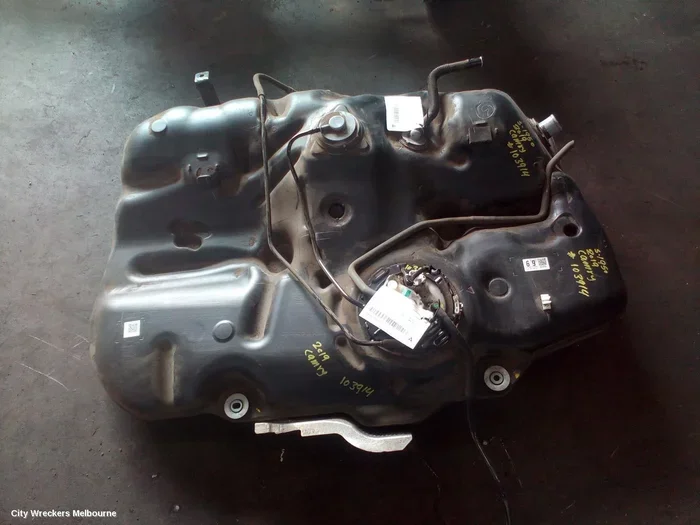
Does Tank Shape or Placement Matter?
You might wonder if the shape or location of the fuel tank affects your range. In most cases, it does not make a noticeable difference. Toyota designs the tank to fit well within the car’s structure while maximizing volume. The placement under the rear seat helps keep the center of gravity low, which improves handling. But from a pure fuel capacity standpoint, the numbers listed above are what matter most for your range calculations.
One thing to keep in mind is that some Camry trims may have slightly different tank configurations. For instance, the hybrid version has a smaller gasoline tank because it also uses a battery pack for propulsion. We will cover this in more detail later in the article.
Camry Fuel Economy: City vs Highway
Your driving environment has a huge impact on how long a full tank lasts. City driving and highway driving produce very different fuel economy results. Understanding this difference is key to estimating your real-world range accurately.
In city conditions, the Camry typically gets between 28 and 32 MPG. Stop-and-go traffic, frequent idling, and lower speeds all work against fuel efficiency. Every time you stop and start, your engine uses extra fuel to get back up to speed. This is why city driving reduces your total range per tank.
On the highway, the Camry shines. Most models achieve between 39 and 41 MPG at steady speeds. The lack of constant stopping and starting allows the engine to operate more efficiently. If you do a lot of highway driving, you can expect to stretch a full tank well beyond 500 miles easily.
Here is a simple comparison to illustrate the difference:
- City Driving (28-32 MPG): A 16-gallon tank gives you roughly 448 to 512 miles of range.
- Highway Driving (39-41 MPG): A 16-gallon tank gives you roughly 624 to 656 miles of range.
- Mixed Driving (30-35 MPG): A 16-gallon tank gives you roughly 480 to 560 miles of range.
These numbers are estimates based on EPA ratings and real-world driver reports. Your actual results may vary based on your specific driving style, road conditions, and vehicle maintenance.
How Driving Style Affects Your MPG
Your personal driving habits play a bigger role than you might think. Aggressive acceleration, speeding, and hard braking all burn more fuel. Smooth, predictable driving helps your Camry sip gas instead of gulping it. If you want to maximize your range, try to maintain steady speeds and anticipate traffic flow ahead of you.
Another factor is the use of accessories. Running the air conditioning at full blast, especially in hot weather, can reduce your fuel economy by a few miles per gallon. On short trips, using the heater can also have a small impact. These may seem like minor details, but they add up over time and across multiple fill-ups.
Factors That Affect Your Camry’s Driving Range
Several factors go into determining exactly how far your Camry can go on a single tank. Let us walk through the most important ones so you can better understand your personal range.
Vehicle Condition and Maintenance
A well-maintained Camry will always get better fuel economy than a neglected one. Regular oil changes, clean air filters, and properly inflated tires all contribute to better MPG. In fact, something as simple as a dirty cabin air filter can reduce airflow to the engine and slightly impact fuel efficiency.
If you want to learn more about how cabin filters affect your fuel economy, check out our article on Does a Cabin Air Filter Affect Gas Mileage. It explains the connection in detail and offers practical tips to keep your engine breathing freely.
Also, old or worn spark plugs can cause incomplete combustion, which wastes fuel. A clogged fuel filter restricts fuel flow and forces the engine to work harder. Staying on top of your maintenance schedule keeps all of these issues at bay and helps your Camry run at its best.
Tire Pressure and Alignment
Underinflated tires create more rolling resistance, which means your engine has to work harder to move the car. This directly reduces your fuel economy. Check your tire pressure at least once a month and keep it at the level recommended by Toyota. You can find this number on the driver’s side door jamb.
Wheel alignment also matters. Misaligned wheels cause the tires to drag slightly, which wastes fuel and wears down your tires unevenly. A simple alignment check every year or two can help you maintain both fuel efficiency and tire life.
Load and Cargo Weight
The heavier your Camry, the more fuel it uses. Carrying extra cargo on your roof rack creates aerodynamic drag, which can reduce your MPG by 2 to 5 percent. If you do not need a roof rack, remove it when it is not in use. Inside the car, clearing out unnecessary items from your trunk also helps keep weight down and fuel economy up.
Weather and Temperature
Cold weather can reduce your fuel economy by 10 to 20 percent in some cases. Engines take longer to warm up in winter, and heating the cabin uses energy that would otherwise go toward propulsion. Hot weather can also affect fuel economy, mainly through increased air conditioning use. Understanding these seasonal changes helps you adjust your range expectations accordingly.
Hybrid vs Gasoline Camry: Which Goes Further?
The Toyota Camry Hybrid is a different beast when it comes to fuel economy. The hybrid system combines a gasoline engine with an electric motor to extract every possible mile from each gallon of fuel. If you are comparing the hybrid and gasoline versions, the hybrid clearly wins in terms of range per tank.
The Camry Hybrid typically achieves between 44 and 51 MPG combined, depending on the model year and trim. With a slightly smaller tank of around 11.3 gallons in some hybrid models, the hybrid Camry can still deliver a respectable range of about 500 to 600 miles per fill-up. The electric motor assist is especially helpful in city driving, where it handles low-speed operation and reduces fuel consumption significantly.
One interesting consideration is the hybrid battery. If you are someone who parks your car for extended periods, you might wonder about battery health. While the hybrid battery is designed for long life, it is worth noting that hybrid vehicles can sit without being driven for a period, but regular use helps keep the battery in good condition.
Which Camry Variant Should You Choose for Maximum Range?
If your primary goal is to maximize how far you can go on a single tank, the hybrid Camry is the clear choice. It offers the best fuel economy numbers in the lineup and pairs well with the smaller but efficient battery system. The gasoline Camry, while not as efficient, still delivers excellent range thanks to its larger tank and proven 2.5-liter four-cylinder engine.
For drivers who do mostly highway cruising, the gasoline Camry’s highway MPG is quite competitive. But for those who spend most of their time in stop-and-go traffic, the hybrid’s electric motor assist provides a noticeable advantage. Think about your typical driving patterns when deciding which version fits your needs best.
Tips to Maximize Your Camry’s Fuel Range
Want to squeeze every last mile out of your full tank? Here are some practical tips that real Camry owners swear by. These simple habits can add up to meaningful improvements in your fuel economy and overall range.
- Keep your tires properly inflated. This is one of the easiest and most effective things you can do. Check pressure monthly and before long trips.
- Drive at steady speeds. Use cruise control on the highway to maintain a consistent pace and avoid unnecessary acceleration.
- Avoid excessive idling. If you are parked for more than a minute, turn off the engine. Idling burns fuel without moving you forward.
- Remove unnecessary weight. Clear out heavy items from your trunk and remove roof racks when not in use.
- Use the recommended grade of motor oil. Toyota specifies the right oil for your engine. Using the correct grade helps the engine run efficiently.
- Plan your trips wisely. Combine errands into one trip to avoid multiple cold starts, which use more fuel.
- Keep up with maintenance. Regular oil changes, air filter replacements, and spark plug checks all contribute to better fuel economy.
Quick Tips for Road Trips
On longer road trips, a few extra strategies can help. Try to fill up at stations that are slightly cheaper, even if it means a small detour. Use your Camry’s trip meter to track your MPG in real time and adjust your driving if you see numbers dropping. And always know where the next gas station is, especially when driving through rural areas.
Keeping a maintenance schedule is also critical for long-term fuel efficiency. If you are not sure how to set one up, our guide on How Do I Create a Maintenance Schedule walks you through the process step by step.
Common Mistakes That Reduce Your Range
There are some habits that quietly eat into your fuel economy without you noticing. Aggressive acceleration is one of the biggest culprits. Flooring the gas pedal uses a lot of fuel, especially in the lower gears. Similarly, braking hard and then accelerating again wastes the energy you already paid for with gas.
Another common mistake is ignoring the check engine light. Even a small issue like a loose gas cap can trigger the light and reduce your fuel economy. A faulty oxygen sensor or clogged fuel injector can cause even bigger problems. If your check engine light comes on, get it checked sooner rather than later.
Finally, some drivers over-rely on premium fuel. The Camry is designed to run well on regular unleaded gasoline. Using premium fuel will not improve your range or performance unless your specific model requires it. Always check your owner’s manual to confirm the recommended fuel type.
Conclusion
So, how long does a full tank of gas last in a Toyota Camry? The answer is clear: between 450 and 600 miles for most models, with the exact number depending on your driving habits, road conditions, and whether you drive the gasoline or hybrid version. The Camry remains one of the most fuel-efficient and reliable sedans on the market, and understanding your fuel range helps you get the most out of every trip.
By keeping up with regular maintenance, driving smoothly, and planning your fuel stops thoughtfully, you can maximize your Camry’s impressive range. Whether you are commuting to work or heading out on a cross-country adventure, the Camry has you covered. Take the tips from this guide, apply them to your daily driving, and you will notice the difference at the pump.
Remember, every Camry is a little different, and your personal results may vary. Use the numbers in this article as a starting point, and adjust based on your own driving experience. The more you know about your vehicle, the better you can take care of it and the further you can go.
Frequently Asked Questions
How many miles can a Toyota Camry go on a full tank?
Most Toyota Camry models can travel between 450 and 600 miles on a full tank of gas. The exact number depends on your tank size, fuel economy, and driving conditions. Highway driving typically gives you the longest range per tank.
What is the gas tank size on a Toyota Camry?
The Toyota Camry typically has a fuel tank that holds between 15.8 and 16 gallons. Some older models and certain hybrid variants may have slightly different capacities. You can find the exact tank size in your owner’s manual or on the manufacturer’s website.
Does the Camry Hybrid get better fuel range than the gasoline version?
Yes, the Camry Hybrid generally delivers better fuel economy and a longer effective range per tank. It combines a gasoline engine with an electric motor to maximize efficiency, especially in city driving conditions. The hybrid system makes it one of the most fuel-efficient sedans in its class.
How can I make my Camry’s full tank last longer?
You can stretch your fuel range by driving at steady speeds, keeping your tires properly inflated, removing unnecessary cargo, and staying on top of regular maintenance. Avoiding aggressive acceleration and excessive idling also helps improve your miles per gallon significantly.
Why does my Camry’s fuel range vary from trip to trip?
Your fuel range changes based on driving conditions, speed, weather, cargo weight, and how you accelerate and brake. City driving with lots of stops uses more fuel than steady highway cruising. Even the temperature outside can affect how far you go on a full tank.
When should I fill up my Camry before the tank runs low?
It is best to fill up as soon as the low fuel light comes on. While the Camry has a fuel reserve that can add extra miles, constantly running on empty can strain the fuel pump and potentially cause costly repairs. Keeping your tank at least a quarter full is a good habit for long-term vehicle health.