Air Pressure Machine For Car Ultimate Guide And Tips
An air pressure machine for car is an essential tool that keeps your tires properly inflated, improves fuel efficiency, and boosts road safety. This guide covers every type of machine, how to pick the right one, and how to use it correctly. You will also find expert tips, common mistakes to avoid, and a full step-by-step walkthrough for everyday tire care.
Keeping your tires at the right car tire pressure is one of the simplest things you can do for your vehicle. Yet so many drivers overlook it until something goes wrong. A flat tire on the highway or uneven wear on your treads can cost you time and money. That is where an air pressure machine for car comes in. It is a compact, powerful device that fills your tires quickly and accurately. Whether you keep one in your garage or your trunk, this tool changes the way you handle basic car maintenance.
In this guide, we will walk you through everything you need to know. You will learn what an air pressure machine for car actually does, why it matters, and how to pick the best one for your needs. We will also cover how to use it the right way, what mistakes to avoid, and expert tips that make tire care a breeze. By the end, you will feel confident choosing, using, and maintaining your own air compressor for tires.
Let us get started. Your tires will thank you.
Key Takeaways
- Right Tool Matters: Choosing the correct air pressure machine for car saves time, money, and extends tire life.
- Know Your PSI: Always check your vehicle’s recommended tire pressure levels before inflating.
- Portability Wins: A portable tire inflator is ideal for daily use and roadside emergencies.
- Maintenance Is Key: Regular care keeps your compressor machine running smoothly for years.
- Avoid Common Mistakes: Overinflating, ignoring leaks, and skipping gauge checks are top errors drivers make.
- Digital Gauges Are Best: A digital tire gauge gives accurate readings every single time.
- Invest Wisely: Spending a little more on quality pays off in durability and performance.
📑 Table of Contents
- What Is An Air Pressure Machine For Car And Why It Matters
- Types Of Air Pressure Machines For Cars
- How To Choose The Right Air Pressure Machine For Your Vehicle
- Step-By-Step Guide To Using Your Air Pressure Machine
- Maintenance Tips And Common Mistakes To Avoid
- Expert Insights And Pro Tips For Better Tire Care
- Conclusion
What Is An Air Pressure Machine For Car And Why It Matters
An air pressure machine for car is a device that pumps air into your vehicle’s tires. It raises the tire pressure to the level recommended by your car’s manufacturer. Most vehicles operate best between 30 and 35 PSI, which stands for pounds per square inch. When your tires are properly inflated, they grip the road better, handle turns more smoothly, and last much longer.
Why does this matter so much? Underinflated tires create more rolling resistance. That means your engine works harder, which burns more fuel. Overinflated tires, on the other hand, wear out the center of the tread faster. Both situations reduce safety and increase costs. A reliable tire inflator helps you avoid all of that.
Beyond fuel and wear, proper tire inflation also affects braking distance. Studies show that tires with low air take longer to stop on wet roads. A portable air compressor lets you check and adjust pressure anytime, anywhere. This is especially useful during long road trips or sudden weather changes.
Many modern vehicles come with a tire pressure monitoring system, or TPMS. This sensor warns you when pressure drops too low. But a TPMS is not a replacement for a tire pressure gauge or an air pump for car. It simply alerts you. The actual fix still requires an inflation system like a compressor machine.
How Tire Pressure Affects Daily Driving
Think about how much you rely on your tires every day. They carry the full weight of your car. They absorb bumps, grip the road, and transfer steering input. If the tire pressure levels are off, every part of that job suffers.
Here is a quick look at what happens when pressure is not right:
- Underinflated tires cause the sidewalls to flex too much. This leads to overheating, blowouts, and premature shoulder wear.
- Overinflated tires create a harsh ride. The center tread wears fast, and traction on wet surfaces drops.
- Correctly inflated tires give you a smooth ride, better fuel economy, and even tread wear across the entire surface.
Using an electric air pump or a portable tire inflator takes just minutes. It is one of the easiest tire care habits you can build.
Types Of Air Pressure Machines For Cars
Not all air pressure machines for car are the same. They come in different shapes, sizes, and power sources. Knowing the types helps you pick the one that fits your lifestyle and budget.
Portable Tire Inflators
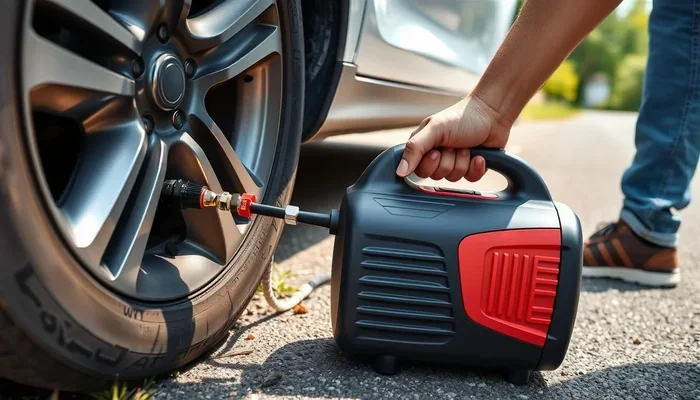
A portable tire inflator is the most popular choice for everyday drivers. These compact devices plug into your car’s 12-volt outlet, also called a cigarette lighter socket. They are lightweight, easy to store, and perfect for roadside emergencies.
Most portable units can inflate a standard sedan tire from flat to full in under five minutes. They usually come with a digital tire gauge built right in. This means you can check and set pressure in one step. Popular brands in this category include models from Viair, Slime, and EPAuto.
If you want something you can toss in the trunk and forget about until you need it, a portable option is ideal. Just make sure it comes with a carrying case and all the valve attachments.
Full-Size Automotive Air Compressors
A full-size automotive air compressor is built for heavier use. These machines sit in your garage and plug into a wall outlet. They deliver higher air volume, which means faster inflation for multiple tires or even other tasks like powering air tools.
Full-size compressors are great if you have a larger vehicle like an SUV, truck, or RV. Their tanks store compressed air, so you can inflate several tires without waiting for the motor to catch up. Look for models with a built-in tire pressure gauge and an automatic shutoff feature.
The trade-off is size and weight. A full-size unit is not something you want to carry on a road trip. But for home garage use, it is hard to beat.
12-Volt Car Air Pumps
A 12-volt car air pump is essentially a portable air compressor for tires that runs off your vehicle’s electrical system. These are the most common type of air pressure machine for car on the market today.
They range from basic models with analog gauges to advanced units with digital displays and preset pressure buttons. The best ones include a digital tire gauge that lets you set your desired PSI and walk away while the machine does the work.
12-volt pumps are perfect for daily drivers, commuters, and anyone who wants a simple tire inflation solution. Just keep an eye on the power draw, especially if you have a smaller vehicle battery.
Comparison Table: Types Of Air Pressure Machines
| Type | Power Source | Portability | Best For | Price Range |
|---|---|---|---|---|
| Portable Tire Inflator | 12V car outlet | Very high | Roadside use, daily checks | $25 – $80 |
| Full-Size Compressor | Wall outlet | Low (garage only) | Home garage, heavy vehicles | $80 – $300 |
| 12V Car Air Pump | 12V car outlet | High | Commuters, road trips | $30 – $100 |
| Foot Pump (Manual) | Human power | Very high | Emergency backup, bikes | $15 – $40 |
How To Choose The Right Air Pressure Machine For Your Vehicle
With so many options out there, picking the right air pressure machine for car can feel overwhelming. But it does not have to be. A few simple considerations will guide you to the perfect choice.
Consider Your Tire Pressure Needs
Start by checking your owner’s manual or the sticker on the driver’s door jamb. This tells you the recommended tire pressure levels for your specific vehicle. Passenger cars usually need 30 to 35 PSI. Trucks and SUVs may require 35 to 45 PSI or more.
Make sure the inflation system you choose can reach your vehicle’s maximum PSI. Most portable compressors handle up to 100 PSI, which covers nearly all passenger vehicles. If you drive a large truck or run low-profile tires, look for a model that reaches 120 PSI or higher.
Power Source And Portability
Ask yourself where and how often you will use the machine. If you want to use it on the go, a portable tire inflator with a 12V plug is your best bet. If you only need it at home, a full-size automotive air compressor gives you more power and tank capacity.
Battery-powered portable models are also available. These are great for SUVs and trucks with weaker 12V systems, since they do not drain the car battery as much. Just remember to recharge them periodically.
Build Quality And Extra Features
Look for machines with a built-in digital tire gauge. Analog gauges work fine, but digital ones are easier to read and more accurate. Other features worth considering include:
- Auto shutoff — turns off when the target pressure is reached.
- LED light — helpful for nighttime tire checks or roadside emergencies.
- Multiple nozzle attachments — fits different valve stems including Presta and Schrader.
- Carrying case — keeps everything organized and protected.
- Backlit display — makes it easy to read in low light.
These extra features add convenience and safety. They turn a basic air pump for car into a truly useful tire care tool.
Step-By-Step Guide To Using Your Air Pressure Machine
Using an air pressure machine for car is simple once you know the steps. Follow this guide every time for safe and accurate results.
Step 1: Check Current Tire Pressure
Before you add any air, check the current tire pressure with a tire pressure gauge. Remove the valve cap from the tire stem. Press the gauge firmly onto the valve and read the number. Write it down so you do not forget.
If you have a digital tire gauge built into your compressor, you can skip a separate gauge. But it is always smart to have a standalone one as a backup.
Step 2: Find The Recommended PSI
Look up the recommended pressure for your vehicle. Check the sticker on the driver’s door jamb or your owner’s manual. Do not use the number printed on the tire sidewall — that is the maximum pressure the tire can handle, not the recommended pressure for your car.
Step 3: Connect The Air Pressure Machine
Plug your portable air compressor into the 12V outlet. Attach the nozzle to the tire valve stem. Make sure it fits snugly so no air escapes. Turn on the machine and set your desired PSI if the unit has a digital display.
Step 4: Inflate And Monitor
Let the machine run until it reaches the target pressure. If your unit has an auto shutoff, it will turn off by itself. Otherwise, watch the digital tire gauge and turn the machine off when you hit the right number.
Do not overinflate. A few PSI over is not the end of the world, but going too far can affect ride quality and safety.
Step 5: Replace The Valve Cap
Once the tire is at the right pressure, remove the nozzle and replace the valve cap. This small step keeps dirt and moisture out of the valve stem, which helps prevent slow leaks.
Repeat the process for each tire. Check your spare tire too — it loses pressure over time and you do not want to be surprised when you need it.
Quick Tips For Using Your Air Pressure Machine
- Always check tire pressure when the tires are cold — driving heats the air inside and raises the reading.
- Keep a tire pressure gauge in your glove box for quick spot checks.
- Inflate tires in the morning for the most accurate baseline reading.
- Store your air pressure machine for car in a cool, dry place.
- Check all four tires at least once a month.
Maintenance Tips And Common Mistakes To Avoid
Your air pressure machine for car is a tool, and like any tool, it needs care. Proper maintenance keeps it working reliably for years. At the same time, avoiding common mistakes protects both your machine and your tires.
Quick Tips For Longevity
- Clean the nozzle after each use. Dirt and debris can clog the valve connection and cause air leaks.
- Store the cord properly. Do not wrap it tightly or leave it tangled. A loose coil keeps the wiring intact.
- Check the power cord regularly for fraying or damage. A damaged cord is a safety hazard.
- Run the machine occasionally even if you are not using it. This keeps the motor and internal parts lubricated.
- Replace the filter if your model has one. A clogged filter reduces airflow and strains the motor.
These small habits go a long way. A well-maintained air compressor for tires gives accurate readings and consistent performance every time.
Common Mistakes That Damage Your Machine
Even experienced drivers make mistakes with their tire inflator. Here are the ones to watch out for:
- Running the machine too long — most portable units are not designed for continuous use. Give it a rest every few minutes to prevent overheating.
- Ignoring the duty cycle — check your manual for the recommended run time and cooldown period. Pushing past it burns out the motor.
- Using the wrong nozzle — not all valve stems are the same. Make sure your attachments fit your tires properly.
- Inflating hot tires — as mentioned earlier, driving heats the air inside. Always check pressure when the tires are cool.
- Neglecting the power source — if you are using a 12V plug, make sure the outlet is working properly. A loose connection causes inconsistent performance.
Avoiding these mistakes keeps your inflation system in great shape and your tire pressure levels accurate.
Common Mistakes That Damage Your Tires
The machine is only half the equation. Here are tire-related mistakes drivers make:
- Not checking the spare tire — a flat spare defeats the purpose of having one.
- Ignoring slow leaks — if a tire loses pressure frequently, get it inspected for punctures or valve damage.
- Relying only on TPMS — your tire pressure monitoring system is a warning tool, not a substitute for regular checks.
- Guessing the pressure — never eyeball it. Always use a tire pressure gauge for accuracy.
Expert Insights And Pro Tips For Better Tire Care
We asked experienced auto technicians and tire specialists for their top advice on using an air pressure machine for car. Here is what they shared.
Expert Insight 1: Check Pressure Seasonally
Air pressure inside tires changes with temperature. For every 10-degree drop in outside temperature, tire pressure can drop by about 1 PSI. This means your winter mornings may show lower readings than summer afternoons. Make it a habit to check tire pressure at the start of each season.
Expert Insight 2: Invest In A Quality Digital Gauge
A good digital tire gauge costs just a few dollars and pays for itself in fuel savings alone. Cheap analog gauges can be off by 2 or 3 PSI, which adds up over time. Look for one with a pressure range that covers your vehicle’s needs.
Expert Insight 3: Keep A Portable Unit For Roadside Emergencies
A roadside emergency can happen to anyone. A flat tire, a slow leak, or a sudden pressure drop can leave you stranded. A compact portable tire inflator in your trunk gives you the freedom to handle these situations yourself, without waiting for roadside assistance.
Expert Insight 4: Rotate Tires Along With Pressure Checks
Proper tire care is not just about air. Rotating your tires every 5,000 to 7,000 miles promotes even wear. Combine this with regular tire pressure checks using your air pump for car, and your tires will last significantly longer.
Expert Insight 5: Know When To Replace, Not Just Inflate
An air pressure machine for car helps you maintain pressure, but it cannot fix worn-out tires. If your tread depth is below 2/32 of an inch, or if you see cracks, bulges, or uneven wear patterns, it is time for new tires. No amount of tire inflation can replace a safe, fresh set of rubber.
Conclusion
An air pressure machine for car is one of the most practical and affordable tools you can own. It keeps your car tire pressure at the right level, improves fuel economy, enhances safety, and extends the life of your tires. Whether you choose a portable tire inflator for on-the-go convenience or a full-size automotive air compressor for home garage use, the benefits are clear.
Use this guide to pick the right machine, follow the step-by-step usage instructions, and avoid the common mistakes that trip up so many drivers. Take a few minutes each month to check your tire pressure levels with a reliable digital tire gauge. Your tires, your fuel bill, and your safety will all benefit.
Start today. Grab an air compressor for tires, make it part of your car maintenance routine, and enjoy the confidence that comes with properly inflated tires. A small investment in the right inflation system pays big dividends over the life of your vehicle.
Frequently Asked Questions
What PSI should I set my air pressure machine for car tires?
Check your owner’s manual or the sticker on the driver’s door jamb for the recommended PSI. Most passenger cars require between 30 and 35 PSI. Never use the number on the tire sidewall as your target — that is the maximum pressure the tire can handle, not the recommended pressure for your vehicle.
Can I use a portable air compressor for all types of vehicles?
Most portable tire inflators work well for cars, SUVs, and light trucks. However, if you drive a large truck or RV with higher pressure requirements, make sure the unit can reach the PSI your vehicle needs. Check the maximum pressure rating before purchasing.
How often should I check my tire pressure with an air pressure machine for car?
Experts recommend checking your tire pressure at least once a month and before any long road trips. Temperature changes also affect pressure, so a seasonal check is a smart habit. Always measure when the tires are cold for the most accurate reading.
Is a digital tire gauge better than an analog one?
Yes, a digital tire gauge is generally more accurate and easier to read. Analog gauges can lose calibration over time and are harder to read in low light. A digital gauge gives you a clear, precise number every time, which helps you maintain the correct tire pressure levels.
What should I do if my air pressure machine for car keeps overheating?
Overheating usually means you are running the machine beyond its duty cycle. Most portable units need a few minutes of rest after every few minutes of use. Check your manual for the recommended run time and cooldown period. If overheating continues, the motor may be damaged and the unit may need replacement.
Can I use an air pressure machine for car to inflate other items besides tires?
Many compressors come with multiple nozzle attachments that fit basketballs, bicycles, inflatable mattresses, and more. Just make sure you use the correct attachment and keep the pressure within the safe range for whatever you are inflating. Never exceed the maximum PSI rating of the item you are filling.