Can a Parking Brake Be Fixed Before It Fails Completely
A parking brake can often be fixed if you catch the problem early. Whether it is a loose cable, worn brake shoes, or a sticking caliper, many parking brake issues are repairable at home or by a mechanic. Ignoring a failing parking brake can lead to serious safety risks and expensive brake system damage. This guide covers the most common parking brake problems, repair options, costs, and tips to keep your emergency brake working reliably for years to come.
Your parking brake is one of those parts you probably do not think about until something goes wrong. Maybe you pulled the lever one morning and noticed it felt loose. Or perhaps your car rolled a little too far on a hill, and panic set in. The thought probably crossed your mind: can a parking brake be fixed? The good news is that in most cases, the answer is yes. A parking brake can often be repaired before it fails completely, saving you from a dangerous situation and a hefty repair bill.
Understanding how your parking brake works and what causes it to fail gives you the power to act early. Whether you drive a car with drum brakes in the rear or disc brakes, the parking brake system shares many common components. Cable tension, brake shoes, and the lever mechanism all play a role in keeping your vehicle stationary. When one part wears out or breaks, the entire system suffers. This article walks you through everything you need to know about parking brake repair, from simple DIY fixes to signs that it is time to visit a mechanic.
We will cover the most common parking brake problems, what causes them, how much repairs cost, and whether you should try fixing it yourself or call in a professional. By the end, you will have a clear picture of your options and the confidence to take action. A working parking brake is not just a convenience. It is a critical safety feature that protects you, your passengers, and everyone on the road.
Key Takeaways
- Most parking brake problems are fixable: cables, levers, and shoes can often be repaired or replaced affordably.
- Early detection saves money: catching warning signs early prevents costly brake system damage.
- DIY repairs work for simple issues: cable adjustment and lubrication are common fixes you can do at home.
- Professional help is needed for complex problems: caliper, rotor, or internal brake failures require a mechanic.
- Regular brake maintenance extends lifespan: routine checks keep your emergency brake and rear brakes in top shape.
- Replacement costs vary widely: simple cable fixes cost under $50, while full brake jobs can exceed $300.
- Never ignore warning signs: a failing parking brake is a safety hazard that should be addressed immediately.
📑 Table of Contents
- How a Parking Brake Works
- Common Parking Brake Problems and Their Causes
- How to Tell If Your Parking Brake Needs Repair
- Can You Fix a Parking Brake Yourself?
- Parking Brake Repair Costs
- Tips to Prevent Parking Brake Failure
- When a Parking Brake Cannot Be Fixed
- Expert Insights on Parking Brake Maintenance
- Key Takeaways
- Conclusion
How a Parking Brake Works
Before diving into fixes, it helps to understand the basics. Your parking brake, also called an emergency brake, is a separate system from your regular foot brakes. It uses a mechanical cable to engage the rear brakes either directly or through a lever mechanism. When you pull the parking brake lever or press the pedal, the cable tightens and pushes brake shoes against the brake drum or holds the disc brake rotor in place.
Most vehicles use the rear brakes for the parking brake system. This means your parking brake cable connects to the rear brake shoes or calipers. When the cable pulls, it creates friction that keeps the wheels from turning. Simple enough, right? But because this system relies on cables, springs, and mechanical parts, it is subject to wear and tear over time.
The Role of the Parking Brake Cable
The parking brake cable is the most important part of the system. It is a steel cable that runs from the lever or pedal under your dashboard all the way to the rear brakes. Over time, this cable can stretch, rust, or fray. When the cable loses tension, your parking brake will not hold properly. This is one of the most common reasons drivers ask about parking brake repair.
Brake Shoes and Drums
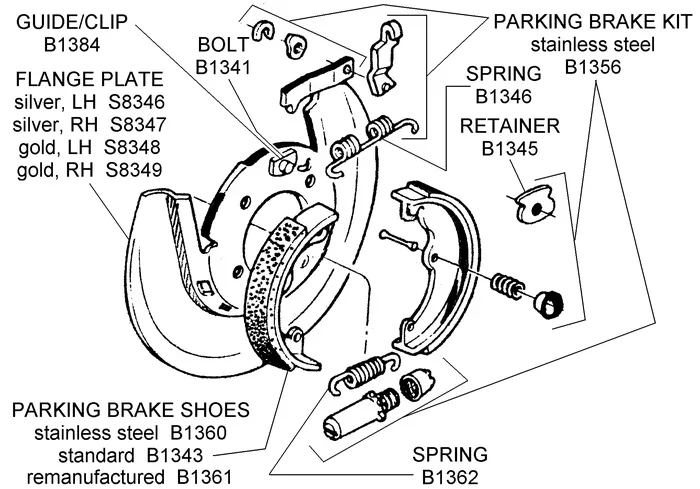
In vehicles with drum brakes on the rear wheels, the parking brake pushes brake shoes outward against the inside of the brake drum. These brake shoes wear down over time just like your regular brake pads. When they wear too thin, the parking brake will not grip effectively. This is a common cause of parking brake failure that many people overlook.
Disc Brake Parking Systems
Some modern cars use a disc brake parking brake system at the rear. Instead of brake shoes, a small caliper engages the brake rotor. These systems use a parking brake caliper that squeezes pads against the rotor. While they are more complex, they still follow the same basic principle of creating friction to hold the vehicle in place.
Common Parking Brake Problems and Their Causes
Knowing what goes wrong with a parking brake helps you spot trouble early. Here are the most common parking brake issues drivers face.
Loose or Sticking Parking Brake Cable
A loose cable is the number one cause of a parking brake that does not hold. The cable stretches over time, especially if you frequently pull the lever hard. A sticking cable, on the other hand, happens when rust or dirt builds up inside the cable housing. A sticking cable may cause the parking brake to drag, which wears out your rear brake pads faster and reduces fuel efficiency.
Worn Brake Shoes or Pads
Brake shoes in drum brake systems wear down with use. When they are thin, the parking brake cannot generate enough friction to hold the car. Similarly, worn brake pads on disc brake systems reduce parking brake effectiveness. This is especially noticeable on hills or inclines where you need full braking power to keep the car stationary.
Broken or Stretched Cable
Sometimes the parking brake cable breaks entirely. This can happen due to corrosion, age, or sudden stress. A broken cable means the parking brake will not engage at all. This is a serious safety issue that requires immediate attention. If you notice the lever goes all the way down without resistance, your cable may be snapped.
Seized Parking Brake Caliper
In disc brake parking systems, the caliper can seize or stick. This prevents the parking brake pads from engaging or releasing properly. A seized caliper often causes the car to pull to one side when driving and creates uneven brake pad wear on the rear wheels.
Faulty Lever or Pedal Mechanism
The lever or pedal itself can also fail. Springs inside the mechanism can break, or the pivot points can wear out. A faulty lever means you cannot engage the parking brake properly, even if the cable and brakes are in good condition.
Brake Fluid Leaks Affecting Parking Brake
In some vehicles, the parking brake system shares components with the hydraulic brake system. A brake fluid leak can affect parking brake performance. If you notice a soft pedal or fluid under the car, get your brake system checked right away. Low brake fluid levels compromise both your regular brakes and your parking brake.
How to Tell If Your Parking Brake Needs Repair
Catching parking brake problems early can save you from a complete failure. Here are the warning signs you should never ignore.
- The lever or pedal feels loose or goes too far down. This usually means the cable has stretched and needs adjustment.
- The car rolls on a hill when the parking brake is engaged. Your parking brake is not creating enough friction to hold the vehicle.
- The parking brake warning light stays on. This could indicate a cable issue, low fluid, or a sensor problem in the brake system.
- You hear grinding or scraping when engaging the brake. Worn brake shoes or pads are digging into the drum or rotor.
- The parking brake will not release fully. A sticking cable or seized caliper is preventing the brake from disengaging.
- The car pulls to one side when the parking brake is applied. Uneven brake engagement suggests a problem with one side of the rear brake system.
If you notice any of these signs, do not wait. Addressing the problem early is always cheaper and safer than dealing with a complete parking brake failure.
Can You Fix a Parking Brake Yourself?
The answer depends on the problem and your mechanical skills. Some parking brake repairs are simple enough for a DIY enthusiast, while others require professional tools and expertise.
Repairs You Can Do at Home
Cable adjustment is the most common DIY parking brake fix. Most vehicles have an adjustment point on the parking brake cable, usually located under the car or near the lever mechanism. You simply loosen the lock nut, pull the cable tight, and retighten. This takes about 15 minutes and costs nothing but a little elbow grease.
Lubricating the cable is another easy fix. If your parking brake sticks or does not release smoothly, a shot of cable lubricant can work wonders. Spray lubricant into the cable housing and work the lever back and forth to distribute it. This simple step can extend the life of your parking brake cable significantly.
Replacing a parking brake cable is also doable at home if you have basic tools. The process involves removing the old cable, routing the new one, and adjusting the tension. Most replacement cables cost between $10 and $30, making this one of the cheapest brake repairs you can do yourself.
Repairs That Need a Professional
Brake shoe or pad replacement requires removing the rear wheels and accessing the brake assembly. While it is not extremely difficult, it does require knowledge of brake systems and the right tools. If you have never done brake work before, it is best to leave this to a professional.
Caliper replacement or repair is a more advanced job. Seized parking brake calipers need to be removed, rebuilt, or replaced. This involves dealing with brake fluid, mounting bolts, and precise alignment. A mechanic can do this safely and correctly the first time.
Brake drum or rotor resurfacing requires specialized equipment. If your rear brake drums are warped or your rotors are scored, they need to be machined or replaced. This is not a job for the home garage in most cases.
Internal brake system repairs involving brake lines, master cylinders, or hydraulic components should always be handled by a licensed mechanic. These repairs affect your entire brake system and any mistake can compromise your safety.
Parking Brake Repair Costs
Understanding parking brake repair costs helps you budget and make informed decisions. Costs vary widely depending on the problem, your vehicle, and where you live.
| Repair Type | Parts Cost | Labor Cost | Total Estimated Cost |
|---|---|---|---|
| Cable adjustment | $0 | $0 (DIY) | Free |
| Cable replacement | $10 – $30 | $50 – $100 | $60 – $130 |
| Brake shoe replacement (rear) | $30 – $60 | $100 – $200 | $130 – $260 |
| Brake pad replacement (rear) | $40 – $80 | $80 – $150 | $120 – $230 |
| Caliper replacement (parking brake) | $80 – $200 | $100 – $250 | $180 – $450 |
| Drum brake resurfacing | $0 – $20 | $50 – $100 | $50 – $120 |
| Full rear brake job | $100 – $250 | $150 – $300 | $250 – $550 |
These are average costs and can vary based on your vehicle make and model, local labor rates, and the severity of the problem. A simple cable adjustment costs nothing if you do it yourself. But ignoring a problem that leads to a full rear brake job can easily push costs above $500.
The best way to save money on parking brake repair is to address small issues early. A $10 cable replacement today can prevent a $300 brake shoe replacement next month. Prevention is always cheaper than repair.
Tips to Prevent Parking Brake Failure
Preventing parking brake problems is much easier than fixing them. Here are some simple tips to keep your emergency brake system in great shape.
- Use your parking brake regularly. It may sound counterintuitive, but regularly engaging the parking brake keeps the cable from seizing up. If you leave it unused for months, the cable can rust and stick.
- Release the parking brake gently. Yanking the lever or slamming the pedal puts unnecessary stress on the cable and mechanism. Smooth, steady movements extend the life of every component.
- Get regular brake inspections. During oil changes or tire rotations, ask your mechanic to check the parking brake cable, shoes, and pads. Catching wear early saves money and prevents surprises.
- Keep your vehicle level. Parking on a steep incline puts extra strain on the parking brake cable and rear brakes. If possible, park on flat ground and turn your wheels toward the curb as an extra safety measure.
- Replace brake fluid on schedule. Clean brake fluid keeps the entire brake system, including the parking brake mechanism, working smoothly. Old or contaminated fluid can cause corrosion inside brake lines and components.
- Do not ignore warning signs. If your parking brake feels different, makes unusual noises, or does not hold like it used to, get it checked immediately. Small problems become big problems fast.
When a Parking Brake Cannot Be Fixed
While most parking brake issues are repairable, there are situations where a full replacement or major rebuild is the only option. Severely corroded cables that are rusted through cannot be safely repaired. Worn brake drums that are cracked or warped beyond resurfacing need to be replaced entirely. In some older vehicles, finding replacement parking brake parts can be difficult or expensive, making a full brake system overhaul impractical.
If the parking brake caliper piston is severely damaged or the brake line is corroded beyond repair, the cost of fixing it may exceed the value of the repair. In these cases, your mechanic will recommend replacing the affected components rather than attempting a repair. Always trust your mechanic’s judgment on this. Safety should always come first.
Another situation where repair may not be feasible is when the parking brake system is integrated into the rear brake assembly and multiple components have failed simultaneously. For example, if both rear brake shoes are worn thin and the cable is stretched, replacing just the cable will not solve the problem. You will need a comprehensive rear brake service to restore proper parking brake function.
Expert Insights on Parking Brake Maintenance
Experienced mechanics agree that the parking brake is the most neglected safety system in most vehicles. Many drivers only think about it when something goes wrong. Regular attention to this system can prevent unexpected failures and keep your car safe on the road.
One mechanic shared that the most common mistake he sees is drivers ignoring a slightly loose parking brake. They adjust to the looseness and keep driving, not realizing the cable is stretching further every day. By the time the parking brake fails completely, the cable is often damaged beyond simple adjustment and needs full replacement.
Another expert pointed out that parking brake cables in vehicles driven in coastal or snowy areas wear out much faster due to salt and moisture exposure. If you live in such an area, inspect your parking brake system at least twice a year. A quick look under the car at the cable and housing can reveal rust or corrosion before it becomes a serious problem.
Top mechanics also recommend parking brake exercises. This means pulling the lever up and releasing it fully once a week. This simple action keeps the cable moving freely and prevents it from seizing. It takes just a few seconds but can add years to the life of your parking brake system.
Key Takeaways
- Most parking brake problems are fixable: cables, levers, and shoes can often be repaired or replaced affordably.
- Early detection saves money: catching warning signs early prevents costly brake system damage.
- DIY repairs work for simple issues: cable adjustment and lubrication are common fixes you can do at home.
- Professional help is needed for complex problems: caliper, rotor, or internal brake failures require a mechanic.
- Regular brake maintenance extends lifespan: routine checks keep your emergency brake and rear brakes in top shape.
- Replacement costs vary widely: simple cable fixes cost under $50, while full brake jobs can exceed $300.
- Never ignore warning signs: a failing parking brake is a safety hazard that should be addressed immediately.
Conclusion
So, can a parking brake be fixed? In the vast majority of cases, yes. A parking brake can be fixed before it fails completely, and the sooner you address the problem, the better. Whether it is a simple cable adjustment you can do in your driveway or a more involved brake shoe replacement that needs a mechanic, there is almost always a solution available.
The key is paying attention to warning signs and not ignoring them. A loose lever, a car that rolls on a hill, or a warning light on your dashboard are all signals that something is wrong with your parking brake system. Taking action quickly keeps you safe and saves you money in the long run.
Regular parking brake maintenance is the best investment you can make. A few minutes of attention each month can prevent major repairs down the road. Use your parking brake often, inspect it regularly, and do not hesitate to seek professional help when needed. Your parking brake is there to protect you every time you park your car. Make sure it is always ready to do its job.
Take the time today to check your parking brake. Pull the lever, listen for unusual sounds, and make sure your car stays put when parked on a hill. If something does not feel right, address it now. A working parking brake is not just about following the law. It is about keeping yourself and everyone around you safe on the road.
Frequently Asked Questions
How long does a parking brake repair take?
A simple cable adjustment can be done in about 15 minutes. Replacing a parking brake cable usually takes one to two hours at a shop. More complex repairs like brake shoe or caliper replacement can take three to four hours depending on your vehicle. The time varies based on the specific problem and the accessibility of the rear brake components.
Is it safe to drive with a broken parking brake?
It is not recommended. A broken parking brake means your car is not secured when parked and it can roll, especially on an incline. In some vehicles, a broken parking brake cable can also affect rear brake performance. Always get a broken parking brake fixed before driving the car, particularly on hills or steep roads.
How much does it cost to fix a parking brake?
The cost depends on the repair needed. A cable adjustment is free if you do it yourself. Cable replacement costs between $60 and $130. Brake shoe or pad replacement runs from $120 to $260. More complex repairs like caliper replacement can cost $180 to $450. Getting a diagnosis from a mechanic is the best way to know your exact cost.
Can a parking brake cable be repaired without replacing it?
In most cases, a damaged parking brake cable needs to be replaced rather than repaired. Cables are relatively inexpensive and designed to be swapped out. However, if the cable is only stretched, a simple adjustment may restore proper tension. Rust or fraying in the cable means replacement is the safest option.
Why does my parking brake feel weak or loose?
A weak or loose parking brake is usually caused by a stretched cable that needs adjustment. Worn brake shoes or pads in the rear can also reduce grip. In some cases, a sticking cable or corroded cable housing prevents the cable from pulling tight. Have a mechanic inspect the entire system to pinpoint the exact cause.
How often should I check my parking brake?
You should test your parking brake every time you park, especially on hills. A more thorough inspection should be done during every oil change or tire rotation. Mechanics can check the cable tension, brake shoes, and overall condition of the parking brake system during these routine services. Regular checks catch problems before they become serious failures.